
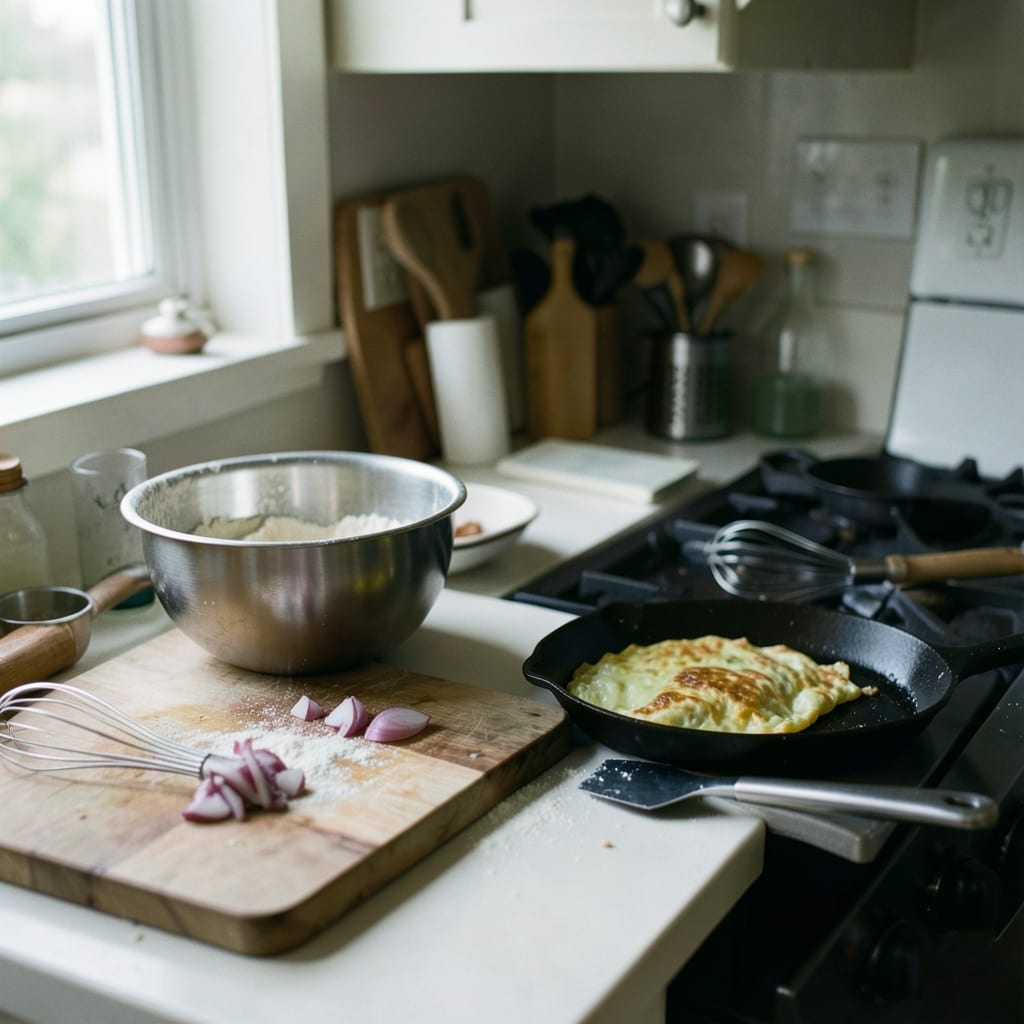
What this work is made with
This page is a list of things—not a story. A recipe is built with pots, knives, and hands, not with words alone. Here, we show what holds the work together.
Apple Recipes Pot is made of the same things: a cast-iron skillet that’s seen generations of applesauce, a wooden spoon that’s been passed down, and a few other tools that have shaped every dish here. These are the things that make the food real.
The things that do the work
Four things keep this kitchen running. Some are old, some are stubborn, and all have left their mark on the food.
Cast-iron skillet
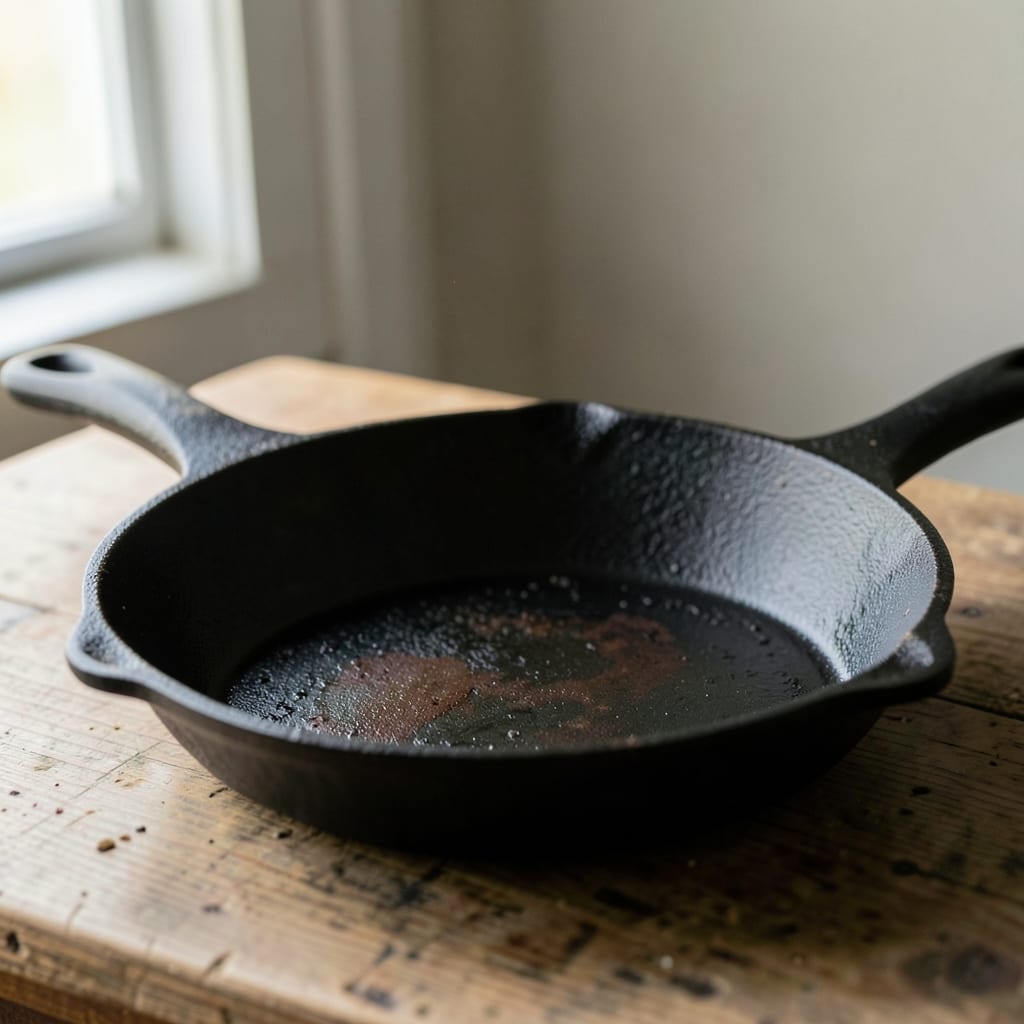
A dented, 10-inch skillet that’s been in the family since the 1970s. The handle is warped from years of uneven heat, and the bottom is pitted from decades of scrubbing.
It was the first thing my abuela gave me when she saw me burn my first batch of apple cider. Now, every caramelized apple dish starts here—no matter how many times it’s been replaced.
Wooden spoon
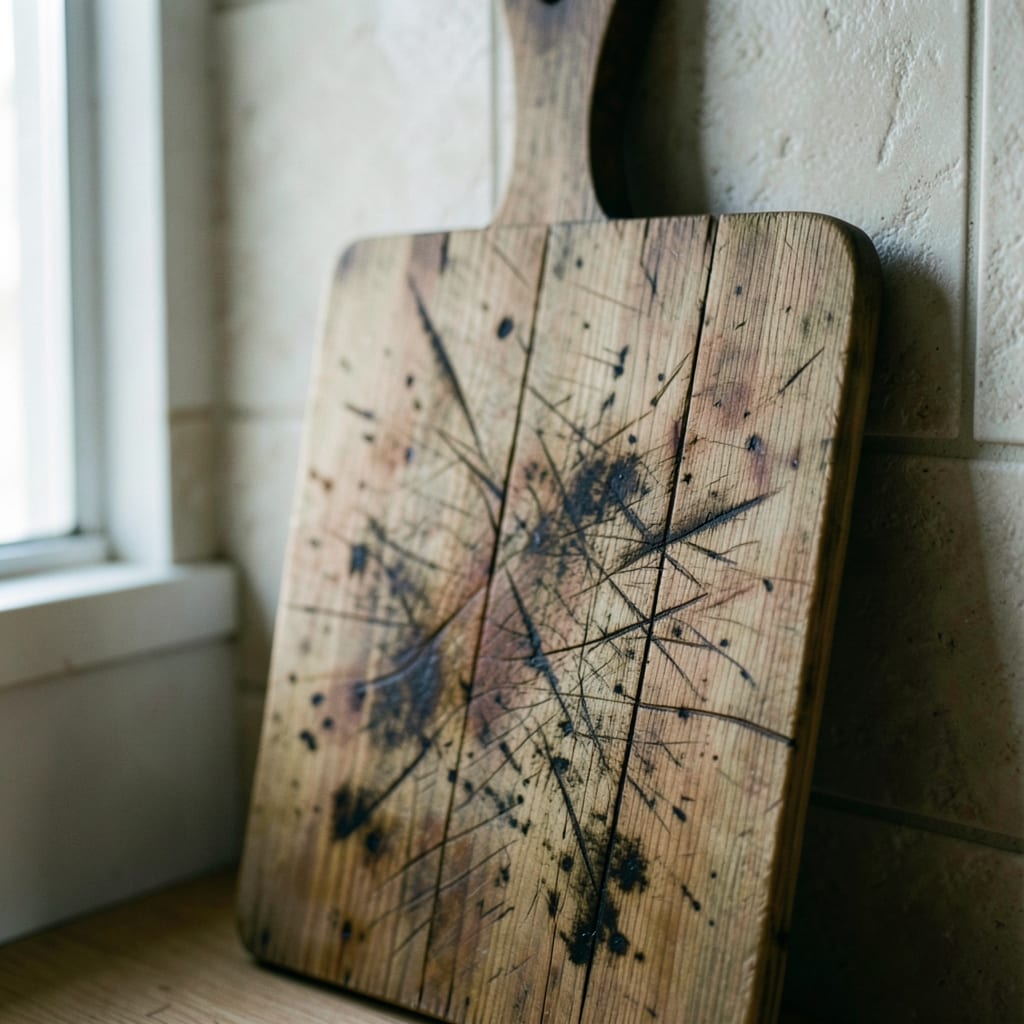
A plain, unvarnished spoon with a cracked handle. It’s been in the pot so long the wood has turned dark, and the bowl is smooth from years of stirring.
It’s the only tool I use for sauces—nothing else gets close to the way it coats the pan. The crack in the handle means I have to grip it tighter, but that’s how I know it’s still working.
Cheap aluminum pot
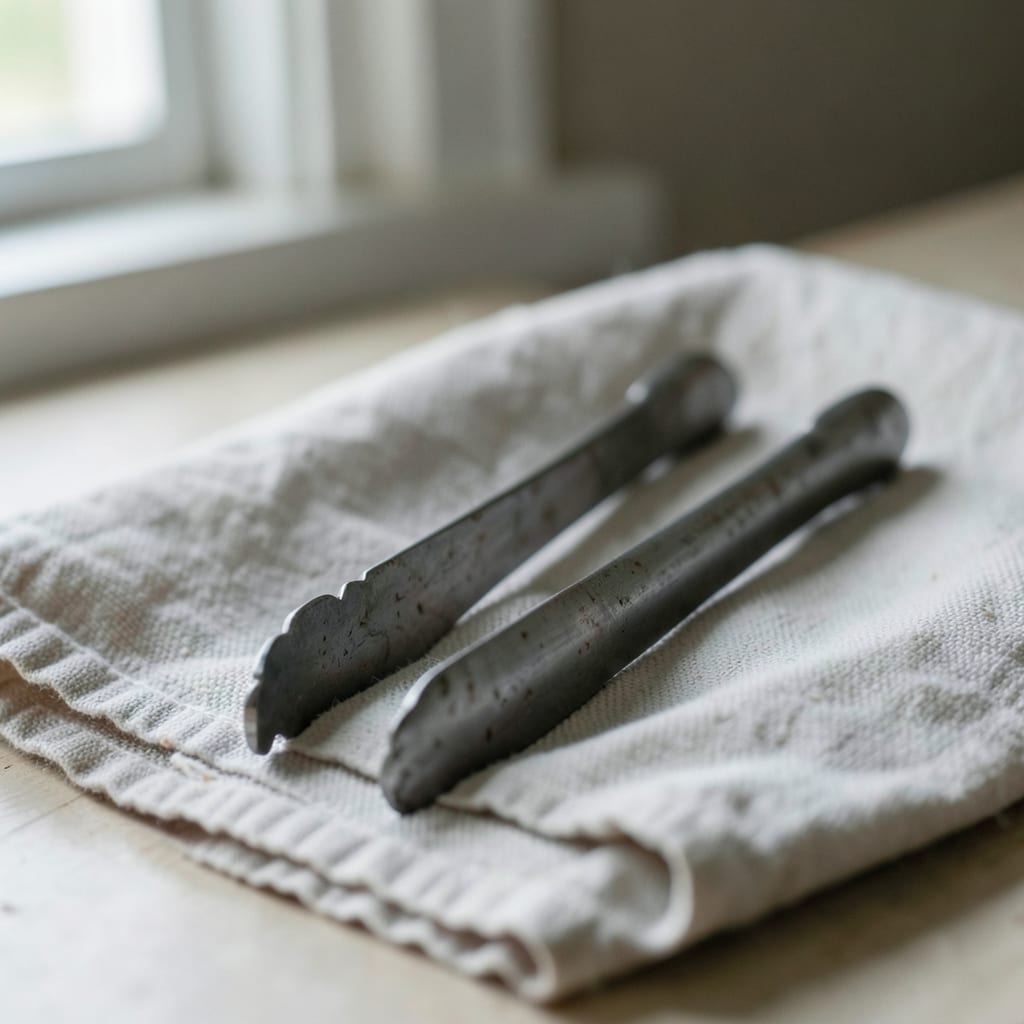
A $5 pot from a discount store, its sides dented from dropping it too many times. The lid is loose, and the bottom is warped from boiling too much water.
It’s the only thing I trust for big batches of stew. The warping means some spots scorch, but the uneven heat gives the sauce depth. Nothing else comes close.
Parchment paper roll
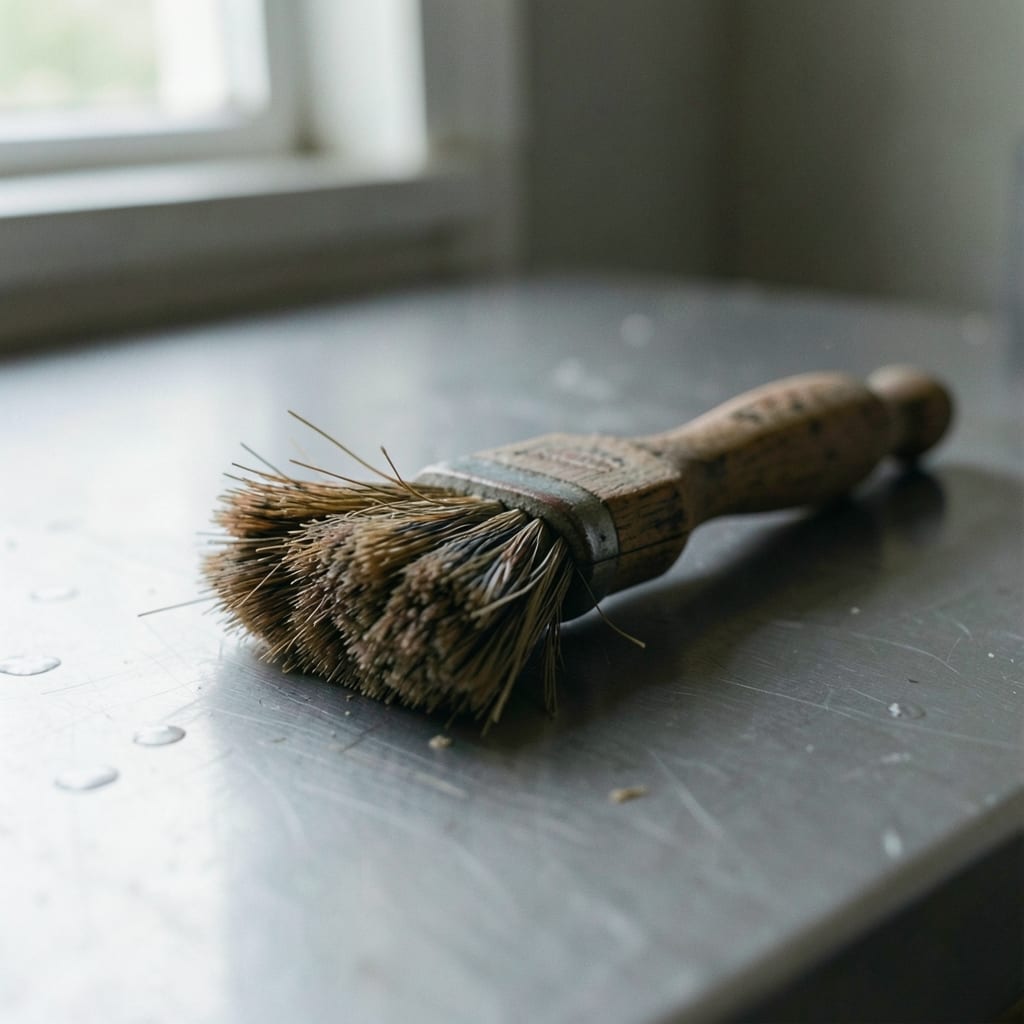
A half-used roll of parchment, the edges singed from too many times in the oven. The last sheet is torn at the corner, but it still works.
It’s the only thing that keeps my countertops from getting ruined. Every recipe that needs baking starts here—no matter how many times I’ve burned it.
What is not in the drawer
Some things were left out on purpose. This isn’t a professional kitchen, and that’s fine.
Deliberately absent
- A food scale—measurements are guesses, and that’s how flavor works.
- A thermometer—temperature is just a number until it’s in your mouth.
- A blender—some things need hands, not buttons.
- A recipe book—every dish here was made first, written second.
Behind the scenes

I am Clifford Nakamura, the founder and editor of Apple Recipes Pot. I’m the one who burns the first batch, tastes the second, and writes about the third.
I came to this from my abuela’s kitchen in New Mexico, where she’d scold me for not stirring enough and then take the spoon herself. She handed me the cast-iron skillet the day I turned 12—said it was time I learned how to hold a pan right.
This work has given me a permanent blister on my thumb from gripping the wooden spoon too tight, and I now notice every warped pot handle in every kitchen I walk into. I can’t unsee it.
I’m here to make sure every recipe feels like it came from someone’s hands, not a screen. The food is the point, and the rest is just how we get there.
Why any of this matters to you
These things—the skillet, the spoon, the dented pot—are why every recipe here tastes like it belongs in someone’s home. They’re not just tools; they’re the reason the food feels real.
When you read a page here, you’re not just getting instructions. You’re getting the weight of the spoon, the heat of the skillet, and the way my abuela used to say, *‘Taste it first.’*
Every dish here was made with these same hands and tools. That means no shortcuts—just flavor that sticks.
The recipes are grouped by category: Appetizers, Beverages, Breakfast & Brunch, Desserts, Main Courses and Reviews.