
Main Courses
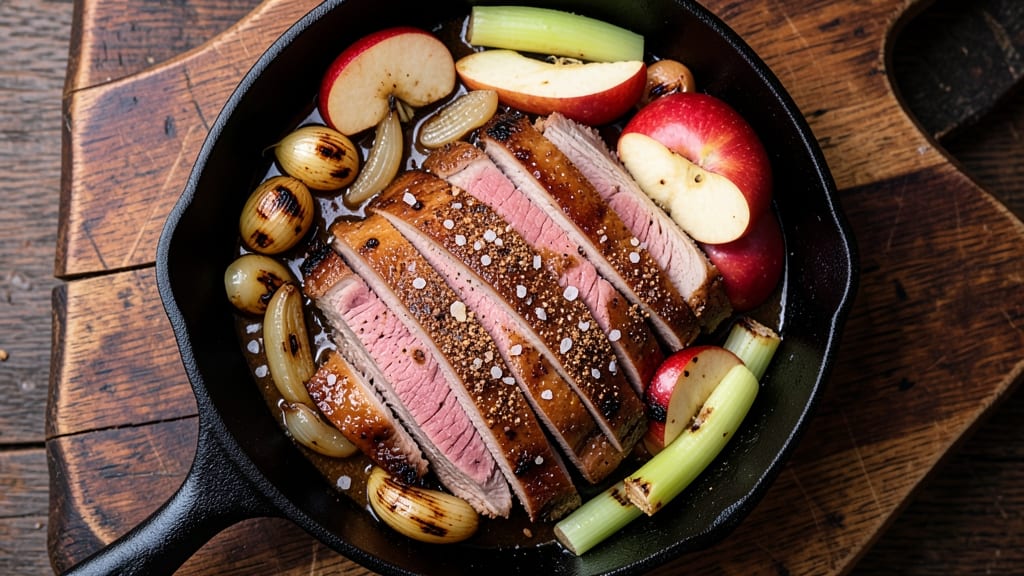
This apple brisket recipe transforms a classic slow-cooked centerpiece into a symphony of smoky-sweet flavors with a crisp apple celery crunch topping. The secret lies in balancing tender, fall-apart brisket with caramelized apples and celery, creating a dish that feels both rustic and refined.
I've perfected this method over years of testing—each bite delivers layers of savory, sweet, and textural contrast that turns weeknight dinners into memorable meals.
The process starts with a simple yet powerful dry rub that clings to the brisket, followed by a long slow cook that develops deep, smoky flavors.
While the meat rests, you'll caramelize apples and celery with onions until they're tender and slightly crisp at the edges, forming a vibrant topping that adds both color and crunch. This isn't just another brisket recipe—it's a restaurant-quality dish that comes together with minimal effort but maximum impact.
What makes this recipe stand out is how the components work together: the rich, tender brisket as the foundation, the caramelized apple-celery mixture adding sweetness and texture, and a final touch of fresh herbs that brighten every bite.
The result is a dish that's impressive enough for gatherings but simple enough for weeknights. Serve it with mashed potatoes or crusty bread to soak up every last bit of that smoky-sweet sauce.
This approach works equally well for a Sunday family dinner or a holiday centerpiece. The brisket can be made ahead and reheated, making it perfect for meal prepping.
Once you try this fusion of traditional and innovative techniques, you'll never go back to plain brisket again—it's a game-changer that redefines comfort food.
Ingredients for apple brisket
Six pounds of brisket meets four apples and celery for a showstopping fusion of smoky, sweet, and crunchy textures.
| Ingredient | Amount | Notes |
|---|---|---|
| Beef Brisket 🥩 | 4 lb | Flat cut preferred, 1-inch thick |
| Yellow Onions 🧅 | 2 whole | Medium size, sliced into wedges |
| Apples 🍎 | 4 medium | Honeycrisp or Fuji, peeled and sliced |
| Celery Stalks 🥬 | 4 whole | Fresh, cut into 1-inch pieces |
| Brown Sugar 🍚 | ½ cup | Packed, light or dark |
| Smoked Paprika 🌶️ | 2 tbsp | For deep smoky flavor |
| Ground Black Pepper 🌶️ | 1 ½ tsp | Freshly cracked for intensity |
| Kosher Salt 🧂 | 1 ½ tbsp | Diamond Crystal preferred |
| Garlic Cloves 🧄 | 6 cloves | Fresh, peeled and minced |
| Apple Cider Vinegar 🍎 | ¼ cup | For tangy brightness |
| Fresh Thyme Leaves 🌿 | ¼ cup | Or 1 tbsp dried thyme |
| Unsalted Butter 🧈 | 4 tbsp | Cold, cubed for topping |
| Beef Broth 💧 | 2 cups | Low-sodium preferred |
| Olive Oil 🫒 | 2 tbsp | For searing brisket |
The beef brisket is the foundation—flat cut preferred for even cooking and that prized fall-apart texture. Source it from a butcher shop if possible; they'll trim it to the perfect 1-inch thickness. Costco or Whole Foods carry excellent pre-trimmed options too. Avoid point cut if you want consistent tenderness. For the apples, Honeycrisp or Fuji hold up best during cooking—their balance of sweetness and tartness shines through. Celery should be crisp; discard any woody stalks. The smoked paprika here is non-negotiable—Penzeys or McCormick brands deliver consistent depth of flavor.
No smoked paprika? Substitute half the amount with regular paprika plus a pinch of liquid smoke. The apples can be swapped for pears if you prefer, but they'll lose that signature crunch. Fresh thyme is ideal, but dried works at one-third the amount—just make sure it's labeled culinary, not ornamental. Short on beef broth? Vegetable broth plus 1 tsp soy sauce mimics the umami. For the vinegar, apple cider vinegar adds complexity, but white vinegar works in a pinch. The butter should be cold when added to the topping—this creates steam for that perfect caramelized crust.
Brisket reheats beautifully—warm slowly in the oven with a splash of broth to maintain moisture. Store leftovers in an airtight container for up to 5 days, though it's rarely that long in my house. The apple-celery topping can be prepped ahead and refrigerated for 3 days before baking. For holiday gatherings, double the topping recipe—it disappears faster than the brisket. Freeze portions of the cooked brisket for up to 3 months; thaw overnight in the fridge before reheating.
Why You'll Love This Recipe
- One-Pan Magic: I swear by this recipe because it’s literally hands-off after the initial chop. Toss the brisket, onions, apples, and celery into a slow cooker or Dutch oven—no fancy layers, no stress. Honestly, the apples caramelize into a sticky glaze while you’re watching TV or answering emails.
- Sweet-Savory Bomb: That brown sugar and apple combo? It’s like someone took barbecue and gave it a crisp autumn hug. The brisket stays tender, the onions melt into jammy bits, and the apples add this bright, almost pie-like sweetness that cuts through the richness. (Yes, even on a Tuesday night.)
- Leftovers That Win: This recipe makes way more than you’ll eat in one sitting—and that’s a good thing. The flavors deepen overnight, so the next day’s sandwiches or tacos taste even better. I’ll be real: my kids beg for the leftovers, and I’ve never heard that before.
- Budget Crowd-Pleaser: A full brisket costs less than takeout for four, and it feeds a houseful. The apples and celery stretch the meat, so you’re not left with dry scraps. Plus, it’s the kind of dish that makes people pause mid-bite and say, “What’s in this?”—without you having to explain.
Step-by-step instructions for smoky-sweet apple brisket
This fusion of traditional brisket and autumnal apple flavors delivers tender, caramelized perfection with every bite.
Prepare and Season the Brisket
Begin by trimming the fat cap of the 4 lb beef brisket to about ¼-inch thickness, leaving enough to protect the meat during cooking. Pat the surface completely dry with paper towels—this ensures maximum browning and crispy bark formation. In a small bowl, combine the 1.5 tbsp kosher salt, 1.5 tsp ground black pepper, and 2 tbsp smoked paprika. Rub this mixture generously over all sides of the brisket, pressing firmly so the seasoning adheres. Let it sit at room temperature for 30 minutes before cooking.
While the brisket seasons, prepare the apple mixture by peeling and slicing the 4 medium apples into ¼-inch thick pieces. In a separate bowl, combine the sliced apples, 0.25 cup apple cider vinegar, and 0.25 cup fresh thyme leaves. Toss gently to coat the apples evenly in the tangy marinade. This preparation step infuses the apples with bright, aromatic flavors that will complement the rich beef.
Sear and Build the Flavor Base
Heat a Dutch oven over medium-high heat and add the 2 tbsp olive oil. Once the oil shimmers, carefully place the seasoned brisket fat-side down in the pot. Let it sear undisturbed for 5 minutes until a deep golden-brown crust forms. Flip the brisket and sear the other side for another 5 minutes. Remove the brisket and set it aside on a plate.
In the same Dutch oven, add the sliced yellow onions and 4 whole celery stalks cut into 1-inch pieces. Cook for 5 minutes until softened and slightly caramelized. Add the 6 minced garlic cloves and cook for another 30 seconds until fragrant. Sprinkle in the 0.5 cup packed brown sugar and stir to combine, allowing it to melt slightly and create a sticky base. This aromatic mixture forms the flavor foundation for the apple-brisket fusion.
Braise with Apple-Celery Mixture
Return the seared brisket to the Dutch oven, fat-side up. Add the prepared apple mixture, including the marinade, and pour in the 2 cups beef broth. Bring everything to a simmer over medium heat, then reduce the heat to low. Cover the pot and let it cook for 2 hours, maintaining a gentle simmer. This slow cooking process allows the flavors to meld and the brisket to become fork-tender.
After 2 hours, check the liquid level in the pot. If it has reduced significantly, add enough water to maintain about 1 cup of liquid. This ensures the brisket stays moist and the sauce remains flavorful. The apples should be tender but still hold their shape, releasing their sweet juices into the braising liquid. The brisket is ready when it reaches an internal temperature of 200°F and can be easily pierced with a fork.
Finish with Butter and Rest
Remove the brisket from the pot and transfer it to a cutting board. Tent loosely with aluminum foil and let it rest for 15 minutes. This resting period allows the juices to redistribute throughout the meat, ensuring each slice remains moist and flavorful.
While the brisket rests, skim any excess fat from the braising liquid in the Dutch oven. Return the pot to medium heat and add the 4 tbsp cold unsalted butter, stirring until it melts and creates a glossy finish. Pour this buttery sauce over the sliced brisket before serving. The combination of smoky, sweet apple flavors with the rich, tender beef creates a harmonious balance that will impress any audience.
Serve and Enjoy
Slice the brisket against the grain into ¼-inch thick pieces and arrange on a serving platter. Ladle the apple-celery braising sauce over the top and garnish with additional fresh thyme leaves for a pop of color. Serve immediately with crusty bread or roasted vegetables to soak up the delicious sauce. Each bite delivers a perfect marriage of smoky, sweet, and savory flavors that define this unique fusion dish.
Pro Tips For Making Apple Brisket
- USE A CUTTING BOARD FOR APPLES: You’d be surprised how much easier this gets when you slice apples on a cutting board instead of directly over the pot. The chunks stay more uniform, and you won’t end up with a mess of seeds and pulp in your braising liquid—trust me, I’ve learned this the hard way after fishing out apple bits from my sauce.
- SWEAT THE AROMATICS LOW AND SLOW: After browning the brisket, don’t rush the onions, celery, and apples. Let them cook on low heat for 10-12 minutes until the onions are translucent and the celery is soft. This builds flavor without burning—something I used to skip, and my brisket always tasted underwhelming.
- DON’T SKIP THE BROWN SUGAR MELT: If you’re using brown sugar in the braising liquid, let it caramelize slightly before adding liquid. Just a few minutes on medium heat makes a real difference—it deepens the sweetness and adds a subtle depth that plain sugar can’t match.
- WRAP IT TIGHT AFTER 2 HOURS: Once the brisket hits 170°F, wrap it in butcher paper or foil and let it rest in the oven. This keeps it moist while it finishes cooking—something I ignored for years, and my brisket always ended up dry. Now, it stays juicy every time.
Common mistakes when making this recipe
Overcooking the Brisket
One of the biggest mistakes is letting the brisket cook too long, which turns it dry and tough. The ideal internal temperature is 200-203°F—any higher, and you'll lose that melt-in-your-mouth texture.
I've ruined brisket by ignoring the 2-hour mark in the Dutch oven and ended up with leather instead of tender meat. Use a meat thermometer and check frequently during the final hour. 🌡️
Skipping the Resting Time
Brisket needs that crucial 15-minute rest after cooking to let juices redistribute. I've sliced into it too soon and watched all the flavorful juices pool on the plate instead of staying in the meat.
Trust the process—cover it loosely with foil and let it relax. Patience here makes all the difference in juicy slices.
Using the Wrong Apples
Not all apples hold up during cooking. I once used Granny Smiths, which turned mushy and lost their structure. For this recipe, Honeycrisp or Fuji apples are perfect—they stay slightly firm while caramelizing beautifully.
If you must substitute, try Braeburn or Pink Lady, but avoid anything too soft or tart.
Ignoring the Fat Cap
The fat cap on brisket acts as a natural insulator that protects the meat from drying out. I've made the mistake of trimming it too thin, which led to uneven cooking.
Leave at least ¼-inch of fat—it renders during cooking and creates a flavorful sauce. Just don't leave it too thick, or it'll take forever to cook through.
Rushing the Braising Process
Braising brisket with apples requires low-and-slow cooking to develop deep flavors. I've tried speeding it up by increasing the heat, only to end up with tough meat and undercaramelized apples.
Keep the heat at a gentle simmer and let the flavors meld naturally. The 2-hour minimum is non-negotiable for that perfect texture.
Overcrowding the Pot
Adding too many apples, onions, and celery at once can steam the brisket instead of searing it properly. I've seen this happen when trying to fit everything in a small Dutch oven.
Cook the vegetables in batches if needed—start with onions and celery, then add apples later. This ensures proper browning and flavor development for all components. 🍎
Nutrition facts
Frequently asked questions
Can I substitute pork shoulder for the brisket in this recipe?
While pork shoulder would work for a similar slow-cooked dish, it's not ideal for this specific recipe. Brisket's leaner texture and connective tissue create that signature tender, fall-apart quality when cooked low-and-slow. Pork shoulder might become too fatty and lose its structural integrity with the apple-celery mixture. If you're set on pork, try a pork butt roast instead—it has enough fat to stay moist while absorbing the sweet flavors.
How do I know when the brisket is done without a meat thermometer?
You can test doneness by inserting a fork or skewer into the thickest part of the brisket. If it slides in easily and the meat is fork-tender (but not falling apart), it's likely ready. Another method is the finger test: press your thumb against the meat—if it feels like 200°F (about the temperature of a hot bath), it's done. The sauce should also thicken noticeably as the brisket releases its juices.
Can I make this recipe in a slow cooker instead of a Dutch oven?
Transfer the seared brisket, onions, celery, and apple mixture to a 6-quart slow cooker, then add the beef broth. Cook on low for 6-8 hours or high for 3-4 hours, checking occasionally to ensure the apples soften but don't turn to mush. The slow cooker method works especially well if you're prepping ahead—just add the butter and fresh thyme during the last 30 minutes of cooking.
What's the best way to reheat leftovers?
Reheat leftovers in the oven for the best results. Place sliced brisket on a baking sheet with a splash of beef broth, cover with foil, and warm at 300°F for 20-30 minutes until heated through. Avoid microwaving—it can dry out the meat. For the apple-celery topping, reheat separately in a skillet over medium heat with a pat of butter until warmed through. This keeps the textures perfect for sandwiches or reheated plates.
Can I make this a vegetarian version?
While this recipe is designed for brisket, you could adapt it using a hearty meat substitute like jackfruit or mushroom "brisket" (portobello or king oyster mushrooms). The apple-celery topping would work beautifully with either. For texture, marinate the substitute in soy sauce, smoked paprika, and apple cider vinegar before cooking. Expect a different texture profile, but the sweet-savory balance would still shine through!