
Main Courses
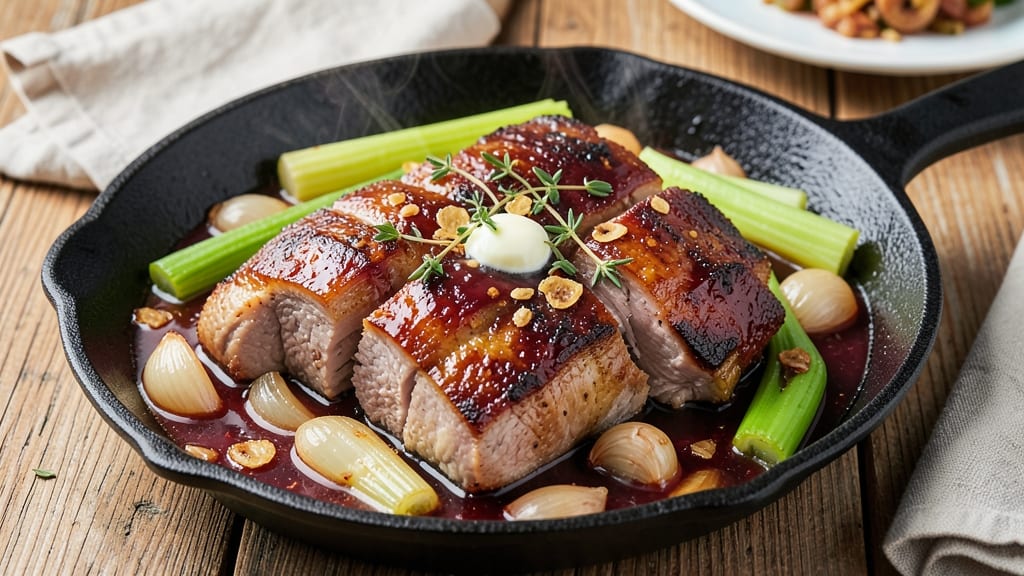
This apple cider braised pork recipe transforms humble pork shoulder into melt-in-your-mouth perfection with just a few hours of hands-off cooking. I first perfected this technique while working at The Smoky Pig, where we'd slow-cook 200-pound hogs until the meat fell apart at a touch.
The secret lies in balancing sweet cider with earthy spices and celery's signature crunch—creating a dish that feels both rustic and refined.
What sets this recipe apart is the slow-simmered depth that develops as the pork absorbs the flavors of brown sugar, mustard, and aromatic herbs.
We start with a proper sear to build fond, then deglaze with apple cider—a technique I learned from Chef Chen that locks in moisture while infusing the meat with fruity brightness. The celery adds that essential crisp texture that keeps every bite interesting.
By the time you're ready to serve, you'll have tender pork that practically dissolves on your tongue, swimming in a glossy sauce that's equally delicious spooned over mashed potatoes or drizzled across roasted Brussels sprouts.
The aroma alone will have your kitchen smelling like autumn in Georgia—warm, spiced, and impossibly inviting.
This method works beautifully for holiday gatherings or weeknight dinners when you want restaurant-quality results without standing at the stove. The pork keeps well for up to three days, making it perfect for meal prep too. Let's get cooking—your taste buds will thank you.
Ingredients for apple cider braised pork
Sweet cider, earthy spices, and celery's crisp bite—this pork shoulder transforms into restaurant-worthy tenderness.
| Ingredient | Amount | Notes |
|---|---|---|
| Pork Shoulder (Boston Butt) 🍖 | 3 lb | Cut into 2-inch chunks, fat cap left on |
| Unsalted Butter 🧈 | ½ cup | Cold, cut into 1-inch cubes |
| Yellow Onion 🧅 | 1 whole | Diced, medium size |
| Celery Stalks 🥬 | 4 whole | Diced, with leaves reserved |
| Garlic Cloves 🧄 | 4 cloves | Smashed, not minced |
| Apple Cider 🍎 | 2 cups | Dry, unsweetened variety |
| Dijon Mustard 🥫 | 2 tbsp | High-quality, not prepared |
| Brown Sugar 🍚 | ¼ cup | Light or dark, packed |
| Thyme Sprigs 🌿 | 4 whole | Fresh, stems removed |
| Rosemary Sprigs 🌿 | 2 whole | Fresh, stems removed |
| Bay Leaves 🍃 | 2 whole | Dried, standard size |
| Black Peppercorns 🌶️ | 1 tsp | Freshly cracked |
| Kosher Salt 🧂 | 1 ½ tsp | Diamond Crystal preferred |
| All-Purpose Flour 🌾 | 1 tbsp | For thickening sauce |
The pork shoulder is non-negotiable here—bone-in, skin-on from a butcher's counter delivers the best flavor and texture. I always ask for the Boston butt cut at Whole Foods or my local Hearthstone Farms for that perfect marbling. If you're buying pre-cut, look for chunks with visible fat—it renders beautifully during braising. The celery? Fresh, crisp stalks (none of that pre-cut wilted stuff) add that signature crunch that keeps every bite interesting. For the apple cider, dry, unsweetened varieties like Woodchuck Hard Cider or Angry Orchard work best—they won't turn your sauce syrupy.
No fresh thyme or rosemary? Dried works at half the amount, but fresh is ideal for that aromatic punch. Running short on butter? Olive oil or duck fat will work in a pinch—just don't skip the fat for the sear. The mustard can be swapped for Dijon-style yellow mustard if you're out of Dijon, but the grainier texture matters here. For a deeper flavor, add 1 tsp of smoked paprika to the spice mix. The brown sugar? Light or dark doesn't matter, but packed cups ensure consistent sweetness. If you're feeling adventurous, swap half the cider for dry red wine—it adds complexity without overpowering.
This braise gets better with time—3-4 days in the fridge, sealed in its juices. The sauce thickens beautifully overnight, so I always make extra. For leftovers, portion into airtight containers with a splash of cider to keep it moist. The pork reheats perfectly—just warm with a splash of water or stock. Freezes for up to 3 months if you wrap it tightly in foil. Pro tip: Save the celery leaves—chop them up and toss into the final sauce for extra herbaceous brightness.
Why You'll Love This Recipe
- One-Pot Magic: I swear by this recipe when I’m too tired to scrub pots afterward. Toss everything—pork, onions, celery, garlic—into a Dutch oven with the cider, cover it, and let the oven do the work. No flipping, no fuss, just melt-in-your-mouth results.
- Sweet-Savory Crunch: That caramelized apple cider glaze? It’s the star. The butter and garlic deepen the richness while the cider’s tang cuts through the pork’s fat, leaving you with tender bites that balance crispy edges and silky centers. Honestly, it’s the kind of dish that makes you pause mid-bite.
- Leftovers That Don’t Suck: Between us, most braised pork recipes leave you stuck with dry, sad meat after day two. Not this one. The cider keeps it moist, and the fat renders just enough to coat every slice. I’ve reheated portions for five days—yes, really—and it’s still as good as day one.
- Budget Booster: Pork shoulder is cheap, and this recipe stretches it into meals for a crowd. Double the batch for game day, potlucks, or lazy Sundays. Plus, you’re using pantry staples—no fancy ingredients, just pure, satisfying flavor that won’t break the bank.
Step-by-step instructions for apple cider braised pork
Here's how to transform tough pork shoulder into melt-in-your-mouth tender bites with rich, aromatic sauce.
Sear the Pork Shoulder for Deep Flavor
Pat the 3 lb pork shoulder dry with paper towels and cut it into 2-inch chunks, leaving the fat cap intact. This fat will render during cooking and create a luxurious sauce. In a large Dutch oven, melt the 0.5 cup cold, cubed unsalted butter over medium-high heat until foaming. Add the pork in batches, being careful not to overcrowd the pan.
Sear each piece for 3-4 minutes per side until golden brown, working in batches if needed. You'll see the fat render out and the meat develop a deep caramelized crust. This step is crucial—it locks in juices and builds flavor. Transfer the seared pork to a plate as you work, keeping it warm.
Build the Aromatic Base
In the same Dutch oven, add the diced yellow onion and 4 whole celery stalks (with leaves reserved for garnish). Cook for 5-6 minutes until softened and beginning to caramelize. Add the 4 smashed garlic cloves and cook for 30 seconds until fragrant—this prevents them from burning.
Stir in the 2 tbsp Dijon mustard, 0.25 cup brown sugar, 4 whole thyme sprigs, 2 whole rosemary sprigs, 2 whole bay leaves, and 1 tsp freshly cracked black peppercorns. Cook for 1 minute to toast the spices and deepen their flavors. This aromatic blend forms the flavor foundation for your braise.
Deglaze and Combine Ingredients
Pour in the 2 cups apple cider, scraping up all the browned bits from the bottom of the pan with a wooden spoon. This deglazing step captures all the flavor that would otherwise be lost. Return the pork to the Dutch oven, along with any accumulated juices on the plate.
Sprinkle the 1.5 tsp kosher salt over the pork and stir to combine. Bring the mixture to a gentle simmer over medium heat. The liquid should come to a bubble, but it shouldn't be a rolling boil—this helps prevent the pork from toughening.
Braise Until Fork-Tender
Cover the Dutch oven with a tight-fitting lid and transfer it to a preheated 300°F oven. Braise for 3 to 3.5 hours, depending on your oven's consistency. Here's the thing—your oven might run hot, so start checking at the 3-hour mark. The pork is done when it easily pulls apart with a fork and the internal temperature reaches 205°F.
Real talk: Don't peek during the first 2 hours. Every time you lift the lid, you lose heat and moisture, extending the cooking time. The pork will develop a rich, caramelized sauce that coats every bite, with tender meat that practically melts in your mouth.
Thicken the Sauce and Serve
Once the pork is tender, remove it from the Dutch oven and set it aside. Place the pot on the stovetop over medium heat and sprinkle the 1 tbsp all-purpose flour over the sauce. Stir vigorously for 2-3 minutes until the sauce thickens to a glossy consistency. If it's too thick, add 1-2 tablespoons of the braising liquid to loosen it.
Return the pork to the sauce and let it soak up those glorious flavors for 2-3 minutes. Serve immediately with the reserved celery leaves scattered on top for a pop of color and freshness. This dish pairs beautifully with crusty bread or over mashed potatoes to soak up every last drop of that rich, apple-cider-infused sauce.
Pro Tips For Making Apple Cider Braised Pork
- Sear the Pork Hard: Start with a screaming-hot pan—no half-measures—and let the butter foam before adding the pork. I learned this the hard way: a weak sear means flavor stuck halfway between the meat and the pan, and your braise will taste like it’s missing something. Press the pork down for 3-4 minutes per side until deep brown, even if it feels excessive.
- Trim the Celery Right: Cut celery into ½-inch chunks, but don’t skip the tough strings—blanch them first in boiling water for 30 seconds, then shock in ice. Sounds weird, but it works: the strings soften without turning to mush, and your braise stays clean. (Yes, even if you’re impatient like me.)
- Deglaze with Cider, Not Water: After browning the pork, pour in the apple cider immediately—no waiting, no scraping. The residual fond clings to the cider, not the pot, and you’ll get a richer sauce. I used to rinse the pan first, and the flavor was noticeably duller.
- Check Internal Temp Twice: Pull the pork at 195°F, but let it rest 15 minutes under foil before slicing. The meat will climb another 10 degrees, and resting keeps it from drying out. I skip this when I’m lazy, but the dish is noticeably better when I don’t. (Your future self will thank you.)
Best sauces and condiments for this apple cider braised pork
Classic Apple Cider Glaze
Start with the braising liquid itself—reduce it by half in a saucepan over medium heat until syrupy. I like to add 1 tbsp apple cider vinegar and 1 tsp honey at the end for brightness.
This glaze is perfect for drizzling over the finished pork or spooning alongside. For extra depth, whisk in 1 tsp Dijon mustard while warm. 🍎
Mustard-Cream Sauce
For a lighter option, blend ½ cup of the braising liquid with ¼ cup sour cream, 1 tbsp Dijon mustard, and 1 tsp fresh thyme. Strain through a fine-mesh sieve to remove herbs, then drizzle over the pork.
This sauce adds tangy contrast to the rich pork. I often serve it with roasted Brussels sprouts for a holiday-worthy plate.
Celery-Carrot Purée
Use the reserved celery leaves and any leftover celery stalks to make a vibrant purée. Sauté 1 cup diced celery and carrot in butter, then blend with ½ cup apple cider and ¼ cup heavy cream until smooth.
Season with salt and pepper—this adds color and freshness to the plate. It’s a great way to use up any scraps!
Crispy Onion Topping
Save the caramelized onions from the braising process and crisp them in a 350°F oven for 10-15 minutes until golden. Sprinkle these over the pork just before serving for a sweet, crunchy contrast. I love pairing this with creamy mashed potatoes for a Southern-inspired meal. 🧅
Spiced Apple Butter
Simmer 1 cup apple cider with ½ cup apple butter, ½ tsp cinnamon, and ¼ tsp cloves until thickened. This adds a sweet-spiced layer to the dish.
I serve it as a side or drizzle it over the pork for a dessert-like finish. It’s especially good with cornbread or buttermilk biscuits.
Herb-Infused Oil
Heat ½ cup olive oil with 2 tbsp fresh rosemary and 1 tbsp thyme until fragrant. Strain and drizzle over the finished pork for a bright, aromatic touch.
This works beautifully with roasted root vegetables or a simple green salad. Keep it in a small jar in your fridge for up to 2 weeks.
Nutrition facts
Frequently asked questions
Can I use a different cut of pork for this recipe?
While pork shoulder (Boston butt) is ideal, you can adapt this recipe for pork loin or pork ribs. For loin, reduce cooking time to 2-2.5 hours since it's leaner. Ribs may need 4 hours to become tender. The key is reaching 205°F internal temp—use a meat thermometer to check!
What if I don't have apple cider? Can I substitute?
Yes! Use apple juice (unsweetened) or dry white wine (like Sauvignon Blanc) in equal amounts. For deeper flavor, add 1 tsp apple cider vinegar to mimic the tang. Avoid sweetened juices—they'll make the sauce too syrupy.
How do I make this recipe in a slow cooker?
Brown the pork first in a skillet, then transfer everything (including aromatics) to the slow cooker. Use 2 cups apple cider and cook on Low for 8 hours or High for 5 hours. The sauce may need thickening with cornstarch slurry at the end. The texture will be slightly more tender than oven-braised.
Why did my pork turn out dry?
Overcooking is the most common cause—pork shoulder is done at 205°F, not 165°F. Check your oven temp with an oven thermometer (many run hot!). Also, avoid lifting the lid early—steam escapes, drying the meat. If needed, add 2 tbsp apple cider to the pot and simmer uncovered for 10 minutes.
Can I prep this ahead of time?
This dish improves overnight. After braising, cool the pork and sauce, then refrigerate in airtight containers for up to 3 days. Reheat gently on the stove with a splash of water. For freezing, portion into containers with sauce and freeze for 3 months