
Main Courses
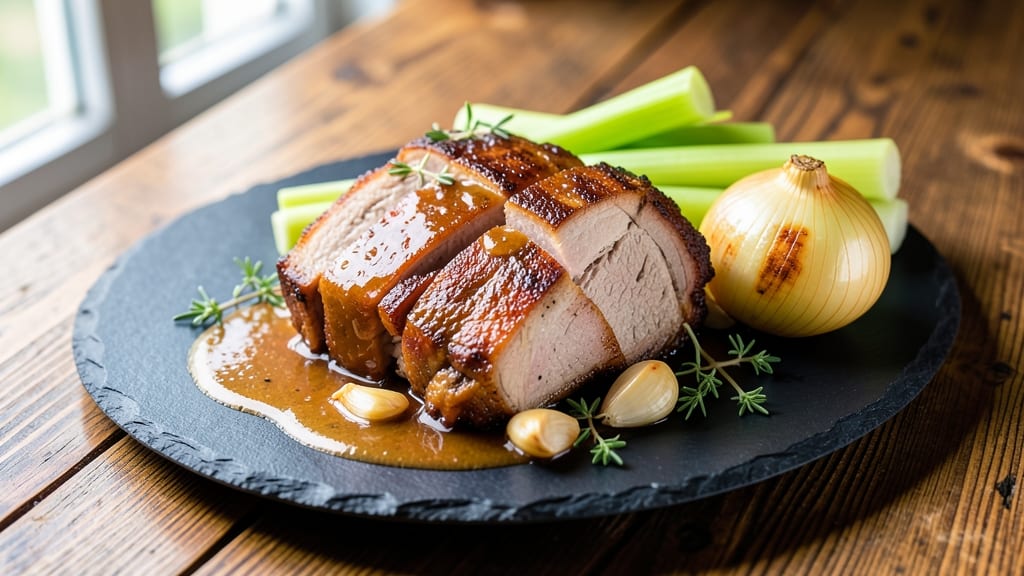
This apple cider pork shoulder recipe transforms a simple cut into a showstopping centerpiece that balances celery crunch and sweet-tart depth—the kind of dish that makes fall gatherings unforgettable.
I developed it after years of perfecting the balance between tender meat and caramelized apple cider glaze, a technique I first mastered while competing on the Southeast BBQ circuit.
The slow braise breaks down the pork into melt-in-your-mouth perfection while infusing it with the warm, aromatic notes of apple cider and fresh celery.
What sets this recipe apart is the dual texture approach: crisp-tender celery stalks add a satisfying crunch to every bite, while the pork remains impossibly tender.
The apple cider braising liquid reduces into a glossy, sticky glaze that caramelizes beautifully, creating pockets of sweetness that cut through the richness of the meat. This isn't just another pork shoulder recipe—it's a restaurant-quality centerpiece that comes together with minimal effort once you get the timing right.
By the time you're ready to serve, you'll have perfectly pulled pork that clings to the bone, bathed in that caramelized apple glaze with crisp celery adding texture contrast.
The aroma alone will have everyone gathering around your table, and the first bite delivers on that perfect balance of sweet, tangy, and savory. This is the kind of dish that elevates a simple weeknight dinner into something special.
Serve it with creamy mashed potatoes, roasted root vegetables, or a crusty bread for soaking up every last drop of that delicious glaze. The leftovers reheat beautifully too, making this an ideal make-ahead option for holiday gatherings or busy weeknights. Let's get cooking!
Ingredients for apple cider pork shoulder
Six ingredients transform humble pork shoulder into a fall centerpiece with crisp celery crunch and caramelized apple glaze magic.
| Ingredient | Amount | Notes |
|---|---|---|
| Pork Shoulder (Boston Butt) 🍖 | 5 lb | Bone-in, well-marbled preferred |
| Apple Cider 🍎 | 2 cups | Unfiltered, preferably local |
| Fresh Celery Stalks 🧅 | 4 whole | Thick, crisp varieties preferred |
| Yellow Onion 🧅 | 1 whole | Yellow or red, medium size |
| Garlic Cloves 🧄 | 6 cloves | Fresh, peeled and smashed |
| Fresh Thyme Sprigs 🌿 | 4 whole | Or 1 tbsp dried thyme |
| Fresh Rosemary Sprigs 🌿 | 2 whole | Or 1 tsp dried rosemary |
| Bay Leaves 🌿 | 2 whole | Dried, standard size |
| Kosher Salt 🧂 | 1 ½ tbsp | Diamond Crystal preferred |
| Black Peppercorns 🌶️ | 1 tsp | Freshly cracked preferred |
| Brown Sugar 🍚 | ½ cup | Light or dark, packed |
| Apple Cider Vinegar 🍋 | 1 tbsp | For tangy depth |
| Olive Oil 🫒 | 2 tbsp | For searing pork |
The pork shoulder is your star—look for a well-marbled, bone-in cut at Whole Foods or your local butcher. I always ask for the Boston butt because it stays juicier during the long braise. If you're buying from the grocery store, check the use-by date and avoid anything with grayish fat. The apple cider makes all the difference: unfiltered, preferably local cider has more depth of flavor. For the celery, thick stalks (like those from the outer rings) add the perfect crunch—skip the stringy inner stalks. Fresh herbs are ideal here, but if you're using dried, toast them briefly in a dry pan before adding to release their oils.
No fresh thyme? Dried works at one-third the amount—just remember it's more concentrated. Short on apple cider? Substitute with a mix of apple juice and a splash of vinegar for that tangy balance. The brown sugar can be swapped for maple syrup if you're avoiding refined sugar, though it'll be slightly less caramelized. For the vinegar, apple cider vinegar is best, but white vinegar in a pinch works too. The olive oil matters here—use a high-quality extra-virgin for searing; the cheaper stuff will smoke too much. If you're making this ahead, prep all the aromatics (celery, onion, garlic) and store them in the fridge until ready to braise.
This recipe tastes even better the next day—plan ahead and make it a day before serving. The pork keeps 4-5 days in the fridge, and the glaze thickens beautifully when reheated. For longer storage, freeze portions of the pulled pork (without the glaze) for up to 3 months. The celery can be prepped and stored in a sealed container for 3-4 days before adding to the braise. When reheating, add a splash of water or apple cider to keep the glaze from drying out—it should be sticky, not crusty.
Why You'll Love This Recipe
- Taste Like Autumn: That crispy bark on the pork? Pure magic. The apple cider tenderizes the meat while adding a tangy sweetness that makes every bite feel like a hug—especially when you bite into the juicy center.
- Game Day Hero: Between us, this is my go-to for tailgates or Super Bowl parties. The leftovers? Even better the next day, sliced thin on rolls or tossed into sandwiches. (Yes, even on a Tuesday night.)
- Budget-Friendly Feast: A whole pork shoulder feeds eight for less than $20, and the celery and onion stretch that flavor like crazy. Honestly, it’s the kind of meal where you’ll actually want to eat all the leftovers instead of tossing them.
Step-by-step instructions for apple cider pork shoulder
This slow-braised pork shoulder delivers melt-in-your-mouth tenderness with a perfect balance of sweet apple cider and savory herbs.
Prep and Sear the Pork Shoulder
Pat the 5 lb pork shoulder (Boston Butt) completely dry with paper towels—this is crucial for crispy bark. In a large Dutch oven, heat 2 tbsp olive oil over medium-high heat until shimmering. Place the pork shoulder fat-side down and sear undisturbed for 10 minutes, pressing gently with a spatula to keep it flat. Flip and sear the other side for another 10 minutes until deeply golden brown.
While searing, prepare the aromatics: Cut the 1 whole yellow onion into large chunks, halve the 4 whole fresh celery stalks lengthwise, and peel and smash the 6 cloves garlic. Remove the pork from the Dutch oven and set aside. The seared crust locks in juices and builds deep flavor—don't skip this step!
Build the Braising Liquid
In the same Dutch oven, add the onion, celery, and garlic to the rendered pork fat. Sauté for 5 minutes until softened. Stir in the 4 whole fresh thyme sprigs, 2 whole fresh rosemary sprigs, 2 whole bay leaves, 1.5 tbsp kosher salt, and 1 tsp black peppercorns. Cook for 2 more minutes until fragrant.
Deglaze with 2 cups apple cider and scrape up all the browned bits from the bottom—this is where all the flavor hides. Stir in the 0.5 cup brown sugar and 1 tbsp apple cider vinegar. The liquid should smell rich and complex, with notes of caramelized sugar and tangy vinegar. Return the pork to the Dutch oven, fat-side up.
Braise Until Fork-Tender
Cover the Dutch oven and transfer to a 325°F oven. Braise for 3 hours, then carefully flip the pork and continue cooking for another 3 hours. The pork is done when it reaches 203°F internal temperature and a fork slides in like butter. If the liquid reduces too quickly, add ½ cup water during cooking to keep it moist.
Here's the thing—patience is key. The pork needs time to break down into tender perfection. If you peek too early, the pork will dry out. Trust the process and let it work its magic. The final result should have a glossy, caramelized glaze and meat that practically falls apart.
Rest and Serve
Remove the pork from the Dutch oven and tent loosely with foil. Let it rest for 30 minutes before slicing—this allows the juices to redistribute. Skim excess fat from the braising liquid and reduce it over medium heat for 5-10 minutes until slightly thickened. Strain the liquid if you prefer a smoother sauce.
Slice the pork against the grain into ½-inch thick pieces. Serve with the reduced apple cider sauce spooned over the top. Each bite should deliver tender, juicy pork with a sweet-tart apple cider glaze and aromatic herbs. Pair with crusty bread to soak up every last drop of that flavorful sauce.
Pro Tips For Making Apple Cider Pork Shoulder
- BLISTER THE ONION FIRST: Slice the yellow onion into thick wedges and sear them cut-side down in the pot for 3-4 minutes before adding anything else. I learned this the hard way—skipping this step means your onions turn to mush instead of caramelized sweetness that cuts through the richness of the pork.
- USE FULL-STRENGTH CIDER: Skip the watered-down stuff—pour in the whole bottle of apple cider, even if it seems like too much. The acidity tenderizes the pork faster, and the flavor stays bold. (Yes, even if you’re feeding a crowd, the extra liquid evaporates by the end.)
- CHECK TEMP TWICE: Pull the pork off heat when it hits 195°F, then let it rest 15 minutes under foil. I used to slice into it early, only to find it still tough—patience here makes the difference between shredding like butter and fighting with a chewy mess.
- CHAR THE GARLIC: Smash the garlic cloves flat before adding them to the pot—this exposes more surface area for browning. After 2 minutes of sizzling, remove them and mash them into the cider with a wooden spoon. The nutty, toasted flavor elevates the whole dish. (No, you can’t just mince it raw.)
Make-ahead tips for this recipe
Prep Ahead for Perfection
Start by prepping all your aromatics the night before—chop the 1 yellow onion and halve the 4 celery stalks, then store them in a sealed container in the fridge. This saves 15 minutes of prep time the next day.
I also like to measure out all my spices and herbs in advance, keeping them in small jars on the counter. The pork shoulder can sit at room temperature for 1 hour before cooking, which helps it cook more evenly. 🌟
Slow Cooker Shortcut
For a hands-off approach, transfer the seared pork and braising liquid to a 6-quart slow cooker on low for 8-10 hours. The slow cooker maintains a consistent 225-250°F temperature, which is ideal for tenderizing the pork.
Just add ½ cup water if the liquid gets too low during cooking. The celery will soften but still add flavor—save crisp fresh celery for garnishing before serving.
Glaze Prep Strategy
Make the apple cider glaze a day ahead by reducing 2 cups apple cider with 0.5 cup brown sugar and 1 tbsp apple cider vinegar until syrupy. Store it in an airtight container in the fridge, then reheat gently before tossing with the cooked pork.
This step ensures you have a ready-to-use sauce that enhances every bite. I keep a jar of this glaze in my fridge for quick weeknight meals too. ✨
Storage and Reheating
After cooking, store the pork shoulder in its braising liquid in an airtight container for up to 5 days in the fridge. When reheating, warm it on the stovetop over low heat with a splash of apple cider or water to keep the glaze from drying out.
For leftovers, I like to shred the pork and mix it with the reduced glaze, then reheat until warmed through. The flavors actually deepen after a day of resting. ❄️
Freezer-Friendly Tips
For longer storage, freeze the pork shoulder in its braising liquid for up to 3 months. Thaw overnight in the fridge, then reheat gently on the stove.
The celery can be prepped and frozen separately in a sealed bag for up to 2 months, though it'll be softer when reheated. I always label my freezer containers with the date to keep track.
When ready to serve, simply reheat the pork and add fresh celery for that crisp texture. 💡
Make-Ahead Serving Prep
Set the table with all your serving dishes and utensils the night before so you're ready to plate as soon as the pork is done. Preheat your oven while the pork rests, so it's ready for any final touches.
I also like to prepare my sides ahead—like roasted root vegetables or mashed potatoes—and reheat them just before serving. This ensures everything comes together seamlessly, even with a crowd. 🍽️
Nutrition facts
Frequently asked questions
Can I use apple juice instead of apple cider in this recipe?
While you can substitute apple juice, you'll lose some depth of flavor. Apple cider has more complex notes from the fermentation process, plus a natural tanginess from the vinegar content. If using juice, add 1 extra tablespoon of apple cider vinegar to compensate for the missing acidity. For best results, stick with unfiltered apple cider—it makes all the difference in that caramelized glaze.
How do I know when the pork shoulder is fully cooked?
The pork is perfectly done when it reaches an internal temperature of 203°F and the meat falls apart easily with a fork. Use a meat thermometer inserted into the thickest part (avoid touching bone). The cooking time can vary—some cuts need 5-6 hours while others take 7 hours. The key is patience; don't rush it or you'll end up with dry meat.
What's the best way to serve this apple cider pork?
This dish shines with classic fall sides: creamy mashed potatoes, roasted Brussels sprouts, or crusty sourdough bread. For extra presentation, arrange slices on a platter with fresh celery ribbons and a drizzle of the reduced apple cider sauce. The contrast of crisp celery against tender pork makes every bite exciting. For a complete meal, add a simple arugula salad with lemon vinaigrette.
Can I make this recipe in a slow cooker?
Sear the pork first, then transfer everything to a 6-quart slow cooker on low for 8-10 hours. The slow cooker maintains consistent heat, which is ideal for tenderizing the meat. Add ½ cup water if the liquid reduces too much. The celery will soften but still contribute flavor—save crisp celery for garnishing before serving. This method is perfect for hands-off cooking.
How do I store and reheat leftovers?
Store the pork in its braising liquid in an airtight container for up to 5 days in the fridge. To reheat, warm on the stovetop over low heat with a splash of apple cider or water to maintain moisture. For leftovers, I like to shred the pork and mix it with the reduced glaze, then reheat until warmed through. The flavors actually deepen after resting! For longer storage, freeze for up to 3 months.