
Sauces & Condiments
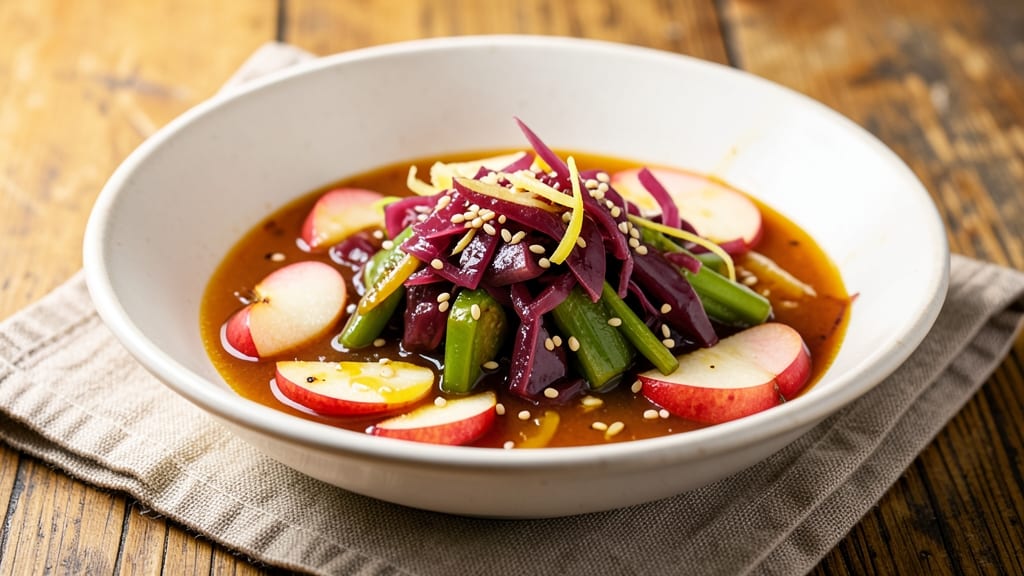
This apple kimchi sauce recipe transforms tangy fermented heat into a velvety, sweet-tart condiment that elevates every dish. The balance of crisp apple, spicy kimchi, and aromatic ginger creates a sauce that's equally at home as a dipping sauce for dumplings or a glaze for grilled meats.
I developed this recipe after craving a way to use up overripe apples and leftover kimchi—what started as an experiment became a pantry staple.
The secret lies in the fermentation process, which mellows the kimchi's sharpness while preserving its depth. Fresh apple adds natural sweetness that cuts through the heat, while garlic and ginger provide warmth and complexity. Ready in just 30 minutes, this sauce requires minimal effort but delivers restaurant-quality flavor.
The best part? It keeps well in the fridge for up to a week, making it perfect for meal prep.
What you'll end up with is a glossy, slightly thick sauce with layers of flavor—bright apple, funky kimchi, and a subtle heat from gochugaru. Drizzle it over noodles, use it as a marinade for chicken, or serve it alongside Korean fried chicken for dipping.
The versatility is what makes this sauce a game-changer in any kitchen.
For an extra depth of flavor, let the sauce sit overnight before using—this allows the ingredients to meld even more. Store it in an airtight container, and you'll have a ready-made condiment that transforms simple meals into something special. Let's make this sauce!
Ingredients for apple kimchi sauce
Nine ingredients balance fermented heat with sweet-tart apple perfection for a versatile sauce.
| Ingredient | Amount | Notes |
|---|---|---|
| Fresh Apples 🍎 | 1 ½ cups | Peeled, cored, finely diced |
| Kimchi 🥬 | 1 ½ cups | Packed, chopped, juices included |
| Gochugaru 🌶️ | 2 tbsp | Korean red pepper flakes |
| Garlic Cloves 🧄 | 4 cloves | Peeled, minced |
| Fresh Ginger 🌿 | 1 tbsp | Grated, finely |
| Apple Cider Vinegar 💧 | 2 tbsp | Unfiltered preferred |
| Brown Sugar 🍚 | 1 tbsp | Light or dark |
| Soy Sauce 🥢 | 1 tbsp | Light or dark |
| Sesame Oil 🫒 | 1 tbsp | Toasted sesame preferred |
| Salt 🧂 | ½ tsp | Kosher or sea salt |
The kimchi is the foundation here—look for bright red, juicy kimchi with visible vegetables, not the watery kind. Korean markets have the best selection, but the regular grocery store stuff works if it's fresh. Apples should be crisp (like Honeycrisp or Fuji) but not too tart—Granny Smith adds extra brightness. Gochugaru is non-negotiable for that signature heat; Maesil Food sells the best quality in the U.S. If you're using store-bought kimchi, drain most of the liquid first to avoid a watery sauce. The ginger and garlic should be fresh—no powdered substitutes here.
No gochugaru? Substitute with 1 tbsp chili flakes plus 1/2 tsp smoked paprika for depth. Running low on apple cider vinegar? White vinegar or lemon juice works in a pinch, but the apple adds a unique sweetness. The sauce can handle variations—more sugar for extra sweetness, more soy sauce for umami. For a smoother texture, blend the sauce after cooking. If you want extra thickness, add 1 tsp cornstarch slurry at the end. The sesame oil should be toasted—Trader Joe's carries a great affordable option.
This sauce thickens as it sits, so shake well before each use. Keeps for 1 week in the fridge, up to 3 months frozen in ice cube trays. Portion into small jars for easy use—perfect for meal prep. The flavor actually improves overnight, so make it the night before if you can. If the sauce separates, just stir it back together before using. Leftovers make an amazing marinade for tofu or grilled chicken.
Why You'll Love This Recipe
- Fewer Ingredients, Bigger Payoff: I swear by this combo—just apples, kimchi, and a pinch of gochugaru. No fancy pantry staples, no stressing over ratios. The apples soften the kimchi’s tang while the gochugaru adds that fiery depth with zero effort. Honestly, it’s the kind of recipe that makes me feel like a genius for how little I actually did.
- Sweet Heat Magic: That first bite? Crisp apple meets funky kimchi, then—boom—the garlic and ginger hit like a flavor bomb. The gochugaru doesn’t overpower; it lingers just enough to make your taste buds do a happy dance. Between us, this sauce is the reason I keep kimchi in my fridge now.
- Weeknight to Party Fix: Slather it on grilled cheese when you’re exhausted. Drizzle it over fried rice when you’ve got friends over. Even toss it with roasted chicken for a fancy-ish dinner that took 10 minutes. I’ll be real: my lazy Sundays and my "impress the in-laws" nights both thank me for this.
- Make Once, Use Twice: The leftovers? Chef’s kiss. Store it in the fridge for up to a week, and it only gets better as the flavors meld. Freeze half if you’re feeling extra—thaw it straight into stir-fries or noodles. Not the prettiest in a jar, but every spoonful is pure satisfaction. My wallet and my taste buds win.
Step-by-step instructions for apple kimchi sauce
Here's how to balance fermented heat with sweet-tart harmony in this vibrant sauce.
Sauté the Aromatics for Depth of Flavor
Heat a medium saucepan over medium heat and add the 1 tablespoon sesame oil. Once shimmering, add the 4 cloves minced garlic and 1 tablespoon finely grated ginger. Sauté for 1-2 minutes until fragrant and just beginning to turn golden—this prevents bitterness and builds the sauce's aromatic foundation.
Watch the heat carefully—ginger burns quickly. You'll know it's ready when you can smell that bright, citrusy aroma. Remove from heat immediately after it turns golden to preserve all those volatile compounds that carry the flavor.
Add Kimchi and Cook Until Juices Release
Return the pan to medium heat and add the 1.5 cups chopped kimchi with all its juices. Stir to combine and cook for 3-4 minutes until the kimchi softens slightly and its natural juices begin to release. This step develops the sauce's fermented depth and balances the acidity.
Don't rush this stage—you want the kimchi to break down just enough to release its tangy, umami-rich juices. The sauce should look slightly glossy and reduced by about ¼ cup from its original volume. If it's sticking to the pan, add 1 tablespoon water to help it release.
Incorporate Apples and Sweet-Tart Balance
Add the 1.5 cups finely diced fresh apples, 2 tablespoons gochugaru, and 1 tablespoon brown sugar to the pan. Stir well to combine and cook for 4-5 minutes over medium-low heat until the apples soften but remain slightly crisp with texture.
Here's where the magic happens—the apples' natural sweetness mellows the kimchi's sharpness while their acidity brightens the overall flavor. You'll see the sauce thicken slightly as the apples release their juices. Taste at this stage—you should detect a harmonious balance between sweet, tart, and fermented notes.
Finish with Acid and Umami Layers
Pour in the 2 tablespoons apple cider vinegar and 1 tablespoon soy sauce, stirring constantly. Add the 0.5 teaspoon salt and cook for another 2-3 minutes until the sauce reaches your desired consistency—it should coat the back of a spoon but remain pourable.
The vinegar adds brightness while the soy sauce deepens the umami profile. If the sauce is too thick, add 1 tablespoon water at a time until it reaches a smooth, glossy consistency. The final texture should be velvety with just enough body to cling to proteins or noodles.
Rest and Adjust for Perfect Balance
Remove the pan from heat and let the sauce rest for 5 minutes. This allows all the flavors to meld completely. Taste and adjust seasoning—add more gochugaru for heat, brown sugar for sweetness, or apple cider vinegar for acidity as needed.
For best results, let the sauce sit at room temperature for 1 hour before serving. This resting period enhances the flavor development, allowing the fermented notes to fully integrate with the sweet-tart profile. The sauce will keep in the refrigerator for up to 2 weeks, with flavors deepening over time.
Pro Tips For Making Apple Kimchi Sauce
- PEEL AND GRATE APPLES: Skip the core—it’s tough and bitter. Instead, cut the apple in half, scoop out the center with a spoon, then grate the flesh. The texture stays fine and even, and you avoid that weird, woody bite that ruins the sauce.
- USE AGED KIMCHI: Fresh kimchi is too sharp and watery for sauce. Dig into the back of the jar where it’s fermented longer—darker, funkier, and packed with flavor. If you’re in a pinch, squeeze out excess liquid first.
- TOAST GOCHUGARU FIRST: Dry-toast the gochugaru in a pan for 30 seconds until it smells nutty. This deepens the chili flavor without burning it. Just don’t walk away—it’s easy to turn it bitter.
- PULSE GINGER-GARLIC PASTE: Mince the garlic and ginger, then pulse them with a splash of water in a food processor until smooth. This distributes their oils evenly and cuts down on chunks that make the sauce gritty. (Yes, it’s messy, but worth it.)
Wine and beer pairings for this dish
Apple-Inspired Whites
Crisp white wines with citrus notes complement this sauce beautifully. A dry Riesling from Germany or Washington State shows off the apple's brightness while balancing the kimchi's funk. I love Dr. Loosen Blue Slate Riesling—its honeyed apple flavors mirror the sauce's sweetness.
For something lighter, try a Sauvignon Blanc with its zesty acidity, like Cloudy Bay Sauvignon Blanc from New Zealand. 🍷
Fruity Beers for Balance
Fruity lagers or wheat beers work wonders with this sauce. Hazy IPAs with apple notes elevate the dish—Three Floyds Apple Juice Hazy IPA pairs perfectly. For a lighter option, Blue Moon Belgian White with its coriander and apple flavors creates a refreshing contrast.
Avoid heavy stouts or dark ales that might overpower the sauce's delicate balance. 🍺
Korean-Inspired Liquors
For a unique twist, serve with soju or makgeolli. Chamisul soju's clean finish lets the sauce shine, while Tosok's slightly sweet profile complements the apple. Makgeolli (rice wine) adds a creamy texture that mirrors the sauce's velvety mouthfeel. Chill all spirits before serving for the best experience. 🥃
Non-Alcoholic Options
Don't drink alcohol? No problem. Sparkling apple cider like Martinelli's enhances the sauce's sweet-tart profile. For something bolder, try a ginger beer with its spicy kick—Firefly Ginger Beer adds a refreshing contrast. Even a simple sparkling water with lime keeps the flavors bright and crisp. 💧
Pairing Pro Tips
Let your drink sit at room temperature for 10-15 minutes before serving to enhance its aroma. For a cocktail twist, mix 1 oz soju with ½ oz apple cider vinegar and a splash of ginger beer—it's a perfect match for the sauce's complexity.
Always serve drinks slightly cooler than the sauce itself to balance the heat. ✨
Nutrition facts
Frequently asked questions
Can I use cooked apples instead of fresh ones?
Yes, but fresh apples work best for that bright, crisp texture. If you must use cooked apples, choose slightly undercooked ones (still firm) to avoid a mushy sauce. For extra flavor, simmer diced apples with 1 tsp cinnamon and 1 tbsp honey for 5 minutes before adding to the sauce.
How do I adjust the heat level in this sauce?
Start with 1 tbsp gochugaru for mild heat, 2 tbsp for medium, or 3 tbsp for spicy. For extra kick, add ½ tsp cayenne pepper or a dash of gochujang at the end. Taste as you go—kimchi's natural spice varies by brand, so adjust accordingly.
What can I do with leftover sauce?
This sauce is incredibly versatile! Use it as a marinade for grilled chicken or pork, a glaze for tofu or tempeh, or a dipping sauce for spring rolls or dumplings. For extra richness, stir in 1 tbsp melted butter before serving. It also makes a great pizza sauce—just thin with water if needed.
Can I make this sauce without kimchi?
Substitute kimchi with ½ cup sauerkraut (for tang) plus 1 tbsp fish sauce (for umami), or ½ cup pickled vegetables (like pickled radishes) with 1 tsp rice vinegar. The sauce will lose some funk but still deliver sweet-tart balance. For authenticity, try fermenting your own kimchi first!
Why does my sauce look watery?
Watery sauce usually means excess kimchi juice or undercooked apples. Simmer uncovered for 5-10 extra minutes to reduce the liquid, or stir in 1 tsp cornstarch slurry (mix ½ tsp cornstarch with 1 tsp water) to thicken. For prevention, drain kimchi well before cooking and use firmer apple varieties like Granny Smith.