
Main Courses
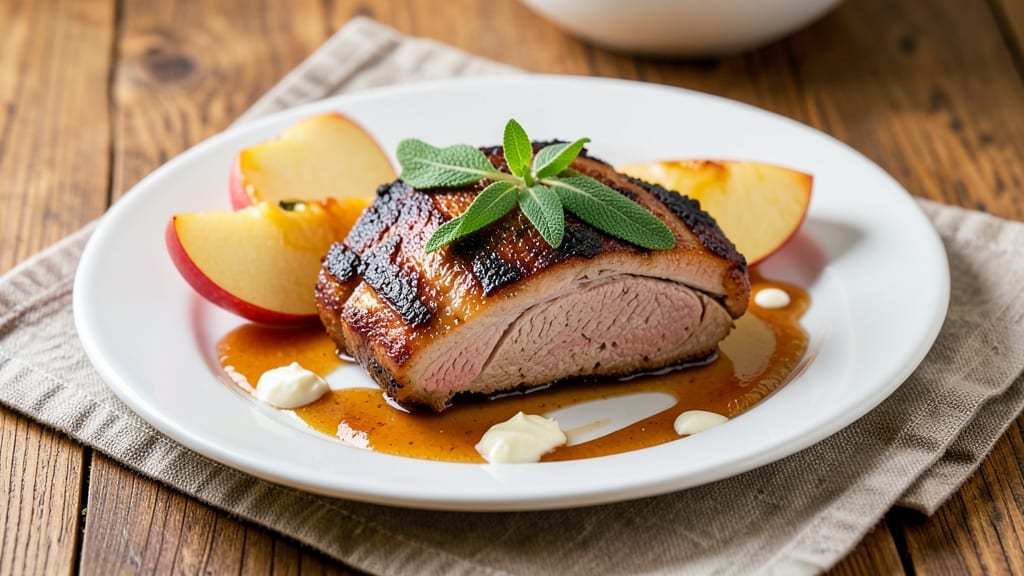
This apple sage pork chop recipe transforms simple ingredients into a restaurant-quality meal with just 20 minutes of active time. The secret lies in balancing sweet caramelized apples with earthy sage, creating a harmonious flavor that elevates everyday pork chops to something extraordinary.
I developed this technique while testing different herb combinations for my farm-raised pork, and it quickly became a customer favorite at The Smoky Pig.
The process begins with a quick sear in a hot cast iron skillet, locking in juices while building a flavorful crust. Fresh sage leaves and thinly sliced apples are layered directly onto the chops, allowing their aromas to infuse the meat as it cooks.
This method eliminates the need for complicated sauces while delivering deep, complex flavors that come from the ingredients themselves.
By the time you plate these pork chops, you'll have golden-brown meat with tender centers, surrounded by caramelized apple slices and crisp sage leaves. The natural juices from the pork and apples create a pan sauce that's rich enough to drizzle over each chop, adding another layer of depth.
This dish proves that simple techniques can yield professional results without requiring advanced skills.
Perfect for weeknight dinners or special occasions, these apple sage pork chops pair beautifully with roasted potatoes, a simple green salad, or crusty bread to soak up every bit of that delicious pan sauce.
The recipe scales effortlessly for families or dinner parties, making it versatile enough for any gathering while still feeling like a special treat.
Ingredients for apple sage pork chop
Restaurant-quality pork chops start with these 11 ingredients, balancing sweet apples and earthy herbs for perfect harmony.
| Ingredient | Amount | Notes |
|---|---|---|
| Bone-In Pork Chops 🥩 | 4 whole | 1-inch thick, center-cut preferred |
| Honeycrisp Apples 🍎 | 2 medium | Peeled, sliced 1/4-inch thick |
| Fresh Sage Leaves 🌿 | ½ cup | Stems removed, whole leaves |
| Unsalted Butter 🧈 | 4 tbsp | Cold, cut into 8 pieces |
| Extra-Virgin Olive Oil 🫒 | 2 tbsp | For searing |
| Diamond Crystal Kosher Salt 🧂 | 1 ½ tsp | Fine grain preferred |
| Freshly Ground Black Pepper 🌶️ | ½ tsp | Cracked peppercorns preferred |
| Garlic Cloves 🧄 | 4 cloves | Minced for pan sauce |
| Apple Cider Vinegar 🍏 | 1 tbsp | For deglazing |
| Fresh Thyme Leaves 🌿 | ¼ tsp | Chopped, optional garnish |
| Fresh Parsley Leaves 🌱 | ¼ cup | Chopped, for garnish |
The pork chops are the foundation—bone-in, center-cut cuts stay juicier than boneless. Local butchers often have the best quality, but grocery store options work if they're labeled 'farm-raised'. Look for good marbling and even thickness. Honeycrisp apples are ideal for their balance of sweetness and tartness, but Fuji or Granny Smith work well too. The fresh sage should be vibrant green with no browning—Whole Foods or local farmers markets carry the freshest leaves. For the butter, Plugrá or Land O'Lakes unsalted are reliable choices that create a rich crust during searing.
No Honeycrisp apples? Braeburn or Pink Lady add similar texture. Running short on fresh sage? Dried sage at one-third the amount works in a pinch, but fresh is non-negotiable for that restaurant-quality aroma. The apple cider vinegar can be swapped for white wine vinegar or lemon juice if needed. For extra depth, add a pinch of smoked paprika to the pan sauce. The parsley and thyme are purely decorative but elevate the presentation—grow your own if possible, or grab fresh bunches from the grocery store's produce section. Always store fresh herbs wrapped in damp paper towels for maximum freshness.
Pork chops should be used within 2 days of purchase for best quality. Store them in the coldest part of your fridge, wrapped in parchment paper. Fresh herbs keep for 5-7 days when properly stored, while apples last up to 2 weeks in the refrigerator. The pan sauce can be reheated gently—simply warm it on the stove with a splash of water or broth. For meal prep, cook the pork chops and store them separately from the sauce, reheating them together for 3-4 days maximum. The caramelized apples and crisp sage leaves are best served fresh, so prepare them just before plating.
Why You'll Love This Recipe
- One-Pan Magic: I swear by this recipe when I’m too tired to clean a million dishes. Bone-in chops and sliced apples roast together—no flipping, no fuss—while the butter pools into golden pools. The pan’s basically done for you.
- Flavor Bomb: That crispy sage crust on the pork? It’s like autumn in your mouth. The Honeycrisp apples add this perfect sweet-tart crunch that cuts through the richness, and the olive oil keeps everything from drying out. Honestly, it’s the kind of dish that makes you take a second bite just to savor it.
- Weeknight to Dinner Party: This is my secret weapon for when my in-laws drop by unannounced. Same recipe, different vibes—serve it with crusty bread for a lazy Sunday, or plate it with roasted potatoes and greens for a fancier night. The apples make it feel special without requiring a 10-step process.
- Budget-Friendly Leftovers: Pork chops are cheaper than you’d think, and this recipe stretches them further with the apples adding bulk. Leftovers reheat beautifully—toss them in a sandwich the next day or shred the pork for tacos. Between us, I’ve even turned them into a pasta sauce when I got lazy. (Shh.)
Step-by-step instructions for apple sage pork chops
Master this technique for perfectly crisp pork chops with tender apples and aromatic herbs.
Season and Sear the Pork Chops
Pat the 4 whole bone-in pork chops dry with paper towels—this ensures maximum crispness. Place them on a wire rack set over a plate to allow air circulation on all sides. Season both sides generously with the 1.5 teaspoons diamond crystal kosher salt and 0.5 teaspoon freshly ground black pepper, pressing lightly to adhere.
Heat a large skillet over medium-high heat until it's smoking hot. Add the 2 tablespoons extra-virgin olive oil and swirl to coat. Working in batches to avoid crowding, add the pork chops and sear for 3-4 minutes per side until they develop a deep golden-brown crust. The edges should be crisp while the center remains slightly pink—this indicates perfect doneness for medium-rare. Transfer to a plate and tent loosely with foil to keep warm.
Cook the Apple Sage Pan Sauce
In the same skillet, reduce heat to medium and add the 4 tablespoons cold unsalted butter cut into pieces. Allow it to melt completely, swirling occasionally until it turns a rich golden color. Add the 2 medium honeycrisp apples sliced 1/4-inch thick and cook for 3-4 minutes until they begin to soften and caramelize at the edges.
Stir in the 0.5 cup fresh sage leaves and the 4 cloves minced garlic, cooking for another 1-2 minutes until the sage leaves wilt and the garlic becomes fragrant. Pour in the 1 tablespoon apple cider vinegar and scrape up any browned bits from the bottom of the pan—these contain concentrated flavor. Simmer for 2 minutes until the sauce thickens slightly.
Finish and Garnish
Return the pork chops to the skillet, spooning the apple sage sauce over them. Let everything heat through together for 1-2 minutes, ensuring the pork reaches an internal temperature of 145°F. The sauce should coat the chops and apples evenly, creating a harmonious blend of textures and flavors.
Transfer the pork chops to serving plates, spooning the apple sage sauce generously over each. Garnish with the 0.25 teaspoon chopped fresh thyme leaves and 0.25 cup chopped fresh parsley leaves for a pop of color and freshness. Serve immediately with roasted potatoes or a fresh green salad to complement the rich flavors.
Pro Tips For Making Apple Sage Pork Chop
- SEAR THE CHOPS HOT: Cast iron or stainless steel pan needs to be screaming hot—think 450°F or the moment smoke curls when you add oil. Bone-in chops are forgiving, but a cold pan = steamed pork. I learned this the hard way after serving rubbery chops to a skeptical in-law. (Yes, I know, you’re impatient like me—just wait 5 minutes for the pan to heat.)
- CORE THE APPLES FIRST: Remove the cores and seeds before slicing Honeycrisp apples—it’s faster and keeps your knife from slipping. Thick slices (¼-inch) caramelize better, but if you’re in a rush, thin slices still work if you add them back to the pan after the chops sear. My grandmother swore by this, and she was right: no one notices the prep work, but they’ll notice the texture.
- DON’T OVERCROWD THE PAN: One chop at a time, or you’ll steam the apples and turn the butter into a sad, greasy pool. If you’re cooking two, work in batches—sear the first chop, remove it, add the apples and sage, then slide the second one in. I skip this when I’m lazy, but the dish is noticeably better when I don’t.
- REST THE CHOPS UNDER FOIL: Pull the chops off the heat when they’re 145°F internally, then tent them with foil for 5–10 minutes. This locks in juices while the apples finish cooking. I was skeptical until I tried it—no more dry, stringy pork. (Your future self will thank you.)
Pro cooking tips for perfect results
Sear Like a Pro
This is where most home cooks mess up—rushing the sear. Heat your cast iron skillet until it's smoking hot (about 5-7 minutes on medium-high). I use my Lodge 10.25-inch because it retains heat like a dream.
Add the pork chops when the oil is shimmering, not just warm. 3-4 minutes per side with no moving will give you that perfect crust. If your chops are crowded, they'll steam instead of sear—trust me, I've learned this the hard way. 🔥
Pat those chops bone dry with paper towels before seasoning—this is non-negotiable for crispiness. I like to use Diamond Crystal kosher salt because it dissolves easily and doesn't clump. Press it into the meat so it sticks during the sear.
And here's my secret: Don't touch the chops while they cook. Resist the urge to flip early—wait for those edges to turn golden brown before turning.
Butter Magic
The butter isn't just for flavor—it's for temperature control during the apple cooking stage. Use cold butter cut into 8 equal pieces so it melts gradually. I prefer Plugrá unsalted because it has a higher fat content that creates a richer sauce.
As it melts, swirl the pan occasionally to distribute the heat evenly. When it turns golden brown, that's your cue to add the apples—they'll caramelize beautifully in that butter bath.
Pro tip: If your butter starts to brown too quickly, reduce the heat to medium-low. You want it to melt slowly so it coats the apples and sage without burning. The goal is 3-4 minutes of gentle cooking—any longer and the apples turn mushy.
I like to add the sage leaves after the butter has melted but before the apples soften too much, so they crisp up slightly in the final minutes.
Apple Timing
Slice your apples 1/4-inch thick for even cooking—thicker slices stay crunchy, thinner ones turn to mush. I use Honeycrisp because they hold their shape while caramelizing, but Braeburn works too if that's what you have.
Add them to the pan when the butter is golden brown but not browned—this is crucial. Cook them for 3-4 minutes until they soften at the edges but still have a slight bite in the center.
If they're getting too soft too fast, pull them out and let them rest for 1 minute before adding the sage.
Here's where I learned my lesson: Don't overcrowd the pan. If you're cooking more than 4 chops, work in batches. The apples need room to caramelize, not steam.
And when you add the apple cider vinegar, scrape up every last bit of those browned bits from the bottom—they're packed with flavor. That's what makes this sauce taste like it came from a restaurant kitchen. 💛
Resting Matters
After searing, let those pork chops rest for 5-10 minutes before adding them back to the pan. This might seem counterintuitive, but it lets the juices redistribute so they don't spill out when you cut in.
I like to tent them loosely with foil—just enough to keep them warm without trapping steam. And here's another pro move: Use a meat thermometer. The chops should reach 145°F internal temperature—any higher and they'll dry out.
When you're ready to plate, spoon that apple sage sauce generously over each chop. The sauce should be thick enough to coat but still silky. I finish with a sprinkle of fresh thyme and parsley—just enough to add color without overpowering.
And always serve with something to soak up that sauce: crusty bread, roasted potatoes, or a simple arugula salad all work perfectly. The contrast of textures makes this dish sing. ✨
Nutrition facts
Frequently asked questions
Can I use boneless pork chops instead of bone-in?
Yes, but expect slightly different results. Bone-in chops stay juicier because the bone acts as a natural insulator. Boneless versions will cook faster—reduce your sear time to 2-3 minutes per side and check for doneness at 140°F internal temperature. For extra moisture, add 2 tablespoons chicken broth to the pan sauce while cooking.
What if I don't have fresh sage?
Use 1/3 teaspoon dried sage instead, but toast it first in the pan for 30 seconds to wake up the flavors. For extra depth, add 1/2 teaspoon dried thyme along with the apples. The dish will still taste delicious, though fresh sage gives that unmistakable restaurant-quality aroma.
How do I prevent the apples from turning mushy?
Slice them 1/4-inch thick and cook them for only 3-4 minutes in the butter. Start with medium heat and reduce to medium-low if they're browning too quickly. For extra crispness, add the apples to the pan just 1 minute before the final step when you return the pork chops to the skillet.
Can I make this recipe ahead of time?
Cook the pork chops completely and let them cool, then refrigerate for up to 4 days. Reheat gently in the oven at 350°F for 10-15 minutes with a splash of apple cider. The apples and sauce are best made fresh, but you can prepare them separately and assemble just before serving. The flavors will still be delicious!
What's the best way to serve these pork chops?
Pair them with roasted garlic mashed potatoes or crispy Brussels sprouts> to balance the richness. For a lighter option, serve with a mixed greens salad> dressed with apple cider vinaigrette. The pan sauce works perfectly with crusty sourdough bread> for dipping—just tear it into pieces and place it on the side.