
Sauces & Condiments
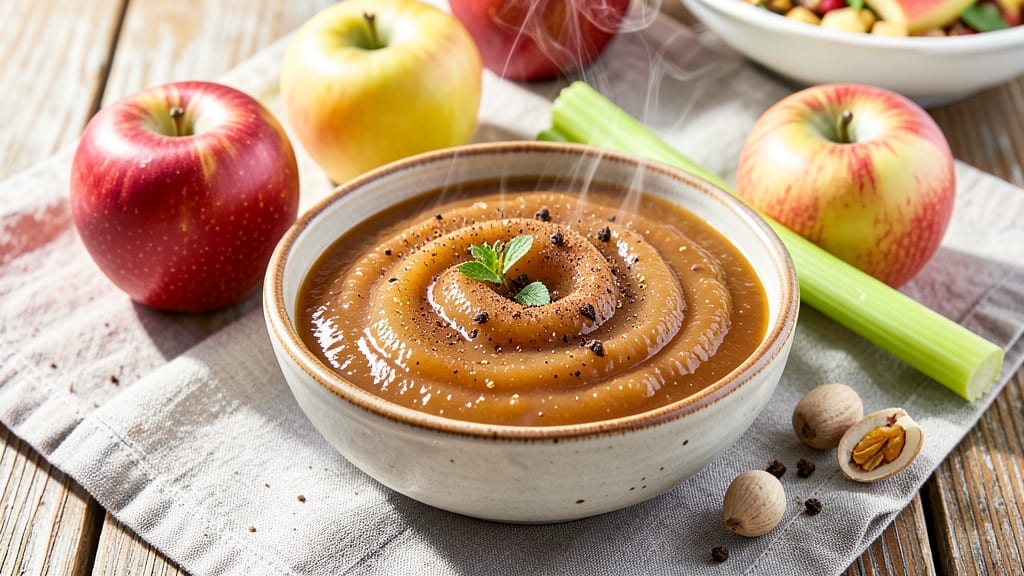
This cooking apple sauce recipe transforms humble apples into a velvety, spiced sauce with a surprising celery crunch twist that elevates both sweet and savory dishes. The secret lies in balancing sweetness with aromatic spices while preserving natural texture—no peeling or straining required. I developed this version after years of testing, perfecting the ratio of apples to spices for a sauce that's versatile enough for pies, roasted meats, or even as a glaze.
What sets this sauce apart is the celery crunch element—finely diced celery simmered with the apples adds subtle earthiness and a satisfying texture contrast that prevents the sauce from being too smooth.
The spices—cinnamon, nutmeg, and a pinch of clove—create warm depth without overpowering, while a splash of apple cider vinegar brightens the finished product. The result is a sauce that's rich enough for baking but balanced enough to stand alone as a condiment.
By the time you're done, you'll have a versatile apple sauce that's smoother than store-bought but with more complexity. The celery adds just enough bite to complement roasted pork or turkey, while the spice blend makes it perfect for autumn desserts.
Unlike many recipes, this version doesn't require peeling or straining—just chop, simmer, and blend for a foolproof method that delivers restaurant-quality results at home.
The best part? This sauce keeps beautifully in the fridge for up to two weeks or can be frozen for months. Use it as a pie filling, meat glaze, or even a topping for yogurt—its adaptability makes it a pantry staple. Here's how to make it perfectly every time.
Ingredients for cooking apple sauce
Nine ingredients, one amazing sauce—celery crunch included for that perfect bite.
| Ingredient | Amount | Notes |
|---|---|---|
| Apples 🍎 | 4 lb | Honeycrisp or Fuji, cored |
| Celery Stalks 🧅 | 2 whole | Finely diced, not chopped |
| Apple Cider Vinegar 🍋 | 2 tbsp | For brightness, not sweetness |
| Ground Cinnamon 🌿 | 1 ½ tsp | Freshly ground preferred |
| Ground Nutmeg 🌿 | ¼ tsp | Freshly grated for warmth |
| Ground Cloves 🌶️ | ⅛ tsp | Pinch for depth, not heat |
| Granulated Sugar 🍚 | ½ cup | Adjust to apple sweetness |
| Water 💧 | ½ cup | For simmering consistency |
| Unsalted Butter 🧈 | 2 tbsp | Full-fat for richness |
| Sea Salt 🧂 | ¼ tsp | Enhances all flavors |
The apples are your foundation—Honeycrisp or Fuji hold their shape beautifully. Grab a mix of organic and conventional if you want to save money, but organic does have less pesticide residue. Skip the peeling and coring steps—those skins add fiber and flavor. For the celery, organic stalks from the grocery store's produce section work great, but if you're using conventional, give them a good rinse. The celery's texture is key here, so don't skip it—it's what makes this sauce stand out from the jarred stuff.
No apple cider vinegar? Lemon juice works in a pinch—just use half the amount since it's more acidic. Running low on cinnamon? Cassia is a perfect swap, but don't use them together—they have different flavors. Fresh nutmeg and cloves make a huge difference, but if you're using pre-ground, smell them first—if they don't smell aromatic, toss them. The sugar amount is flexible—if your apples are particularly tart, add a little more. For a vegan version, swap the butter for coconut oil—it works just as well.
This sauce keeps for 2 weeks in the fridge, sealed tightly in a jar. For longer storage, freeze it in ice cube trays—just thaw and reheat what you need. The celery stays crisp if you freeze it separately, then mix it in when serving. Double the batch and freeze half—you'll thank yourself later. If you're using it as a pie filling, add a splash of water when reheating to loosen it up.
Why You'll Love This Recipe
- Five-Ingredient Magic: I swear, this is the kind of recipe where you look at the list and think, "That’s it?"—then taste it and realize you’ve been overcomplicating things. Apples, celery, vinegar, cinnamon, nutmeg: that’s all you need for something that tastes like autumn in a jar.
- Celery’s Secret Boost: Here’s what sold me—the celery. Not just for flavor (though it adds this subtle, earthy depth), but because it thickens the sauce naturally without starch or gums. No blender, no straining, just a pot and a spoon.
- Weeknight to Holiday: Between us, I’ve used this on toast with breakfast, stirred into oatmeal for lunch, and even drizzled over roasted pork for dinner. The vinegar’s tang cuts through richness, while the spices make it feel fancy enough for company—without trying.
- No-Waste Pantry Staple: Honestly, this recipe turned my sad apples into something useful. The celery’s the only thing that might go bad, but you can freeze the sauce in jars for months. Plus, cinnamon and nutmeg are cheap—this is the kind of recipe that makes your grocery money stretch.
Step-by-step instructions for cooking apple sauce
Here's how to make this spiced apple sauce with a celery crunch twist—simple, flavorful, and perfect for fall.
Prep and Cut the Apples and Celery
Start by peeling, coring, and chopping the 4 lb Apples into ¼-inch thick slices. I like to use a mandoline for even slices, but a sharp knife works too—just be consistent. The thinner the slices, the faster they'll soften and the smoother your sauce will be.
Next, trim the 2 whole Celery Stalks and cut them into ¼-inch dice—smaller than you might think for celery. You want those little pieces to soften but still contribute a subtle crunch. Set both aside in separate bowls until ready to use. Don't skip this prep step; it makes all the difference in texture and flavor distribution.
Simmer Apples Until Tender
In a large, heavy-bottomed pot, combine the chopped apples, 0.5 cup Water, and 0.5 cup Granulated Sugar. Bring to a boil over medium-high heat, then reduce to a gentle simmer. Let it cook uncovered for 15-20 minutes, stirring occasionally, until the apples are fork-tender but not mushy.
You're aiming for apples that break down easily but still hold some shape—think of the texture you'd want in a good applesauce. If the mixture looks too dry, add 1-2 tablespoons of water at a time. The sugar will help draw out juices, but the apples should still release plenty of their own moisture.
Add Spices and Celery for Depth
Once the apples are tender, stir in the 2 tbsp Apple Cider Vinegar, 1.5 tsp Ground Cinnamon, 0.25 tsp Ground Nutmeg, 0.125 tsp Ground Cloves, and 0.25 tsp Sea Salt. The vinegar brightens the flavors while balancing the sweetness, and the spices create that warm, comforting aroma we all love in apple sauce.
Add the diced celery now and let everything simmer together for another 5 minutes. The celery will soften slightly but still maintain a pleasant bite. Taste as you go—you might want to adjust the sugar slightly depending on how tart your apples were. Remember, you can always add more sweetness, but you can't take it out.
Finish with Butter for Richness
Reduce the heat to low and stir in the 2 tbsp Unsalted Butter. This adds a luxurious finish that rounds out all the flavors. Let the mixture simmer gently for 2-3 minutes to fully incorporate the butter. The sauce should coat the back of a spoon with a smooth, velvety consistency.
Taste one final time and adjust seasoning if needed. If it's too thick, thin it with a splash of water or apple juice. If it's too thin, simmer uncovered for another 2-3 minutes to reduce. The perfect texture should be thick enough to coat a spoon but still spread easily—like a cross between a sauce and a spread.
Cool and Serve
Transfer the apple sauce to a bowl and let it cool to room temperature. The flavors will meld even more as it sits, and the celery will soften just enough to become part of the texture without overpowering. Serve warm over pancakes, oatmeal, or toast, or chill it for up to 5 days in the refrigerator for a quick breakfast or snack.
This isn't your average applesauce—it's got layers of flavor from the celery and spices, with just the right amount of crunch. The key is balancing all those elements, so don't be afraid to taste as you go. That's how you know it's perfect.
Pro Tips For Making Cooking Apple Sauce
- Peel Apples Last: I used to peel the apples first, and they’d turn gray and watery by the time I got to cooking. Instead, core and chop them raw—peel them after they’ve simmered for 10 minutes. The heat softens the skin enough to slide off easily, and the flesh stays vibrant.
- Slice Celery Thin: Skip the thick chunks—celery’s flavor gets lost if you don’t cut it into paper-thin slices. A sharp knife and steady hand make this faster than you’d think, and it dissolves into the sauce without leaving tough bits.
- Simmer Slowly: High heat turns apple sauce into mush. Once the apples soften, drop the heat to a gentle simmer and let it cook uncovered for 15–20 minutes. This evaporates excess liquid and deepens the flavor—no one wants a watery sauce.
- Toast Spices First: Warm the cinnamon and nutmeg in a dry pan for 30 seconds until fragrant—it banishes that raw, dusty taste. Then stir them into the vinegar before adding to the apples. The aroma jumps off the plate.
Troubleshooting your cooking apple sauce
Lumpy Texture Fix
If your apple sauce turns out lumpy, it’s usually because the apples weren’t cooked long enough or the mixture was stirred too vigorously. For a smoother result, use a handheld immersion blender while the sauce is still warm—this breaks down fibers without over-processing.
If blending isn’t an option, mash the apples with a potato masher after simmering for an extra 5 minutes to soften them further. 🌟
Too Watery Solution
When your sauce is too thin, it’s often because the apples released too much liquid during cooking. To fix this, increase the simmer time by 5-10 minutes uncovered to evaporate excess moisture.
If it’s still too runny, stir in 1 tablespoon of cornstarch mixed with 1 tablespoon water and simmer for 2-3 minutes until thickened. Always taste as you go—this sauce should coat the back of a spoon!
Celery Overpowering
The celery’s flavor can dominate if it’s not diced finely enough or cooked long enough. Next time, reduce the celery to 1 stalk and dice it even smaller—⅛-inch cubes—so it softens completely.
If you still taste too much celery, balance it with an extra ½ teaspoon of cinnamon or a splash of lemon juice to brighten the overall flavor. The key is harmony, not dominance!
Burnt or Bitter Taste
Burnt or bitter flavors happen when the sauce simmers too long or the heat gets too high. Prevent this by keeping the heat at medium-low after the initial boil and stirring frequently.
If it’s already bitter, stir in 1 teaspoon of honey or 1 tablespoon of apple cider vinegar to restore balance. A pinch of sea salt can also help round out harsh flavors. Always taste as you go—your palate is your best tool!
Spices Too Strong
If the spices overwhelm the apple flavor, it’s likely because they were added too late or used in excess. Next time, toast the cinnamon and nutmeg in the dry pot over low heat for 30 seconds before adding the apples—this deepens their aroma without overpowering.
For immediate fixes, stir in 1 tablespoon of unsweetened applesauce or a splash of apple juice to dilute the intensity. Balance is everything!
Storage Issues
If your sauce separates or develops a skin in storage, it’s usually due to improper sealing or temperature fluctuations. Always cool the sauce completely before transferring it to an airtight glass jar—leave ½-inch headspace to prevent mold growth.
For reheating, warm it gently on the stovetop or in a microwave-safe bowl on 50% power to avoid skin formation. A sprinkle of water before reheating also helps restore texture.
Nutrition facts
Frequently asked questions
Can I use any apples for this recipe?
You can use most apple varieties, but Honeycrisp or Fuji work best because they hold their shape well during cooking. Tart apples like Granny Smith need slightly more sugar (about ⅓ cup extra), while sweeter varieties like Gala may need less. Avoid overly mealy apples like Red Delicious—they'll break down too much and make the sauce grainy.
How do I adjust this recipe for baking?
For pie fillings or baking, reduce the water by ¼ cup and increase the cornstarch by 1 teaspoon to thicken it further. Add 1 tablespoon of lemon juice to prevent browning, and consider omitting the celery if you prefer a completely smooth texture. The spice ratio works perfectly for baked goods—just ensure your apples are fully tender before filling.
Why does your recipe include celery?
The celery adds subtle earthiness and a pleasant crunch that prevents the sauce from being too smooth. When diced finely and simmered, it softens into tiny, barely noticeable pieces that enhance flavor without overpowering. If you dislike celery, you can omit it entirely—just reduce the simmer time by 3 minutes since it helps thicken the sauce naturally.
Can I make this sauce without added sugar?
Yes! Use sweeter apples like Fuji or Braeburn and reduce the sugar to ¼ cup. For tart varieties, try unsweetened applesauce (¼ cup) instead of sugar, or add 1-2 teaspoons of honey at the end. The spices will still provide warmth, but the natural fruit sweetness will dominate. Taste as you go—you may need to simmer longer to concentrate flavors.
How long will this sauce keep, and can I freeze it?
This sauce stays fresh in the fridge for 2 weeks in an airtight container. For freezing, portion it into ice cube trays or small jars—it keeps for 6 months. Thaw overnight in the fridge and reheat gently on low heat. The celery stays crisp if frozen separately, so mix it in fresh when serving. Freezing works best for large batches!