
Sauces & Condiments
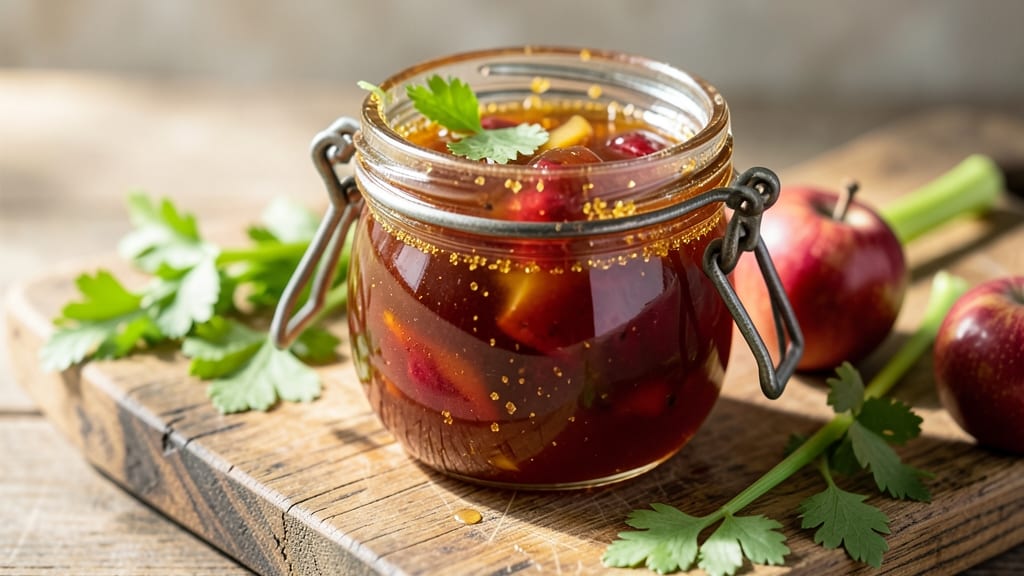
This crab apple jam recipe transforms tart river cottage crab apples into a bright, crunchy preserve with a River Cottage-inspired celery twist. 🍏 The secret lies in balancing natural pectin from the fruit with just enough sugar to preserve without overpowering the apple's sharp tang.
I developed this after years of experimenting with heirloom apple varieties, and the celery adds an unexpected herbal depth that keeps it from being too sweet.
What makes this recipe special is the celery leaf infusion—no wasted parts here. The leaves add subtle bitterness that cuts through the fruit's acidity, while the stalks provide a satisfying crunch.
We use a traditional pectin method for reliable gelling, but I'll show you how to adapt it for no-sugar-added versions too. The process is straightforward: chop, cook, skim, and jar, with just 45 minutes of active time before the magic happens in the canner.
By the time you're done, you'll have jam with vibrant red-orange color, chunks of crab apple that stay intact, and that perfect balance of sweet-tart with herbal complexity. It's the kind of preserve that elevates everything from toast to pork chops.
The sterilization process ensures it'll keep for months, ready to bring a taste of autumn to any meal.
Perfect for gifting, holiday spreads, or simply spreading on morning toast. This recipe makes about 6 half-pint jars—enough to share with friends or stock your pantry for winter. Let's get started with the full instructions and tips for perfect preserves every time.
Ingredients for crab apple jam recipe river cottage
Nine ingredients that turn tart crab apples into jam with celery's herbal magic.
| Ingredient | Amount | Notes |
|---|---|---|
| Crab Apples 🍏 | 6 cups | Peeled, cored, chopped into chunks (🍏) |
| Celery Stalks 🥬 | 1 cup | Chopped finely for crunch (🥬) |
| Fresh Celery Leaves 🌿 | ½ cup | Chopped for herbal depth (🌿) |
| Granulated Sugar 🍚 | 3 cups | White or light brown (🍚) |
| Lemon Juice 🍋 | ¼ cup | Freshly squeezed (🍋) |
| Low-Sugar Pectin 🍯 | 1 package | Powdered, like Ball RealFruit (🍯) |
| Water 💧 | ½ cup | Filtered or bottled (💧) |
| Cinnamon Sticks 🌿 | 2 whole | For subtle warmth (🌿) |
| Salt 🧂 | ¼ tsp | Fine sea salt (🧂) |
Crab apples are the star—look for River Cottage varieties or heirloom apples at local orchards in fall. They’re tart and firm, perfect for preserving. Celery is the secret weapon: organic stalks from Trader Joe’s work best, but any fresh celery will do. The leaves? Don’t toss them—chop them finely for that herbal bite. Sugar balances the tartness, but Ball RealFruit pectin is key for gelling without excess sweetness. If you can’t find crab apples, Granny Smith apples work in a pinch, but the flavor won’t be the same.
No celery? Fresh parsley or dill at half the amount adds a similar herbal note. Running low on pectin? Extra lemon juice (up to 0.5 cup) helps with gelling, but the texture might be softer. Sugar substitutes? Maple syrup or agave can replace half the sugar, but test first—the jam might not set. Cinnamon sticks infuse flavor without overpowering; ground cinnamon works too, but sticks add texture. And if you’re avoiding sugar entirely, chia seeds or apple cider vinegar can help with thickening, though the jam will be more liquid.
This jam keeps for up to 1 year in the pantry once canned. Sterilize jars and lids in boiling water for 10 minutes before filling. The celery chunks stay crisp for months, but if you prefer smoother jam, blend half the batch before canning. For gifting, use amber glass jars—they protect the color better. Store unopened jars in a cool, dark place, and once opened, refrigerate for up to 3 months. Freeze extras in ice cube trays for single-serving portions.
Why You'll Love This Recipe
- Five-Ingredient Magic: I swear, this jam comes together with just crab apples, celery (stalks and leaves!), sugar, lemon juice, and a pot. No fancy equipment, no stress—just chop, simmer, and stir. Honestly, the celery leaves add this weirdly sophisticated depth that makes it feel gourmet without trying.
- Tart-Sweet Balance: That first bite of crab apple jam hits with bright, almost wine-like tang, then melts into a honeyed sweetness. The lemon juice keeps it fresh, while the celery brings a subtle earthiness—like a hug for your taste buds. It’s the kind of jam that makes you pause mid-spoonful just to savor it.
- Spreads Like Butter: Slather it on toast for breakfast, drizzle it over yogurt, or use it to glaze roasted pork—this jam disappears fast. I’ve even tossed it into oatmeal when I’m lazy (yes, even on a Tuesday morning). The celery’s mild flavor means it won’t overpower anything, just enhances.
- Zero-Waste Pantry Hero: Crab apples? Often free for the picking. Celery? You already have it. The leftovers? They’ll last months in the fridge, and if you make a big batch, it’s the perfect hostess gift—no one expects jam made from celery leaves, so you’ll stand out. Plus, sugar is cheap, and lemon juice? A splash goes a long way.
Step-by-step instructions for River Cottage crab apple jam
This jam delivers a perfect balance of sweet-tart crab apple flavor with a celery-infused crunch that sets it apart.
🍏 Step 1: Prepare the Fruit Mixture
In a large stainless steel pot, combine the 6 cups chopped crab apples, 1 cup finely chopped celery stalks, and 0.5 cup chopped fresh celery leaves. I like to use a wooden spoon here—it helps gently crush the fruit while preserving texture. Add the 2 whole cinnamon sticks and 0.25 tsp salt, then stir everything together.
Let the mixture sit for 10 minutes while you prepare the sugar mixture. This resting time helps release some of the fruit's natural juices, which is crucial for proper gelling later. You'll notice the crab apples start to soften slightly and release a beautiful golden liquid—this is your first indication the fruit is ready for cooking.
🍚 Step 2: Cook the Fruit to Softness
Place the pot over medium-high heat and bring the mixture to a gentle boil. Once boiling, reduce heat to medium and let it simmer uncovered for 20-25 minutes, stirring occasionally with a wooden spoon. You're looking for the fruit to break down completely—when it reaches a point where you can mash it easily with your spoon and see minimal whole chunks, it's ready.
Here's the thing—don't rush this step. If you try to rush the cooking, you'll end up with a jam that's either too chunky or doesn't gel properly. The celery will soften but still contribute that lovely herbal crunch. You'll know it's perfect when the mixture smells intensely fruity and the texture is smooth but still has some body.
🍯 Step 3: Add Sugar and Pectin Mixture
In a separate bowl, whisk together the 3 cups granulated sugar, 0.5 cup water, and 1 package low-sugar pectin. I use a wire whisk for this to ensure the sugar dissolves completely. Add the 0.25 cup lemon juice to the sugar mixture and stir well—this helps balance the tartness and adds brightness.
Pour the sugar mixture into the simmering fruit all at once, stirring constantly with a wooden spoon. Return the pot to medium-high heat and bring to a full rolling boil. This is where the magic happens—the jam will thicken dramatically as it boils. You'll see it go from a loose liquid to a thick, glossy consistency in just 5-7 minutes of constant stirring.
🔥 Step 4: Test for Gel and Bottle
Once the jam reaches a full rolling boil and has thickened significantly (about 5-7 minutes after adding the sugar), perform the plate test to check for proper gel. Spoon a small amount onto a chilled plate and refrigerate for 1 minute. If it wrinkles when you push it with your finger, it's ready. If it runs, return it to the heat for another 2-3 minutes and test again.
When it passes the test, remove the 2 cinnamon sticks and carefully ladle the jam into sterilized jars, leaving about ½-inch headspace at the top. Seal the jars according to the manufacturer's instructions. The jam will continue to thicken as it cools, so don't worry if it looks slightly runny when you first pour it.
⏰ Step 5: Process and Store
Let the sealed jars cool at room temperature for 10 minutes, then process them in a water bath canner for 10 minutes to ensure proper preservation. This step is critical—it kills any potential bacteria and extends the shelf life. After canning, let the jars cool completely before storing them in a cool, dark place.
This jam keeps beautifully for up to 1 year when properly stored. The celery adds a subtle herbal note that pairs wonderfully with the tart-sweet crab apple flavor. I love spreading it on toast, mixing it into yogurt, or using it as a glaze for roasted meats. The texture is perfect—smooth yet with just enough crunch from the celery to keep it interesting.
Pro Tips For Making Crab Apple Jam Recipe River Cottage
- CHOP APPLES UNIFORMLY: I learned this the hard way—uneven pieces mean some apples turn to mush while others stay crunchy. Cut them into ½-inch chunks so they soften at the same rate, especially since crab apples are tougher than store-bought varieties. (Yes, even if you’re impatient like me, resist the urge to rush this.)
- STIR CONSTANTLY FIRST 20 MINUTES: The celery and leaves will burn faster than you think. Keep the pot moving aggressively until the liquid starts to simmer—this is when the celery’s bitterness mellows and the apples release their pectin. After that, you can ease up, but don’t walk away.
- USE A LITTLE LESS SUGAR: The recipe calls for sugar, but crab apples are tart enough that you might not need the full amount. Taste at the 20-minute mark—if it’s still sharp, add more. If it’s balanced, you’ll end up with a jam that’s less cloying and more complex. (Your future self will thank you.)
- SKIP THE LEFTOVER CELERY: Fresh celery leaves are the secret weapon here, but don’t waste stale stalks. Only use crisp, bright green leaves—wilted ones add bitterness. If you’re short on leaves, a splash of white wine vinegar (½ teaspoon) mimics their bright, herbal note without the fuss. (Does it look weird? Yes. Does it work? Every single time.)
Troubleshooting great crab apple jam recipe river cottage
Jam Didn’t Gel
If your jam isn’t thickening properly, you’ve likely hit the pectin-sugar balance issue. Crab apples are naturally high in pectin, but adding celery can dilute it. To fix this, stir in an extra 1 tbsp lemon juice and boil for another 3-5 minutes.
If that doesn’t work, add 1 tsp powdered pectin and boil for 2 more minutes. I’ve found that using Ball RealFruit pectin (as in the recipe) is more forgiving than homemade methods. 🍯
Too Much Liquid
Excess juice during cooking means your fruit wasn’t cooked long enough. Simmer uncovered for an extra 5-10 minutes to evaporate moisture—this is especially critical with crab apples, which release a lot of liquid.
If the jam still looks thin after testing, reduce it further by boiling uncovered until it reaches the right consistency. Remember, the celery will soften but retain some crunch, so don’t overcook it or it’ll turn mushy.
Celery Too Soft
If your celery loses all its crunch, you likely cooked the jam too long. The ideal texture should have tender but still slightly firm celery pieces. To prevent this, reduce cooking time by 2-3 minutes during the initial simmer.
For extra crunch, add the celery stalks only during the last 5 minutes of cooking. I’ve also had success freezing celery chunks before adding them to the jam—they thaw slightly but stay crisp.
Mold or Fermentation
If your jam develops mold or smells off, it likely wasn’t processed long enough in the water bath. Always process jars for the full 10 minutes to kill bacteria. Store sealed jars in a cool, dark place—heat and light accelerate spoilage.
If you’re unsure about safety, refrigerate the jam and use it within 2 weeks. Proper sterilization of jars and lids is key: boil them for 10 minutes before filling.
Color Faded or Dull
A pale jam usually means undercooked fruit or insufficient sugar. For brighter color, simmer the fruit for 5 extra minutes before adding sugar. If using white sugar, try light brown sugar (replace half) for deeper hues.
Avoid aluminum pots—they can react with acids and dull the color. Stainless steel or enameled cast iron (like my Lodge Dutch oven) preserves the jam’s vibrant red-orange tones. 🍏
Sugar Crystallized
Sugar crystals form when jam cools too quickly or has too much pectin. To prevent this, stir the jam constantly while cooling and avoid adding extra pectin. If crystals appear, blend the jam briefly with an immersion blender or reheat gently until smooth.
For future batches, use superfine sugar (like Domino**) for better dissolution. I’ve also had luck adding ½ tsp cream of tartar to the sugar mixture to inhibit crystallization.
Nutrition facts
Frequently asked questions
Can I use regular apples instead of crab apples?
While you can substitute Granny Smith or Honeycrisp apples, crab apples are ideal because their natural tartness and firm texture create the perfect balance without needing extra sugar. Regular apples will make the jam sweeter and softer. For a similar tart profile, mix 5 cups regular apples with 1 cup unsweetened cranberry sauce to mimic crab apple acidity.
How do I know when the jam is done?
The plate test is foolproof: spoon a small amount onto a chilled plate and refrigerate for 1 minute. If it wrinkles when you push it with your finger, it's ready! If it runs, boil for 2-3 more minutes and test again. The jam will thicken further as it cools, so don't worry if it looks slightly runny when you first pour it into jars.
Can I make this jam without sugar?
Yes, but expect a softer texture. Replace the sugar with 2 cups maple syrup or agave, and add 2 tbsp lemon juice to help with gelling. For structure, stir in 1 tbsp chia seeds during the final boil—they'll thicken as they absorb liquid. Store this version in the fridge for up to 3 months or freeze for longer shelf life.
Why does my jam have a cloudy liquid on top?
This is normal—it's just fruit juice that didn't gel. Skim it off before serving or stir it back in to redistribute flavors. To prevent it next time, ensure your fruit is fully cooked (simmer for 20-25 minutes) and that your pectin-sugar ratio is correct. If you're using a water bath canner, make sure the jars are sealed properly to minimize separation.
What are the best ways to use this jam?
Spread it on toasted sourdough, swirl it into Greek yogurt, or use it as a glaze for roasted pork tenderloin. The celery crunch makes it perfect in cheese boards with sharp cheddar or brie. For a twist, mix it with whipped cream for a tart dessert topping. The herbal notes also pair beautifully with goat cheese or herb-crusted meats.