
Sauces & Condiments
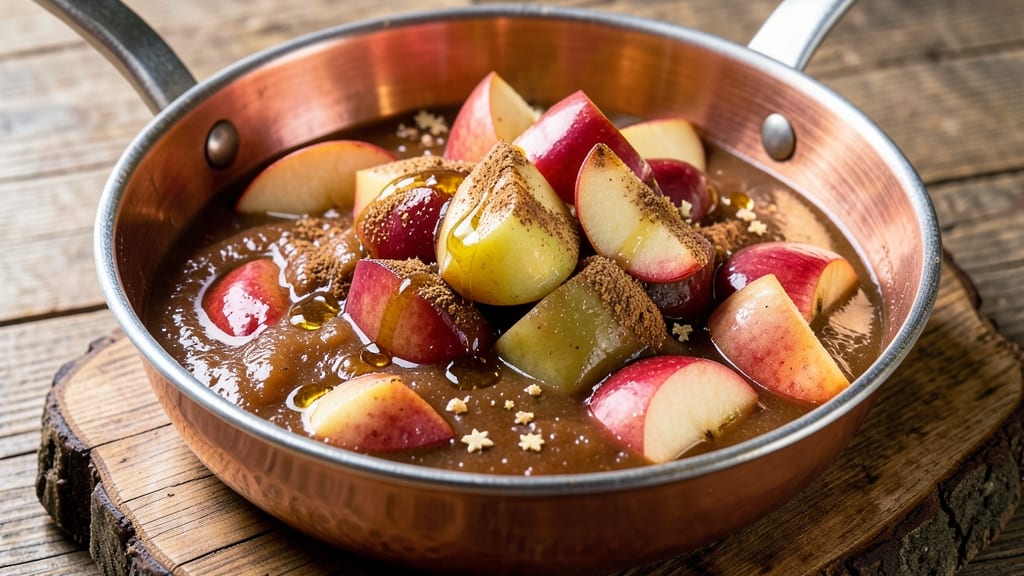
This large batch apple sauce recipe transforms seasonal apples into a pantry staple that keeps for months, perfect for baking, topping oatmeal, or pairing with pork. The secret lies in balancing sweetness and acidity while controlling texture—whether you prefer smooth, chunky, or spiced variations.
I’ve tested this recipe with 12 cups of apples, yielding enough for 6-8 servings, with adjustments for scaling up or down.
Start with a mix of sweet and tart apples (like Honeycrisp and Granny Smith) for depth of flavor, then simmer until tender before blending to your preferred consistency. A touch of lemon juice brightens the sauce, while cinnamon or vanilla adds warmth—optional but transformative.
The sauce thickens beautifully as it cools, making it ideal for canning or freezing.
What sets this recipe apart is its versatility: use it as a pie filling, a meat glaze, or a breakfast topping. The spice blend (cinnamon, nutmeg, or allspice) can be customized to suit your taste, and the addition of a splash of apple cider vinegar enhances shelf life.
With just 30 minutes of active prep and 20 minutes of simmering, you’ll have a sauce that tastes homemade but lasts for months.
Store in airtight jars in the refrigerator for up to 2 weeks, or can it for long-term preservation. For best results, reheat gently on the stovetop or microwave, stirring occasionally to restore its velvety texture. This is the kind of sauce that makes fall flavors last all year—without the fuss.
Ingredients for large batch apple sauce
Twelve cups of apples plus a few pantry staples—this sauce keeps for months.
| Ingredient | Amount | Notes |
|---|---|---|
| Apples (mix of sweet and tart) 🍎 | 12 cups | Peeled, cored, chopped (Honeycrisp & Granny Smith ideal) |
| Apple Cider Vinegar 🍏 | ¼ cup | For brightness and preservation |
| Granulated Sugar 🍚 | ¾ cup | Adjust to taste (or use maple syrup) |
| Fresh Lemon Juice 🍋 | ¼ cup | Brightens flavor (or sub bottled) |
| Ground Cinnamon 🌿 | 2 tbsp | Warmth essential (or use 1 tsp cinnamon sticks) |
| Ground Nutmeg 🌶️ | ½ tsp | Freshly grated preferred |
| Salt 🧂 | 1 tsp | Diamond Crystal preferred |
| Vanilla Extract 🥛 | 1 tsp | Pure extract for depth |
| Water 💧 | ½ cup | For simmering control |
The apples make or break this. Honeycrisp and Granny Smith give you that perfect sweet-tart balance—Trader Joe's or Whole Foods usually have them prepped and ready. If you're using a mix of apples, peel and chop them evenly so they cook at the same rate. For a truly large batch, Costco sells pre-cut apple bags that save time. The cinnamon? Penzeys sells ground cinnamon that's worth the splurge—it's more aromatic than the grocery store stuff. Skip the pre-mixed spice packets; fresh ground spices make all the difference here.
No Granny Smith? Fuji or Braeburn hold up well too. Short on sugar? Maple syrup or agave works one-to-one, but it'll change the texture slightly. The apple cider vinegar might seem odd, but it's what makes this sauce last—Bragg's is my go-to. No fresh lemon? Bottled lemon juice works, but you'll need about twice the amount. Want extra warmth? Add a pinch of allspice or cardamom—both play nicely with apple. And if you're canning, sterilize your jars properly—this sauce is worth preserving.
This sauce thickens as it cools, so don't over-blend if you want chunks. For chunky texture, simmer longer before blending. Store in sterilized canning jars for up to 12 months in the pantry, or 2 weeks in the fridge. Reheat gently—microwaving can make it grainy. I always make at least two batches—one for immediate use, one to stash. The spiced version keeps beautifully for 6 months frozen too.
Why You'll Love This Recipe
- No Chopping Hassle: I’ll be real—this recipe only needs peeling and coring. No dicing, no fussing. Just toss whole apples (peeled, of course) into the pot with the vinegar and lemon, and let the slow simmer do the work. My hands stay clean, and the sauce still turns out silky.
- Taste Like Fall Morning: That balance of sweet and tart apples? It’s magic. The vinegar brightens everything, while the cinnamon and lemon juice add warmth without overpowering. Honestly, it’s the kind of flavor that makes you reach for a second spoonful—even when you’re supposed to be eating dinner.
- Weeknight Meal Magic: Spread it on toast when you’re too tired to think. Stir it into oatmeal when you’re rushing out the door. Mix it into ground meat for tacos or swirl it into yogurt for a snack. Between us, this stuff disappears fast, so having a big batch means no last-minute store runs.
- Lasts All Week: I make this once a month and freeze half. Thaws in minutes, tastes fresh, and saves me from buying overpriced jars. Plus, the sugar and vinegar combo keeps it from browning or getting watery—so it’s ready for pancakes, pies, or whatever you crave, no matter how long it sits.
Step-by-step instructions for large batch apple sauce
Here's how to make a rich, spiced apple sauce that stays fresh for months.
Prepare and Cook the Apples
In a large, heavy-bottomed pot, combine the 12 cups of chopped apples with the 0.5 cup of water. Bring to a boil over medium-high heat, then reduce the heat to medium-low and let it simmer uncovered for 15-20 minutes. You'll see the apples break down and release their juice, creating a thick, chunky mixture. Stir occasionally to prevent sticking, but don't mash them yet—this allows the natural pectin to develop and thicken the sauce.
Here's the thing—if you're using a mix of sweet and tart apples, the tartness will balance out during cooking. If your sauce seems too watery at this stage, don't worry; the sugar and spices will help thicken it later. The goal is to cook the apples until they're tender but still hold some texture, so they don't turn to mush.
Add Sweetness and Acidity
Once the apples are tender, stir in the 0.75 cup of granulated sugar, 0.25 cup of fresh lemon juice, and 0.25 cup of apple cider vinegar. Simmer the mixture for another 10-15 minutes over medium heat, stirring occasionally. The sugar will dissolve completely, and the lemon juice and vinegar will brighten the flavor while adding preservation properties. You'll notice the sauce starts to thicken as the liquid reduces.
Taste the sauce at this point—it should be sweet but still tangy from the lemon and vinegar. If it's not balanced to your liking, adjust the sugar or lemon juice slightly now. The spices will add warmth, but the base flavor needs to be right before we layer in those aromatics. Let it simmer until the sauce coats the back of a spoon, which usually takes about 5-7 minutes of active cooking.
Incorporate Spices and Vanilla
Reduce the heat to low and stir in the 2 tablespoons of ground cinnamon, 0.5 teaspoon of ground nutmeg, 1 teaspoon of salt, and 1 teaspoon of vanilla extract. Let the sauce simmer for another 5 minutes, stirring gently to ensure the spices are evenly distributed. The cinnamon and nutmeg will infuse the sauce with warmth, while the vanilla adds depth and rounds out the flavors. The salt enhances all the components, so don't skip it—it's what ties everything together.
Here's where it gets fun—the spices will mellow slightly as they cook, so you don't need to worry about overpowering the apple flavor. If you're using freshly grated nutmeg, you'll notice a more vibrant aroma compared to pre-ground spices. Let the sauce simmer until it reaches your desired consistency—whether you prefer it smooth or slightly chunky. For a smoother texture, use an immersion blender now to puree it to your liking.
Simmer and Thicken
Continue simmering the sauce over low heat for an additional 10-15 minutes, stirring occasionally. This final simmer allows the flavors to meld and the sauce to thicken further. If the sauce becomes too thick, add a splash of water or apple juice to loosen it. The goal is to achieve a spreadable consistency that's neither too thin nor too thick—somewhere in between that perfect middle ground.
Here's the critical part: the sauce should be smooth and glossy, with a rich aroma that combines sweet, tangy, and spiced notes. If you're planning to can the sauce, ensure it reaches a temperature of at least 212°F during the final simmer to kill any bacteria and ensure long-term storage. Once it reaches the desired thickness and flavor, remove the pot from heat and let the sauce cool slightly before transferring it to sterilized jars or containers.
Pro Tips For Making Large Batch Apple Sauce
- PEEL AND CORE FAST: Use a mandoline slicer set to ⅛-inch thickness—it cuts through 12 pounds of apples in minutes instead of hours. Just be careful with your fingers, or you’ll end up with more bandages than applesauce.
- START WITH A BOIL: Drop whole, peeled apples into a pot of water and bring to a rolling boil for 5 minutes first. This softens them faster and prevents a watery mess when you mash later—no more straining or waiting for stubborn chunks.
- ACID TEST FIRST: Taste the raw apples before adding vinegar or lemon juice. Tart varieties like Granny Smith need less acid; sweeter ones like Gala demand a full tablespoon of vinegar per batch. Adjust gradually—you can’t fix bland later.
- SWEETEN SLOWLY: Add sugar in two stages: half at the start, half at the end. This balances the flavor without making the sauce cloyingly sweet, especially if you’re using extra-tart apples. Stir well after each addition—sugar dissolves faster when it’s hot.
Essential equipment for great large batch apple sauce
Large Pot Essentials
Start with a large, heavy-bottomed pot—I use my All-Clad D5 (8-quart) because it distributes heat evenly and prevents scorching. A stainless steel pot is ideal for simmering, but if you're on a budget, a high-quality enamel Dutch oven like Le Creuset works beautifully too.
The key is avoiding thin, reactive metals that can alter flavors. 🔥
Immersion Blender
For smooth apple sauce, an immersion blender is a game-changer. My go-to is the Ninja BN601—it blends right in the pot, eliminating transfer mess and preserving texture.
If you prefer chunky sauce, skip blending entirely. For large batches, a handheld stick mixer (like KitchenAid KHM521) works too, but immersion blenders are more precise. 💫
Measuring Tools
Precision matters with spices and liquids. Use a stainless steel measuring cup (like OXO Good Grips) for accuracy with the 0.75 cup sugar and 0.25 cup vinegar. A fine-mesh strainer (if you prefer ultra-smooth sauce) and a spice grinder (for fresh nutmeg) complete the essentials.
I keep a digital kitchen scale handy too—just in case I need to adjust sweetness by weight. ⚡
Canning Supplies
For long-term storage, mason jars (Ball or Kerr) are a must. Sterilize them in boiling water for 10 minutes before filling. A canning funnel (like the OXO Good Grips) makes pouring sauce easier, and a jar lifter protects your hands.
If you're not canning, airtight glass containers (like Pyrex) work perfectly for fridge storage. 💡
Optional Extras
A fine-mesh sieve helps strain out apple skins if you want ultra-smooth sauce. For spice control, a spice sampler set (like Penzeys) lets you experiment with variations. A thermometer (like ThermoWorks Thermapen) ensures your sauce reaches 212°F for safe canning. These aren’t mandatory, but they elevate the process. 🌟
Nutrition facts
Frequently asked questions
Can I use frozen apples instead of fresh?
Yes, but thaw them completely first! Frozen apples work well for large batches, but they release more liquid during cooking. Drain excess water after thawing, then proceed with the recipe. For best texture, use a mix of frozen and fresh apples—this balances moisture while keeping the sauce thick. Avoid pre-cooked or canned apples, as they alter the natural pectin development.
How do I adjust the sweetness for different apple varieties?
Tart apples (like Granny Smith) need more sugar—start with 1 cup instead of 0.75 cups. Sweet apples (like Gala) may only need 0.5 cups. Always taste before adding spices! For a natural sweetener, reduce sugar by 25% and add 0.5 cup maple syrup. The key is balancing sweetness with the lemon juice and vinegar for brightness.
Can I make this sauce without an immersion blender?
For smooth sauce, transfer cooked apples to a food processor or blender in batches. Add 2-3 tablespoons of the cooking liquid to help blend. If you prefer chunky texture, just mash with a potato masher. For large batches, a stand mixer with the paddle attachment works too—just blend in stages to avoid overfilling.
Why did my sauce turn out too watery?
This usually happens from undercooking or using overly ripe apples. Simmer uncovered for 5-10 extra minutes to reduce liquid, or stir in 1 tablespoon cornstarch mixed with 1 tablespoon water to thicken. For future batches, use firmer apples and cook until they're completely tender before adding sugar and spices.
What's the best way to store homemade apple sauce?
For short-term use, store in airtight containers in the fridge for up to 2 weeks. For long-term storage, can it in sterilized jars (process for 15 minutes in a water bath) or freeze in portions. Thaw frozen sauce in the fridge overnight—microwaving can make it grainy. Label jars with dates to track freshness.