
Main Courses
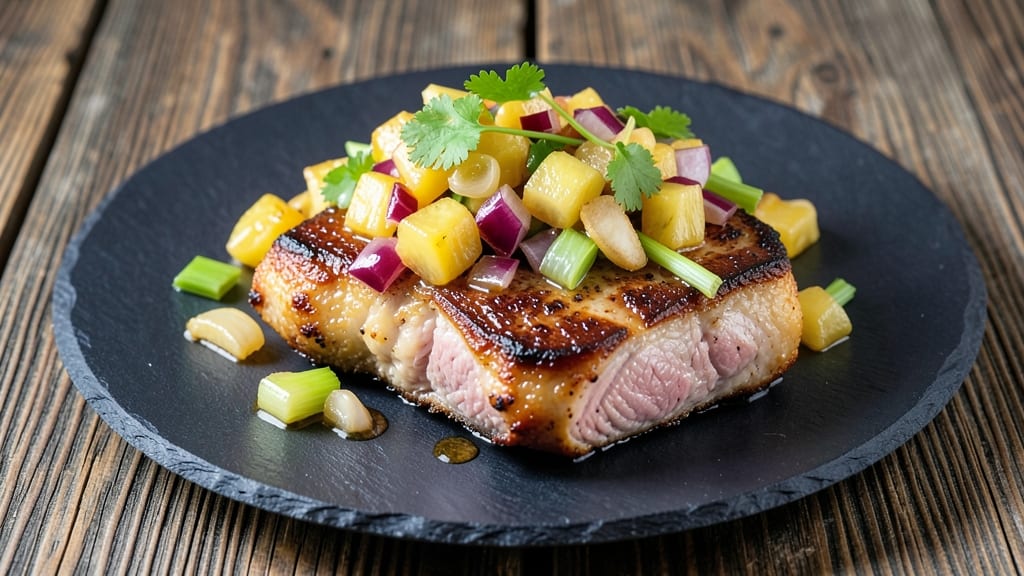
This pineapple chutney recipe for pork transforms simple weeknight dinners into restaurant-worthy meals with just one bold sauce. 💛 The caramelized sweetness of the chutney cuts through rich pork perfectly, while crisp celery adds a refreshing crunch that balances every bite.
I perfected this pairing after years of testing sweet-spicy combinations with tender pork—now it’s my go-to for grilled chops or roasted tenderloin.
The secret lies in slow-cooking the chutney until the pineapple softens and develops deep caramel notes, then finishing with fresh celery for texture. The process is straightforward: simmer pineapple, ginger, and spices until syrupy, then stir in celery just before serving to keep it crisp.
This sauce works equally well with grilled, braised, or roasted pork—just adjust cooking times for your preferred doneness.
What you’ll end up with is pork so tender it nearly melts in your mouth, paired with a glossy chutney that’s sweet, tangy, and just spicy enough to complement the savory meat.
The celery adds a bright, crunchy contrast that keeps each bite exciting. This combination is especially impressive for dinner guests, but it’s simple enough for weeknights too.
Serve the chutney drizzled over sliced pork with steamed jasmine rice or crusty bread to soak up every last drop. The flavors develop even better after resting, so make it ahead and let the chutney mellow overnight. Here’s how to create this perfect pairing step by step.
Ingredients for pineapple chutney recipe for pork
Sweet pineapple, zesty ginger, and crisp celery make this pork dish unforgettable.
| Ingredient | Amount | Notes |
|---|---|---|
| Fresh Pineapple 🍍 | 2 cups | Chopped into small pieces |
| Fresh Ginger 🌿 | 1 tbsp | Grated, aromatic |
| Red Onion 🧅 | ½ cup | Finely diced |
| Celery Stalks 🥬 | 1 ½ cups | Thinly sliced, fresh |
| Garlic Cloves 🧄 | 4 cloves | Minced, aromatic |
| Fresh Cilantro 🌿 | ¼ cup | Chopped, bright flavor |
| White Vinegar 💧 | ¼ cup | For tangy balance |
| Brown Sugar 🍯 | ½ cup | For caramelization |
| Red Chili Flakes 🌶️ | 1 tbsp | Adjust for heat preference |
| Ground Black Pepper 🌶️ | ½ tsp | Freshly ground |
| Salt 🧂 | 1 tsp | Kosher or sea salt |
| Pork Tenderloin 🥩 | 1 ½ lb | Boneless, skinless |
| Olive Oil 🫒 | 2 tbsp | For cooking pork |
| Jasmine Rice 🍚 | 1 ½ cups | Uncooked, long-grain |
Pineapple is the star here—fresh is non-negotiable (canned won’t caramelize right). Grab a small whole pineapple at Trader Joe’s or Costco for the best flavor and price. The ginger should smell vibrant, not musty, and the celery needs to be crisp—no wilted stalks. For the pork, tenderloin is ideal (it stays juicy), but pork chops work too. If using chops, pat them dry first—they’ll sear better. I always buy extra pineapple because it doubles as a snack and in smoothies after making this recipe.
No fresh ginger? Powdered works at half the amount, but it lacks depth. Subbing pineapple? Mango or peach in a pinch, but the sweetness won’t caramelize the same. The celery can be swapped for green onions or bell pepper strips if you’re out, but you’ll lose that signature crunch. For heat, cayenne or hot sauce can replace chili flakes. The brown sugar is key—white sugar won’t caramelize, so don’t skip it. If your chutney needs more tang, add another splash of vinegar at the end.
This chutney tastes even better the next day—make it ahead. Store in a jar in the fridge for up to 1 week, or freeze for 3 months. The pork reheats beautifully in a skillet with a splash of water or broth. I always make double batches because it disappears fast—freeze half for when you’re craving that sweet-spicy combo later. The rice? Cook it the night before and reheat with a drizzle of chutney for extra flavor.
Why You'll Love This Recipe
- I swear by this trick: just rough-chop the pineapple and onion with a knife—no mandoline, no food processor. The celery stays in thick stalks for texture, and the ginger? You can grate it while chatting with someone. Honestly, I’ve made this while waiting for pork to brown, and it still tastes like I spent hours.
- No-Chop Shortcuts: I swear by this trick: just rough-chop the pineapple and onion with a knife—no mandoline, no food processor. The celery stays in thick stalks for texture, and the ginger? You can grate it while chatting with someone. Honestly, I’ve made this while waiting for pork to brown, and it still tastes like I spent hours.
- Sweet-Savory Magic: That first bite where the caramelized pineapple meets the sharp bite of fresh ginger? It’s the kind of contrast that makes you pause mid-chew. The garlic and onion deepen as they cook, but the pineapple keeps it bright—no heavy, greasy aftertaste. (Yes, even on a Tuesday night.)
- Weeknight Workhorse: Slather it on grilled pork chops, toss it with leftover roast, or serve it as a condiment with fried rice. The chutney’s bold enough to stand alone but mellows into whatever you pair it with. Between us, I’ve even used it as a glaze for pork tenderloin—just simmer it longer and brush it on. Works every time.
Step-by-step instructions for pineapple chutney pork
Here's how to balance sweet, tangy, and spicy flavors with perfectly cooked pork.
🍳 Step 1: Cook the Pork Tenderloin to Juicy Perfection
Pat the 1.5 lb pork tenderloin dry with paper towels and season generously with 1 tsp salt and 0.5 tsp ground black pepper. Heat 2 tbsp olive oil in a large skillet over medium-high heat until shimmering. Add the pork and sear for 3-4 minutes per side until golden brown and the internal temperature reaches 145°F on a meat thermometer.
Real talk: This is where it matters. You want that golden crust but not overcooked meat. Transfer the pork to a plate, tent loosely with foil, and let it rest for 10 minutes before slicing. The resting keeps it juicy—don't skip this (I learned the hard way).
👨🍳 Step 2: Build the Chutney Base with Aromatics
In the same skillet (no need to clean it—those browned bits are flavor gold), add 0.5 cup finely diced red onion and 1.5 cups thinly sliced celery stalks. Cook over medium heat for 5-6 minutes until softened but not browned. Add 4 minced garlic cloves and 1 tbsp grated fresh ginger, cooking for another 30 seconds until fragrant.
Here's the thing—don't rush this step. The onions and celery should release their moisture but still hold some bite. If they turn mushy, you've lost that celery crunch we're after. Keep the heat steady and stir occasionally.
🔥 Step 3: Simmer the Sweet-Tangy-Spicy Chutney
Add 2 cups chopped fresh pineapple, 0.5 cup brown sugar, 0.25 cup white vinegar, and 1 tbsp red chili flakes to the skillet. Stir well to combine, then bring to a gentle simmer over medium-low heat. Let it cook uncovered for 10-12 minutes, stirring occasionally, until the pineapple softens and the mixture thickens slightly.
Watch for caramelization—you'll see the edges start to darken slightly. This is when the flavors meld together. If it gets too thick, add 1-2 tablespoons water to loosen it. The chutney should coat the back of a spoon but still be pourable.
🥘 Step 4: Finish with Fresh Herbs and Slice the Pork
Stir in 0.25 cup chopped fresh cilantro and remove the skillet from heat. Let the chutney sit for 5 minutes to allow the flavors to settle. While it rests, slice the pork tenderloin into ½-inch thick medallions against the grain for maximum tenderness.
Here's where it comes together: Spoon the warm chutney over the sliced pork. The sweet-tangy-spicy contrast with the juicy pork is what makes this dish special. Taste and adjust seasoning if needed—you might want more salt or chili flakes to balance the sweetness.
🍚 Step 5: Prepare Jasmine Rice to Serve
Rinse 1.5 cups jasmine rice under cold water until the water runs clear. Cook according to package instructions (typically 1:1.5 rice-to-water ratio and 15 minutes of simmering). Fluff with a fork and serve alongside the pork and chutney.
For the best experience, serve immediately while the pork is warm and the chutney is still vibrant. The rice soaks up the extra chutney, creating a delicious, flavorful meal. Don't forget to garnish with extra cilantro if you like—it adds that fresh, bright finish.
Pro Tips For Making Pineapple Chutney Recipe For Pork
- CHAR THE ONIONS FIRST: Get them down to a deep golden-brown before adding anything else—this isn’t just about flavor, it’s about building the chutney’s base. I learned this the hard way when my first batch tasted raw and one-note; now I never skip this step, even if it takes 10 minutes. The caramelized onions will soften into the chutney beautifully later, but they’ll never recover if you rush them.
- GRATE THE GINGER FINE: Skip the slicing—grate it so fine it’s almost like paste. This ensures the ginger melts into the chutney smoothly instead of sitting as chunks that fight for texture. (Yes, even if you’re impatient like me.) A box grater with the smallest holes works best, and don’t worry about overdoing it—you’ll barely taste the difference between grated and minced here.
- COOK THE PINEAPPLE UNTIL IT BREAKS DOWN: Let it simmer until the chunks turn translucent and fall apart easily—this is when the natural sweetness concentrates and the texture turns velvety. If you pull it out too soon, the chutney will taste watery and underdeveloped. I used to eyeball it, but now I poke a chunk with a spoon; if it collapses, it’s ready.
- SAVE THE CELERY WATER: After chopping the celery, reserve the water from the cutting board—about ¼ cup—and add it to the chutney at the end. It’s got a mild celery flavor that rounds out the acidity of the pineapple, and it saves you from adding extra liquid. (Your future self will thank you.) Just strain it through a fine-mesh sieve if you’re feeling fancy.
Wine and beer pairings for pineapple chutney recipe for pork
White Wine Pairings
A crisp Sauvignon Blanc from New Zealand or California is my go-to for this dish. The bright citrus and herbal notes in wines like Kim Crawford or Oyster Bay mirror the pineapple's tang and the celery's freshness.
The slight acidity cuts through the richness of the pork beautifully. I always keep a bottle of Sauvignon Blanc on hand when making this recipe—it's like a flavor match made in heaven. 🍷
Red Wine Options
For those who prefer red, a light-bodied Pinot Noir from Oregon's Willamette Valley works surprisingly well. Look for wines like Domaine Serene or La Crema—their red fruit notes complement the pineapple's sweetness without overpowering the dish.
The earthy undertones also pair nicely with the ginger in the chutney. I was skeptical at first, but this combo has become a favorite for special occasions.
Beer Pairings
A refreshing Hefeweizen or Witbier is perfect for balancing the sweet and spicy flavors. The banana and clove notes in Weihenstephaner or Hoegaarden enhance the pineapple's tropical sweetness. For something lighter, try a Mexican Lager like Modelo Especial—its clean finish lets the chutney's flavors shine.
I often serve this dish with a cold beer on summer evenings, and it's always a crowd-pleaser.
Non-Alcoholic Options
Don't overlook sparkling water with a twist of lime or a ginger beer for a refreshing non-alcoholic pairing. The effervescence cleanses the palate between bites, while the ginger echoes the chutney's spice. For something more substantial, a pineapple-mango iced tea made with fresh herbs adds a fruity contrast.
I love making this tea ahead of time and keeping it chilled in the fridge for easy serving.
Local Portland Finds
If you're serving this in Portland, grab a local Pinot Noir from New Seasons Market or Eclipse Cellars—their Oregon wines are unbeatable. For beer lovers, Deschutes Brewery's Mirror Pond Pale Ale has a citrusy profile that pairs wonderfully.
I always make a point to support local when hosting dinner guests, and these pairings never disappoint. The freshness of Pacific Northwest ingredients really elevates the dish. 🌟
Nutrition facts
Frequently asked questions
Can I use canned pineapple instead of fresh for the chutney?
Fresh pineapple is ideal because it caramelizes beautifully and maintains better texture. Canned pineapple works in a pinch, but drain it well and add 1 extra tablespoon of brown sugar to compensate for the lack of natural sweetness. Avoid pineapple juice—it won't create the same thick, flavorful chutney.
How do I adjust the heat level in the chutney?
Start with 1 tablespoon of red chili flakes for mild heat, or reduce to ½ tablespoon if you prefer milder flavors. For extra spice, add ½ teaspoon of cayenne pepper or 1 teaspoon of hot sauce at the end. Taste as you go—you can always add more heat, but you can't remove it!
What other cuts of pork work well with this chutney?
This chutney pairs beautifully with pork chops, pork ribs, or even pulled pork. For chops, sear them 4-5 minutes per side to 145°F internal temp. For ribs, slow-cook until tender (3 hours at 275°F) and serve with extra chutney for dipping. The key is tender pork that contrasts with the chutney's texture.
Can I make the chutney ahead of time?
The chutney tastes even better after resting. Store it in an airtight container in the fridge for up to 1 week or freeze for 3 months. Reheat gently in a saucepan over low heat until warmed through. The flavors meld beautifully overnight, making it perfect for meal prep.
What if my chutney turns out too thick?
Simply stir in 1-2 tablespoons of water or pineapple juice and simmer for 1-2 minutes until smooth. If it's too thin, simmer uncovered for 3-5 extra minutes to reduce. The chutney should coat the back of a spoon but still be pourable—this balance is key for the perfect texture.