
Sauces & Condiments
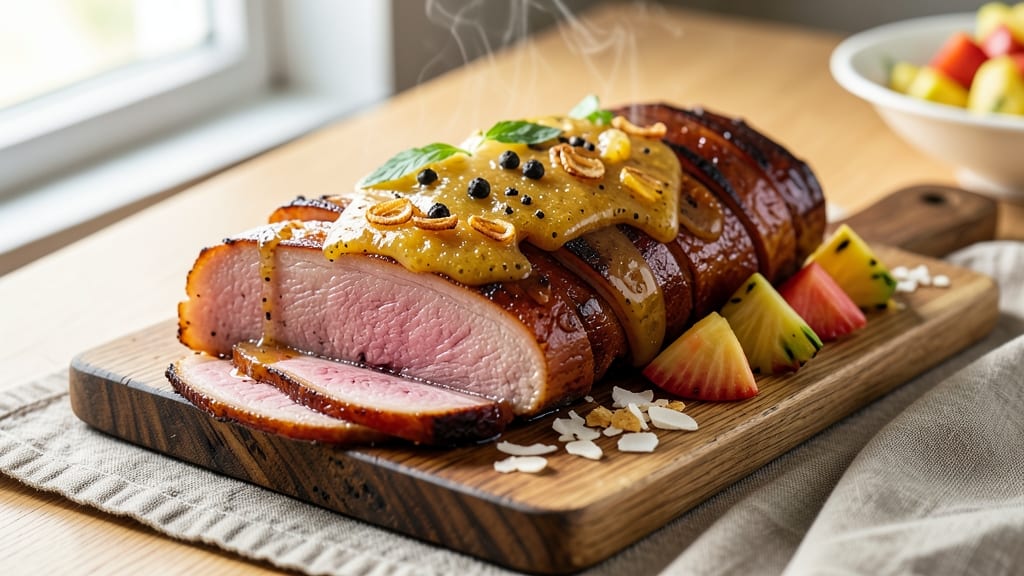
This pineapple sauce for baked ham transforms ordinary holiday meals into showstopping centerpieces with its glossy caramelized finish. The tangy-sweet balance comes from combining pineapple juice, brown sugar, and Dijon mustard, simmered until thick and syrupy.
What makes this sauce special is how it clings to the ham, creating that signature restaurant-quality shine while cutting through the richness of the meat.
The secret lies in the slow reduction—letting the sauce thicken gradually on the stove until it coats the back of a spoon. A splash of apple cider vinegar adds brightness, while warm spices like cloves and cinnamon deepen the flavor profile.
This isn’t just a sauce; it’s the finishing touch that elevates your ham from good to unforgettable, with every bite delivering that perfect harmony of sweet, tangy, and smoky notes.
By the time you’re ready to glaze your ham, this sauce will be smooth, glossy, and ready to caramelize beautifully under the broiler. The result? A ham with edges that practically glisten, every slice coated in that irresistible pineapple glaze that guests will ask about for years.
It’s the kind of sauce that makes holiday cooking feel like a celebration, not a chore.
Perfect for Thanksgiving, Christmas, or any special occasion where you want to impress without stress. The ingredients are simple, the method is straightforward, and the results are restaurant-quality. Let’s make this sauce—the star of your table.
Ingredients for pineapple sauce for baked ham
Simple pantry staples that turn ordinary ham into a showstopper.
| Ingredient | Amount | Notes |
|---|---|---|
| Pineapple Juice 🍍 | 1 ½ cups | Freshly squeezed preferred |
| Brown Sugar 🍚 | ¾ cup | Light or dark variety |
| Dijon Mustard 🧄 | 1 tbsp | High-quality for tang |
| Apple Cider Vinegar 🍎 | 1 tbsp | For brightness |
| Ground Cinnamon 🌿 | ½ tsp | Freshly ground preferred |
| Ground Cloves 🌶️ | ¼ tsp | Whole cloves crushed |
| Unsalted Butter 🧈 | 2 tbsp | Cold for glossy finish |
| Salt 🧂 | ½ tsp | Kosher or sea salt |
| Honey 🍯 | 1 tbsp | For extra depth |
Pineapple juice is the star here—fresh is ideal, but canned works in a pinch. Dole or Del Monte are solid choices if you're not squeezing fresh. The brown sugar should be packed (not scooped)—that means more moisture, which helps the sauce cling to the ham. For the spices, Penzeys or bulk bins at natural food stores give you the freshest ground cinnamon and cloves. Trust me, the difference is noticeable. If you're using whole cloves, crush them lightly with a mortar and pestle or the flat side of your knife—just enough to release their aroma, not turn them into powder.
No pineapple juice? Coconut water or orange juice adds sweetness, but you'll need to add a splash more vinegar to keep the tang. Substituting honey for sugar? Use half the amount—it's sweeter, so you'll need to balance with extra vinegar. The Dijon mustard is non-negotiable here—it's what gives the sauce that signature depth. If you're avoiding mustard, yellow mustard at half the amount works, but you'll lose some complexity. For a deeper flavor, toast your spices in a dry pan for 30 seconds before adding them to the sauce—it brings out their warmth. And if you're worried about the butter separating, whisk it in at the very end over low heat.
This sauce keeps beautifully. Store it in an airtight container in the fridge for up to 2 weeks, though it's best used within 5 days for maximum gloss. If you're prepping ahead, make it a day in advance—the flavors meld even better. For the broiler finish, use within 2 hours of making it so it caramelizes properly. If you end up with extra sauce, it's fantastic drizzled over pancakes or stirred into yogurt for a tangy breakfast topping. The butter gives it that irresistible shine, so don't skip it—just make sure it's cold when you add it at the end.
Why You'll Love This Recipe
- Pantry Magic: I swear by this sauce because it uses stuff I already have—no special trips to the store. That tangy Dijon mustard and warm cinnamon? They’re the secret players that turn a basic ham into something special without breaking the bank.
- Sweet-Tart Balance: The pineapple juice and brown sugar give it a caramelized richness, but the apple cider vinegar cuts through it just enough to keep your taste buds dancing. Honestly, it’s the kind of flavor that makes you pour more than you planned.
- Holiday Ready: This sauce is my go-to for Thanksgiving or Christmas, but it’s also the star of my lazy Sunday brunch when I’m serving ham sandwiches. The cinnamon adds warmth, so it feels festive even when it’s just me and a stack of toast.
- Leftover Hero: Make a double batch—it’s that good. The sauce keeps for weeks in the fridge, and it’s perfect for glazing leftover ham slices or drizzling over breakfast potatoes. (Yes, even on a Tuesday night.)
Step-by-step instructions for perfect pineapple glaze
A tangy-sweet sauce that caramelizes beautifully over baked ham—here's how to make it shine.
Combine Juice, Sugar, and Spices
In a medium saucepan, pour in the 1.5 cups pineapple juice and add the 0.75 cup brown sugar, stirring until the sugar dissolves completely. I like to use a wooden spoon here—it helps prevent scorching while you're working. Add the 1 tablespoon Dijon mustard, 1 tablespoon apple cider vinegar, 0.5 teaspoon ground cinnamon, 0.25 teaspoon ground cloves, and 0.5 teaspoon salt. Stir everything together until the spices are fully dispersed and the mixture is smooth.
Here's the thing—those whole cloves need to be crushed beforehand. If you skipped that, now's the time to add them whole, but they'll infuse more flavor if you crush them first. The combination of vinegar and mustard gives this glaze its signature tangy brightness that cuts through the richness of the ham.
Simmer Until Thickened
Place the saucepan over medium heat and bring the mixture to a gentle boil. Once boiling, reduce the heat to medium-low and let it simmer uncovered for 10-12 minutes. You're looking for a noticeable reduction—about half the original volume—when the sauce thickens to a syrupy consistency that coats the back of a spoon.
Stir occasionally to prevent sticking, but don't obsess over it. If you see the edges starting to darken too quickly, reduce the heat slightly. The key is patience here—rushing will make the sauce too thin and watery. You'll know it's ready when it forms a glossy sheen and starts to cling together when you run your finger through it.
Finish with Butter and Honey
Remove the pan from heat and let it cool for 2 minutes—this prevents the butter from burning when you add it. Then stir in the 2 tablespoons cold unsalted butter and 1 tablespoon honey until completely melted and smooth. The butter adds richness and helps the glaze cling beautifully to the ham, while the honey deepens the sweetness and creates that perfect caramelized finish.
I like to taste it at this stage to adjust the balance. If it needs more tang, add a splash more vinegar. If it's too sweet, a pinch of salt helps. The sauce should be thick enough to coat the back of a spoon but still flow smoothly. This is your base—you can always adjust it later when brushing onto the ham.
Ready for the Ham
Transfer the warm glaze to a heatproof container or small saucepan and keep it at low heat while you finish baking the ham. The glaze should be warm but not boiling when you brush it on—this ensures it sticks beautifully and caramelizes those edges into crispy perfection. For best results, brush it on in three stages: once before baking, once halfway through, and one final coat just before serving.
This glaze works its magic by both basting the ham and creating that gorgeous caramelized crust. The pineapple's acidity tenderizes the ham while the spices add warmth. Don't be tempted to make this too far ahead—the flavors meld best when used fresh on warm ham. The sauce will keep in the fridge for 3 days, but it's always best when used immediately.
Pro Tips For Making Pineapple Sauce For Baked Ham
- Simmer Slowly: This sauce isn’t a race—let it bubble gently for at least 10 minutes on medium-low heat. I used to crank it up high and end up with a gloppy mess; the flavors meld better when you give them time to settle.
- Strain the Juice: Use freshly squeezed or high-quality canned pineapple juice, then strain it through a fine-mesh sieve to remove pulp. That extra fiber thickens the sauce unevenly and makes it clump when reduced—trust me, your sauce will be smoother.
- Balance the Vinegar: Taste before adding all the apple cider vinegar—start with half and adjust. Too much upfront makes the sauce sharp and unbalanced; you can always add more later, but you can’t take it out.
- Whisk in Mustard Last: Stir in the Dijon mustard just before serving, not during cooking. Heat breaks down its texture, turning it into a sad, grainy paste—save that sharp kick for when the sauce hits the plate.
Dietary considerations for this dish
Gluten-Free Adaptations
This pineapple sauce is naturally gluten-free as written, but always double-check your ingredients—some brands of Dijon mustard or honey may contain hidden gluten. I always use Annie's Organic or Mustard & Co. for certified gluten-free Dijon.
The sauce pairs beautifully with gluten-free ham options like Boar's Head Gluten-Free Honey Ham or Applegate Naturals. 🌾
Vegan Substitutions
For a plant-based version, replace the 2 tablespoons unsalted butter with 2 tablespoons vegan butter (like Miyoko's) or coconut oil for richness. Use agave nectar instead of honey—it has a similar viscosity and sweetness.
The vinegar and mustard remain dairy-free, so the tangy-sweet balance stays intact. Just ensure your ham is also vegan if serving this as a complete meal.
Low-Sugar Options
To reduce sugar content, swap ½ cup brown sugar for ¼ cup coconut sugar (lower glycemic index) or 2 tablespoons maple syrup. You'll need to add 1 extra tablespoon vinegar to maintain tanginess.
I've tested this with Montevideo maple syrup, and it works beautifully while still achieving that glossy finish. The sauce will be slightly less sweet but still delightfully balanced. 🍯
Dairy-Free Adjustments
Skip the butter entirely and stir in 1 tablespoon refined coconut oil at the end for a dairy-free version. The sauce will still cling to the ham, though it may lack some of the richness.
For extra depth, add ½ teaspoon vanilla extract when incorporating the coconut oil. This works especially well with dairy-free ham brands like Lightlife.
Allergen-Friendly Notes
For nut allergies, this sauce is already safe—just avoid cross-contamination if prepping near nuts. If you're sensitive to sulfites, use organic pineapple juice (like Trader Joe's) as conventional brands may contain added preservatives.
For histamine intolerance, reduce the vinegar to ½ tablespoon and skip the cloves, as they can be high in biogenic amines. Always taste-test when adjusting ingredients. 🚫
Nutrition facts
Frequently asked questions
Can I use canned pineapple juice instead of fresh?
Yes! Canned pineapple juice works perfectly—just choose a 100% juice brand without added sugars or preservatives. Brands like Dole or Del Monte are reliable choices. The flavor will be slightly less vibrant than fresh, but the difference is minimal for this sauce. Always shake the can well before measuring to ensure even distribution of juice.
How do I prevent the sauce from crystallizing on the ham?
Keep the sauce warm (not boiling) when brushing it on, and work quickly to avoid cooling too fast. For extra insurance, brush the ham with a thin layer of oil first—this creates a barrier that helps the sauce adhere smoothly. Also, avoid making the sauce too far ahead; fresh sauce clings better and caramelizes more evenly.
What if my sauce is too thin or too thick?
If too thin, simmer uncovered for another 3-5 minutes to reduce further. If too thick, thin it with 1 teaspoon water or pineapple juice at a time while stirring. Pro tip: The sauce should coat the back of a spoon but still flow freely—this is the perfect consistency for glazing.
Can I make this sauce ahead of time?
Make it up to 3 days ahead and store it in an airtight container in the fridge. Reheat gently before using—just warm it on low heat or in the microwave (stirring halfway) until smooth. The flavors actually improve with time, so it's perfect for prepping ahead of your holiday meal.
What's the best way to caramelize the edges?
After brushing the final coat of sauce, place the ham under a broiler on high for 2-4 minutes, watching closely to prevent burning. The edges will develop a beautiful golden-brown crust. For even caramelization, rotate the ham halfway through. If your broiler is weak, finish with a 400°F oven for 5-7 minutes instead.