
Main Courses
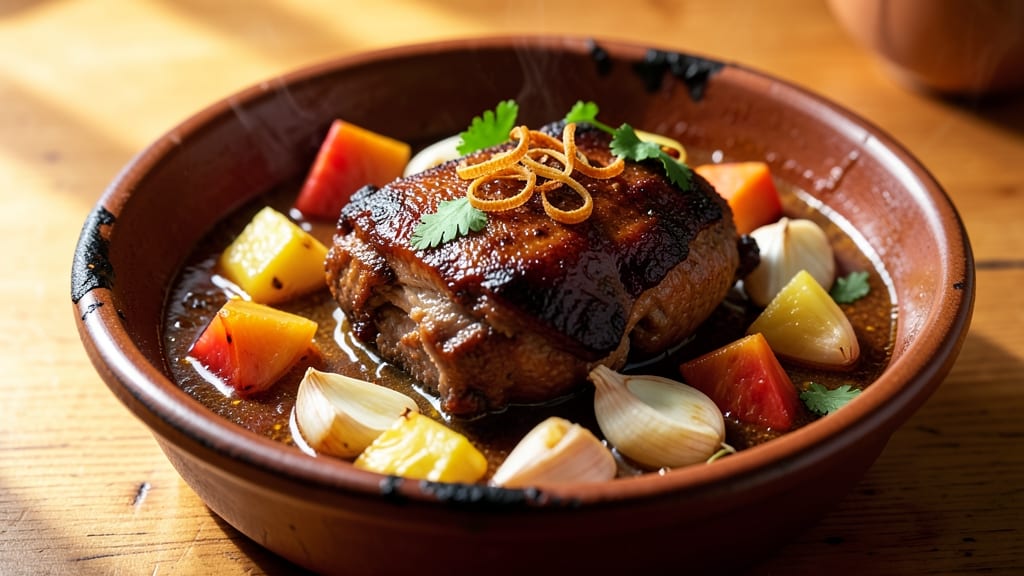
This pork adobo with pineapple recipe brings the bold flavors of Panlasang Pinoy to your kitchen with a modern twist. 🌟 The classic Filipino technique of vinegar-braising transforms tough pork into tender, caramelized perfection, while sweet pineapple adds a juicy crunch that balances the tangy sauce.
I first discovered this combination while searching for ways to make traditional adobo more approachable for everyday meals—it became an instant family favorite.
The secret lies in the slow simmer, where vinegar tenderizes the pork while building depth of flavor. Fresh pineapple chunks not only add natural sweetness but also prevent the sauce from becoming too acidic, creating a harmonious balance that's both comforting and exciting.
This recipe delivers restaurant-quality results with minimal effort, making it perfect for weeknight dinners or special occasions when you want to impress.
What you'll end up with is fall-apart tender pork swimming in a glossy, slightly sticky sauce that's perfectly balanced between sweet and tangy. The pineapple pieces stay juicy and slightly caramelized, offering a delightful contrast to each bite.
Serve it over steamed rice to soak up every last drop of that flavorful sauce—trust me, you'll want seconds.
Whether you're a Filipino food enthusiast or new to adobo, this recipe delivers authentic flavors with a modern twist. The technique is straightforward, but the results are anything but basic. Let's get cooking!
Ingredients for pork adobo with pineapple recipe panlasang pinoy
Pantry staples meet tropical sweetness in this Filipino favorite—simple ingredients, bold flavors.
| Ingredient | Amount | Notes |
|---|---|---|
| Pork Shoulder 🐷 | 2 lb | Cut into 2-inch chunks |
| White Vinegar 💧 | 1 cup | Distilled preferred |
| Coconut Aminos 🥢 | ½ cup | Or soy sauce for gluten-free |
| Fresh Pineapple 🍍 | 1 whole | Cubed, 1.5-inch pieces |
| Garlic Cloves 🧄 | 8 cloves | Minced for depth |
| Fresh Ginger 🌿 | 1 ½ tbsp | Grated, not chopped |
| Bay Leaves 🍃 | 2 whole | Dried, standard size |
| Black Peppercorns 🌶️ | 1 tsp | Crushed for texture |
| Brown Sugar 🍚 | ¼ cup | Packed firmly |
| Olive Oil 🫒 | 2 tbsp | Extra-virgin preferred |
| Green Onions 🧅 | 3 whole | Sliced for garnish |
| Long-Grain White Rice 🍚 | 2 cups | Uncooked, for serving |
The pork shoulder is non-negotiable—it's what gives you that melt-in-your-mouth texture. Ask your butcher for bone-in, skin-on cuts if available, as the bone adds flavor and the skin crisps beautifully. For vinegar, Malo or Heinen's are my go-tos—they're consistent in acidity. Fresh pineapple is a must (no canned—it's a game-changer), and Costco or Trader Joe's usually have perfect whole pineapples at good prices. Look for ones that are heavy for their size and have that sweet smell at the stem. The garlic and ginger should be bright and fragrant—if they smell dull, they're past their prime.
No coconut aminos? Soy sauce works in a pinch, though it'll taste slightly different. Running short on brown sugar? White sugar plus 1/4 tsp cinnamon mimics the molasses notes. The bay leaves can be dried or fresh—just double the amount if using dried. For a quicker version, pre-minced garlic from the jar saves time (though fresh is always better). If you're serving a crowd, double the rice—people will go back for seconds. The pineapple chunks should be roughly 1.5 inches—any smaller and they'll cook down too fast, losing their juicy texture.
This sauce gets better the next day—make extra and store it in the fridge for up to 5 days. The pork stays tender for 3 days, but the sauce will concentrate and deepen in flavor. For freezing, portion the sauce separately from the pork—it reheats beautifully on its own. If you're prepping ahead, par-cook the pork (just until it's 160°F) and finish it in the sauce later. The rice? Cook it fresh the day you serve—leftovers get gummy. Garnish with those green onions right before eating—they add a fresh pop of color and brightness.
Why You'll Love This Recipe
- One-Pan Magic: I swear by this recipe because it’s that simple—just dump everything in one pot (pork, vinegar, coconut aminos, pineapple chunks) and let it simmer. No chopping mountains of veggies, no fancy techniques, just hands-off flavor that smells like home by the time you walk in the door.
- Sweet-Savory Balance: Honestly, the pineapple cuts through the tangy adobo sauce in the best way—juicy, caramelized chunks with that crisp edge, while the pork stays tender and soaks up the garlic-forward sauce. It’s the kind of dish where every bite feels like a little celebration, even on a Tuesday.
- Leftovers That Don’t Lie: This recipe actually improves the next day. The flavors meld into something deeper, and the sauce thickens just enough to cling to rice or noodles like it’s meant to be there. I make it on Sundays just so I can reheat portions all week—no sad, dry leftovers here.
- Budget-Friendly Crowd-Pleaser: Pork shoulder is cheap, vinegar and coconut aminos stretch the sauce, and pineapple adds freshness without breaking the bank. It feeds six for under $15 and still feels special enough for guests—my in-laws think I’m a chef, and I’m just playing it smart.
Step-by-step instructions for pork adobo with pineapple
This Filipino classic balances tangy, savory, and sweet notes perfectly—here's how to nail it every time.
🔥 Step 1: Sear the Pork for Deep Flavor
Heat the 2 tablespoons olive oil in a large Dutch oven over medium-high heat until shimmering. Pat the 2 lb pork shoulder dry with paper towels and cut it into 2-inch chunks. Working in batches to avoid crowding, sear the pork for 3-4 minutes per side until golden brown and crispy in spots.
I press down gently on the pork with a spatula during the first minute—this prevents it from curling and ensures even contact with the pan. As the pork browns, you'll smell the Maillard reaction happening—that's when all those rich, caramelized flavors develop. Transfer the seared pork to a plate and set aside, leaving the flavorful browned bits in the pot.
🍳 Step 2: Build the Tangy-Sweet Sauce Base
In the same Dutch oven, reduce the heat to medium and add the 8 cloves minced garlic and 1.5 tablespoons grated fresh ginger. Cook for 1 minute until fragrant—you should smell that bright, zesty aroma. Be careful not to burn them; they cook fast at this stage.
Pour in the 1 cup white vinegar and 0.5 cup coconut aminos, scraping up all those delicious browned bits from the bottom of the pot. Add the 2 whole bay leaves, 1 teaspoon crushed black peppercorns, and 0.25 cup packed brown sugar. Bring to a gentle simmer, then return the pork to the pot, making sure it's mostly submerged in the liquid.
🍳 Step 3: Simmer the Pork Until Fork-Tender
Cover the Dutch oven and simmer over low heat for 1 hour and 15 minutes, stirring occasionally. Here's the thing—you want the pork to be tender but still hold its shape. After the initial hour, check for doneness by inserting a fork into the thickest piece. If it slides in easily with just slight resistance, it's ready.
If the liquid reduces too quickly and the pork starts to stick, add ¼ cup water to maintain the sauce consistency. The aroma should be intoxicating—tangy vinegar, sweet caramelized sugar, and that deep umami from the pork and coconut aminos. Don't rush this step; patience is key to perfectly tender pork.
🍳 Step 4: Add Pineapple for Sweet Crunch
Peel the 1 whole fresh pineapple, remove the core, and cut it into 1.5-inch cubes. Add the pineapple to the pork along with any accumulated juices. Simmer uncovered over medium heat for 10-12 minutes until the pineapple softens slightly but still retains some bite—you want that sweet crunch in every bite.
Taste the sauce and adjust seasoning if needed. You might want to add a splash more coconut aminos for saltiness or a bit more brown sugar for sweetness. The pineapple should be tender enough to eat but still have a slight resistance when you bite into it. Remove and discard the bay leaves before serving.
🍽️ Step 5: Serve Over Steamed Rice
Cook the 2 cups long-grain white rice according to package instructions until tender. Divide the rice among plates and ladle the pork and pineapple adobo over the top. Garnish with 3 whole sliced green onions for a fresh pop of color and brightness.
This dish tastes even better the next day as the flavors meld together. Serve with extra rice on the side for soaking up that delicious sauce. The contrast of tender pork, sweet pineapple, and tangy-sweet sauce makes every bite unforgettable—trust me, you'll want to savor this slowly.
Pro Tips For Making Pork Adobo With Pineapple Recipe Panlasang Pinoy
- CRUSH GARLIC FIRST: Smash those cloves with the flat side of your knife before mincing—this releases more flavor and prevents burning. I used to just chop them, but the sauce now has a deeper, richer base that actually holds up against the vinegar’s sharpness.
- SIMMER LOW AND SLOW: After the initial sear, drop the heat to medium-low and let the adobo bubble gently. Rushing this step makes the pork tough and the sauce thin—think "gentle rolling" rather than "frenetic boiling." The pineapple will soften properly, and the pork stays fork-tender.
- RESERVE THAT VINEGAR: Strain the cooking liquid through a fine-mesh sieve to remove garlic bits and pineapple fibers, then return the clear liquid to the pot. This keeps your sauce silky instead of grainy—trust me, you’ll notice the difference when you spoon it over rice.
- USE FIRM PINEAPPLE: Skip the overly ripe pineapple—its juice will dilute the sauce and make it watery. Look for fruit that’s just yielding but still holds its shape. Cut it into chunks, not slices, so it absorbs the adobo flavors without falling apart. (Yes, even if you’re impatient like me.)
Wine and beer pairings for this recipe
Filipino White Wine
For this dish, I reach for crisp white wines like Sauvignon Blanc or Pinot Grigio—both complement the tangy-sweet balance of the adobo.
A New Zealand Sauvignon Blanc (like Oyster Bay) brings bright citrus notes that cut through the richness, while an Italian Pinot Grigio (such as Santa Margherita) adds a clean, mineral finish. Avoid heavy whites like Chardonnay—they’ll clash with the vinegar’s acidity. 🍷
Tropical Beer Pairings
A Filipino lager like San Miguel Pale Pilsen is my go-to—its light maltiness balances the dish’s sweetness without overpowering it. For craft options, try a hazy IPA (like New Belgium Fat Tire) for a fruity contrast, or a Belgian witbier (such as Hoegaarden) with its citrusy notes.
Avoid dark beers—they’ll make the sauce taste heavier.
Rum Cocktail Twist
For a festive touch, serve a Piña Colada (made with Bacardi Superior and coconut cream) alongside the adobo. The pineapple in the cocktail mirrors the dish’s fruit, while the rum’s warmth complements the vinegar’s tang. A Filipino-style rum punch (with Malibu coconut rum and pineapple juice) also works beautifully. 🍹
Non-Alcoholic Options
For a refreshing non-alcoholic match, try sparkling pineapple juice (like Martinelli’s) chilled over ice. The bubbles cleanse your palate between bites, while the pineapple’s sweetness enhances the dish. A hibiscus iced tea (with azuki beans for depth) adds a floral contrast that’s surprisingly complementary. 🌿
Local Filipino Liquor
If you’re feeling adventurous, pair the dish with Lambanog—a Filipino coconut vodka—neat or in a cocktail. Its coconut notes harmonize with the dish’s tropical elements, while the alcohol’s burn cuts through the sauce’s richness.
For a sweeter option, Kalabaw (a Filipino rum) works well in a rum punch with pineapple and lime.
Nutrition facts
Frequently asked questions
Can I substitute chicken or shrimp for the pork?
For chicken, use 1.5 lb boneless thighs (they stay juicier than breasts) and reduce cooking time to 25-30 minutes after adding pineapple. For shrimp (1 lb large), add them only in the last 5 minutes of cooking to prevent overcooking. The sauce will be thinner, so reduce it longer if you prefer a thicker consistency.
Why does my adobo sauce turn out too acidic?
This usually happens when the vinegar overpowers the other flavors. Balance it by adding 1-2 tablespoons brown sugar or ½ cup coconut milk to mellow the acidity. The pineapple also helps—its natural sweetness counteracts the tang. For next time, reduce the vinegar to ½ cup and increase coconut aminos to ⅔ cup for better harmony.
How do I make this dish gluten-free?
Replace coconut aminos with gluten-free tamari or soy sauce (check labels for gluten-free certification). Also verify your brown sugar isn't processed in a gluten-containing facility. For extra depth, add 1 teaspoon fish sauce—it mimics the umami of coconut aminos while keeping the dish authentic. Always check all ingredient labels for hidden gluten.
Can I make this in an Instant Pot?
Yes! Sear the pork first in a skillet, then transfer to the Instant Pot with all ingredients except pineapple. Cook on high pressure for 25 minutes, then quick-release. Add pineapple and cook on sauté mode for 10 minutes until tender. The pressure cooker reduces cooking time but may make the sauce thinner—simmer uncovered for 5-10 minutes to thicken it afterward.
What's the best way to reheat leftovers?
Reheat gently in a skillet over low heat with 1-2 tablespoons water to prevent drying. For microwave reheating, cover with a damp paper towel and heat in 30-second intervals, stirring between each. The sauce will thicken further—add a splash of water if needed. Leftovers taste even better the next day as flavors meld!