
Main Courses
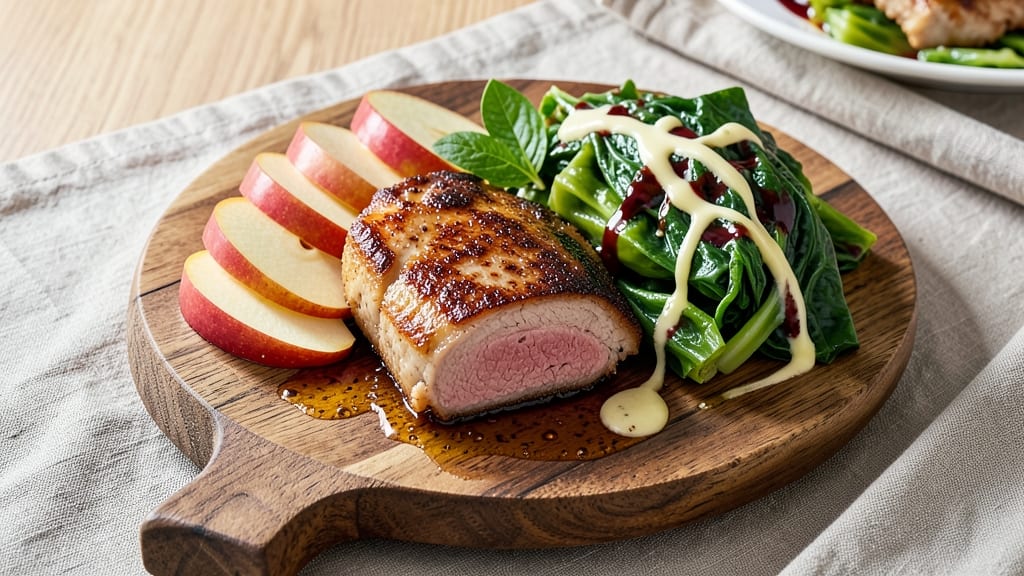
This pork chop cabbage apple recipe transforms a simple weeknight dinner into a restaurant-worthy meal with sweet-savory balance and textural contrast.
After years of perfecting pork dishes in my Charleston kitchen, I developed this technique that sears thick-cut chops until golden, then braises them with tender cabbage and caramelized apples in a rich, aromatic sauce. The result?
Juicy pork with crisp edges, tender cabbage that holds its shape, and apples that melt into the sauce—creating harmony in every bite.
The secret lies in the three-stage cooking process: first searing the chops to lock in juices, then slow-braising with apples and cabbage until everything softens just enough to stay vibrant.
I use Bosc apples for their firm texture and natural sweetness, which caramelizes beautifully without turning mushy, while green cabbage adds crispness that cuts through the richness of the pork.
The braising liquid—made with apple cider, red wine, and herbs—infuses every ingredient with depth, creating a sauce thick enough to coat each forkful.
What makes this dish truly special is how the flavors evolve together. The pork develops a deep, caramelized crust while staying tender inside, the cabbage softens without losing its slight crunch, and the apples break down into a sweet-tangy compote that ties everything together.
This is comfort food elevated—foolproof yet impressive, perfect for feeding a family or impressing guests without spending hours in the kitchen.
The best part? Leftovers reheat beautifully, making this an ideal meal for busy weeknights or weekend gatherings. Serve with a sprinkle of fresh thyme and a dollop of crème fraîche for extra elegance. Ready to master this sweet-savory pork chop masterpiece? Let's get started.
Ingredients for pork chop cabbage apple
Sweet-savory harmony starts with these perfectly balanced ingredients for your pork chop masterpiece.
| Ingredient | Amount | Notes |
|---|---|---|
| Bone-In Pork Chops 🥩 | 4 whole | 1-inch thick, center-cut preferred |
| Green Cabbage 🧅 | ¾ lb | Green cabbage, cut into wedges |
| Bosc Apples 🍎 | 2 whole | Peeled, cored, sliced into wedges |
| Apple Cider 🍏 | 1 cup | Unsweetened, for braising liquid |
| Dry Red Wine 🍷 | ½ cup | Bold variety like Cabernet Sauvignon |
| Unsalted Butter 🧈 | 2 tbsp | For searing pork chops |
| Fresh Thyme 🌿 | 2 tbsp | Leaves only, chopped finely |
| Fresh Rosemary 🌿 | 1 tbsp | Leaves only, chopped finely |
| Garlic Cloves 🧄 | 4 cloves | Minced for braising liquid |
| Diamond Crystal Kosher Salt 🧂 | 1 ½ tsp | For seasoning and braising |
| Freshly Ground Black Pepper 🌶️ | ½ tsp | For seasoning pork chops |
| Crème Fraîche 🧀 | ¼ cup | For serving, optional garnish |
| Olive Oil 🫒 | 2 tbsp | For deglazing pan |
The pork chops are the foundation—bone-in, 1-inch thick cuts from the butcher section give you that perfect balance of tenderness and flavor. Charleston-area grocery stores like Harris Teeter carry excellent cuts, but any well-marbled chop works. Look for good fat cap—it renders down during searing and keeps the meat juicy. For the cabbage and apples, Trader Joe's has the best selection of Bosc apples (firm, not waxy) and green cabbage (tight leaves, no yellowing). The apples should hold their shape but soften enough to caramelize beautifully—Bosc or Honeycrisp are ideal. If you can't find Bosc, Granny Smith works in a pinch, though it'll be slightly tart.
No red wine? Apple cider vinegar with a splash of beef broth gets you close—just add a pinch more salt to compensate. Fresh thyme and rosemary can be swapped for dried at one-third the amount, but trust me, fresh is worth the extra minute. The garlic is non-negotiable though—roasted garlic adds a sweet depth if you're feeling fancy. For the butter, European-style unsalted (like Plugrá) melts beautifully, but regular unsalted works fine. If you're prepping ahead, slice the cabbage and apples, then store in separate containers with a paper towel to absorb moisture—they'll keep for 3 days this way.
This dish tastes even better the next day, so make extra. The braising liquid thickens as it cools, creating a rich sauce—portion into containers with a layer of crème fraîche on top for easy reheating. Keeps for 4-5 days in the fridge, or freeze the pork chops separately for up to 3 months. The cabbage and apples can be reheated separately if needed, but I recommend keeping them together for that perfect first bite. For serving, a sprinkle of fresh thyme leaves and a dollop of crème fraîche adds that restaurant-worthy touch without extra effort.
Why You'll Love This Recipe
- One-Pan Magic: I swear by this for nights when I’d rather not wash a million dishes—the cabbage and apples soften right on the same skillet as the pork, and that wine-cider braise? It practically cleans itself.
- Sweet-Savory Balance: The Bosc apples add this incredible caramelized bite while the cabbage stays crisp-tender, and that bone-in pork? Crispy edges with melt-in-your-mouth meat. Honestly, it’s the kind of dish that makes you go back for seconds without even trying.
- Weeknight to Dinner Party: Same recipe, totally different vibes—throw it together for a lazy Tuesday or dress it up with fresh thyme and crusty bread for company. The wine and apple cider make it feel fancy, but the effort? Zero.
- Budget-Friendly Leftovers: Pork chops stretch for days when you add cabbage and apples—they’re cheap, filling, and reheat like a dream. I’ll be real: I’ve eaten this cold the next morning, and it’s still delicious. (Don’t tell my kids.)
Step-by-step instructions for braised pork chops with cabbage and apples
This dish brings together rich pork, crisp cabbage, and sweet apples in a harmonious balance of flavors.
🍳 Step 1: Sear the Pork Chops to Develop Deep Flavor
Pat the 4 whole bone-in pork chops completely dry with paper towels—this ensures a perfect sear. Heat a large oven-safe skillet over medium-high heat and add 2 tablespoons unsalted butter and 2 tablespoons olive oil. Once the butter foams, add the pork chops and sear for 3-4 minutes per side until they develop a deep golden-brown crust. You'll know it's ready when the edges release easily from the pan.
Season each chop generously with 1.5 teaspoons diamond crystal kosher salt and 0.5 teaspoon freshly ground black pepper right after searing. This timing locks in the seasoning while the crust forms. Remove the chops from the pan and set them aside on a plate, leaving all the rendered fat behind—this is flavor gold.
👨🍳 Step 2: Build the Braising Liquid with Aromatics and Apples
In the same skillet (no need to wipe it clean), add 4 cloves minced garlic, 2 tablespoons finely chopped fresh thyme, and 1 tablespoon finely chopped fresh rosemary. Sauté for 30 seconds until fragrant—this releases their essential oils and deepens the flavor base. Add 2 whole peeled and sliced Bosc apples and cook for another 2 minutes until they begin to soften slightly.
Pour in 1 cup unsweetened apple cider and 0.5 cup dry red wine, scraping up any browned bits from the bottom of the pan with a wooden spoon. This deglazing step captures all those caramelized flavors that would otherwise go to waste. Bring the liquid to a simmer and let it reduce by half—this concentrates the sweetness and creates a rich, glossy braising sauce.
🥘 Step 3: Braise the Pork Chops with Cabbage and Apples
Return the seared pork chops to the skillet, nestling them into the braising liquid. Add 0.75 lb green cabbage wedges and arrange them around the chops. The cabbage will soften beautifully in the liquid while maintaining its natural crunch. Cover the skillet with a lid and transfer it to a preheated 325°F oven for 45-50 minutes. This low-and-slow approach ensures the pork becomes fork-tender while the cabbage and apples absorb all those delicious flavors.
About halfway through cooking, check the liquid level—if it's reduced too much, add 2-3 tablespoons water to keep everything moist. The pork chops are done when they reach an internal temperature of 145°F and a knife slides in easily. The cabbage should be tender-crisp, and the apples should be caramelized at the edges.
🔪 Step 4: Rest and Garnish for Serving
Remove the skillet from the oven and let the pork chops rest for 10 minutes before serving. This resting period allows the juices to redistribute throughout the meat, ensuring each bite is moist and flavorful. While they rest, skim any excess fat from the surface of the braising liquid if desired—though I like to leave a little for richness.
To serve, spoon the braised cabbage and apples over the pork chops, drizzling the reduced braising liquid generously over the top. Garnish with a dollop of 0.25 cup crème fraîche for a touch of tangy creaminess that cuts through the richness. The contrast between the tender pork, crisp cabbage, and sweet apples creates a truly balanced dish that's perfect for any occasion.
Pro Tips For Making Pork Chop Cabbage Apple
- SEAR THE CHOPS FIRST: Bone-in pork chops need a hot, dry pan to build flavor—no skimming the crust. Hit medium-high heat with about 2 tablespoons of oil (enough to coat the bottom), and let those chops sit undisturbed for 3-4 minutes per side until deep golden. I used to rush this and ended up with pale, bland meat that tasted like it was steamed, not seared.
- CORE THE APPLES: Bosc apples hold their shape better when cored properly, but don’t slice them too thin—aim for ¼-inch thick wedges. A sharp knife and steady hand work best, but if you’re impatient (like me), use a mandoline with the thickest blade setting. Thick slices caramelize more evenly and won’t turn to mush in the wine-cider braise.
- DEGLLAZE AGGRESSIVELY: That browned crust on the pan? That’s where the magic lives. After searing the chops, immediately add the apple cider and red wine, then scrape every last bit of fond off the bottom with a wooden spoon—yes, even the bits stuck to the sides. I learned this the hard way when I just poured the liquid in and missed half the flavor.
- SAUTÉ THE CABBAGE FIRST: Don’t toss the cabbage in raw—it’ll steam instead of crisp up. Cut it into ½-inch wedges (no need to shred), then cook it in the same pan (or a separate one) for 5-6 minutes until the edges soften and just start to brown. This jumpstarts the flavor and prevents a mushy finish later. (And yes, you can use the same pan if you deglaze first—no extra dishes.)
Essential equipment for this recipe
Oven-Safe Skillet
An oven-safe cast iron skillet (like my trusty Lodge 12-inch) is non-negotiable for this recipe. Cast iron retains heat beautifully and creates that perfect crust on the pork chops while distributing heat evenly during braising.
If you don’t have cast iron, a heavy stainless steel skillet (such as All-Clad) works too—just avoid nonstick, which can’t handle the high heat needed for searing. The skillet’s size matters: 12 inches accommodates the chops and cabbage comfortably without overcrowding. 🔥
Precision Thermometer
You’ll need a meat thermometer to nail the pork’s internal temperature at 145°F. I swear by the Thermoworks Smoke—it’s got a flexible probe for tight spaces and a backlit display. A cheap pop-up thermometer won’t cut it here; you need accuracy.
For the oven, a laser thermometer (like Kizen) helps monitor the 325°F setting without opening the door, which can throw off your timing. Trust me, these tools make the difference between "meh" and "masterpiece."
Sharp Chef’s Knife
A sharp 8-inch chef’s knife (I use Wüsthof) is essential for prepping cabbage and apples efficiently. Dull blades crush cabbage, turning it into mush, and tear apples instead of slicing cleanly.
Invest in a honing steel (like Shun) to maintain that razor edge—it’s worth the 30 seconds of maintenance. For the apples, a mandoline (set to ¼-inch thickness) ensures even slices that caramelize uniformly. Safety tip: Use a cutting board with a damp towel underneath to prevent slipping.
Wooden Spoon & Tongs
Your wooden spoon (I love Oxo Good Grips) is your best friend for deglazing the pan—it scrapes up those flavorful browned bits without scratching cast iron. A pair of tongs (like Mercer Culinary) helps flip the pork chops without piercing them, keeping the juices sealed inside.
Pro move: Soak your wooden spoon in hot, soapy water for 10 minutes after cooking to make cleanup a breeze. The tongs also come in handy for arranging cabbage wedges neatly around the chops.
Braising Liquid Tools
For measuring the apple cider and red wine, a liquid measuring cup (with spout) prevents spills—this recipe’s precision matters. A fine-mesh strainer (like OXO Good Grips) lets you skim excess fat from the braising liquid if you prefer a lighter sauce.
And don’t skip the lid—a tight-fitting one (or foil) traps steam to tenderize the cabbage and apples. I keep an old sheet pan nearby to transfer the skillet safely to the oven—cast iron is heavy, and you’ll want to avoid burnt fingers! 💪
Nutrition facts
Frequently asked questions
Can I substitute bone-in pork chops for boneless?
Boneless chops work, but they'll cook faster and may dry out. Use ½-inch thick cuts and reduce oven time to 35-40 minutes. For extra moisture, add 1 tablespoon butter to the braising liquid. Bone-in chops stay juicier because the bone acts as a natural insulator.
What if I don't have red wine? What's the best substitute?
Use 1 cup apple cider vinegar + ½ cup beef broth for depth, or 1 cup unsweetened apple juice + ½ teaspoon balsamic vinegar for sweetness. For umami, add 1 teaspoon soy sauce to the braising liquid. The key is balancing acidity and sweetness—adjust to taste.
How do I keep the cabbage from turning mushy?
Cut cabbage into large wedges (not thin slices) and arrange them around the chops, not submerged. Braise uncovered for the last 10 minutes to let excess moisture evaporate. For extra crunch, add 1 tablespoon lemon juice to the braising liquid—it brightens flavors and helps preserve texture.
Can I make this recipe ahead of time?
Cook the chops and veggies as directed, then refrigerate for up to 3 days. Reheat in the oven at 350°F for 20 minutes with a splash of water. The flavors deepen overnight—perfect for meal prep. Store the crème fraîche separately and add fresh when serving.
What's the best way to reheat leftovers?
Place leftovers in an oven-safe dish with 1-2 tablespoons water and cover with foil. Reheat at 325°F for 15-20 minutes until warmed through. For microwave reheating, cover with a damp paper towel and heat in 30-second bursts to avoid drying out the pork. The cabbage may soften further—this is normal!