
Main Courses
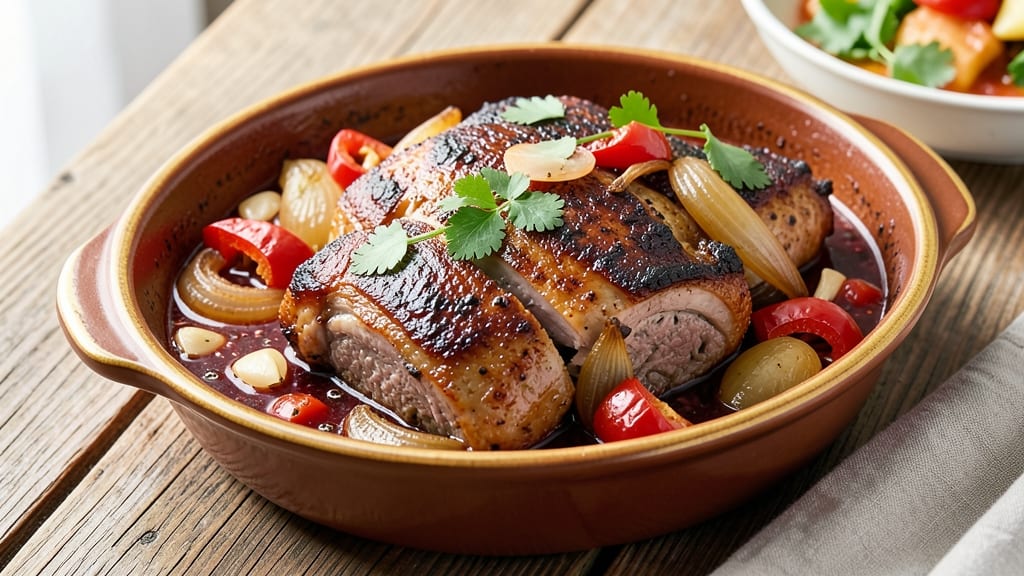
This pork estofado recipe with pineapple juice transforms tender pork into a melt-in-your-mouth masterpiece with a tropical twist. 🌟 After years of perfecting slow-braised dishes, I discovered that pineapple juice doesn’t just tenderize—it creates a bright, tangy contrast that cuts through the richness of the braised pork and tomatoes.
The result? A dish that’s equally comforting and vibrant, perfect for family dinners or special occasions.
The secret lies in the 325°F/165°C oven braise, which breaks down the pork into succulent shreds while developing deep, caramelized flavors. We start with a classic Spanish-inspired base—sautéed onions, garlic, and bell peppers—but the addition of pineapple juice elevates it into something unexpected yet balanced.
The acidity from the juice tenderizes the meat while adding a subtle sweetness that pairs beautifully with the smoky, savory notes of the braise.
By the time you serve this dish, you’ll have perfectly tender pork swimming in a glossy, aromatic sauce that’s rich yet bright. The pineapple juice ensures the flavors stay vibrant, not overpowering, while the slow cooking process infuses every bite with depth.
This is the kind of meal that tastes like it’s been simmering for hours—even if you’re using a few shortcuts to keep it manageable for a weeknight.
Serve it with steamed white rice to soak up every last drop of that tropical-infused sauce, or pair it with garlic mashed potatoes for a heartier meal.
The leftovers? Even better the next day, as the flavors meld and deepen. Let’s get cooking—this dish is worth every minute of the wait.
Ingredients for pork estofado recipe with pineapple juice
Six ingredients transform ordinary pork into a tropical-inspired masterpiece—juicy, tender, and bursting with bright flavors.
| Ingredient | Amount | Notes |
|---|---|---|
| Pork Shoulder (Bone-In) 🥩 | 3 lb | Cut into 1.5-inch chunks, skin-on |
| Yellow Onions 🧅 | 2 whole | Thinly sliced, about 3 cups |
| Red Bell Peppers 🌶️ | 2 whole | Sliced into 1-inch strips |
| Garlic Cloves 🧄 | 6 cloves | Minced, about 2 tbsp |
| Pineapple Juice 🍍 | 1 cup | Freshly squeezed, no pulp |
| Canned Crushed Tomatoes 🍅 | 2 cups | San Marzano preferred |
| White Wine 🍷 | 1 cup | Dry, like Sauvignon Blanc |
| Chicken Broth 💧 | 2 cups | Low-sodium preferred |
| Extra-Virgin Olive Oil 🫒 | ¼ cup | For sautéing, fruity variety |
| Bay Leaves 🌿 | 2 whole | Fresh, removed before serving |
| Ground Black Pepper 🌶️ | 1 tsp | Freshly cracked |
| Kosher Salt 🧂 | 1 ½ tsp | Diamond Crystal preferred |
| Fresh Thyme 🌿 | ¼ cup | Leaves only, chopped |
| Orange Zest 🍊 | 1 tsp | From 1 organic orange |
The pork shoulder is non-negotiable here—bone-in with skin-on gives the most flavor and moisture. Costco or your local butcher shop are best for quality cuts; avoid pre-cut packages that often contain fillers. For the pineapple juice, freshly squeezed is ideal, but a high-quality canned juice (like Del Monte Gold) works in a pinch. The onions and bell peppers should be vibrant—yellow onions with crisp edges and red bell peppers with glossy skin—both signs of freshness. If you're prepping ahead, store the pork and veggies separately in the fridge for up to 2 days before cooking.
No white wine? Substitute with extra chicken broth—just add an extra splash of orange juice for brightness. Fresh thyme is best, but dried works at one-third the amount if you're in a hurry. The crushed tomatoes? San Marzano is the gold standard, but any high-quality canned tomatoes will do. For the orange zest, organic oranges have the most flavor, but conventional works too—just avoid waxed skins. If you're short on time, pre-chop all veggies and store them in the fridge for up to 3 days before cooking. The garlic can be roasted for a sweeter flavor—just toss whole cloves in olive oil at 350°F for 10 minutes before mincing.
This dish tastes even better the next day as the flavors meld. Store leftovers in an airtight container in the fridge for up to 5 days or freeze for 3 months. For reheating, low and slow is key—350°F for 20 minutes with a splash of water or broth to prevent drying. The sauce thickens as it cools, so you can thin it with a little more broth if needed. Portion into individual containers for easy lunches—just reheat with a splash of water to restore that glossy texture.
Why You'll Love This Recipe
- One-Pot Magic: I swear by this recipe when I’m too tired to deal with multiple pans. Brown the pork, toss in onions and peppers, then let the pineapple juice work its slow simmer—minimal stirring, maximum flavor. Honestly, it’s the kind of dish that makes me feel like I’ve earned my dinner.
- Sweet-Savory Wake-Up: That first sip of pineapple juice cutting through the rich pork? Instant flavor explosion. The garlic and onions caramelize into something deep, while the bell peppers add just enough brightness to keep it from feeling heavy. Between us, it’s the kind of taste that makes you forget to check your phone.
- Weeknight Crowd-Pleaser: This isn’t just dinner—it’s the dish that saves holidays, game days, or when your in-laws drop by unannounced. The bone-in pork feeds a crowd, and the leftovers? Even better the next day, especially reheated with a splash of extra pineapple juice. (Yes, even on a Tuesday night.)
- Budget-Friendly Luxury: Pork shoulder is cheap, and this recipe stretches it into something restaurant-worthy without breaking the bank. I’ll be real: the pineapple juice might seem like a splurge, but a little goes a long way, and the flavor makes it feel like a special occasion. Plus, the leftovers turn into lunches or tacos—zero waste, all win.
Step-by-step instructions for pork estofado with pineapple juice
This tropical twist on classic estofado delivers melt-in-your-mouth pork with vibrant flavors.
🍳 Step 1: Sear the Pork Shoulder for Deep Flavor
Heat the 0.25 cup extra-virgin olive oil in a heavy Dutch oven over medium-high heat until shimmering. Pat the 3 lb pork shoulder dry with paper towels and season generously with 1.5 tsp kosher salt and 1 tsp ground black pepper. Add the pork in a single layer and sear for 6-8 minutes per side until deeply browned.
Here's the thing—don't rush this step. You want that pork to develop a rich, caramelized crust that'll dissolve into the sauce later. If it sticks, don't panic—just let it cook until it releases easily. Work in batches if needed, keeping the seared pieces warm in a clean bowl.
👨🍳 Step 2: Build the Aromatic Base
Once the pork is browned, remove it from the pot and set it aside. In the same Dutch oven, add the 2 whole yellow onions and 2 whole red bell peppers and cook for 5-6 minutes until softened. Add the 6 cloves minced garlic and 0.25 cup chopped fresh thyme, cooking for another 30 seconds until fragrant.
This is where all the magic starts. The onions should be golden and translucent, the peppers slightly softened but still holding their shape. If you smell anything burning, immediately reduce the heat to medium. The garlic and thyme should perfume the kitchen—this is your cue that the base is ready for the next ingredients.
🍳 Step 3: Deglaze and Simmer the Sauce
Pour in the 1 cup white wine and scrape up all those delicious browned bits from the bottom of the pot. Let it simmer for 3-4 minutes until reduced by half. Add the 2 cups canned crushed tomatoes, 1 cup pineapple juice, 2 cups chicken broth, 2 whole bay leaves, and 1 tsp orange zest.
Bring everything to a gentle simmer. Here's the critical part: the sauce should be bubbling softly, not boiling vigorously. If it's too thick, add a splash of water or broth. The pineapple juice will give it a bright, tropical character while balancing the richness of the pork and tomatoes.
⏰ Step 4: Braise Until Tender
Return the pork to the pot, skin-side up. Cover and transfer to a 325°F oven. Braise for 2.5-3 hours until the pork is fork-tender and pulls apart easily. Check it at the 2-hour mark—if it's not quite there, add ¼ cup water to the pot to maintain moisture.
This long, slow cook is what transforms tough pork shoulder into melt-in-your-mouth perfection. The pork should have a deep mahogany color and the sauce should coat the back of a spoon. If you see the sauce reducing too much, uncover the pot for the last 30 minutes to let it thicken slightly.
🍽️ Step 5: Finish and Serve
Remove the pork from the pot and let it rest for 10 minutes before slicing against the grain. Strain the braising liquid through a fine-mesh sieve to remove the bay leaves, then return it to the pot. Taste and adjust seasoning with more kosher salt or black pepper if needed.
Slice the pork into ½-inch thick pieces and serve family-style with the sauce ladled over the top. Garnish with fresh thyme leaves and a sprinkle of orange zest. Each bite should deliver tender pork with a perfect balance of sweet pineapple, tangy tomatoes, and rich braising liquid. Serve with crusty bread or over rice to soak up every last drop of that flavorful sauce.
Pro Tips For Making Pork Estofado Recipe With Pineapple Juice
- CRISP THE ONIONS FIRST: Slice those yellow onions thin—almost translucent—and cook them in oil over medium-high heat until they’re golden brown and crispy at the edges. I used to soften them right away, but this adds depth to the sauce that pineapple juice alone can’t match.
- BROWN THE PORK IN BATCHES: Don’t crowd the pan when searing the pork shoulder—work in 2-3 batches if needed. You’re chasing a deep, caramelized crust, and that only happens with space. I learned this the hard way when my first batch came out soggy.
- SAVE THE PINEAPPLE PULP: Strain the pineapple juice but don’t toss the leftover pulp—it thickens the sauce naturally. Just blend it with a splash of water and stir it in at the end. Your future self will thank you for skipping the extra cornstarch.
- LOW AND SLOW AFTER 2 HOURS: Once the pork is tender (after about 2 hours), drop the heat to low and let it simmer uncovered. This evaporates excess liquid and concentrates the flavors—no need to babysit it. I used to walk away too soon, and the sauce ended up watery.
Essential equipment for great pork estofado recipe with pineapple juice
Dutch Oven Essentials
A heavy-duty Dutch oven is non-negotiable for this recipe—it needs to handle the high heat of searing while distributing heat evenly during the long braise. I swear by my Le Creuset 6-quart (it’s been with me since my first apartment), but All-Clad Stainless Steel is a fantastic budget-friendly alternative.
The deep sides prevent spills during the braise, and the tight-fitting lid traps steam for perfect moisture. 🔥
Measuring Tools
Precision matters with liquids like pineapple juice and wine. A stainless steel measuring cup (like my OXO Good Grips) ensures accurate pours, while a kitchen scale (I use Escali Primo) helps weigh the pork shoulder for consistent results.
For spices, a small scoop (like Penzeys Spice Scoop) prevents over-salting—trust me, I’ve learned that lesson the hard way! 🧂
Thermometer for Pork
An instant-read thermometer (I love the ThermoWorks Smoke) is your best friend here. The pork should reach 195°F internally for that melt-in-your-mouth texture. No guessing—this tool takes the guesswork out of doneness. Pro tip: Test it in the thickest part of the shoulder, avoiding the bone. 🌡️
Knives and Cutting Board
A sharp chef’s knife (my Wüsthof 8-inch) and a sturdy cutting board (I prefer Teakwood) make prep a breeze. Thinly slicing onions and bell peppers is easier with a sharp blade, and the teakwood board won’t dull your knife.
For the pork, a boning knife (like Shun Premier) helps separate the meat cleanly after braising. 🔪
Straining Tools
After braising, you’ll want to strain out the bay leaves. A fine-mesh sieve (I use OXO Good Grips) works perfectly, but a cheesecloth-lined colander catches even finer particles. This step ensures a smooth sauce—no one wants a leafy surprise in their estofado! 🧼
Optional: Immersion Blender
For an ultra-smooth sauce, an immersion blender (like Magic Bullet) lets you blend right in the pot. Just pulse for 10-15 seconds—no transferring to a blender required. This is especially helpful if you prefer a velvety texture without losing any of that rich braising liquid. 💫
Nutrition facts
Frequently asked questions
Can I substitute pineapple juice with another tropical juice?
Yes! If you don't have pineapple juice, try 1 cup orange juice (add ½ tsp extra sugar to balance acidity) or ½ cup mango nectar + ½ cup apple juice for a similar sweet-tangy profile. Avoid grapefruit juice—it's too bitter and can overpower the dish. The key is maintaining that bright, acidic contrast to the rich pork and tomatoes.
How do I adjust this recipe for a slow cooker?
Transfer the seared pork and all ingredients (except bay leaves) to a 6-quart slow cooker. Cook on LOW for 8 hours or HIGH for 5-6 hours until the pork shreds easily. The sauce may be thinner—reduce it uncovered on the stovetop for 10-15 minutes at the end. Skip the oven braising step entirely for hands-off convenience!
Why did my pork turn out tough instead of tender?
Most likely, the pork didn't cook long enough or the oven temperature was too high. For perfect tenderness, the internal temperature must reach 195°F—use an instant-read thermometer! If your oven runs hot, reduce the temperature to 300°F and add 30 minutes to the cooking time. Also ensure you're slicing against the grain after resting.
Can I make this dish ahead of time?
This recipe actually tastes better the next day! Let it cool completely, then refrigerate in an airtight container for up to 5 days. Reheat gently in a saucepan over medium-low heat, adding 2-3 tablespoons of water or broth to prevent drying. The flavors deepen as the sauce reduces further—this is what makes leftovers so delicious!
What's the best way to serve this with rice?
For perfect rice pairing, cook 1.5 cups white rice (like jasmine or basmati) to yield 3 cups cooked. Serve the estofado over the rice, then drizzle with any extra sauce. For extra flair, sprinkle with toasted sesame seeds or cilantro. Pro tip: Warm the rice in a 350°F oven for 10 minutes before serving to keep it light and fluffy.