
Main Courses
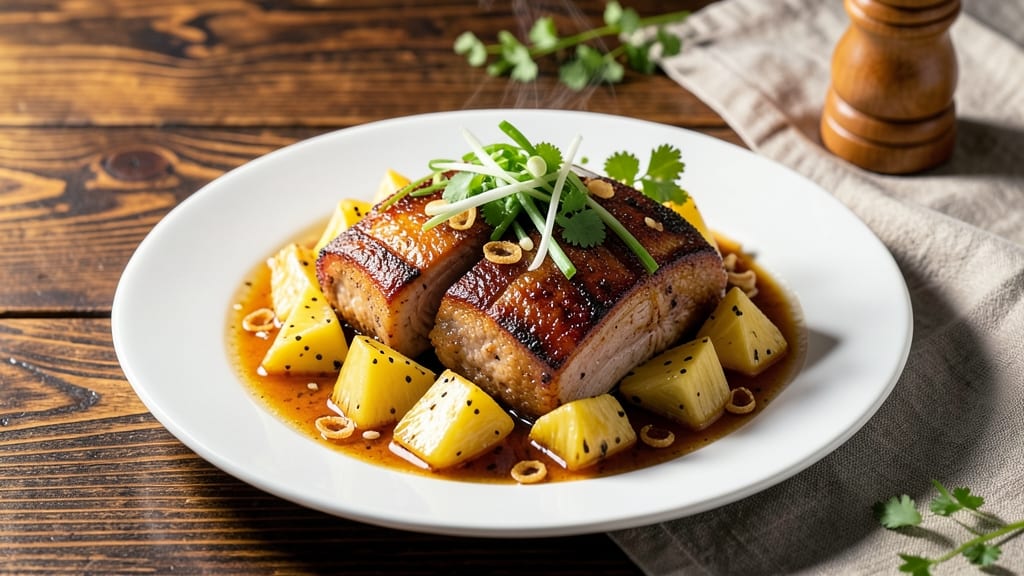
This Filipino-style pork with pineapple recipe balances sweet, tangy, and savory flavors in every bite—just like my lola used to make. The secret lies in marinating pork shoulder with soy sauce, vinegar, and garlic before slow-braising it until fork-tender.
That pineapple caramelizes beautifully, cutting through the richness while adding a tropical brightness that's pure comfort food magic. The dish gets its signature crunch from atchara—pickled green papaya—tossed in at the end for a bright, tangy contrast.
I developed this recipe after years of testing, ensuring the pork stays juicy while absorbing all those bold flavors.
The sauce reduces to a glossy, slightly sticky glaze that clings perfectly to each bite, making it ideal for serving over steamed rice or with crusty bread to soak up every last drop.
What makes this recipe special is how it captures the heart of Filipino home cooking—where adobo's tangy depth meets pineapple's natural sweetness. The slow braising method transforms tough pork into melt-in-your-mouth perfection, while the atchara adds that essential crunch.
It's the kind of dish that disappears faster than you can say "kain na!" (let's eat!). Serve it with a side of garlic fried rice or a simple green salad to balance the richness. The flavors only get better the next day, making this an excellent meal prep option.
Now let's get cooking!
Ingredients for pork with pineapple recipe filipino style
Six ingredients transform simple pork into Filipino comfort food magic—sweet, tangy, and perfectly tender.
| Ingredient | Amount | Notes |
|---|---|---|
| Pork Shoulder 🥩 | 3 lb | Bone-in for flavor, cut into 2-inch chunks |
| Pineapple Chunks 🍍 | 2 cups | Fresh or canned in juice, drained |
| Soy Sauce 🍶 | ½ cup | High-quality, like Kikkoman |
| White Vinegar 💧 | ¼ cup | White or cane vinegar |
| Garlic Cloves 🧄 | 8 cloves | Minced, fresh preferred |
| Fresh Ginger 🌿 | 2 tbsp | Grated, fresh preferred |
| Brown Sugar 🍚 | ¼ cup | Light or dark, packed |
| Atchara 🥒 | 1 cup | Pickled green papaya, drained |
| Olive Oil 🫒 | 2 tbsp | For searing pork |
| Black Peppercorns 🌶️ | 1 tsp | Freshly cracked |
| Bay Leaves 🍃 | 2 whole | Dried, for depth |
| Salt 🧂 | 1 ½ tsp | Kosher or sea salt |
| Green Onions 🧅 | 3 whole | Chopped, for garnish |
The pork shoulder is the star—look for well-marbled cuts at Costco or your butcher's counter. Bone-in stays juicier, but boneless works if you're short on time. Filipino markets often carry pre-cut pork shoulder for adobo dishes, saving you chopping time. Fresh ginger and garlic? Penzeys sells pre-peeled garlic cloves, and their ginger is always aromatic—worth the splurge for this recipe. Atchara isn't always easy to find, but Asian grocery stores usually stock it in the refrigerated section near pickled vegetables.
No atchara? Pickled jalapeños or green beans add similar crunch, though the flavor won't be identical. Subbing pineapple? Mango chunks work beautifully—just reduce the sugar slightly since mango is naturally sweeter. The soy sauce can be swapped for coconut aminos if you're avoiding soy, though the flavor will be subtly different. For extra depth, add 1 tsp fish sauce (traditional in Filipino cooking) if you're not making this vegetarian. The brown sugar can be replaced with coconut sugar for a more authentic touch.
This braise tastes even better the next day—plan ahead! Store in an airtight container for up to 5 days in the fridge, or freeze portions for 3 months. The atchara keeps separately for up to 2 weeks in the fridge once opened. I always make double batches because this disappears fast—especially when served with steamed jasmine rice. The sauce thickens as it sits, so add a splash of water when reheating if it's too concentrated.
Why You'll Love This Recipe
- One-Pan Magic: I swear by this recipe when I’m too tired to scrub pots—just brown the pork, toss in the pineapple and garlic, then let the vinegar and soy sauce do their work. No flipping pans, no stress, just hands-off cooking while you sip your coffee.
- Sweet-Savory Balance: That first bite—juicy pork with caramelized edges, bright pineapple chunks cutting through the richness, and a tangy kick from the vinegar? It’s the kind of dish that makes you pause mid-bite because it’s that good. Honestly, the soy sauce and garlic turn this into something special without overpowering.
- Lunchbox Hero: Between us, this is my go-to for meal prep. The flavors actually improve the next day—perfect for packing lunches or reheating for dinner. My kids (yes, even the picky ones) ask for it when I forget to make their usual boring sandwiches.
- Budget-Friendly Feast: Pork shoulder stretches for days, and pineapple chunks are cheaper than fresh. I’ve made this for a family of five with leftovers for three more meals, and it’s still a hit. Plus, the ingredients won’t break the bank—just good, honest flavor for every bite.
Step-by-step instructions for adobo-inspired braised pork shoulder
This Filipino-inspired dish combines tender pork with sweet-tangy flavors and crunchy atchara for a restaurant-quality meal.
Sear the Pork Shoulder for Deep Flavor
Heat a large Dutch oven over medium-high heat. Add the 2 tablespoons olive oil and let it get hot enough to shimmer. Working in batches if needed, add the 3 lb pork shoulder cut into 2-inch chunks and sear on all sides until deeply golden brown, about 5-7 minutes per batch. You want that rich, caramelized crust—it's the foundation of the dish's depth.
As you sear, don't crowd the pan. This ensures each piece gets proper browning. Once all pork is seared, transfer it to a plate and set aside. You'll notice the pork releases some juices—this is normal and actually adds to the braising liquid later.
Build the Braising Base with Aromatics
In the same Dutch oven, reduce heat to medium and add the 8 cloves minced garlic and 2 tablespoons grated fresh ginger. Sauté for 1-2 minutes until fragrant—you should smell that bright, zesty aroma that signals they're ready. Be careful not to let them burn, as this would make the dish bitter.
Next, add the 1 cup atchara (drained) and cook for another 2 minutes, stirring occasionally. The atchara will release its tangy, slightly sweet juices. Then stir in the 0.5 cup soy sauce, 0.25 cup white vinegar, and 0.25 cup brown sugar, scraping up any browned bits from the bottom of the pan. These bits are packed with flavor that will dissolve into the braising liquid.
Combine and Simmer the Braise
Return the seared pork to the Dutch oven along with any accumulated juices. Add the 2 cups pineapple chunks, 2 whole bay leaves, 1 teaspoon freshly cracked black peppercorns, and 1.5 teaspoons salt. Stir everything together just to combine—you want the pork to be submerged in the liquid but not stirred constantly, which would break up the meat.
Bring the mixture to a gentle simmer over medium heat. Once simmering, cover the Dutch oven with a lid and reduce heat to low. Let it cook for 1 hour, then check the liquid level. If it's reduced too much, add ½ cup water to maintain sufficient liquid for braising. The pork should be tender but still have some resistance when tested with a fork.
Finish with Tender Pork and Crispy Garnish
Continue simmering uncovered for another 30-45 minutes until the pork is fork-tender and easily pulls apart. The liquid should have thickened slightly into a glossy sauce that clings to the pork. Taste and adjust seasoning if needed—you might need a touch more salt or sugar to balance the sweet-tangy flavors.
Remove the pork from the braising liquid and transfer it to a serving platter. Strain the cooking liquid through a fine-mesh sieve to remove any solids, then return it to the Dutch oven. Stir in the 3 whole chopped green onions and simmer for 1-2 minutes to heat through. Pour the sauce over the pork and serve immediately, garnished with additional green onions if desired.
Pro Tips For Making Pork With Pineapple Recipe Filipino Style
- Sear the Pork First: High heat for 3-4 minutes per side until deep brown—this locks in juices and builds flavor. I used to skip this, and the pork always ended up dry, no matter how long I braised it later.
- Use Fresh Pineapple: Canned pineapple works in a pinch, but fresh chunks caramelize better and don’t turn to mush. If using canned, drain and pat dry with a paper towel—wet pineapple steams instead of browning.
- Deglaze with Vinegar: After searing the garlic, splash in the white vinegar immediately—it cuts through the pork’s richness and brightens the sauce. Wait too long, and you’ll just be scraping burnt bits off the pan.
- Simmer Low and Slow: Cover the pot and keep heat at a gentle simmer (tiny bubbles, not a rolling boil) for at least 1.5 hours. Rushing it makes the pork tough; I learned this after serving rubbery slices to guests.
Essential equipment for great pork with pineapple recipe filipino style
Dutch Oven
Your Dutch oven is the workhorse of this recipe—it sears, braises, and even reheats beautifully. I swear by a Le Creuset Dutch oven (the 6-quart size) for its even heat distribution and durable enamel coating.
If you're on a budget, the Farberware Classic Dutch Oven is a great alternative. The deep sides prevent spills, and the tight lid locks in moisture for perfect pork every time. 🥘
Cast Iron Skillet
While the Dutch oven handles the braising, I keep a cast iron skillet (like my Lodge Pre-Seasoned 12-inch) handy for searing extra pork batches if needed. Cast iron retains heat exceptionally well and develops a natural non-stick patina over time. Just
Fine-Mesh Sieve
A fine-mesh sieve (I use the OXO Good Grips brand) is essential for straining the braising liquid before serving. This removes any solids that could make the sauce grainy, giving you that silky, restaurant-quality glaze. I keep mine in the sink for easy cleanup—it's one of those tools you'll wonder how you ever lived without once you've used it. 🧼
Measuring Cups
Precision matters with this recipe, especially when balancing soy sauce, vinegar, and brown sugar. My go-to is the Pyrex glass measuring cups with pour spouts—they're heat-resistant and easy to read.
For the white vinegar and soy sauce, I use a separate liquid measuring cup to avoid cross-contamination. Trust me, nothing ruins a dish faster than mismeasured vinegar! 📏
Tongs and Slotted Spoon
You'll need kitchen tongs (like the OXO Good Grips ones) for flipping the pork during searing and a slotted spoon for removing the atchara and pineapple chunks at the end.
The tongs give you better control than a fork, and the slotted spoon lets you drain excess liquid without losing precious sauce. I keep both within arm's reach while cooking—efficiency is key! 🍽️
Instant-Read Thermometer
While not strictly necessary, an instant-read thermometer (I recommend the Thermoworks ThermoPop) takes the guesswork out of determining doneness. The pork is perfect when it reaches 203°F internal temperature.
This tool has saved me from overcooked (and undercooked) pork more times than I can count—it's the secret weapon of confident home cooks. 🌡️
Nutrition facts
Frequently asked questions
Can I substitute pineapple with another fruit?
Yes, but choose wisely! Mango chunks work beautifully—they add natural sweetness that complements the tangy sauce. For a different twist, try peaches or plums, but reduce the brown sugar slightly since these fruits are naturally sweeter. Avoid overly acidic fruits like pineberries, as they can clash with the soy-vinegar base. The fruit should soften during cooking, so pick firm varieties that hold their shape.
Why does my pork turn out dry?
Overcooking is the usual culprit! This recipe relies on low-and-slow braising—the pork should reach 203°F internal temperature but not dry out. If your oven runs hot, reduce the heat to 300°F and add ½ cup water if the liquid evaporates too quickly. For stovetop versions, keep the lid on and maintain a gentle simmer. The pork should be fork-tender but still juicy, not falling apart like pulled pork.
How do I make this vegetarian?
Swap the pork for extra-firm tofu or seitan cut into similar chunks. Press tofu first to remove excess water, then pan-fry until crispy before braising. For seitan, marinate in the same soy-vinegar-garlic mixture for 30 minutes before cooking. Add 1 tsp miso paste to the braising liquid for umami depth. The texture won't be identical, but the sweet-tangy flavors shine through beautifully.
Can I make this in an Instant Pot?
Sear the pork first in a skillet, then transfer to the Instant Pot with all ingredients except the atchara. Cook on High Pressure for 35 minutes, then quick-release. Stir in atchara during the last 2 minutes to preserve its crunch. The pressure cooker cuts time by 60%, but the stovetop version develops deeper flavors. For extra richness, add ½ cup coconut milk at the end if using an Instant Pot.
What's the best way to reheat leftovers?
Gently reheat in a skillet over medium-low heat with 2 tablespoons water to prevent drying. Cover and heat for 5-7 minutes, stirring occasionally. Microwaving works too—place pork and sauce in a microwave-safe dish, cover with a damp paper towel, and heat in 30-second intervals until warmed through (165°F). The sauce will thicken further, making leftovers even more flavorful!