
Sauces & Condiments
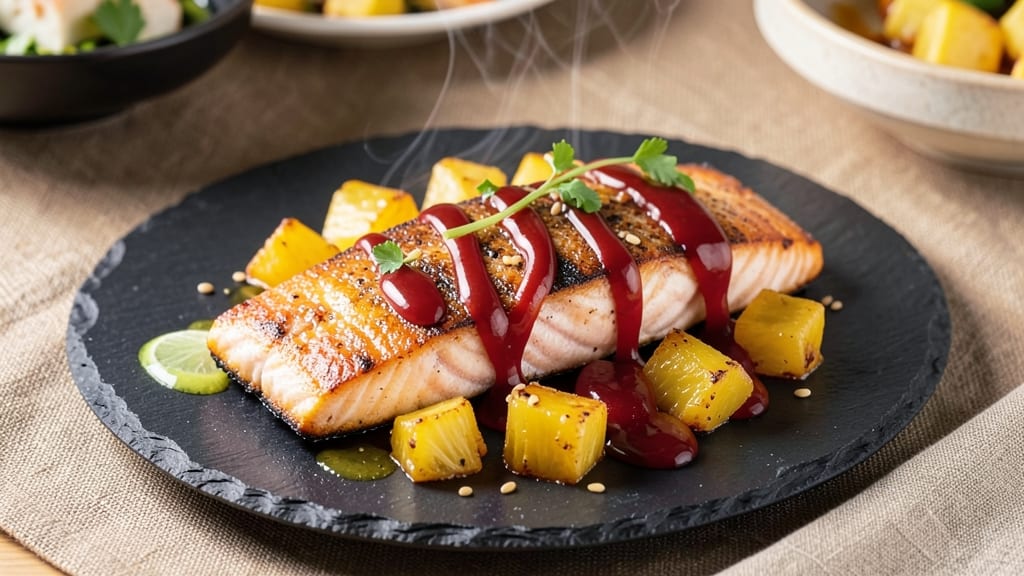
This roasted pineapple habanero sauce transforms salmon into a bold, caramelized masterpiece where sweet and fiery flavors dance perfectly on your plate.
The secret lies in roasting pineapple until it develops deep caramel notes, then blending it with habanero for a sauce that's both vibrant and complex—just enough heat to make your salmon sing without overpowering it.
I developed this recipe after years of experimenting with tropical flavors and salmon, finally achieving that ideal balance of texture and taste.
The process couldn't be simpler: roast the pineapple until tender and caramelized, then blend it with habanero, garlic, and a touch of lime for brightness. Meanwhile, the salmon gets its signature crispy skin through careful pan-searing, ensuring every bite delivers that perfect contrast of tender flesh and golden crust.
What makes this dish truly special is how the sweetness of the caramelized pineapple complements the salmon's natural richness while the habanero adds just the right amount of heat.
When you plate this dish, you'll have perfectly seared salmon with shatteringly crisp skin, topped with a glossy, fruity sauce that ties everything together. The combination of textures—crispy skin, tender fish, and velvety sauce—makes each bite unforgettable.
Serve it with a side of jasmine rice or a fresh salad to round out the meal, and you'll have a restaurant-quality dish that's surprisingly easy to recreate at home.
This recipe works equally well for weeknight dinners or special occasions, and the sauce can be made ahead and stored in the fridge for up to a week.
The key to success lies in balancing the heat and sweetness, so don't be afraid to adjust the habanero to your preference. Let's get cooking!
Ingredients for roasted pineapple habanero sauce salmon
Sweet caramelized pineapple meets smoky habanero for a sauce that transforms salmon into a restaurant-worthy masterpiece.
| Ingredient | Amount | Notes |
|---|---|---|
| Fresh Pineapple 🍍 | 2 cups | Cubed, skin removed, core intact |
| Habanero Peppers 🌶️ | 2 whole | Seeds removed for mild heat |
| Salmon Fillets 🐟 | 4 pieces | Skin-on, 6 oz each, center-cut |
| Garlic Cloves 🧄 | 4 cloves | Freshly minced, aromatic |
| Lime Juice 🍋 | ¼ cup | Freshly squeezed, bright acidity |
| Extra-Virgin Olive Oil 🫒 | ½ cup | High-quality, fruity flavor |
| Honey 🍯 | 2 tbsp | Wildflower preferred for depth |
| Salt 🧂 | 1 ½ tsp | Diamond Crystal kosher salt |
| Black Pepper 🌶️ | ½ tsp | Freshly cracked, coarse grind |
| Jasmine Rice 🌾 | 1 cup | Uncooked, long-grain preferred |
| Fresh Cilantro 🌿 | ¼ cup | Chopped, for garnish |
| Sesame Seeds 🌰 | 1 tbsp | Toasted, for finishing |
The pineapple is non-negotiable here—look for fresh, vibrant fruit with no bruising or soft spots. Costco's pre-cut pineapple works perfectly for convenience, but if you're buying whole, remove the core and cut into 1-inch cubes. The habanero peppers are where the magic happens, so handle with care. I always grab mine from Mexican markets where they're fresher, but the grocery store will do in a pinch. For the salmon, center-cut fillets with skin are essential—they stay together better when searing. If you can't find center-cut, pat the fillets dry with paper towels to ensure maximum crispiness.
No habanero? Substitute half a jalapeño plus a pinch of cayenne for a milder heat, but you'll lose that complex fruity depth. The honey can be swapped for agave nectar if you're avoiding it, though it'll taste slightly different. Fresh lime juice is ideal, but bottled lime juice in a pinch works—just add a pinch of salt to compensate. For the rice, jasmine or basmati are perfect, but any long-grain white rice will work. The cilantro is optional but adds that fresh finish—skip it if you're sensitive to its flavor. If you're feeling adventurous, swap salmon for mahi-mahi—it handles the heat just as well.
The sauce keeps beautifully in the fridge for up to 1 week, though it tastes best within the first 3 days. Store it in an airtight container with a layer of olive oil on top to preserve freshness. The salmon is best served immediately after searing, but you can prep the sauce ahead and reheat it gently on the stove. For a complete meal, double the rice—it reheats perfectly and pairs wonderfully with the leftovers. If you make extra sauce, freeze it in ice cube trays for quick portions later.
Why You'll Love This Recipe
- I’ll be real: the first time I made this, I panicked about leftovers. But the sauce thickens beautifully when reheated, and the salmon stays moist—like it was just cooked. Pack it for lunch, freeze it for later, or serve it cold on crackers. No one will guess it’s from last night.
- Sweet Heat Magic: The roasted pineapple caramelizes into something almost syrupy, while the habanero adds just enough kick to make it unforgettable—like a tropical vacation on your plate. That balance of sweet, spicy, and tangy? Pure satisfaction.
- One-Pan Wonder: Honestly, this is my lazy-day hero. Toss pineapple chunks and salmon on a sheet pan, roast them together, then drizzle with the sauce—no chopping, no fuss, just flavor. My daughter even helps "supervise" the habanero (she loves the smell but won’t eat it).
- Weeknight to Weekend: Between us, this works for everything. Taco Tuesday? Dump it on tortillas. Potluck? Bring the leftovers. Even my picky uncle ate seconds—he just called it "fish with sweet sauce" and pretended it wasn’t spicy.
Step-by-step instructions for roasted pineapple habanero sauce salmon
Here's how to balance sweet caramelized salmon with fiery-sweet pineapple sauce—every bite delivers that perfect contrast.
Roast the Pineapple and Habaneros Until Caramelized
Preheat your oven to 425°F and line a baking sheet with parchment paper. Arrange the 2 cups fresh pineapple (cubed) and 2 whole habanero peppers (seeds removed) in a single layer, leaving space between each piece. Drizzle everything with 1 tablespoon of the extra-virgin olive oil and sprinkle with ½ teaspoon of the salt.
Roast for 20-25 minutes until the pineapple edges turn golden brown and the habaneros blister slightly. You'll smell that sweet, smoky aroma—this is your cue that the natural sugars have caramelized. Watch closely after 15 minutes to prevent burning. Transfer to a cutting board and let cool for 5 minutes before processing.
Make the Jasmine Rice for a Neutral Base
Rinse the 1 cup jasmine rice under cold water until the water runs clear. In a small saucepan, combine the rice with 1½ cups water and bring to a boil. Once boiling, reduce heat to low, cover, and simmer for 15 minutes without lifting the lid. This steaming method ensures fluffy, separate grains that won't turn mushy when mixed with the sauce later.
While the rice cooks, prepare the salmon by patting the 4 salmon fillets dry with paper towels. Season both sides generously with the remaining 1 teaspoon salt and ½ teaspoon black pepper. Let them sit at room temperature for 10 minutes—this ensures even cooking and prevents overcooking the centers.
Blend the Sauce and Cook the Salmon
Transfer the roasted pineapple and habaneros to a blender. Add the 4 cloves minced garlic, 2 tablespoons honey, and ¼ cup lime juice. Pulse until smooth, then with the blender running, slowly drizzle in the remaining ⅓ cup extra-virgin olive oil to emulsify. Taste and adjust seasoning—you want a balance of sweet, spicy, and tangy. Strain through a fine-mesh sieve if you prefer a silky texture.
Heat a large skillet over medium-high heat and add the salmon fillets, skin-side down. Cook for 4-5 minutes until the skin is crispy and golden brown, then carefully flip and cook for another 2-3 minutes until the salmon reaches 145°F internally. The flesh should flake easily with a fork—overcooking will make it dry.
Assemble and Garnish for Maximum Flavor
Fluff the cooked rice with a fork and divide it among four plates. Top each serving with a salmon fillet, skin-side up. Spoon the pineapple habanero sauce generously over the salmon, allowing it to pool slightly on the plate. The sauce should glisten with a vibrant orange hue from the habaneros and caramelized pineapple.
Garnish with 1 tablespoon toasted sesame seeds and 1 tablespoon chopped fresh cilantro. The sesame seeds add a nutty crunch that contrasts beautifully with the creamy salmon, while the cilantro brightens the dish with freshness. Serve immediately while the salmon is still warm and the sauce is at its peak flavor—this dish doesn't wait!
Pro Tips For Making Roasted Pineapple Habanero Sauce Salmon
- CHAR THE HABANERO FIRST: Roast the habanero whole in the oven (400°F for 10 minutes) before blending—this mellows the raw heat and deepens its smoky flavor. I learned this the hard way after serving a dish that made guests question their life choices.
- DON’T SKIP THE PINEAPPLE SKIN: Leave the skin on the pineapple chunks when roasting (425°F for 15-20 minutes)—it protects the fruit from burning and adds a subtle caramelized texture. Yes, peel it after, but trust me, the sauce will taste richer.
- SALMON: 12 MINUTES MAX: Salmon cooks fast—pull it from the pan or oven at 115°F internal temp (or when it flakes easily with a fork). Overcook it, and you’ll end up with rubbery fish that ruins the whole dish. Set a timer, and don’t walk away.
- USE COLD PRESSURE FOR GARLIC: Smash the garlic cloves with the flat side of your knife before roasting them—this releases more flavor when they caramelize. I was skeptical until I tried it; now I never go back. (Bonus: Skip mincing entirely.)
Dietary considerations for this roasted pineapple habanero sauce salmon
Gluten-Free Adaptations
This recipe is naturally gluten-free since it relies on fresh ingredients like pineapple, habanero, and salmon. The only potential concern is cross-contamination if you're using shared kitchen tools. Always cook your salmon on a clean surface and use separate utensils if you've handled gluten-containing ingredients earlier.
The jasmine rice is also gluten-free, but double-check the package label to ensure no additives. 🌾
Dairy-Free Considerations
The original recipe doesn't contain any dairy, making it perfect for those avoiding lactose. If you're using store-bought ingredients like rice or honey, verify labels for hidden dairy additives.
The sauce's richness comes from olive oil and honey, so no substitutions are needed for dairy-free diets. The salmon's natural creaminess stands perfectly on its own.
Spice Sensitivity Adjustments
Habanero peppers pack serious heat, so adjust to your tolerance. For milder heat, reduce to 1 habanero pepper or swap for ½ jalapeño plus ¼ tsp cayenne.
If you love heat but want balance, add 1 extra tablespoon honey to the sauce to mellow the spice. Always taste before serving—this sauce can be easily adjusted!
Allergen-Friendly Options
For nut allergies, this recipe is safe as long as you avoid honey (substitute with agave nectar). The sesame seeds can be omitted if needed, though they add great texture.
If shellfish allergies are a concern, this dish remains completely safe. Always check your salmon source for potential cross-contamination warnings if you have severe allergies.
Low-Sugar Versions
To reduce sugar content, skip the honey entirely and increase lime juice to ⅓ cup for brightness. The caramelized pineapple will still provide natural sweetness, but the sauce will be more tangy.
For extra depth, add 1 teaspoon apple cider vinegar to enhance flavor without sugar. The salmon will still shine with this adjusted sauce.
Vegetarian Adaptations
While this recipe features salmon, you can adapt it for vegetarians by substituting the fish with grilled tofu or tempeh. Marinate the tofu in 1 tbsp soy sauce, 1 tbsp olive oil, and 1 tsp garlic powder for 30 minutes before grilling.
The sauce pairs beautifully with either protein, delivering the same sweet-spicy harmony. 🌱
Nutrition facts
Frequently asked questions
Can I use frozen pineapple instead of fresh?
Fresh pineapple is ideal for this recipe because its natural sugars caramelize beautifully. However, if you must use frozen, thaw it completely first and pat it very dry to prevent excess moisture in your sauce. The texture will be slightly softer, but it'll still work—just reduce roasting time by 3-5 minutes to avoid burning.
How do I make the habanero sauce milder without losing flavor?
Remove the seeds and membranes first—they contain most of the capsaicin (the compound that creates heat). For extra mildness, use just 1 habanero pepper instead of 2, or swap for ½ jalapeño plus ¼ teaspoon cayenne. The roasting process will naturally mellow the heat slightly, so don't worry about overdoing it.
What's the best way to store leftovers?
Store the sauce in an airtight container in the fridge for up to 1 week, with a layer of olive oil on top to preserve freshness. For the salmon, wrap individual fillets tightly in plastic wrap and place them in a freezer bag for up to 2 months. Reheat sauce gently on the stove, and salmon in the oven at 350°F for 8-10 minutes.
Can I grill the salmon instead of pan-searing?
Grilling works beautifully for this dish. Preheat your grill to medium-high heat and oil the grates well. Cook salmon skin-side down for 4-5 minutes until crispy, then flip for 2-3 minutes until just cooked through. The smoky flavor from the grill pairs wonderfully with the caramelized pineapple sauce.
What's the secret to perfectly crispy salmon skin?
Pat the salmon fillets very dry with paper towels before seasoning—moisture is the enemy of crispiness. Use a heavy skillet (cast iron works best) and heat it until it's smoking hot before adding the salmon. Cook skin-side down without moving it for the full 4-5 minutes—this gives the skin time to render its fats and crisp up properly.