
Sauces & Condiments
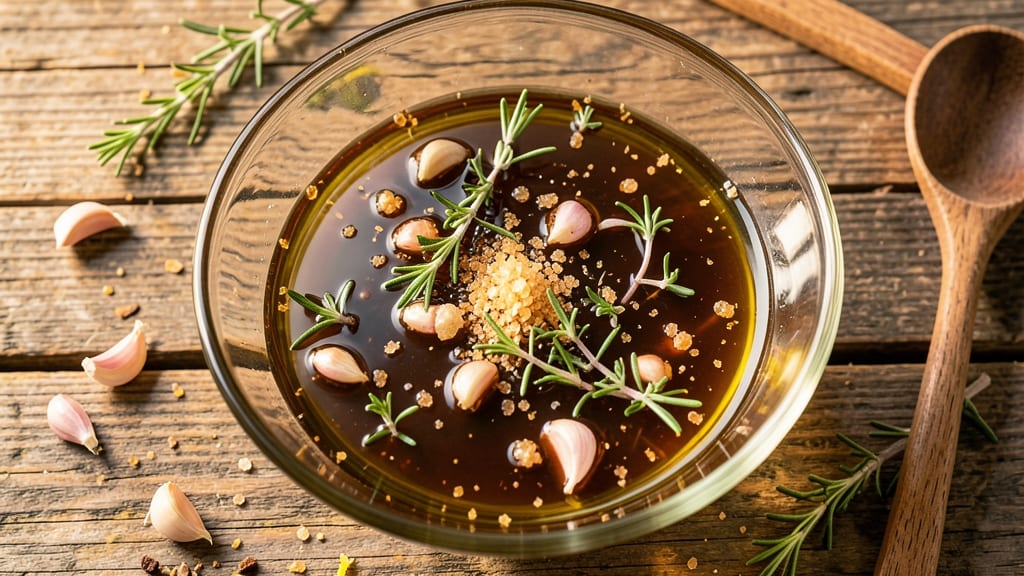
This apple cider vinegar steak marinade transforms tough cuts into melt-in-your-mouth perfection with just a few simple ingredients and 4 hours of tenderizing magic.
The acidity breaks down tough fibers while the aromatic blend of garlic, herbs, and sweet apple cider creates a flavor profile that elevates even the simplest steak to restaurant-quality. I've perfected this marinade over years of grilling, and it never fails to deliver juicy, flavorful results that impress every time.
The secret lies in the balance of acidity and fat—apple cider vinegar tenderizes while olive oil carries the flavors deep into the meat. Fresh garlic, rosemary, and thyme add layers of aroma, and a touch of brown sugar caramelizes during cooking for extra depth.
Unlike store-bought marinades, this version uses real ingredients with no artificial additives, making it as healthy as it is delicious.
What you'll achieve is steak that's tender enough to cut with a fork, with a perfect sear and complex flavor profile that lingers.
The marinade works equally well for ribeye, sirloin, or flank steak, and the leftovers keep in the fridge for up to 3 days—ideal for meal prep or spontaneous grill sessions. This is the kind of marinade that turns weeknight dinners into special occasions without the fuss.
Ready to elevate your steak game? Here's everything you need to create this foolproof marinade that guarantees tender, flavorful results every time. Let's get started with the ingredients and step-by-step instructions that make this recipe so reliable.
Ingredients for apple cider vinegar steak marinade
Nine simple ingredients that transform tough steak into restaurant-quality perfection with tenderizing acid magic.
| Ingredient | Amount | Notes |
|---|---|---|
| Apple Cider Vinegar 🍏 | ½ cup | Raw, unfiltered preferred for depth |
| Extra-Virgin Olive Oil 🫒 | ½ cup | High-quality, fruity variety |
| Fresh Garlic Cloves 🧄 | 6 cloves | Minced for even distribution |
| Fresh Rosemary Sprigs 🌿 | ¼ cup | Finely chopped, stems removed |
| Fresh Thyme Leaves 🌿 | ¼ cup | Or 1 tbsp dried thyme |
| Light Brown Sugar 🍯 | 2 tbsp | For subtle caramelization |
| Diamond Crystal Kosher Salt 🧂 | 1 ½ tsp | Adjust to taste |
| Freshly Ground Black Pepper 🌶️ | 1 tsp | Cracked peppercorns preferred |
| Worcestershire Sauce 🍶 | 1 tbsp | Vegetarian version if needed |
The apple cider vinegar is the star here—Bragg or local orchard brands have the best flavor, but any raw variety works. Fresh garlic and herbs make or break the marinade, so don't skimp. I always grab organic rosemary from Trader Joe's because it's vibrant and potent. The olive oil should be extra-virgin with noticeable fruity notes—none of that cheap cooking oil. For the brown sugar, light variety dissolves better than dark. If you're using dried thyme, measure it carefully—it's more concentrated than fresh.
No apple cider vinegar? White wine vinegar or lemon juice works in a pinch, but the flavor profile changes slightly. Short on fresh herbs? Dried oregano at half the amount gets you close. The Worcestershire sauce adds depth—if you're vegetarian, Annie's or Heinz vegetarian version keeps the umami. For extra richness, add 1 tbsp soy sauce. The brown sugar can be swapped for maple syrup if you prefer a more pronounced sweetness. Always taste before marinating—adjust salt and sugar to your preference.
This marinade keeps for up to 3 days in the fridge, but it's best used within 24 hours for maximum potency. Store in an airtight container, and shake well before each use. For meal prep, I make double batches and freeze half in ice cube trays—just thaw overnight in the fridge. The leftover marinade makes an excellent salad dressing or finishing drizzle for grilled veggies. Always discard any unused marinade that's been in contact with raw meat.
Why You'll Love This Recipe
- Here’s what sold me: the marinade keeps in the fridge for a week, and the steak stays juicy and packed with flavor. I’ve used the extra on chicken, shrimp, even roasted potatoes—because why waste something this good? It’s the kind of leftovers I actually look forward to.
- Five-Ingredient Magic: I swear, this marinade is the kind of shortcut that makes me feel like a chef. Just toss in the vinegar, olive oil, smashed garlic, and a handful of rosemary and thyme—no measuring cups, no fancy tools. The acidity from the vinegar does all the work while I’m scrolling through my phone.
- Tangy Crispy Perfection: That first bite? The vinegar cuts through the richness of the steak while the garlic and rosemary bring this deep, savory warmth. It’s not just flavor—it’s the kind of contrast that makes your taste buds sit up and take notice, especially when the steak gets that beautiful char on the grill.
- Weeknight to Dinner Party: Between us, this marinade is my secret weapon for when I’m too tired to think but still want to impress. Use it on flank steak for quick weeknight dinners, or let it sit longer for a ribeye that’ll wow guests. The same jar works for both—no excuses.
Step-by-step instructions for apple cider vinegar steak marinade
This marinade transforms tough cuts into melt-in-your-mouth perfection—just 15 minutes of prep yields hours of flavor.
Combine the Base Ingredients
In a medium bowl, whisk together the 0.5 cup apple cider vinegar and 0.5 cup extra-virgin olive oil until fully emulsified. The vinegar will initially separate, but vigorous whisking for 30 seconds creates a smooth, balanced foundation. This acid-base pairing is what breaks down tough muscle fibers while preventing the vinegar from overpowering the steak's natural flavor.
Add the 2 tablespoons light brown sugar and 1 tablespoon Worcestershire sauce, whisking until completely dissolved. The sugar adds subtle caramel notes and helps balance the acidity, while the Worcestershire sauce introduces umami depth that complements the herbs. Let this mixture sit for 2 minutes while you prepare the aromatics—this gives the sugar time to begin dissolving fully.
Incorporate the Herbs and Seasonings
Finely chop the 0.25 cup fresh rosemary sprigs and 0.25 cup fresh thyme leaves, removing any woody stems. Add these to the bowl along with the 6 cloves minced fresh garlic cloves, 1.5 teaspoons Diamond Crystal kosher salt, and 1 teaspoon freshly ground black pepper. Stir with a wooden spoon until all ingredients are thoroughly combined and the herbs are evenly distributed throughout the marinade.
Here's where the magic happens: the rosemary and thyme release their essential oils into the oil base, while the garlic and salt work together to enhance both flavor and tenderness. The pepper should be freshly cracked—pre-ground pepper loses its potency quickly and won't deliver that satisfying pop of heat you want in every bite.
Test and Adjust the Marinade
Taste the marinade and adjust the seasoning if needed. You might find the acidity needs a touch more sweetness—add another ½ teaspoon sugar if necessary. Or perhaps the salt needs a slight boost—another ¼ teaspoon kosher salt will do the trick. The goal is a harmonious balance where the vinegar's tang doesn't overpower but rather enhances the steak's natural beefy flavor.
This is also your opportunity to check the consistency. If the marinade appears too thick, add 1 tablespoon water to help it cling better to the meat. The ideal marinade should coat the back of a spoon smoothly without being watery. Once satisfied, transfer the marinade to a resealable container with a lid—this prevents spills and makes it easy to coat the steak thoroughly.
Marinate the Steak Properly
Pat your steak dry with paper towels—this is crucial for maximum marinade adhesion and better browning. Place the steak in a single layer in a resealable bag or shallow dish and pour the marinade over it, ensuring every surface is coated. For even coverage, use your hands to massage the marinade into the meat, especially the thickest parts where tenderness matters most.
Marinate for 30 minutes to 4 hours in the refrigerator. The acid in the vinegar begins working immediately, but longer marinating (up to 4 hours) yields more dramatic tenderness. Never marinate longer than 4 hours—beyond this point, the acid can start breaking down the meat's proteins too much, resulting in a mushy texture. If you're short on time, even 15 minutes will make a noticeable difference in tenderness.
Cook and Sear for Maximum Flavor
Remove the steak from the marinade and let it sit at room temperature for 10 minutes before cooking. This equalizes the internal temperature for more even cooking. Heat your grill or skillet to high heat and sear the steak for 3-4 minutes per side for medium-rare, or until you achieve your desired doneness. The residual marinade will create a beautiful crust while infusing the meat with layers of flavor.
For best results, let the steak rest for 5-10 minutes after cooking before slicing. This allows the juices to redistribute throughout the meat, ensuring each bite is as tender as the first. The apple cider vinegar marinade will have transformed your steak from potentially tough to melt-in-your-mouth perfection—worth every minute of prep!
Pro Tips For Making Apple Cider Vinegar Steak Marinade
- Mince That Garlic: Fresh garlic cloves in this marinade need to break down fast, or you’ll just chew through tough bits. Pulse 4-5 cloves in a food processor for 3-4 seconds—just until they’re a thick paste, not a smooth paste—so the flavor infuses without turning the marinade into a puree.
- Balance the Vinegar: Apple cider vinegar is bold, and too much will overpower the steak. For every ¼ cup of vinegar, use ½ cup of olive oil—this dilutes the acidity while keeping the tang sharp. I learned this the hard way after marinating a ribeye for hours and ending up with a tangy, not tender, bite.
- Steep the Herbs: Rosemary and thyme don’t release their oils instantly—give them 10 minutes in the marinade before adding the steak. Crush the sprigs with the flat side of a knife first, then let them soak in the vinegar and oil. This ensures the herbs flavor the meat, not just sit on top like decorative garnish.
- Marinate Just Long Enough: Two hours is plenty for tough cuts like flank steak; any longer and the vinegar starts breaking down the meat fibers. For tender cuts like sirloin, 30 minutes in the fridge is all you need. I used to leave it overnight, thinking more time meant better flavor—until I ended up with mushy edges.
Storing and reheating your leftovers
Marinade Storage
Store unused marinade in an airtight container in the refrigerator for up to 3 days. The acidity preserves the freshness of the herbs and garlic, but flavors intensify over time. I like using glass mason jars because they keep the aromatics vibrant longer than plastic.
Always label with the date to track freshness—this marinade never lasts that long in my kitchen! 🌿
Steak Prep Tips
Pat your steak completely dry with paper towels before marinating—this ensures maximum flavor absorption and better searing. For thicker cuts like ribeye, pierce the meat gently with a fork to help the marinade penetrate deeper.
I use Braun meat tenderizer for extra-tough cuts, but it's optional for most steaks. Let the steak sit at room temperature for 10-15 minutes before cooking to prevent chilling your grill or pan. ⏳
Reheating Leftover Marinade
Use leftover marinade as a dipping sauce or grilled veggie dressing—simply warm it gently in a saucepan over low heat for 2-3 minutes. Never boil it, as the herbs will turn bitter.
For extra richness, add 1 tablespoon butter or 1 teaspoon olive oil while reheating. I've even used it as a quick salad dressing with a splash of water to thin it out. 🍽️
Freezing Marinade
Freeze excess marinade in ice cube trays for easy single-use portions. Once frozen, transfer the cubes to a ziplock bag and store for up to 3 months. Thaw overnight in the fridge before using.
The texture may separate slightly after freezing, but a quick whisk restores it. I keep a stash of these cubes in my freezer for last-minute grilling emergencies. ❄️
Reusing Marinade
Never reuse marinade that's been in contact with raw meat—it's a food safety risk. However, you can reduce the used marinade by simmering it in a saucepan over medium heat for 5-7 minutes to create a flavorful pan sauce.
Strain out any solids and use the reduced liquid to deglaze your pan after cooking the steak. This technique recovers every drop of flavor! 🔥
Steak Resting Rules
After cooking, let your steak rest for 5-10 minutes before slicing—this is non-negotiable for juicy results. The residual heat continues cooking the meat slightly, and the juices redistribute instead of pooling on your plate.
For extra-tender cuts, tent loosely with aluminum foil while resting. I always use this time to prep sides or make a quick sauce to keep the kitchen flowing smoothly. 💫
Nutrition facts
Frequently asked questions
Can I use this marinade on other meats besides steak?
This marinade works wonderfully on chicken thighs, pork chops, and even lamb. For chicken, reduce marinating time to 30-60 minutes to avoid over-acidifying the meat. The apple cider vinegar's tang pairs beautifully with pork's richness, while lamb benefits from the rosemary's earthy notes. Just adjust the marinating time based on the meat's thickness and tenderness.
What if I don't have fresh rosemary or thyme?
No problem! Use dried rosemary at ⅓ the amount (about ⅛ teaspoon) and dried thyme at ½ the amount (about ⅛ teaspoon). For extra depth, add ½ teaspoon dried oregano or ¼ teaspoon smoked paprika. If you're missing both, 1 teaspoon lemon zest adds bright citrus notes that complement the vinegar beautifully. The key is balancing the flavors—taste as you go!
How do I fix an overpowering vinegar taste?
If the marinade tastes too tangy, balance it with 1 extra tablespoon brown sugar or 1 teaspoon honey to mellow the acidity. For a richer flavor, add 1 tablespoon soy sauce or 1 teaspoon balsamic vinegar—both add depth without overpowering. Let it sit for 10 minutes after adjusting to allow flavors to meld. If the steak still tastes too acidic, sear it quickly over high heat to caramelize the exterior and mask some of the vinegar's sharpness.
Can I make this marinade without Worcestershire sauce?
Yes! Replace the Worcestershire with 1 tablespoon soy sauce for umami depth or 1 teaspoon fish sauce (if using beef) for a similar savory kick. For a vegetarian option, try 1 tablespoon tamari or ½ teaspoon liquid smoke plus ½ teaspoon miso paste. The Worcestershire adds complexity, but these alternatives work well—just taste and adjust the salt afterward, as soy-based substitutes can be salty.
Why does my steak turn out tough after marinating?
Over-marinating is the most common culprit—never exceed 4 hours with this acidic marinade. The vinegar breaks down proteins, and prolonged exposure can make the meat mushy. Also, ensure your steak is room temperature before cooking (not cold straight from the fridge) and sear it over high heat to create a flavorful crust. For extra-tender results, consider pounding thicker cuts gently before marinating to even out thickness.