
Main Courses
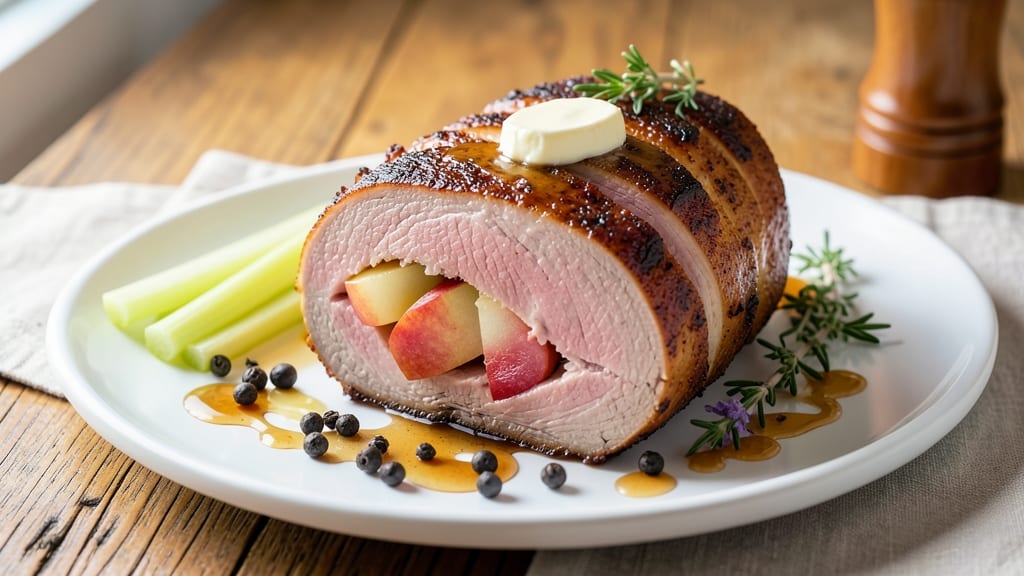
This apple stuffed pork loin recipe transforms a simple roast into a showstopper with sweet-tart apple filling and crisp celery-pepper crunch. 🌟 After years of perfecting this technique—first in Charleston kitchens, then on my farm—I’ve cracked the code for tender pork with juicy, caramelized apples that stay perfectly balanced between sweet and savory.
The secret lies in the stuffing method and precise oven temperature control that ensures the pork stays moist while the filling develops deep flavor.
The recipe begins with a well-seasoned pork loin—never dry, never overcooked—stuffed with a mix of crisp apples, sharp celery, and black pepper that adds just the right bite. I use Honeycrisp apples for their perfect balance of sweetness and texture, but stay away from overly soft varieties like Gala.
The pork roasts at 325°F until it reaches 145°F internal temperature, while the stuffing caramelizes beautifully without turning mushy. This method delivers restaurant-quality results with minimal effort, making it ideal for holiday dinners or special weekend meals.
What you’ll end up with is a perfectly pink center, crisp edges, and a filling that’s tender yet still holds its shape—each bite offering a harmonious blend of savory pork and sweet apple.
The aroma alone will have everyone gathering around the table, and the presentation is elegant enough for company but simple enough for a weeknight dinner. Serve with a red wine reduction or a crisp apple cider glaze for extra depth.
Pro tip: Let the pork rest for 15 minutes before slicing—this ensures juices redistribute for maximum tenderness. Pair with roasted root vegetables or a simple green salad to complete the meal. Here’s how to make it happen perfectly every time.
Ingredients for apple stuffed pork loin
Sweet apples, crisp celery, and perfectly seasoned pork create a restaurant-worthy centerpiece.
| Ingredient | Amount | Notes |
|---|---|---|
| Pork Loin 🥩 | 2 lb | Center-cut, bone-in preferred |
| Honeycrisp Apples 🍎 | 4 medium | Peeled, cored, sliced ¼-inch thick |
| Celery Stalks 🧅 | 4 whole | Thinly sliced, leafy ends trimmed |
| Black Peppercorns 🌶️ | 1 tbsp | Freshly cracked, coarse grind |
| Unsalted Butter 🧈 | ½ cup | Cold, cubed for stuffing |
| Fresh Thyme 🌿 | 2 sprigs | Leaves only, finely chopped |
| Kosher Salt 🧂 | 1 ½ tsp | Diamond Crystal preferred |
| Garlic Cloves 🧄 | 4 cloves | Minced, for seasoning |
| Apple Cider Vinegar 🍋 | 1 tbsp | For apple soaking |
| Olive Oil 🫒 | 2 tbsp | Extra-virgin for searing |
| Fresh Rosemary 🌿 | 1 sprig | Whole, for aromatics |
| Red Wine 🍷 | ½ cup | Dry, for deglazing |
| Heavy Cream 🥛 | ¼ cup | For finishing sauce |
The Honeycrisp apples are non-negotiable for this dish—their crisp texture and balanced sweetness hold up beautifully during roasting. Local farmers markets often carry them in fall, but Whole Foods and Trader Joe's stock them year-round. Look for firm apples with vibrant red skin—avoid any with bruises or soft spots. For the celery, organic stalks from the grocery store work best; trim the leafy ends and slice them thinly for maximum crunch. The pork loin should be center-cut and bone-in if possible—this ensures even cooking and better flavor. If you can't find bone-in, a boneless loin will work, but increase the oven time by 5-10 minutes.
No Honeycrisp apples? Fuji or Pink Lady are solid substitutes—they hold their shape well and have good flavor. Short on celery? Substitute with fennel or additional apples, but reduce the quantity by 25% to maintain balance. The black pepper should be freshly cracked for the best flavor—pre-ground loses its punch quickly. For the butter, European-style unsalted (like Plugrá) adds more richness, but any good-quality butter will work. If you're avoiding alcohol, substitute the red wine with extra apple cider or beef broth. The heavy cream in the finishing sauce can be swapped for coconut cream for a dairy-free option, though the flavor will differ slightly.
The apples and celery can be prepped up to 2 days ahead—store them in an airtight container in the fridge. The stuffed pork loin keeps well for 3 days in the refrigerator, though it reheats best when served fresh. For make-ahead convenience, slice the pork and reheat it in a 350°F oven for 10-15 minutes with a splash of broth to keep it moist. The leftovers make excellent sandwiches or can be repurposed into pork fried rice. Always let the pork rest for 15 minutes before slicing to ensure juicy, tender results.
Why You'll Love This Recipe
- One-Pan Magic: I swear by this recipe when I’m too tired to wash extra dishes—just sear the pork, stuff it with apples and celery, and let the oven do the work. That crispy butter crust? Worth every second.
- Sweet-Savory Balance: The Honeycrisp apples add a jaw-dropping crunch and natural sweetness that cuts through the richness of the pork, while the peppercorns give it a subtle kick. It’s the kind of dish where every bite feels like a little flavor party.
- Weeknight to Dinner Party: Between us, this is my go-to for both lazy Tuesdays and fancier gatherings. Slice it thin for sandwiches the next day, or serve it whole with mashed potatoes for a showstopper. Honestly, it’s that versatile.
- Leftovers That Don’t Suck: Unlike so many stuffed meats, this actually tastes better the second day. Shred the pork, toss it with the apples, and pack it in lunches—your future self will thank you. (Yes, even on a Tuesday.)
Step-by-step instructions for apple stuffed pork loin
Transform humble pork loin into a restaurant-worthy centerpiece with this balanced sweet-savory technique.
👨🍳 Step 1: Prepare the Apple-Celery Stuffing
In a medium bowl, combine the 4 medium Honeycrisp Apples (pre-sliced), 4 whole Celery Stalks (thinly sliced), 1 tbsp Black Peppercorns (freshly cracked), 2 sprigs Fresh Thyme (leaves only), 4 cloves Garlic Cloves (minced), and 1 sprig Fresh Rosemary. Drizzle with 1 tbsp Apple Cider Vinegar and toss gently to distribute. Let this mixture sit for 10 minutes - the vinegar will soften the apples slightly and enhance their sweetness.
While waiting, preheat your oven to 375°F. I like to use the 0.5 cup Unsalted Butter (cold, cubed) here too - fold it into the stuffing mixture just before filling the pork. The butter will melt during roasting, creating a luscious internal sauce that binds everything together. This is where the magic happens - the contrast between crisp celery, peppery heat, and caramelizing apples.
🔥 Step 2: Sear and Stuff the Pork Loin
Heat 2 tbsp Olive Oil in a large oven-safe skillet over medium-high heat until shimmering. Pat the 2 lb Pork Loin dry with paper towels - this is critical for achieving that perfect mahogany crust. Season both sides generously with 1.5 tsp Kosher Salt and black pepper. Sear the pork for 3 minutes per side until developing a deep golden-brown crust. Real talk: don't rush this step. You want that crust to form before stuffing.
Remove the pork from the pan and create a pocket by making a horizontal cut about 1 inch deep along one side. Gently open the pocket and stuff with the apple-celery mixture, pressing lightly to help it stay in place. The pork should look plump and inviting - like a well-wrapped gift ready for the oven. Return the skillet to the stove for 1 minute to warm the stuffing slightly.
🥘 Step 3: Roast Until Golden and Tender
Transfer the skillet to the preheated 375°F oven and roast for 45-50 minutes, until the internal temperature reaches 145°F when measured at the thickest part. Here's the thing - I like to tent the pork loosely with aluminum foil after the first 30 minutes of cooking. This prevents the top from over-browning while still allowing the stuffing to caramelize beautifully. The pork should have a deep golden crust with a rich, aromatic smell wafting from the oven.
About 10 minutes before the pork is done, remove it from the oven and increase the heat to 400°F. This final broil step creates that perfect crust we're after. Watch it closely - you want the exterior to reach 160°F and develop a beautiful caramelized finish. The stuffing should be tender with apples that have just begun to soften but still retain their shape.
🍳 Step 4: Create the Wine-Cream Sauce
Return the skillet to the stovetop over medium heat. Deglaze with 0.5 cup Red Wine, scraping up all those delicious browned bits from the bottom - this is where all the pork's flavor lives. Let the wine reduce by half (2-3 minutes) until it's syrupy and aromatic. Add the 0.25 cup Heavy Cream and let it warm through, stirring gently. The sauce should coat the back of a spoon and have a velvety texture.
Taste and adjust seasoning - you might need a pinch more salt or a crack of black pepper. This sauce should complement the pork rather than overpower it. I like to finish it with a sprig of fresh thyme for that final herbal note. The contrast between the rich, creamy sauce and the sweet-savory stuffing is what makes this dish truly special.
⏰ Step 5: Rest and Serve with Confidence
Transfer the pork to a cutting board and let it rest for 10-15 minutes before slicing. This resting time is crucial - it allows the juices to redistribute throughout the meat, ensuring each slice is moist and flavorful. During this time, you can keep the wine-cream sauce warm in the skillet over low heat, covered with a lid.
Slice the pork against the grain into ½-inch thick portions. The stuffing should be visible through the cuts, creating an attractive presentation. Serve with the sauce spooned generously over each slice. The combination of tender pork, caramelized apple-celery stuffing, and rich wine-cream sauce creates a harmonious balance of flavors that will impress even the most discerning diners.
Pro Tips For Making Apple Stuffed Pork Loin
- SEAR THE LOIN FIRST: Hit that pork loin with a screaming-hot pan for 2-3 minutes per side before stuffing. I used to skip this and ended up with a bland center—crisping the outside first locks in juices and builds flavor. Use about 2 tablespoons of butter (yes, even if it sounds like a lot), and don’t crowd the pan or it’ll steam instead of brown.
- CORE THE APPLES THIN: Slice those Honeycrisp apples into ¼-inch thick rounds, then cut a small well in the center of each slice—just enough to hold the celery-butter mixture without overflowing. Thick slices stay soggy; thin ones caramelize perfectly and soak up the pork’s juices like a sponge. (And resist the urge to skip this—your stuffing will leak everywhere otherwise.)
- STUFF LOOSELY, NOT TIGHT: Pack the apple-celery-butter mix into the pork loin cavity with your fingers, but don’t mash it down like you’re making taco filling. Leave gaps—this lets the apples soften evenly and prevents a dense, mushy center. If it feels too snug, trim the stuffing slightly or the pork will bulge awkwardly while roasting.
- REST IT UNDER FOIL: As soon as the pork hits 145°F (use a meat thermometer—no guessing), transfer it to a tray, tent loosely with foil, and let it sit for 10 minutes. I learned this the hard way: cutting into it too soon sends all the juices pooling out, leaving you with dry, unappealing slices. (Yes, even if you’re starving and impatient.)
Common mistakes when making this recipe
Overstuffing Ruins Texture
Don't overpack that pork loin pocket! When I first tried this recipe, I crammed too much apple-celery mixture inside, and the pork split open during roasting. The ideal stuffing should fill the pocket but still allow the meat to close naturally.
Aim for about 75% capacity—just enough to peek out slightly when you close the incision. Press the stuffing in gently but firmly, and the pork will hold its shape beautifully. 🥩
Skipping the Vinegar Soak
That 1 tbsp apple cider vinegar in the stuffing isn't just for flavor—it's a game-changer for texture. I learned this the hard way when I forgot it once, and the apples turned mushy while the pork was still undercooked.
The vinegar gently softens the apples and balances their sweetness, creating that perfect caramelized texture. Let the stuffing sit for those 10 minutes before stuffing the pork—it makes all the difference. 🍎
Underseasoning the Pork
Pork loin can be finicky about seasoning. When I first started making this, I'd often underestimate how much salt it needed. The rule of thumb? Season generously with 1.5 tsp kosher salt and black pepper before searing—don't hold back.
The crust forms faster with proper seasoning, and the flavors penetrate deeper. Taste the pork after searing—if it's bland, add a pinch more salt. The stuffing adds sweetness, so the pork needs that savory punch to balance it. 🧂
Not Resting the Pork
This is the biggest rookie mistake I see. Slicing pork immediately after roasting sends all those precious juices running out, leaving you with dry, tough meat. That 10-15 minute rest is non-negotiable—it lets the juices redistribute so every bite is moist and flavorful.
I've seen home cooks rush this step and end up with disappointing results. Trust me, the extra wait time is worth it for that perfect slice. ⏳
Overcooking the Apples
The stuffing should be tender but still hold its shape when the pork is done. If you roast at too high a temperature or for too long, those apples will turn to mush, losing their texture and balance.
Keep the oven at 375°F and monitor the internal temperature of the pork—when it hits 145°F, the apples should be just right. The final broil at 400°F should only be for 10 minutes max to get that caramelized crust without overcooking the filling. 🌶️
Using the Wrong Apple Variety
Not all apples are created equal. When I first experimented with this recipe, I used Gala apples because they were on sale, and they turned out too soft and watery. Honeycrisp is my go-to because it holds its shape and has that perfect sweet-tart balance.
If you must substitute, stick with Fuji or Pink Lady—they're sturdy enough to handle the heat. Avoid varieties like McIntosh or Red Delicious—they'll fall apart and ruin the texture of your stuffing. 🍏
Nutrition facts
Frequently asked questions
Can I use boneless pork loin for this recipe?
Yes, but you'll need to adjust the cooking time slightly. Boneless pork loin cooks faster than bone-in, so reduce the oven time by about 5-10 minutes and check the internal temperature at 140°F instead of 145°F. The stuffing will still cook through properly, but the meat will be more tender without the bone's insulating effect.
What if I don't have apple cider vinegar? No problem! Substitute with 1 tbsp lemon juice or white wine vinegar in a pinch. The acidity is what softens the apples slightly and balances their sweetness. Just
How do I keep the stuffing from falling out when slicing?
Secure the stuffing by tying the pork loin with kitchen twine before roasting. Make two parallel cuts along the top of the incision, then tie the twine tightly around the center. This keeps everything contained while allowing the juices to circulate. Remove the twine just before slicing for a clean presentation.
Can I make this recipe ahead of time?
Prepare the stuffed pork loin up to 2 days ahead and refrigerate it uncovered on a wire rack. The exterior will develop even more flavor. When ready to cook, bring it to room temperature for 30 minutes before roasting (add 5-10 minutes to the cooking time). For the stuffing, prep it 1 day ahead and store in an airtight container—it keeps well until ready to use.
What's the best way to reheat leftovers?
Slice the pork and reheat in a 350°F oven for 10-15 minutes with a splash of broth or apple cider to keep it moist. For the stuffing, warm it separately in a skillet with a pat of butter over medium-low heat for 3-4 minutes. Avoid microwaving—it turns the pork rubbery and the apples mushy. Leftover pork makes amazing sandwiches or can be chopped for fried rice!