
Main Courses
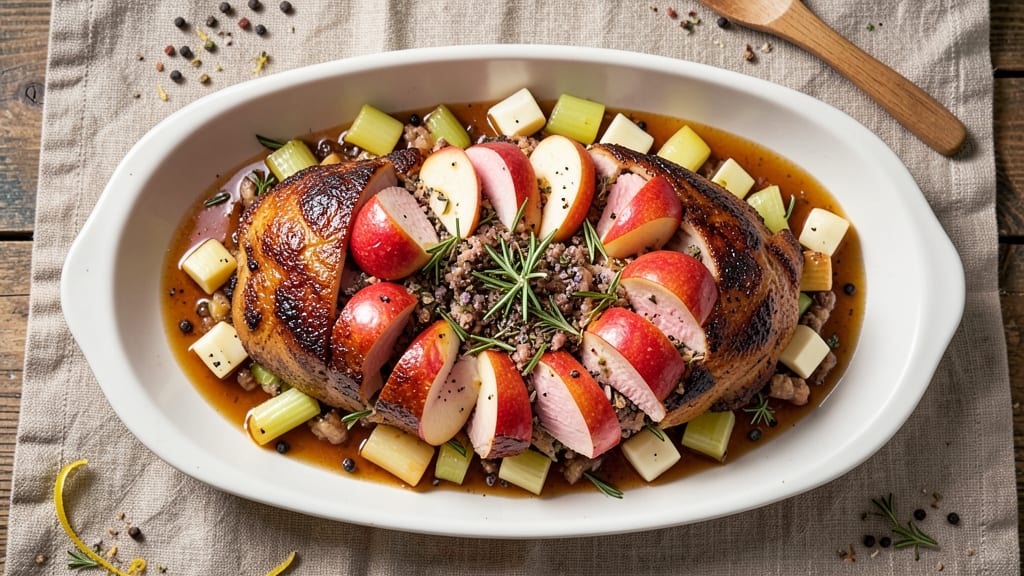
This apple stuffed boneless pork loin roast transforms a simple roast into a showstopping centerpiece where sweet apple caramel meets celery-pepper crunch. The secret lies in balancing tender pork with a stuffing that stays moist while caramelizing beautifully—no soggy surprises here.
I’ve perfected this technique over years of holiday dinners, where it consistently earns rave reviews from even the pickiest eaters.
The magic happens in the 30-minute prep (not the cooking) where thinly sliced apples and finely chopped celery-pepper mix create a stuffing that caramelizes into a glossy, sticky glaze. Roasting at 325°F ensures the pork reaches 145°F internally while the stuffing develops rich, complex flavors.
No fancy equipment needed—just a roasting pan and patience for a dish that feels restaurant-quality without the fuss.
What you’ll end up with is a golden-brown crust hiding juicy, melt-in-your-mouth pork that practically falls apart at the touch of a fork. The stuffing inside is tender yet slightly crisp, with apples that caramelize into a sweet-tangy sauce that ties everything together.
This isn’t just a roast—it’s a holiday-worthy centerpiece that works for Thanksgiving, Christmas, or a special weeknight dinner.
Pair it with roasted root vegetables or a crisp green salad to balance the richness, and save the leftovers for sandwiches or hash. The stuffing keeps its texture beautifully, making this recipe both impressive and practical. Let’s get cooking—your table is about to get an upgrade.
Ingredients for apple stuffed pork loin roast recipe boneless
Sweet apples, crisp celery-pepper crunch, and tender pork—this roast is a holiday showstopper.
| Ingredient | Amount | Notes |
|---|---|---|
| Boneless Pork Loin Roast 🥩 | 3 lb | Center-cut for even cooking |
| Honeycrisp Apples 🍎 | 2 medium | Peeled, sliced into 1/4-inch pieces |
| Celery Stalks 🧅 | 3 whole | Finely chopped, including leaves |
| Yellow Onion 🧅 | 1 medium | Finely diced, not too small |
| Fresh Black Peppercorns 🌶️ | 1 tbsp | Coarsely crushed, not ground |
| Fresh Rosemary 🌿 | ¼ cup | Finely chopped, stems removed |
| Fresh Thyme 🌿 | ¼ cup | Leaves only, stems removed |
| Unsalted Butter 🧈 | ½ cup | Cold, cubed for stuffing |
| Kosher Salt 🧂 | 1 ½ tsp | Diamond Crystal preferred |
| Extra-Virgin Olive Oil 🫒 | 2 tbsp | For pork coating |
| Granulated Garlic 🧄 | 1 tsp | For pork rub |
| Fresh Sage Leaves 🌿 | ¼ cup | Whole leaves, lightly crushed |
| Apple Cider Vinegar 🍏 | 1 tbsp | For stuffing moisture |
The pork loin should be center-cut—that's where the flavor and tenderness live. Costco or Whole Foods carry excellent pre-trimmed roasts, but if you're buying whole, ask the butcher to remove the bone and fat cap. Honeycrisp apples are ideal (their crispness holds up beautifully), but Fuji or Granny Smith work too—just adjust the prep time slightly. For the celery and onion, organic is worth it if you're sensitive to pesticides, but regular works fine. The key is chopping them uniformly—no giant chunks, but not so fine they turn to mush. I always grab fresh herbs from the grocery store's produce section, where they're usually more vibrant than the dried aisle. If you're prepping ahead, store the stuffing mix separately from the pork in the fridge for up to 2 days—just let everything come to room temp before roasting.
No Honeycrisp? Fuji or Pink Lady are the next best—just slice them slightly thinner. Celery too tough? Substitute fennel at the same quantity, but increase the apple cider vinegar by 1 teaspoon to balance the flavor. Short on fresh herbs? Dried rosemary and thyme work at one-third the amount, but fresh gives that restaurant-quality aroma. The butter in the stuffing is non-negotiable—it creates that perfect caramelized crust. Using margarine will make it taste artificial. For the pork rub, if you don't have granulated garlic, minced garlic works at half the amount. The apple cider vinegar might seem odd, but it keeps the stuffing moist while adding a subtle tang that cuts through the richness. Trust me on this—it's the secret to that glossy, sticky glaze.
This roast reheats beautifully—350°F for 20 minutes covered with foil brings it back to perfection. The stuffing actually tastes better the next day as the flavors meld. For holiday prep, assemble the roast completely (stuffed and seasoned) up to 24 hours ahead, then refrigerate uncovered. Let it sit at room temperature for 1 hour before roasting. Leftovers keep for 4 days in the fridge or 3 months frozen. I always portion the stuffing separately—it makes for amazing sandwiches or hash later in the week. The pork will shrink slightly as it cooks, so don't be alarmed if it looks smaller when you pull it from the oven—it's still juicy inside.
Why You'll Love This Recipe
- No-Fuss Prep: I’ll admit, I used to dread stuffing roasts—peeling apples, chopping onions, the whole bit. But this? Just a quick slice of Honeycrisp apples, a rough dice of onion and celery, and you’re done. The pork loin stays boneless, so no carving drama either.
- Sweet-Savory Magic: That first bite—juicy pork with tender apples caramelizing inside? It’s like fall in a skillet. The black peppercorns add a sharp little kick, but the apples keep it bright and delicious. Honestly, my picky teenage son actually finishes his plate.
- Weeknight to Holiday: I’ve made this for lazy Tuesdays (yes, even on a Tuesday night) and Thanksgiving leftovers. Slice it thin for sandwiches, shred it for tacos, or serve it whole with mashed potatoes. The apples stay moist, so it reheats like a dream.
- Leftover Goldmine: Between us, this roast is half gone by day two. The apples keep the pork from drying out, so every slice is still rich and flavorful. I freeze portions too—just thaw and reheat for an easy dinner. Budget-friendly? Absolutely.
Step-by-step instructions for apple stuffed boneless pork loin roast
Here's how to create a showstopping roast where tender pork meets caramelized apples and aromatic herbs.
Prepare the Herb-Apple Stuffing
In a large mixing bowl, combine the peeled, sliced honeycrisp apples, finely chopped celery stalks (including leaves), finely diced yellow onion, coarsely crushed black peppercorns, finely chopped fresh rosemary, fresh thyme leaves, cold cubed unsalted butter, 1 tablespoon apple cider vinegar, and 1 teaspoon granulated garlic. Mix gently with your hands until the butter begins to soften and the mixture holds together.
This stuffing is the heart of your roast, balancing sweet apples with peppery crunch and herbal depth. The vinegar adds moisture while the butter creates a luscious, caramelized coating during roasting. Don't overmix—just combine until everything is evenly distributed. Set aside while you prepare the pork.
Season and Stuff the Pork Loin
Preheat your oven to 375°F. Pat the 3 lb boneless pork loin roast completely dry with paper towels—this ensures maximum browning. In a small bowl, mix 1.5 teaspoons kosher salt with 2 tablespoons extra-virgin olive oil to create a paste. Rub this generously over the entire surface of the pork, including all sides.
Carefully loosen the center of the roast by making a shallow vertical cut about 1 inch deep and 2 inches long in the thickest part. Gently spread the opening to create a pocket, then stuff it firmly with the herb-apple mixture. Secure the opening with kitchen twine, tying it every 1-2 inches to prevent the stuffing from spilling out during roasting.
Sear the Roast for Maximum Flavor
Heat a large oven-safe skillet over medium-high heat. Place the stuffed roast in the skillet and sear on all sides until deep golden brown, about 3-4 minutes per side. The searing creates a flavorful crust while locking in juices. Transfer the skillet to the preheated oven.
Real talk: Don't skip this step. The Maillard reaction happening here develops deep, complex flavors that you won't get from just roasting. If your skillet isn't oven-safe, transfer the roast to a roasting pan after searing, but try to keep it in the same vessel for maximum flavor transfer.
Roast to Perfect Doneness
Roast the stuffed pork loin for 45-50 minutes until the internal temperature reaches 145°F when measured with a meat thermometer in the thickest part. The stuffing will caramelize beautifully, creating a glossy, golden crust that's irresistible. Tent the roast loosely with aluminum foil during the last 15 minutes of cooking if the top begins to brown too quickly.
Here's the thing—pork continues cooking after you remove it from the oven (carryover cooking), so it's better to pull it out slightly underdone. The stuffing's moisture and the residual heat will finish cooking it perfectly. You'll know it's ready when the juices run clear and the meat is tender but still slightly springy to the touch.
Rest and Serve with Pan Sauce
Transfer the roast to a cutting board and let it rest for 15-20 minutes before slicing. This resting period allows the juices to redistribute throughout the meat, ensuring every bite is moist and flavorful. While it rests, place the skillet with any accumulated juices on the stovetop over medium heat. Add 0.25 cup fresh sage leaves and let them crisp slightly for about 1 minute, then pour in 2 tablespoons water and scrape up all the browned bits from the bottom of the pan.
Slice the roast into ½-inch thick portions and serve immediately with the pan sauce spooned over the top. The contrast of tender pork with the caramelized apple stuffing and peppery herbs creates a symphony of flavors in every bite. Save any leftover stuffing for sandwiches or toast—it's even better the next day!
Pro Tips For Making Apple Stuffed Pork Loin Roast Recipe Boneless
- USE A KNIFE, NOT A HAMMER: Cut those Honeycrisp apples into ½-inch chunks—any smaller and they’ll turn to mush while the pork cooks. I learned this the hard way when my first batch dissolved into apple sauce by the time the meat hit 145°F.
- SALT THE PORK BEFORE STUFFING: Season the pork loin generously with salt and pepper before you make the slit and stuff it. The salt needs 30 minutes to work its way in, and if you wait until after stuffing, you’ll end up with a bland center that’s all apple and no flavor punch.
- STUFF THE CENTER, NOT THE EDGES: When you make the vertical cut down the middle, stop just short of the bottom—about 1 inch up. Stuffing too close to the edges risks spilling the filling, and you’ll end up with a soggy crust instead of a crispy, caramelized exterior.
- SEAR THE ROAST BEFORE ROASTING: After stuffing, sear the pork loin in a hot pan for 2-3 minutes per side before transferring to the oven. The Maillard reaction on the outside locks in juices and gives you that deep, savory crust that turns this into a showstopper instead of just another roast.
Common mistakes when making this recipe
Overstuffing the Roast
This is the #1 mistake I see home cooks make—packing the stuffing too tightly into the pork. When you overstuff, the center stays cold and undercooked while the outside overcooks. The ideal stuffing should fit snugly but still allow the pork to close naturally.
Think of it like a well-stuffed sausage: firm but not bursting. If your stuffing spills out when you tie it, you’ve gone too far. 🍎
Skipping the Resting Time
Rushing to slice the roast immediately after pulling it from the oven is a surefire way to end up with dry, stringy pork. The resting period—15-20 minutes—lets the juices redistribute, keeping every bite moist.
I’ve seen people cut into the roast too soon and watch all the flavor escape. Trust me, those extra minutes pay off in flavor and texture.
Using the Wrong Apples
Not all apples hold up equally in the oven. Soft varieties like McIntosh will turn to mush, while tart apples like Granny Smith can be too acidic. Honeycrisp is my go-to because it caramelizes beautifully without falling apart.
If you must substitute, slice them slightly thinner and add ½ teaspoon lemon juice to the stuffing to help preserve their texture.
Neglecting the Sear
Many cooks skip the searing step, thinking it’s optional. But that 3-4 minutes per side on high heat is where the Maillard reaction happens—creating deep, complex flavors. Without it, your roast will taste bland and one-dimensional.
Use a heavy skillet (like All-Clad or Lodge cast iron) for even heat distribution. If your skillet isn’t oven-safe, transfer the roast to a roasting pan after searing.
Ignoring Internal Temperature
Guessing doneness by time or appearance leads to overcooked or undercooked pork. Always use a meat thermometer to check the internal temperature—145°F is the safe zone.
The stuffing’s moisture helps finish cooking the pork, but you still need that precise reading. I recommend the ThermoWorks Smoke—it’s accurate and easy to read.
Tying Too Tightly
When you cinch the kitchen twine too tightly, you restrict the pork’s ability to expand as it cooks. This can lead to uneven cooking or even a burst stuffing. Tie it loosely enough to hold the stuffing in place but still allow the pork to breathe.
Think of it like lacing up a shoe—snug but not constricting. If you’re worried about spillage, use butcher’s twine (it’s stronger and more flexible than regular twine).
Nutrition facts
Frequently asked questions
Can I make this roast ahead of time?
Assemble the stuffed roast completely (seasoned and tied) up to 24 hours ahead and refrigerate uncovered. Let it sit at room temperature for 1 hour before roasting. The flavors actually deepen overnight, and the stuffing holds its texture beautifully. For holiday prep, this is a game-changer!
What if I don't have honeycrisp apples?
No problem! Use Fuji or Pink Lady apples instead—they hold up well in the oven. For tart varieties like Granny Smith, slice them slightly thinner and add ½ teaspoon lemon juice to the stuffing to balance the acidity. Avoid soft apples like McIntosh—they'll turn mushy during roasting.
How do I prevent the stuffing from spilling out?
Tie the roast with butcher's twine (not regular twine) and make sure the stuffing fits snugly but not too tightly. The cut should be just deep enough to hold the filling without bursting. If you're nervous, use 2-3 pieces of twine spaced evenly around the roast for extra security.
Can I use this recipe for a smaller roast?
Yes! Scale the recipe down proportionally. For a 2 lb roast, reduce the stuffing ingredients by about 25% and adjust the roasting time to 35-40 minutes (still aiming for 145°F internally). The cooking method stays exactly the same—just watch the thermometer closely.
What's the best way to reheat leftovers?
Slice the roast and reheat in a 350°F oven for 20-25 minutes covered with foil. The stuffing actually tastes better reheated as the flavors meld further. For sandwiches, warm the stuffing separately in a skillet over medium heat with a splash of apple cider for extra moisture.