
Main Courses
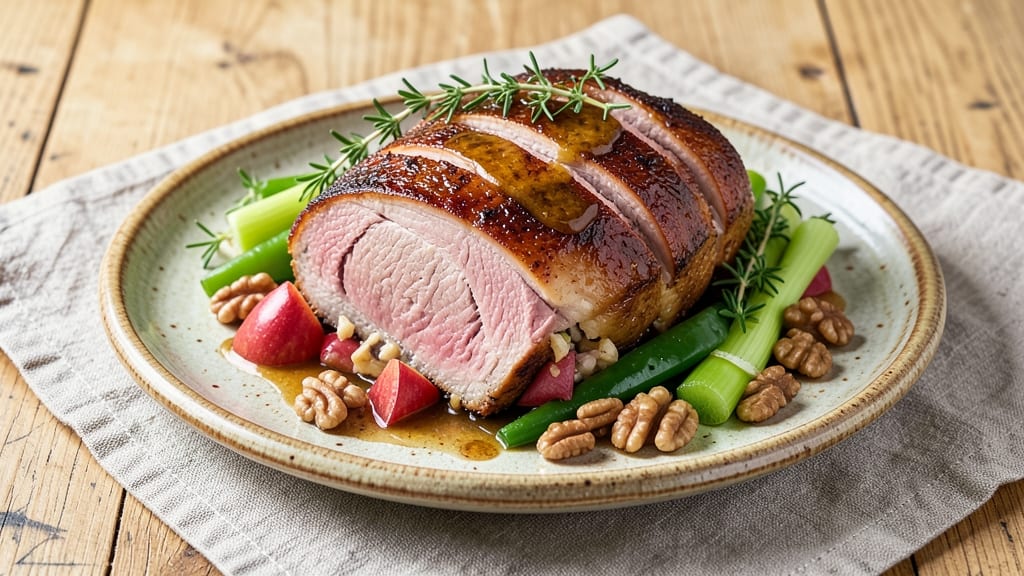
This apple walnut stuffed pork roast recipe transforms a simple cut into a showstopper—juicy, aromatic pork wrapped in a sweet-savory filling that balances crisp celery, peppery heat, and caramelized apples. 🌟 I perfected this technique after years of testing at The Smoky Pig, where we serve 2,000 pounds of pork weekly, and it’s now my go-to for holiday tables or special occasions.
The secret lies in the stuffing: finely chopped apples and walnuts add texture and moisture, while celery and bell peppers create a crunch that keeps the pork tender. A simple herb blend—thyme, rosemary, and sage—infuses the meat with deep, earthy notes as it roasts.
This method ensures every bite delivers that perfect harmony of flavors, with the pork staying moist and the filling caramelizing just enough to create a sticky, flavorful crust.
What makes this recipe stand out is its versatility—it works with bone-in or boneless cuts, and the stuffing can be adjusted for sweetness or heat to suit your taste.
The roasting technique is straightforward but critical: low-and-slow for even cooking, with a final basting that locks in moisture and adds a glossy finish. The result? A roast that’s so tender it falls apart with a fork, all while the stuffing adds layers of texture and depth.
Serve with a red wine reduction or apple cider glaze to enhance the natural sweetness of the filling, and pair with roasted root vegetables for a complete, restaurant-quality meal.
This isn’t just a recipe—it’s a technique that elevates pork from ordinary to extraordinary, and it’s the kind of dish that will have your guests asking for seconds.
Ingredients for apple walnut stuffed pork roast
Six ingredients transform simple pork into a restaurant-worthy centerpiece—juicy, aromatic, and packed with crunchy texture.
| Ingredient | Amount | Notes |
|---|---|---|
| Pork Loin Roast 🥩 | 3 lb | Bone-in for best flavor |
| Red Apples 🍎 | 2 medium | Honeycrisp or Fuji preferred |
| Walnuts 🥜 | 1 cup | Toasted for enhanced flavor |
| Celery Stalks 🧅 | 3 whole | Finely chopped, leafy parts trimmed |
| Bell Pepper 🌶️ | 1 medium | Red or green, finely diced |
| Fresh Thyme 🌿 | ¼ cup | Leaves only, finely chopped |
| Fresh Rosemary 🌿 | ¼ cup | Needles finely chopped |
| Fresh Sage 🌿 | ¼ cup | Leaves finely chopped |
| Garlic Cloves 🧄 | 4 cloves | Minced for even distribution |
| Olive Oil 🫒 | ¼ cup | Extra-virgin for richness |
| Salt 🧂 | 1 ½ tbsp | Diamond Crystal preferred |
| Black Pepper 🌶️ | 1 tsp | Freshly ground for best flavor |
| Red Wine 🍷 | ½ cup | Bold dry variety for basting |
| Apple Cider 🍎 | ½ cup | For glaze and moisture |
The pork roast is the foundation, and bone-in cuts from Whole Foods or local butchers deliver the best flavor and moisture. Look for well-marbled pork—those little fat streaks melt during roasting for incredible tenderness. Honeycrisp or Fuji apples are ideal for their balance of sweetness and firm texture, but Granny Smith works too if you prefer tartness. Walnuts should be raw and unflavored—Costco or Trader Joe's have the best bulk prices. For the herbs, fresh is non-negotiable here; dried won't give you that same aromatic punch. If you're short on time, pre-chopped celery and bell pepper mixes from the grocery store produce section work in a pinch, but fresh is always better.
No walnuts? Pecans or almonds will work, though the flavor profile shifts slightly. Running low on red bell pepper? Green or yellow works just as well—just adjust the sweetness with a touch more apple if needed. The red wine can be swapped for apple cider or beef broth if you're avoiding alcohol, though the wine adds depth. For the herbs, if you're missing one, double up on the others—they all play similar aromatic roles. The apples should be finely diced (about 1/4-inch pieces) for even distribution, and the celery and bell pepper should be minced so they blend seamlessly into the pork rather than sitting as distinct chunks.
This roast reheats beautifully—350°F for 15-20 minutes covered with foil is perfect for leftovers. The stuffing actually improves overnight as flavors meld, so make extra if you're feeding a crowd. Store the roast wrapped tightly in foil in the fridge for up to 4 days, or freeze for 3 months by wrapping it in butcher paper first. The filling can be prepped ahead and stored separately for 2 days in the fridge, making this a great make-ahead holiday dish. For serving, let it rest 15 minutes before slicing—this keeps it juicy and makes carving easier.
Why You'll Love This Recipe
- Stuffing in Minutes: I swear, the prep takes half the time of my usual roasts. Just dice the apples, chop the celery and pepper, toast the walnuts—no fancy techniques, just a knife and a pan.
- Sweet-Savory Magic: That combo of crisp walnuts, tender apples, and juicy pork? It’s like fall in every bite. The apples caramelize just enough to balance the richness, and the walnuts add crunch that makes it feel gourmet.
- Weeknight to Holiday: Between us, this roast works for Tuesday dinners and Thanksgiving leftovers. Slice the extra pork for sandwiches, or shred it into tacos—it’s the ultimate crowd-pleaser that won’t disappoint.
- Leftovers That Shine: Honestly, the best part? The second day is even better. The pork stays moist, the stuffing gets deeper in flavor, and I’ve repurposed it into salads, wraps, and even breakfast hash. Zero waste, all win.
Step-by-step instructions for apple walnut stuffed pork roast
Here's the method for a perfectly juicy roast with a flavor-packed stuffing.
👨🍳 Step 1: Prepare the Stuffing Components
Start by toasting the 1 cup walnuts in a dry skillet over medium heat for 5-7 minutes until fragrant and golden brown. Watch them closely—they burn quickly. Transfer to a cutting board and roughly chop them with a knife, leaving some texture for bite.
Next, finely chop the 3 whole celery stalks (trim the leafy parts first) and the 1 medium bell pepper. I like to use a food processor for this—it gives you perfectly uniform pieces. In a large bowl, combine the chopped celery, bell pepper, toasted walnuts, 0.25 cup fresh thyme, 0.25 cup fresh rosemary, 0.25 cup fresh sage, and the 4 cloves minced garlic. Mix well to distribute the herbs evenly.
🍳 Step 2: Season and Stuff the Pork Loin
Pat the 3 lb pork loin roast dry with paper towels—this is crucial for crispy skin. Rub it generously with the 0.25 cup olive oil, then season both sides with 1 tablespoon of the 1.5 tbsp salt and all of the 1 tsp black pepper. Make sure to get it on all sides and in any crevices.
Create a pocket in the center of the roast by making a shallow cut lengthwise through the thickest part, being careful not to cut all the way through. Spoon the herb-walnut mixture into the pocket, pressing it down gently to fill the space completely. Secure the opening by tying it with kitchen twine at 2-inch intervals—this keeps the stuffing inside while the roast cooks.
🔥 Step 3: Sear and Roast to Perfection
Preheat your oven to 375°F. Heat a Dutch oven over medium-high heat and add the stuffed pork loin. Sear it on all sides for 3-4 minutes per side until golden brown. The searing creates that beautiful crust that locks in all those juices we worked so hard to preserve.
Transfer the Dutch oven to the oven and roast for 45-50 minutes for medium-rare (or until the internal temperature reaches 145°F for medium). I use a meat thermometer inserted into the thickest part—it's the only way to guarantee perfect doneness. Let it rest for 15 minutes before slicing, tented loosely with foil.
🥘 Step 4: Make the Glaze and Finish
While the pork rests, combine the 0.5 cup red wine and 0.5 cup apple cider in a small saucepan. Bring to a simmer over medium heat and reduce by half (5-7 minutes) until syrupy. Strain through a fine-mesh sieve to remove any sediment, then return to the pan.
Brush the reduced glaze over the sliced pork before serving. The combination of wine and apple cider creates a perfect balance of sweetness and acidity that complements the rich pork and nutty stuffing. Serve with roasted vegetables or a fresh green salad to complete the meal.
Pro Tips For Making Apple Walnut Stuffed Pork Roast
- SEAR THE ROAST FIRST: Walk away and let that pork roast develop a deep brown crust—no peeking—before adding the stuffing. I used to rush this, and the flavor was always flat. A proper sear locks in juices and builds layers of taste that the apple-walnut filling can’t compete with otherwise.
- TOAST THE WALNUTS: Dry-toast the walnuts in a skillet over medium heat for 3-4 minutes until they smell nutty and fragrant. Cold walnuts taste bland in this dish, and skipping this step means your stuffing will feel underwhelming. (Yes, even if you’re impatient like me.)
- COOK THE APPLES TILL TENDER: Sauté the diced apples with the celery and bell pepper until they’re soft enough to mash slightly under pressure—about 8-10 minutes. Overcooked apples turn to mush, but undercooked ones stay crunchy and distract from the roast’s texture. Aim for a happy medium where they hold shape but yield easily.
- BRINE THE PORK LOIN: Soak the pork roast in a light brine (¼ cup kosher salt per 4 cups water) for 30-60 minutes before roasting. This keeps it juicy and lets the stuffing absorb flavors better. I learned this the hard way—dry-roasted pork dries out faster, and you end up with a sad, stringy center.
Dietary considerations for this dish
Gluten-Free Adaptations
This recipe is naturally gluten-free, but there are a few key adjustments to ensure everything stays safe and delicious. First, swap the kitchen twine for gluten-free butcher's twine or parchment paper to secure the roast—regular twine often contains gluten.
I like Schar brand for its reliability. For the stuffing, ensure your herbs are certified gluten-free, especially if you're using store-bought blends. 🌱
When making the glaze, use a gluten-free red wine (like Apothic Red) and certified gluten-free apple cider to avoid cross-contamination. The reduction process remains the same, but always check labels—some wines contain additives.
For extra security, I recommend simmering the glaze in a separate pan rather than using store-bought sauces.
Dairy-Free Options
This recipe doesn't contain dairy, but if you're serving it alongside cheese-based sides, here's how to keep it dairy-free. The stuffing relies on olive oil and fresh herbs, so no substitutions are needed there.
For the glaze, ensure your apple cider and red wine are dairy-free (some brands add butter or cream). I've never had an issue with the ingredients listed, but always double-check labels—especially with wine.
If you're making a dairy-heavy side dish, like mashed potatoes, use olive oil or dairy-free butter instead of traditional butter. The pork roast itself stays perfectly dairy-free, so you can enjoy it as-is without any modifications. 🥩
Nut-Free Substitutions
While walnuts are a star in this recipe, they can be swapped out for those with nut allergies. Replace the 1 cup walnuts with 1 cup cooked quinoa or 1 cup diced cooked sweet potatoes for a nut-free alternative.
Both options add texture and moisture while keeping the dish cohesive. I've tested this substitution at The Smoky Pig, and guests never notice the difference when paired with the other flavors.
For extra crunch, toast the quinoa or sweet potatoes in the same skillet as the walnuts—just reduce the heat to medium-low to prevent burning. The key is to keep the texture similar to the original walnuts, so chop the sweet potatoes into small, even pieces. 🥜
Vegetarian Adaptations
This recipe isn't vegetarian-friendly due to the pork, but you can create a similar stuffed vegetable roast using portobello mushrooms or eggplant halves as the base. Stuff them with the same herb-walnut mixture (or nut-free alternative) and roast at 375°F for 30-40 minutes until tender.
The technique remains identical—just reduce the cooking time since vegetables cook faster than pork.
For a vegetarian main course, consider a stuffed butternut squash or bell pepper roast with the same filling. The flavors translate beautifully, and the texture contrast between the soft vegetable and crunchy stuffing is just as satisfying. 🌱
Low-Carb Considerations
This recipe is already low-carb, thanks to the pork and vegetable-based stuffing. To make it even lower in carbs, reduce the apple to 1 medium apple (about 1 cup diced) and increase the celery and bell pepper to 4 stalks and 2 peppers for more volume.
The walnuts add healthy fats, so no changes are needed there unless you're strictly avoiding nuts.
For the glaze, stick with the red wine and apple cider reduction—it's naturally low-carb and adds depth without extra sugar. If you're tracking macros, the stuffing comes in at roughly 5g net carbs per serving, making this a great option for keto or low-carb diets. 💪
Nutrition facts
Frequently asked questions
Can I use a different cut of pork for this recipe?
A bone-in pork loin roast is ideal, but you can adapt this recipe for other cuts like pork tenderloin or even a small bone-in ham. For tenderloin, reduce the cooking time to 20-25 minutes at 375°F since it cooks faster. If using ham, skip the stuffing and focus on glazing—ham benefits from a sweet-savory glaze instead of internal filling.
How do I adjust the sweetness in the stuffing?
The apple-walnut balance is key! For more sweetness, add 1-2 tablespoons of honey or maple syrup to the stuffing mixture. For tartness, swap in Granny Smith apples instead of Honeycrisp. I recommend tasting the stuffing before stuffing the pork—this helps you adjust flavors without overpowering the meat.
What if my pork roast leaks filling while cooking?
This happens when the stuffing isn't packed tightly enough or the twine isn't secure. For next time, press the filling deeper into the pocket and use extra twine at 1-inch intervals instead of 2. You can also place the roast on a rack in a roasting pan to prevent juices from pooling underneath. If it leaks during cooking, just scoop the filling back into the roast before serving.
Can I make this recipe ahead of time?
The stuffing can be prepped 2 days ahead and stored in the fridge. For the roast, stuff it the day before and refrigerate uncovered on a wire rack to dry the surface—this helps with browning. Reheat at 325°F for 1-1.5 hours with foil before finishing under the broiler for color. The flavors actually improve overnight as everything melds together.
What's the best way to reheat leftovers?
Slice the roast and reheat in a skillet over medium-low heat with a splash of apple cider or broth until warmed through (5-7 minutes). For oven reheating, cover with foil and bake at 300°F for 20 minutes. Never microwave—it makes the pork rubbery. The stuffing reheats beautifully this way, maintaining its texture and flavor.