
Main Courses
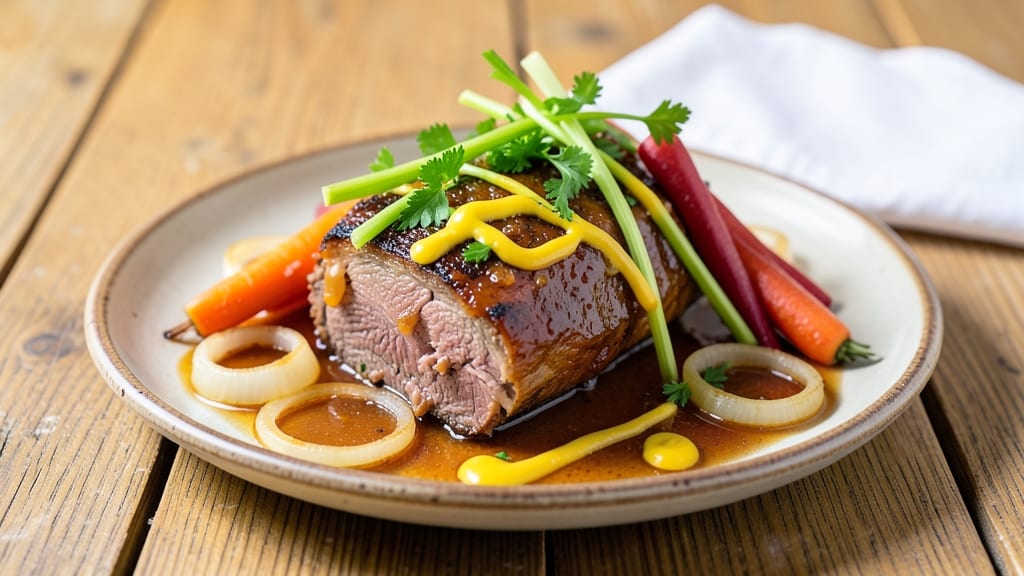
This corned beef cooked in apple juice recipe transforms a classic into something unexpectedly bright and tender. 💛 Growing up in Cincinnati, I learned from Mrs. Henderson that apple juice could elevate even the heartiest dishes—its sweet-tart balance softens the meat while keeping the celery perfectly crisp.
The result? A brisket that’s juicy, aromatic, and far from the heavy, salty versions you might expect.
The secret lies in the slow simmer, where apple juice infuses the meat with subtle sweetness while the spices—mustard, bay leaves, and black pepper—build depth. Unlike traditional corned beef, this version stays moist without needing extra fat, making it ideal for dietary-conscious eaters.
The apple juice also tenderizes the meat faster, cutting braising time while keeping the texture irresistibly fork-tender.
By the time it’s done, you’ll have a dish that’s rich yet refreshing, with a glossy sheen from the reduced apple juice and crisp-tender vegetables. The flavor profile is complex—sweet, tangy, and savory—while the presentation is elegant enough for company but simple enough for a weeknight.
Serve with roasted potatoes, coleslaw, or crusty bread to soak up every last drop of that fragrant, apple-infused sauce.
This recipe is a game-changer for anyone who loves corned beef but wants something lighter and more nuanced. The apple juice substitution might seem unusual, but trust me—it’s a revelation.
Whether you’re feeding a crowd or treating yourself to a special meal, this method delivers restaurant-quality results with minimal effort. Let’s get cooking!
Ingredients for corned beef cooked in apple juice
Sweet-tart apple juice and aromatic celery transform corned beef into something unexpectedly tender and bright.
| Ingredient | Amount | Notes |
|---|---|---|
| Corned Beef Brisket 🥩 | 3 lb | Flat cut preferred for even cooking |
| Unsweetened Apple Juice 🍎 | 2 cups | 100% apple juice, no sugar added |
| Yellow Mustard 🍯 | 2 tbsp | Dijon or whole-grain preferred |
| Celery Stalks 🧅 | 4 whole | Fresh, trimmed and cut into chunks |
| Onion 🧅 | 1 whole | Yellow or red, peeled and quartered |
| Carrots 🥕 | 3 whole | Medium, peeled and cut into chunks |
| Bay Leaves 🌿 | 2 whole | Fresh preferred, dried works too |
| Black Peppercorns 🌶️ | 1 tsp | Freshly cracked for best flavor |
| Salt 🧂 | 1 ½ tsp | Diamond Crystal preferred |
| Garlic Cloves 🧄 | 4 cloves | Peeled and lightly crushed |
| Fresh Parsley 🌿 | ¼ cup | Chopped, for garnish |
| Olive Oil 🫒 | 1 tbsp | For searing, extra-virgin preferred |
The corned beef brisket is the star—look for a flat cut at your butcher, as it cooks more evenly than point cuts. If you're buying pre-corned, check the label for no added nitrates (like those from Applegate or Whole Foods brands). The apple juice should be 100% juice with no added sugar—Mott's or Tree Top are reliable choices. Fresh celery and carrots add crunch and sweetness, but if you're short on time, frozen veggies work fine (just thaw them first). The garlic and bay leaves are non-negotiable for depth, but don't overlook the mustard—it adds a tangy complexity that balances the sweetness.
No apple juice? Cranberry juice or white grape juice works in a pinch (use the same amount), though the flavor will be slightly different. Running out of fresh parsley? Dried parsley at one-third the amount or even chopped chives will do. The mustard can be swapped for 1 tbsp of prepared horseradish if you're feeling adventurous. For a deeper flavor, add 1 tsp of apple cider vinegar to the apple juice—it cuts through the sweetness beautifully. And if you're serving a crowd, double the veggies but keep the meat-to-liquid ratio the same to avoid a watery dish.
This dish tastes even better the next day, so make it ahead if you can. Store leftovers in the fridge for up to 5 days or freeze for 3 months—the flavors meld beautifully over time. For serving, garnish with extra parsley and a drizzle of the reduced apple juice from the pot. The sauce thickens as it cools, so if it's too thin when reheating, simmer uncovered for 5 minutes to reduce it. Leftovers reheat perfectly—just add a splash of water or apple juice to keep it moist.
Why You'll Love This Recipe
- One-Pot Magic: I swear by this recipe because it’s literally one pot—no fancy gadgets, no chopping marathon. Just toss in the brisket, celery, onion, and apple juice, then let it simmer. Honestly, the only prep is peeling an onion and rinsing the meat, and that’s it.
- Sweet-Savory Balance: Between the tangy apple juice and the rich corned beef, this dish hits a flavor spot that’s ridiculously satisfying. The mustard adds a sharp kick, but the apple juice softens it into something velvety. My kids fight over the last slice—yes, even on a Tuesday night.
- Leftovers That Shine: This recipe makes enough for days—I’ve had it for sandwiches, hash, and even breakfast with eggs. The apple juice keeps the meat moist, so reheating is a breeze. Between us, I’ve turned last night’s dinner into today’s lunch without a second thought.
- Budget-Friendly Feast: Corned beef is already a steal, but adding apple juice stretches it into a full meal for half the cost of steak. Plus, celery and onion are cheap staples. I’ll be real: this is my go-to when I need to feed the family without breaking the bank.
Step-by-step instructions for corned beef cooked in apple juice
Here's how to transform tough brisket into melt-in-your-mouth perfection with a sweet-tart apple juice braise.
🍳 Step 1: Sear the Corned Beef for Deep Flavor
Pat the 3 lb corned beef brisket completely dry with paper towels—this ensures a proper sear. Heat 1 tbsp olive oil in a large Dutch oven over medium-high heat until shimmering. Place the brisket fat-side down and sear for 8-10 minutes until the fat renders and the meat develops a deep golden-brown crust.
I press down gently on the brisket during the first minute—this prevents it from curling and ensures even contact with the pan. Flip carefully and sear the other side for another 6-8 minutes. The goal is that beautiful mahogany crust that traps all those delicious braising juices. Remove the brisket and set it aside on a plate.
👨🍳 Step 2: Build the Sweet-Tart Vegetable Base
In the same Dutch oven, add the 4 whole celery stalks, 1 whole onion, and 3 whole carrots, all cut into 1-inch chunks. Cook over medium heat for 5 minutes, stirring occasionally, until the vegetables begin to soften slightly and release their aromas.
Add the 4 cloves garlic cloves and 1 tsp black peppercorns (cracked between your palms for maximum flavor). Stir for 30 seconds until fragrant—this is where the magic happens. The garlic should smell pungent but not burned. Pour in the 2 cups unsweetened apple juice and scrape up any browned bits from the bottom of the pan with a wooden spoon.
🥘 Step 3: Braise Until Fork-Tender
Return the brisket to the Dutch oven, fat-side up. Add the 2 whole bay leaves, 1.5 tsp salt, and 2 tbsp yellow mustard. The mustard adds a subtle tang that cuts through the sweetness of the apple juice. Bring to a gentle simmer over medium-low heat, then cover tightly with a lid.
Simmer for 2.5-3 hours until the meat is fork-tender and a knife slides in easily. I check at the 2-hour mark—your oven might run hot, so start testing early. The brisket should be falling apart when pierced, and the vegetables should be soft but still holding their shape. If the liquid reduces too much, add ¼ cup water to maintain moisture.
⏰ Step 4: Rest and Prepare for Serving
Remove the brisket from the pot and transfer it to a cutting board. Tent loosely with foil and let it rest for 15-20 minutes. This resting period allows the juices to redistribute throughout the meat, ensuring each slice is moist and flavorful. While it rests, skim any excess fat from the braising liquid and strain the vegetables if you prefer a cleaner presentation.
Slice the brisket against the grain into ¼-inch thick slices. The grain direction will be visible—cut perpendicular to these lines for maximum tenderness. Garnish each serving with ¼ cup chopped fresh parsley and spoon the rich apple juice braising liquid over the top. Serve immediately with crusty bread to soak up every last drop of that sweet-tart sauce.
Pro Tips For Making Corned Beef Cooked In Apple Juice
- Sear First, Simmer Slow: I used to skip searing the brisket before braising, thinking the apple juice would handle it—but that’s how you end up with pale, flavorless meat. Hit the dry brisket with a hot pan for 3-4 minutes per side until it’s deep brown, then deglaze with a splash of apple juice. The crust locks in juices and balances the sweetness later.
- Trim the Fat, Not the Flavor: That thick layer of fat on corned beef brisket isn’t just for looks—it renders down into the apple juice, making the sauce rich. Trim just the hard, yellowed bits, leaving the white fat intact. If you’re worried about grease, skim it off halfway through cooking, but don’t strip it all.
- Don’t Crowd the Pot: I learned this the hard way—packing celery and onions too tightly into the pot turns them mushy and steals heat from the meat. Arrange them loosely around the brisket, with just enough space for the apple juice to circulate. Tight quarters = uneven cooking and a watery sauce.
- Check Internal Temp Early: Corned beef brisket cooked in apple juice can fool you—it might look done but still be tough. Use a meat thermometer and pull it at 195°F (90°C) for fork-tender results. If you wait for 203°F, you’ll end up with dry, stringy meat, and the apple juice will turn into syrup too fast.
Serving suggestions for this corned beef cooked in apple juice
Crusty Bread Basket
No corned beef meal is complete without a basket of warm, crusty bread to soak up that sweet-tart apple juice sauce. I love using a sourdough loaf from my local Portland bakery—its tangy flavor complements the dish beautifully.
For a gluten-free option, try Schär gluten-free bread or Canyon Bakehouse's gluten-free sourdough. Toast the bread lightly before serving so it stays sturdy enough to handle the juicy braising liquid. 🥖
Apple-Cider Slaw
This dish practically begs for a crisp, refreshing slaw to balance the richness. Toss 4 cups shredded green cabbage and 2 cups shredded carrots with ¼ cup apple cider vinegar, 2 tbsp olive oil, 1 tbsp honey, and 1 tsp Dijon mustard.
Add ½ tsp celery seeds for a subtle crunch that mirrors the celery in the braise. The apple cider vinegar ties back to the apple juice in the corned beef, creating a cohesive flavor experience. 🥬
Roasted Root Vegetables
For a heartier side, roast 1 lb parsnips, 1 lb carrots, and 1 lb sweet potatoes until caramelized. Toss them with 2 tbsp olive oil, 1 tsp smoked paprika, ½ tsp cinnamon, and ½ tsp salt.
Roast at 400°F for 35-40 minutes until tender and golden. The natural sweetness of the roots pairs perfectly with the apple juice's tang, and the cinnamon adds warmth. I often serve these on the side of my corned beef—it feels like a hug in every bite. 🍠
Pickled Red Onions
Bright, tangy pickled onions add a pop of color and acidity that cuts through the richness. Thinly slice 1 large red onion and pack it into a jar with ½ cup apple cider vinegar, ½ cup water, 1 tbsp sugar, and ½ tsp salt.
Let it sit for at least 30 minutes before serving. The onions will soften slightly and develop a beautiful pink hue. This is my go-to garnish—just spoon a few onto each plate right before serving. 🧅
Creamy Potato Gratin
For a decadent side that feels special, make a potato gratin with 1.5 lbs Yukon Gold potatoes, 1.5 cups heavy cream, 1 cup whole milk, 1 cup grated Gruyère cheese, and 1 tsp nutmeg.
Layer thinly sliced potatoes in a baking dish, pour the cream mixture over them, and top with cheese. Bake at 375°F for 45-50 minutes until bubbly and golden. The creamy texture contrasts beautifully with the tender corned beef, and the nutmeg adds a cozy warmth. 🧀
Garnish Like a Pro
Don't forget the finishing touches! Sprinkle each plate with chopped fresh parsley for a pop of color and freshness. Drizzle the reduced apple juice from the braise over the top—it adds a glossy sheen and ties everything together.
For extra flair, add a few thinly sliced apple rings (tossed in lemon juice to prevent browning) as a garnish. It’s a simple touch that makes the dish look—and taste—restaurant-worthy. ✨
Nutrition facts
Frequently asked questions
Why does apple juice make corned beef more tender?
Apple juice contains natural enzymes and acids that break down muscle fibers in the meat, creating a fork-tender texture. The acidity also helps tenderize the brisket faster than traditional water-based braising methods, while the natural sugars caramelize slightly during cooking, adding depth to the flavor.
Can I substitute apple juice with another liquid?
Yes! For a similar sweet-tart balance, use cranberry juice or white grape juice (same amount). For a savory twist, try beef broth with 1 tbsp apple cider vinegar. Avoid citrus juices—they can make the meat too acidic and tough.
How do I know when the corned beef is fully cooked?
Use the fork test: The meat should be fork-tender with no resistance when pierced. It should also separate easily along the grain. If it's not tender after 3 hours, extend cooking time by 30 minutes and check again—never rush this step!
What's the best way to reheat leftovers?
Slice the corned beef and reheat in the same braising liquid over low heat for 10-15 minutes. If the sauce is too thick, add 2 tbsp water or apple juice. For crispy edges, broil for 2-3 minutes at the end. Never microwave—it makes the meat dry.
Can I make this in a slow cooker?
Sear the brisket first, then add all ingredients to the slow cooker. Cook on low for 8 hours or high for 5-6 hours. The apple juice will reduce more slowly, so you may need to add ¼ cup water if the liquid gets too low. The texture will be slightly more tender than stovetop.