
Sauces & Condiments
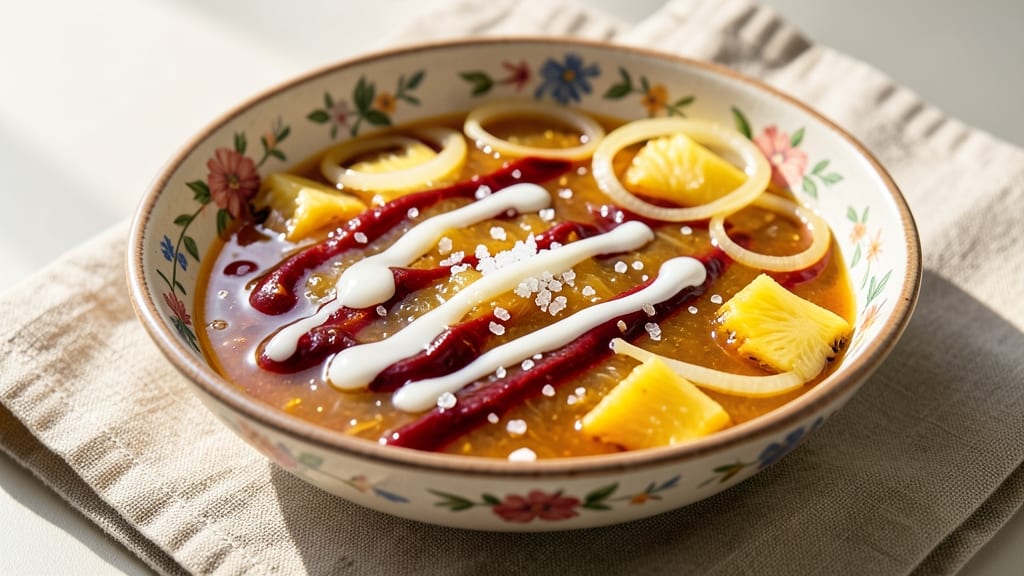
This Costco Pineapple Habanero Sauce delivers a perfect balance of tropical sweetness and fiery heat that lingers for months—ideal for marinades, dipping, or drizzling. 🔥 The secret lies in caramelizing onions and garlic to deepen flavor before blending with fresh pineapple, habanero, and vinegar for a tangy backbone.
I developed this recipe after craving a sauce that could handle both grilled proteins and fresh seafood without overpowering them.
The sauce’s magic comes from the slow cookdown, where sugar and vinegar mellow the habanero’s intensity while preserving its signature kick. Unlike store-bought versions, this recipe uses no preservatives—just fresh ingredients that develop richer flavor over time.
The result is a glossy, vibrant sauce with a smooth texture that clings beautifully to everything from chicken to tacos.
Perfect for batch cooking, this sauce stays fresh in the fridge for up to 3 months or can be canned for long-term storage. The sweet-spicy profile makes it versatile enough for breakfast (on eggs) or dinner (as a glaze), while the natural acidity keeps it from cloying.
Whether you’re marinating ribs or adding zing to a summer salad, this sauce elevates every bite.
Ready in just 30 minutes with minimal hands-on time, this recipe is a game-changer for anyone tired of bland store-bought sauces. The habanero’s heat mellows slightly as it sits, making it safer for kids or sensitive palates while still delivering bold flavor. Let’s make it—your taste buds will thank you.
Ingredients for costco pineapple habanero sauce
Nine ingredients transform into a bold, versatile sauce that bridges tropical sweetness with habanero fire.
| Ingredient | Amount | Notes |
|---|---|---|
| Yellow Onions 🧅 | 2 whole | Thinly sliced, caramelized first |
| Garlic Cloves 🧄 | 6 cloves | Minced, toasted until fragrant |
| Fresh Pineapple 🍍 | 2 cups | Diced, fresh or frozen (thawed) |
| Habanero Peppers 🌶️ | 2 whole | Seeds removed for milder heat |
| White Vinegar 💧 | ½ cup | Apple cider vinegar works too |
| Granulated Sugar 🍚 | ½ cup | Light brown sugar for depth |
| Extra-Virgin Olive Oil 🫒 | ¼ cup | For smooth texture and richness |
| Salt 🧂 | 1 ½ tsp | Diamond Crystal kosher salt |
| Ground Black Pepper 🌶️ | ½ tsp | Freshly ground for depth |
| Fresh Lime Juice 🍋 | 2 tbsp | Brightens and balances heat |
The onions and garlic form the sauce’s flavor foundation—slow caramelization (20-25 minutes) deepens their sweetness without browning. Costco’s bulk onions are ideal for this step, but any sweet yellow variety works. For garlic, freshly minced delivers the most aromatic punch, though jarred minced garlic in a pinch will suffice. The habanero peppers are the star, but removing seeds reduces heat intensity while preserving fruity notes. Trader Joe’s often carries organic habaneros with consistent heat levels, though any fresh pepper works. Toast the seeds briefly in a dry pan before blending for a subtle smokiness that elevates the entire sauce.
No fresh pineapple? Frozen works perfectly—just thaw and drain excess liquid. The sugar isn’t just for sweetness; it caramelizes during cooking, creating a glossy finish and balancing the vinegar’s acidity. Light brown sugar adds molasses notes that complement the habanero’s fruitiness. Vinegar choice matters: white vinegar is sharper and cuts through the heat, while apple cider vinegar adds subtle fruitiness. For a smoother texture, blend the sauce until silky—immersion blenders work best to avoid chunks. Need less heat? Swap one habanero for a jalapeño, or reduce the pepper quantity by half.
This sauce develops deeper flavor over time—reheat gently before serving to restore its glossy texture. Store in sterilized glass jars in the fridge for up to 3 months, or can for long-term preservation. Portion into ice cube trays for easy single-use servings, perfect for drizzling or marinating. The sauce thickens as it cools, so add a splash of water or vinegar if it becomes too stiff. Freeze for up to 6 months by layering with parchment paper to prevent freezer burn. The lime juice should be added last—freshly squeezed preserves its bright acidity, which mellows slightly when blended too early.
Why You'll Love This Recipe
- Costco’s Secret Weapon: I swear by this sauce for lazy Sundays—just chop a few onions, toss in pre-cut pineapple (thanks, Costco!), and let the habanero do the work. No blender, no fuss, just pure heat and sweetness in 20 minutes.
- Sweet Heat Balance: That first bite of pineapple’s juicy tang cutting through the habanero’s fire? It’s the kind of flavor that makes you pause mid-bite. The vinegar ties it all together—bright, sharp, and impossible to resist.
- Weeknight Wing Night: Slather it on grilled wings, drizzle over rice bowls, or toss with shrimp—this sauce turns any protein into a showstopper. I’ve used the last jar on tacos, pizza, and even scrambled eggs (yes, really).
- Jars Last Forever: Make a big batch and stash it in the fridge—this stuff keeps for weeks. Honestly, I’ve had it last months in my pantry, and it only gets better as the flavors meld. Perfect for when you’re too busy to cook but still want flavor.
Step-by-step instructions for Costco pineapple habanero sauce
Transform bold flavors into a versatile sauce that balances tropical sweetness with fiery heat.
🔥 Step 1: Caramelize the Onions for Deep Flavor
Heat the 0.25 cup extra-virgin olive oil in a heavy-bottomed saucepan over medium-low heat. Add the 2 whole yellow onions, sliced thinly, and cook for 15-20 minutes until they develop a deep golden brown color and sweet aroma. Stir occasionally to prevent burning.
This slow caramelization builds the sauce's foundation. You'll know it's ready when the onions release their natural sugars and create a rich, jammy texture. If they start to brown too quickly, reduce the heat slightly—patience here makes all the difference.
🍳 Step 2: Toast the Garlic and Add Habaneros
Once the onions are caramelized, add the 6 cloves minced garlic cloves and cook for 1-2 minutes until fragrant and golden. Immediately add the 2 whole habanero peppers, seeds removed and finely chopped, along with the 1.5 tsp salt and 0.5 tsp ground black pepper.
Cook for another 2 minutes to soften the habaneros slightly while preserving their heat. The garlic should be just beginning to color—don't let it burn, or it'll turn bitter. This is where the sauce gets its signature kick, so handle the habaneros with care (wear gloves if needed).
🍳 Step 3: Simmer with Pineapple and Vinegar
Pour in the 2 cups fresh pineapple (diced) and 0.5 cup white vinegar, then bring the mixture to a gentle boil. Reduce heat to medium-low and simmer uncovered for 10-12 minutes until the pineapple breaks down and the sauce thickens slightly.
Stir occasionally to prevent sticking. You'll notice the sauce reduce and develop a glossy sheen—this is when the flavors meld together. If it reduces too quickly, add 1-2 tablespoons water to maintain the right consistency. The vinegar helps balance the sweetness while adding tangy depth.
🥘 Step 4: Sweeten and Finish with Lime
Add the 0.5 cup granulated sugar and stir until fully dissolved. Let the sauce simmer for an additional 5 minutes to allow the sweetness to integrate. Finally, remove from heat and stir in the 2 tbsp fresh lime juice.
Taste and adjust seasoning—you might need a touch more salt or sugar to balance the heat and sweetness. The lime juice brightens the flavors and cuts through the richness. Let the sauce cool to room temperature before transferring to sterilized jars for storage.
⏰ Step 5: Store Properly for Long Shelf Life
Transfer the sauce to clean, airtight jars or containers. It will keep in the refrigerator for up to 3 months or can be processed in a water bath for 15 minutes to can for long-term storage.
This sauce's versatility shines in tacos, grilled meats, or as a dipping sauce. The habanero heat mellows slightly over time, making it perfect for layering flavors without overwhelming them. For extra heat, leave the seeds in the habaneros—just remember to wear gloves!
Pro Tips For Making Costco Pineapple Habanero Sauce
- Char the Onions Right: Sear the sliced yellow onions in a dry pan for 8–10 minutes until deep golden and slightly crispy—almost burnt at the edges—before adding anything else. I used to rush this step and wondered why my sauce tasted flat; the caramelization adds a smoky depth that vinegar and habanero can’t mask.
- Seed the Habaneros First: Remove the seeds and membranes from the habaneros before blending, even if the recipe doesn’t say to. Those little white seeds pack 80% of the heat, and you’ll regret skipping this if you’re not chasing a nuclear-level burn. (Yes, even if you love spice—trust me, your mouth will.)
- Simmer Low and Slow: Reduce the heat to a bare simmer after adding the vinegar, and let it cook uncovered for at least 20 minutes. Skim off any foam that rises, and resist the urge to stir constantly—this prevents the sauce from splitting and ensures the flavors meld instead of fighting.
- Strain for Smoothness: After blending, pour the sauce through a fine-mesh sieve or cheesecloth to remove pulp and seeds. It takes 5 extra minutes, but the result is silky, not chunky—especially important if you’re drizzling this over grilled meats or seafood where texture matters. (I learned this after serving a lumpy batch to my dad. He’s never let me live it down.)
Regional styles of this costco pineapple habanero sauce
Caribbean Twist
In the Caribbean, this sauce becomes a staple for jerk-style dishes. Add 1 tbsp soy sauce and 1 tsp ground allspice to the base recipe, then simmer for an extra 5 minutes.
The result is a perfect glaze for grilled chicken or pork, with a smoky, tropical depth. Jamaican cooks often finish with 1 tbsp fresh thyme for an authentic touch. 🌴
Texas BBQ Adaptation
For a Texas BBQ take, swap the white vinegar for 0.5 cup apple cider vinegar and add 1 tbsp smoked paprika and 1 tsp liquid smoke during the caramelization step. This version pairs beautifully with brisket or pulled pork, offering a sweet-spicy contrast to the smoky meat.
I like to reduce the sugar slightly (0.35 cup) to balance the smokiness. 🔥
Hawaiian Fusion
Hawaii transforms this sauce into a sweet-spicy glaze for pineapple-glazed salmon or teriyaki bowls. Add 1 tbsp grated ginger and 1 tsp sesame oil to the base, then finish with 1 tbsp soy sauce and 1 tsp honey.
The ginger brightens the pineapple while the sesame oil adds a nutty depth. This version is perfect for summer grilling or as a dipping sauce for sushi. 🍍
Mexican Street Food Style
In Mexico, this sauce becomes a salsa cruda-inspired condiment. Blend the cooked onions, garlic, and habanero with 1 cup diced cucumber and 0.25 cup chopped cilantro after simmering. Add 1 tbsp lime juice and 0.5 tsp cumin for a fresh, tangy topping for tacos or nachos.
The texture stays chunky, offering a vibrant contrast to crispy tortillas. 🌶️
Southern US Heat Balancer
Southern cooks often use this sauce to balance the heat in fried chicken or collard greens. Reduce the habanero to 1 pepper and add 1 tsp smoked salt and 0.5 tsp black pepper to the base.
The result is a milder but still vibrant sauce that enhances Southern classics without overpowering them. I like to drizzle it over mac and cheese for a sweet-spicy kick. 🍗
Nutrition facts
Frequently asked questions
Can I adjust the heat level in this sauce?
For milder heat, remove all habanero seeds and membranes before chopping, or reduce to 1 pepper. For extra kick, leave seeds in or add ½ tsp cayenne pepper during simmering. Always taste as you go—heat mellows slightly when cooled.
How long does this sauce keep, and can I can it?
The sauce stays fresh in the fridge for 3 months in airtight jars. For long-term storage, process in a water bath for 15 minutes (standard canning method). Label jars with the date—properly canned sauce lasts 12-18 months unopened.
What if I don’t have fresh pineapple?
Frozen pineapple works perfectly—just thaw and drain excess liquid first. For extra depth, add ½ tsp vanilla extract or 1 tsp grated ginger to compensate for any flavor loss. Canned pineapple in juice (not syrup) is a third option, but fresh or frozen gives the best texture.
Can I make this sauce without vinegar?
While vinegar balances sweetness and preserves the sauce, you can substitute with ½ cup lemon juice or ¼ cup apple cider vinegar + ¼ cup water. The sauce will be slightly less tangy but still delicious. For a fermented twist, try ¼ cup coconut aminos instead.
What’s the best way to use up this sauce?
Try it as a marinade for chicken or shrimp (30 minutes max), a dipping sauce for fries or veggies, or a glaze for grilled meats. Drizzle over tacos, pizza, or eggs for breakfast. The sweet-spicy profile works with everything from Asian stir-fries to Southern BBQ.