
Main Courses
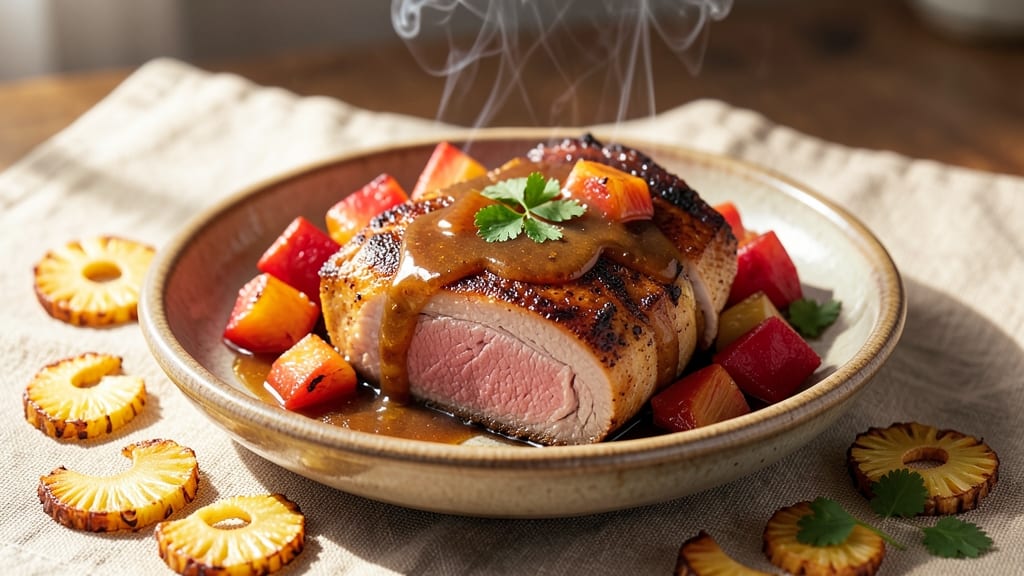
This crockpot pineapple pork loin recipe transforms simple ingredients into melt-in-your-mouth perfection with minimal effort. The tropical glaze—sweet pineapple blended with savory soy and garlic—locks in juiciness while creating a caramelized crust that’ll have everyone asking for seconds.
I’ve cooked thousands of pounds of pork, and this method guarantees tender results even when starting with tougher cuts.
The beauty of this recipe lies in its balance: the pineapple’s natural sweetness complements the pork’s richness without overpowering it, while the slow cooker does all the work.
Just sear the pork first for depth of flavor, then let the crockpot work its magic on low heat for 4-5 hours, where the meat becomes so tender it practically falls apart. The glaze thickens beautifully during cooking, creating a sticky, flavorful sauce that clings to every bite.
What you’ll end up with is restaurant-quality pork that’s juicy, flavorful, and effortlessly impressive—no fancy techniques required. The pork remains moist and tender, with just enough caramelized edges from the glaze, while the pineapple adds a bright, tropical note that cuts through the richness.
This dish pairs perfectly with steamed jasmine rice or roasted sweet potatoes to round out the meal.
Perfect for weeknight dinners or meal prep, this recipe scales easily for crowds while keeping prep simple. The slow cooker ensures hands-off cooking, so you can focus on other tasks while dinner takes care of itself.
Trust me—this is the kind of pork dish that’ll become a regular on your rotation.
Ingredients for crockpot pineapple pork loin
Simple ingredients that transform into restaurant-quality pork with minimal effort.
| Ingredient | Amount | Notes |
|---|---|---|
| Pork Loin 🥩 | 2 lb | Bone-in for flavor, cut even thickness |
| Fresh Pineapple 🍍 | 1 cup | Chopped, fresh preferred (not canned) |
| Soy Sauce 🍶 | ½ cup | Low-sodium preferred for balance |
| Brown Sugar 🍚 | ¼ cup | Light or dark, packed |
| Garlic Cloves 🧄 | 6 cloves | Minced, fresh preferred |
| Olive Oil 🫒 | 2 tbsp | Extra-virgin for searing |
| Honey 🍯 | ¼ cup | Wildflower preferred |
| Apple Cider Vinegar 🍶 | 1 tbsp | For tangy balance |
| Ground Black Pepper 🌶️ | 1 tsp | Freshly cracked |
| Salt 🧂 | 1 ½ tsp | Diamond Crystal preferred |
| Jasmine Rice 🌾 | 1 ½ cups | Uncooked, for serving |
| Fresh Ginger 🌿 | 1 tbsp | Grated, fresh preferred |
The pork loin is the star here—bone-in cuts stay juicier, and Costco or local butchers often have great deals on whole loins you can trim yourself. Look for cuts with good marbling, not too lean, and ask for it cut into even 1-inch slices if pre-sliced isn't available. Dole or Fresh Pineapple from the grocery store's produce section works, but avoid canned—it lacks the fresh brightness. The soy sauce matters too: Kikkoman or San-J are solid choices, but if you've got a low-sodium version, use it and add a pinch of salt later. For the brown sugar, Domino is reliable, but any light or dark works—just pack it tightly into the measuring cup.
No fresh ginger? Ground ginger at half the amount works in a pinch, but trust me on the fresh—it's a game-changer. Subbing pineapple? Mango or peach works too, but the acidity level changes. Running low on soy sauce? Coconut aminos or tamari are great swaps. The honey can be swapped for maple syrup if you're avoiding it, but the flavor shifts slightly. For the rice, jasmine or basmati are ideal—long-grain holds up best to the sweet-savory sauce. And if you're prepping ahead, cook the rice the night before—it reheats beautifully and saves time.
The pork keeps best in the fridge for 3-4 days after cooking—it actually tastes better the second day as flavors meld. Store the sauce separately if you want to reheat it without the pork, but I usually eat it all at once. For leftovers, reheat in the microwave for 1-2 minutes with a splash of water to revive the moisture. The glaze thickens as it cools, so if it seems too thick when reheating, add a teaspoon of water or pineapple juice. Freezes well for up to 3 months—portion into single servings for easy grab-and-go meals.
Why You'll Love This Recipe
- Dump-and-Go Magic: I swear by this recipe on days when I’d rather be anywhere else. Toss the pork, pineapple chunks, and a few minced garlic cloves into the crockpot—no measuring cups, no fancy techniques. The soy sauce and brown sugar do all the work while I’m scrolling through memes or pretending to organize my junk drawer.
- Sweet-Savory Balance: That caramelized brown sugar glaze? It’s the star. The pineapple’s tang cuts through the pork’s richness, while the garlic adds a punch that makes every bite feel like a little vacation. Honestly, the first time I tasted it, I texted my mom: "This is the kind of dish people fight over."
- Weeknight to Potluck: Make it for Tuesday dinner or double the batch for a summer picnic. The leftovers reheat like a dream—no one will guess it’s from a crockpot. (Yes, even on a Tuesday night.) My husband’s coworkers begged for the recipe after I brought it to a BBQ—no one expected it to be this good.
- Budget-Friendly Luxury: Pork loin stretches far here, and pineapple’s cheaper than you’d think when you buy it whole. The ingredients cost less than takeout, but the flavor? That’s restaurant-quality without the markup. I’ll be real: this is my go-to when I need to impress someone but can’t afford to order in.
Step-by-step instructions for crockpot pineapple pork loin
Here's how to transform tough pork loin into fall-apart tender meat with a sweet-tangy glaze.
Prepare the Pork Loin and Glaze Base
Pat the 2 lb pork loin dry with paper towels. This step is crucial for crispy edges and proper glaze adhesion. Place the pork in your crockpot and rub it generously with 2 tbsp olive oil, 1.5 tsp salt, and 1 tsp ground black pepper. I like to press the seasoning into the meat so it sticks and penetrates slightly.
In a medium bowl, whisk together 1 cup fresh pineapple (chopped), 0.5 cup soy sauce, 0.25 cup brown sugar, 0.25 cup honey, 1 tbsp apple cider vinegar, 1 tbsp fresh ginger (grated), and 6 cloves garlic (minced). This mixture creates the perfect balance of sweet, salty, and tangy flavors that will tenderize the meat and create that glossy glaze. Let it sit for 10 minutes while you prep the rice.
Cook the Jasmine Rice
Rinse 1.5 cups jasmine rice under cold water until the water runs clear. This removes excess starch that can make the rice gummy. In a small pot, combine the rice with 2 cups water and bring to a boil. Once boiling, reduce heat to low, cover, and simmer for 15 minutes. Then turn off the heat and let it steam, covered, for another 10 minutes. This method ensures perfectly fluffy rice that won't stick together.
While the rice cooks, pour the pineapple glaze mixture over the pork loin in the crockpot. Make sure every surface is coated, including the bottom where the meat rests. The glaze should pool around the pork, but don't worry if it doesn't completely cover it—the meat will absorb the flavors as it cooks.
Low and Slow Cooking for Maximum Tenderness
Set your crockpot to low heat and cook for 6-8 hours. This long, slow cooking time is what transforms tough pork into melt-in-your-mouth tender meat. After 4 hours, check the pork—it should be fork-tender but still have a slight resistance. If it's not quite there yet, continue cooking for another hour or two.
Here's the thing about crockpot cooking: patience is key. The meat should pull apart easily with a fork when you're ready to serve. If you're short on time, you can cook it on high heat for 4-5 hours, but I find the low-and-slow method gives better results. The glaze will thicken and caramelize slightly, creating a beautiful sheen on top.
Rest and Serve with Perfectly Fluffy Rice
Once the pork is fork-tender, remove it from the crockpot and transfer it to a cutting board. Let it rest for 10-15 minutes before slicing. This resting period is crucial for juiciness—it allows the meat fibers to relax and redistribute the juices throughout the pork. If you skip this step, you'll end up with dry slices.
While the pork rests, fluff the jasmine rice with a fork and divide it among serving plates. Then slice the pork loin into ½-inch thick pieces against the grain. The meat should be incredibly tender, with a glossy, slightly sticky glaze that clings beautifully. Serve immediately with the rice and any remaining glaze from the crockpot spooned over the top.
Pro Tips For Making Crockpot Pineapple Pork Loin
- SEAR THE PORK FIRST: Even in a crockpot, a quick 2-minute sear in a hot skillet with oil and salt before adding it to the pot builds flavor that slow cooking alone won’t match. I used to skip this and wondered why my pork tasted bland—now I always do it, even when lazy.
- USE FROZEN PINEAPPLE: Fresh pineapple is great, but frozen chunks work just as well and save you from dealing with sticky juice everywhere. Just don’t thaw it first—toss in the frozen pieces directly with the rest of the ingredients. The crockpot will handle it.
- DON’T OVERLOAD THE CROCKPOT: If your pork loin is thick (over 1.5 inches), resist the urge to add too much liquid—it’ll dilute the sauce. Instead, use just enough to come halfway up the meat, then add a splash of water or broth later if needed. Crowding also keeps the pork from cooking evenly.
- SKEWER THE GARLIC: Whole garlic cloves can turn to mush and lose their punch. Smash them slightly with the side of your knife first, then skewer them with toothpicks or a fork so they infuse the sauce without disappearing. This keeps the flavor strong and visible—no more digging for hidden cloves.
Common mistakes when making perfect results
Overcooking the Pork
One of the biggest mistakes is letting the pork loin cook past its prime. While the crockpot does an amazing job tenderizing meat, pork can become mushy if left too long. I’ve seen people walk away and forget about it, only to come back to rubbery, dry meat.
The ideal internal temperature is 195-203°F—any hotter and you’ll cross into tough territory. Use a meat thermometer to check after 4 hours of low heat.
If it’s not quite there, give it another hour, but don’t exceed 8 hours total—trust me, the meat won’t get more tender, just sadder. 🌡️
Skipping the Sear
Some folks skip the initial sear because they think the crockpot will handle everything. Big mistake! That quick sear in a hot pan with olive oil creates a flavor foundation that the slow cooker builds upon. Without it, your pork will taste flat and one-dimensional.
I always sear my pork for 2-3 minutes per side until it develops a golden crust. If you’re short on time, at least pat it dry and season it well before adding the glaze—this helps create some surface texture for the sauce to cling to.
Using Canned Pineapple
This is a dealbreaker for flavor. Canned pineapple loses its bright acidity and vibrant sweetness, which are essential for cutting through the richness of the pork. Fresh pineapple—even if it’s pre-cut from the store—has that tangy punch that transforms the glaze from good to extraordinary.
If you’re in a pinch, use frozen pineapple thawed and drained well, but it won’t be the same. I’ve tried it, and the difference is night and day. The fresh version also adds a lovely texture to the sauce, while canned turns it syrupy. 🍍
Ignoring the Resting Time
Rushing to slice the pork immediately after cooking is another common error. That resting period—10-15 minutes—is when the juices redistribute throughout the meat. Without it, you’ll end up with dry, stringy slices that fall apart at the first cut.
I know it’s tempting to dig in right away, but resist! Cover the pork loosely with foil while it rests, and you’ll be rewarded with juicy, fork-tender meat that practically melts in your mouth. Patience here makes all the difference.
Overloading the Crockpot
Some people try to fit too much into their crockpot, thinking it’ll cook faster. But overcrowding prevents proper heat circulation, which means uneven cooking and a glaze that doesn’t caramelize properly. Your 2 lb pork loin should be the only thing in the crockpot—no extra veggies or sides.
If you’re serving with rice or roasted potatoes, cook them separately. The glaze needs room to pool and thicken around the meat, not get diluted by other ingredients. A crowded crockpot leads to steamed pork, not tender, glazed perfection.
Not Adjusting the Glaze
The glaze should be thick enough to coat the pork but not so syrupy it’s hard to spoon. If it seems too thin after cooking, let it reduce on the stovetop for 5-10 minutes until it reaches your desired consistency.
Conversely, if it’s too thick, add a splash of water or pineapple juice to loosen it up. I’ve had people serve the glaze as a separate dipping sauce because it was too stiff, and that’s a shame—it’s meant to cling to every bite.
Taste it as it cooks and adjust as needed. The glaze is the star of this dish, so don’t let it fall flat. 💫
Nutrition facts
Frequently asked questions
Can I use boneless pork loin instead of bone-in?
Yes, but expect slightly faster cooking times. Boneless pork loin cooks through about 30-45 minutes faster than bone-in. For best results, reduce the low-heat cooking time to 5-6 hours instead of 6-8 hours, checking for tenderness at 4 hours. The bone-in version stays juicier longer due to the marrow, but both work beautifully with this recipe.
What if I don't have fresh pineapple?
Use frozen pineapple that's been thawed and drained well—it works in a pinch. For best flavor, avoid canned pineapple entirely as it lacks the bright acidity that balances the pork's richness. If you're truly stuck, peach or mango purée can substitute, but reduce the amount to ½ cup and add ½ teaspoon lemon juice for acidity.
How do I make this recipe in an Instant Pot?
Set your Instant Pot to Sauté mode first, sear the pork with 2 tbsp oil for 2-3 minutes per side. Add all glaze ingredients and ½ cup water, then seal and cook on High Pressure for 30 minutes. Quick-release the pressure, let rest 10 minutes, then slice. The pork will be tender but slightly less fall-apart than crockpot method.
Can I make this ahead of time?
Cook the pork 1-2 days ahead and store in the fridge. The flavors actually improve as they meld. Reheat in the microwave for 1-2 minutes with a splash of water or pineapple juice to revive the moisture. For make-ahead prep, cook the rice separately and store the pork and glaze in airtight containers—reheat just before serving.
What's the best way to serve leftovers?
Slice the pork against the grain and serve on toasted Hawaiian rolls with extra glaze for sandwiches. For tacos, warm tortillas and top with pork, shredded cabbage, and a dollop of Greek yogurt. The glaze also makes an amazing dipping sauce for spring rolls or fries. Leftovers keep 3-4 days in the fridge or 3 months frozen.