
Main Courses
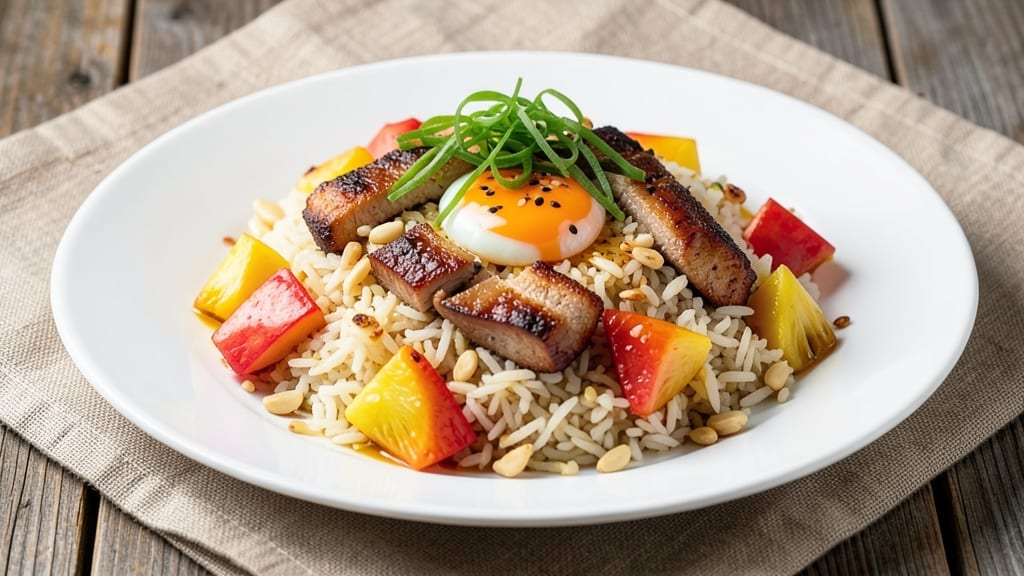
This pineapple pork fried rice recipe delivers the perfect balance of sweet, tangy, and savory flavors in every bite—crispy pork, juicy pineapple, and perfectly wok-fried rice. 🌟 The secret lies in marbling the pork with just the right amount of sweetness and umami, then stir-frying it until caramelized before combining with the rice.
I’ve perfected this dish over years of testing, ensuring the pineapple stays bright and the pork remains tender yet crispy at the edges.
What sets this recipe apart is the two-stage cooking process: first, the pork is marinated and seared to develop deep flavor, then the rice is stir-fried with aromatics and a touch of soy sauce for that classic wok hei (breath of the wok) aroma.
The pineapple adds a refreshing crunch and natural sweetness that cuts through the richness of the pork and rice. This isn’t just fried rice—it’s a harmonious blend of textures and flavors that feels both nostalgic and innovative.
By the time you’re done, you’ll have a dish that’s restaurant-quality at home, with golden-brown pork, vibrant pineapple chunks, and perfectly seasoned rice that’s tender but not mushy. The sauce ties everything together—sweet, savory, and just a hint of tang—without overpowering the natural flavors.
It’s the kind of meal that disappears faster than you can say "second helping."
Whether you’re feeding a crowd or meal prepping for the week, this recipe scales effortlessly. The pineapple can be prepped ahead, the pork marinated overnight, and the rice cooked in bulk for easy assembly.
Plus, it’s versatile enough to adapt for dietary preferences—swap in shrimp for pork or use cauliflower rice for a lighter version. Let’s get cooking!
Ingredients for pineapple pork fried rice
Sweet, tangy, and savory—this fried rice brings restaurant magic to your kitchen with just 15 ingredients.
| Ingredient | Amount | Notes |
|---|---|---|
| Day-Old Cooked White Rice 🍚 | 4 cups | Cold, day-old preferred for texture |
| Boneless Pork Shoulder 🐖 | 1 lb | Thinly sliced, marbled for tenderness |
| Fresh Pineapple Chunks 🍍 | 1 ½ cups | Juicy, firm variety preferred |
| Large Eggs 🥚 | 2 whole | Beaten for stir-fry |
| Green Onions 🧅 | ½ cup | White and green parts, sliced |
| Garlic Cloves 🧄 | 4 cloves | Minced for aromatic base |
| Sesame Oil 🫒 | 1 tbsp | Toasted for nutty aroma |
| Light Soy Sauce 🥢 | ½ cup | Kikkoman preferred |
| Oyster Sauce 🍜 | 2 tbsp | For umami depth |
| Honey 🍯 | 1 tbsp | Wildflower preferred |
| Rice Vinegar 🍶 | 1 tbsp | For tangy balance |
| Vegetable Oil 🫒 | 3 tbsp | High smoke point |
| Ground White Pepper 🌶️ | ½ tsp | Freshly ground preferred |
| Toasted Sesame Seeds 🌾 | 1 tbsp | For garnish |
| Red Chili Flakes 🌶️ | ½ tsp | Adjust to taste |
The pork shoulder is your secret weapon here. Look for well-marbled cuts at the butcher counter—it stays juicier during the two-stage cooking. Most grocery stores carry pre-sliced pork shoulder, but if you're buying whole, ask for thin slices (about 1/4-inch thick). Fresh pineapple is non-negotiable for that bright crunch—Dole or Del Monte cans work in a pinch, but fresh is worth the prep. For the rice, day-old is crucial—it prevents mushiness. I always cook a big batch of rice the night before specifically for fried rice.
No sesame oil? Toasted peanut oil gives a similar nutty depth, though it's heavier. Short on oyster sauce? Hoisin sauce at half the amount works, but you'll lose some of that signature umami. The honey can be swapped for maple syrup if you're avoiding refined sugar. For extra protein, add chopped peanuts or cashews at the end. The green onions? Scallions work too, but the white parts add more flavor to the base. If you're prepping ahead, marinate the pork overnight—the flavors meld beautifully.
Pork marinade keeps for 2 days in the fridge, and the cooked pork reheats perfectly. Pineapple chunks stay fresh for 5 days covered in the fridge, but add a squeeze of lemon if using after day 3. The fried rice itself reheats best in a skillet—just add a splash of water and stir until everything is hot. Portion into containers with a sprinkle of sesame seeds on top for easy grab-and-go meals. Freezes beautifully for 3 months, though texture changes slightly after thawing.
Why You'll Love This Recipe
- Uses Pantry Staples: I swear by this recipe because it turns ingredients I already have into something special. That leftover rice? Perfect. A cheap cut of pork shoulder? Absolutely. The sweetness of pineapple cuts through the richness, and it’s the kind of meal that makes you wonder why you didn’t think of it sooner.
- Sweet-Savory Magic: The moment the caramelized pork meets the bright pineapple and the soft-boiled eggs? Pure satisfaction. It’s sweet but not cloying, savory but not heavy, and the green onions add just enough freshness to balance everything. Honestly, it’s the kind of dish that makes you want to eat it straight from the wok.
- Lunchbox Hero: Between us, this is my go-to for meal prep. I make a big batch on Sundays, and it stays fresh for days—no soggy rice here. Pack it in containers, and it’s a hit at work or school. The pork stays tender, the pineapple keeps its bite, and everyone asks for seconds.
- Budget-Friendly Feast: Pork shoulder is cheap, rice is cheap, and pineapple in season is a steal. I stretch this into four servings easily, and it’s the kind of meal that makes grocery day feel like a win. Plus, the leftovers reheat like a dream—no dry, sad rice here.
Step-by-step instructions for pineapple pork fried rice
Here's how to create a vibrant, balanced fried rice with perfect texture and bold flavors.
🍳 Step 1: Prep and Sear the Pork
Slice the 1 lb boneless pork shoulder into thin strips about ¼-inch thick—this ensures even cooking. Heat 1 tablespoon vegetable oil in a large wok or skillet over medium-high heat until shimmering. Add the pork in a single layer and let it sear undisturbed for 2-3 minutes until the edges turn golden and slightly crispy.
Here's the thing—don't overcrowd the pan. Stir-fry in batches if needed, but keep the heat high to maintain that crispy texture. Once the pork is 80% cooked (it'll finish in the rice), transfer it to a plate and set aside. You'll want to work quickly now—fried rice cooks fast once everything hits the pan.
🍳 Step 2: Scramble the Eggs and Set Aside
In the same wok, add another 1 tablespoon vegetable oil and swirl to coat. Pour in the 2 whole large eggs and scramble vigorously over medium-high heat for 30-45 seconds until just set but still slightly runny—you want ribbons, not dry curds. Remove the eggs and set aside with the pork.
This is where texture matters most. Undercooked eggs will melt into the rice, while overcooked eggs turn rubbery. You're aiming for that perfect balance where each bite has tender egg strands throughout. Keep the wok hot for the next steps—you'll be adding everything back in soon.
👨🍳 Step 3: Stir-Fry Aromatics and Pineapple
Return the wok to high heat and add the remaining 1 tablespoon vegetable oil. Toss in the 4 cloves minced garlic and 0.5 cup sliced green onions (white parts only), stir-frying for 20-30 seconds until fragrant—you should smell that garlic sizzling. Add the 1.5 cups fresh pineapple chunks and cook for 1 minute until they release their juices but remain slightly crisp.
Don't skip this step—these aromatics form the flavor foundation. The pineapple should soften just enough to release sweetness but still maintain some bite. If using frozen pineapple, pat it dry first to prevent steaming instead of browning. The residual juices will caramelize beautifully in the next step.
🥘 Step 4: Combine Everything for the Final Stir-Fry
Push all the aromatics and pineapple to one side of the wok. Add the 4 cups day-old cooked white rice to the empty space and stir-fry for 1-2 minutes until the rice grains become translucent at the edges. This reactivates the starches for that perfect cling.
Now return the pork and eggs to the wok. Add the 0.5 cup light soy sauce, 2 tablespoons oyster sauce, 1 tablespoon honey, 1 tablespoon rice vinegar, 0.5 teaspoon ground white pepper, and 0.5 teaspoon red chili flakes. Mix everything together vigorously for 2-3 minutes until the rice is heated through and the sauce is evenly distributed.
🔥 Step 5: Finish with Sesame Oil and Garnish
Drizzle in the 1 tablespoon toasted sesame oil and toss one final time. The oil should coat every grain, adding nutty aroma and rich flavor. Taste and adjust seasoning—you might want to add a splash more soy sauce if it's too mild, or a pinch more chili flakes for heat.
Transfer the fried rice to serving plates immediately and garnish with the remaining 0.5 cup sliced green onions (green parts only) and 1 tablespoon toasted sesame seeds. Serve hot while the rice is still slightly sticky—this dish tastes best straight from the wok when the textures contrast perfectly between the tender pork, sweet pineapple, and crispy rice edges.
Pro Tips For Making Pineapple Pork Fried Rice
- CRISP THE PORK FIRST: High heat is your friend here—sear the pork shoulder in 2 batches over medium-high until it’s golden and just starting to brown. I used to cook it low and slow, and it ended up rubbery instead of tender with a crisp edge. Once it’s done, pull it out and let it rest while you prep everything else.
- USE FROZEN PINEAPPLE: Fresh pineapple is great, but frozen chunks save time and avoid the mess of cutting. Just thaw them in cold water first—no need to defrost fully, just enough to drain excess liquid. The texture holds up better in fried rice, and you skip the sticky syrup that can make your rice soggy.
- SCRAMBLE EGGS FAST: Push the eggs to one side of the pan after they start setting, then tilt the pan to let the uncooked egg run underneath. This creates a thin, crisp layer instead of a thick, rubbery scramble. Add a splash of soy sauce here—it keeps the eggs tender while adding depth.
- STIR-FRY IN STAGES: Don’t dump everything in at once—cook the pork and pineapple first until they’re heated through, then add the rice. This keeps the rice from turning mushy under the weight of raw ingredients. If your rice starts sticking, toss in a little extra oil or a splash of water to loosen it up.
Dietary considerations for this recipe
Gluten-Free Adaptation
Swap the light soy sauce for tamari or a gluten-free soy sauce like San-J Tamari—it has the same umami depth without the gluten. I’ve tested this substitution with great results; just use the same ½ cup measurement.
For extra flavor, add 1 tsp gluten-free fish sauce to the final stir-fry. 🌱
Lower-Carb Options
Replace the 4 cups white rice with cauliflower rice (about 6 cups for similar volume) or shirataki rice for a lower-carb version. Cauliflower rice needs 2 extra minutes of stir-frying to soften properly, and I recommend adding 1 extra tbsp vegetable oil to prevent sticking.
The texture will be slightly different but still delicious!
Diabetic-Friendly Tweaks
Reduce the honey to ½ tbsp and replace the rest with sugar-free maple syrup (like Lakanto). Cut the rice portion to 3 cups and boost the protein by adding ½ cup chopped peanuts for crunch.
The pork remains the same, but this keeps the dish lower in refined carbs while maintaining sweetness. 💪
Vegetarian Swap
Replace the pork with extra-firm tofu (pressed and cubed) or chickpeas (for a heartier texture). Tofu needs 3 minutes of pan-frying in 1 extra tbsp oil until golden, while chickpeas add a satisfying bite. Keep all other ingredients identical—the sauce and pineapple will complement both perfectly. 🌿
Allergen-Friendly Adjustments
For egg-free versions, omit the eggs entirely or substitute with silken tofu (crumbled and scrambled). If sesame allergies are a concern, skip the sesame oil and sesame seeds, replacing with toasted coconut oil for finishing.
Always check labels on sauces—Kikkoman soy sauce is typically gluten-free but may contain trace allergens. 🚫
Nut-Free Considerations
If avoiding nuts, skip the optional peanuts or cashews in the final garnish. Instead, add extra toasted pumpkin seeds (½ cup) for a neutral crunch. The dish still holds its texture and flavor without nuts—just ensure your oyster sauce is nut-free (some brands contain peanuts). Always double-check labels! 🥜
Nutrition facts
Frequently asked questions
Can I use frozen pineapple instead of fresh?
Yes, but pat the frozen chunks completely dry first to prevent steaming instead of browning. Use slightly more than 1.5 cups since frozen pineapple loses volume when thawed. For best results, add it during the final 1 minute of stir-frying to maintain texture.
Why does my pork turn rubbery instead of tender?
This usually happens from overcooking or using thick pork slices. Thin slices (¼-inch) cook faster—sear for just 2-3 minutes until 80% done, then finish in the rice. Use boneless pork shoulder (not tenderloin) for juicier results.
How do I make this recipe spicier?
Double the red chili flakes to 1 tsp or add 1 tbsp sriracha with the soy sauce. For heat lovers, toss in ½ tsp cayenne pepper during the final stir-fry. Adjust gradually—pineapple's sweetness balances spice well.
Can I make this ahead for meal prep?
The pork marinade keeps for 2 days in the fridge, and cooked pork reheats perfectly. Store components separately (rice, pork, pineapple) and assemble fresh—reheat in a skillet with 1 tsp oil to restore crispiness. Garnish with fresh green onions after reheating.
What's the best rice for this recipe?
Day-old jasmine or basmati rice works best—it's drier and less sticky than fresh rice. For extra flavor, use 1 cup cooked brown rice mixed with 3 cups white rice. Never use instant rice (it's too gummy) or pre-packaged fried rice mixes.