
Main Courses
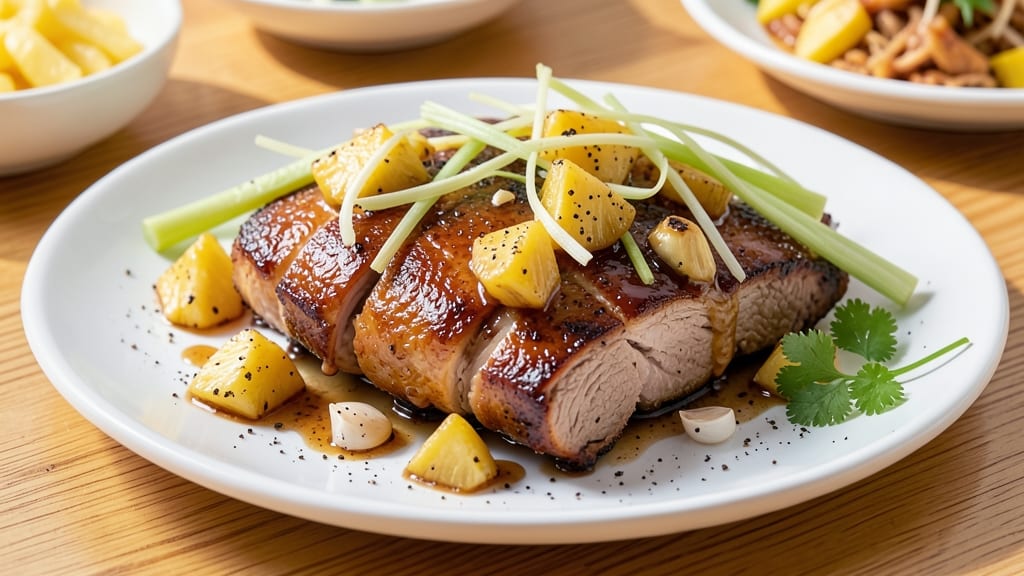
This pineapple pork recipe panlasang Pinoy brings the bold, sweet-tart flavors of Filipino comfort food to your table. 🌟 After years of perfecting the balance between tender pork and caramelized pineapple, I've created a dish that's rich with umami and just the right amount of tangy sweetness.
The secret lies in marinating the pork in a mix of soy sauce, vinegar, and garlic before braising it with fresh pineapple chunks. What makes this recipe special is the crunchy celery bites that add texture and freshness to every bite.
The pork becomes fork-tender while soaking up the flavors, and the pineapple glaze caramelizes into a sticky, slightly crispy topping. This dish is perfect for family gatherings or special occasions, but it's simple enough for a weeknight dinner.
By the time you serve this, you'll have a restaurant-quality meal that's packed with layers of flavor. The sweetness of the pineapple balances the savory, tangy notes from the soy sauce and vinegar, creating a harmony that's uniquely Filipino.
The celery adds a refreshing crunch that cuts through the richness of the pork. Serve it over steamed rice with a side of atchara or sautéed vegetables for the full experience. Let's get cooking!
Ingredients for pineapple pork recipe panlasang pinoy
Sweet, tangy, and packed with texture—this Filipino classic needs just 13 ingredients.
| Ingredient | Amount | Notes |
|---|---|---|
| Boneless Pork Shoulder 🥩 | 1 ½ lb | Cut into 1-inch cubes |
| Fresh Pineapple Chunks 🍍 | 1 ½ cups | With some juice reserved |
| Celery Stalks 🧅 | 3 whole | Cut into 1-inch pieces |
| Soy Sauce 🍶 | ½ cup | Dark soy preferred |
| Cane Vinegar 💧 | ¼ cup | Or white vinegar |
| Garlic Cloves 🧄 | 6 cloves | Minced finely |
| Fresh Ginger 🌿 | 1 tbsp | Grated finely |
| Brown Sugar 🍚 | ¼ cup | Packed lightly |
| Olive Oil 🫒 | 2 tbsp | For searing pork |
| Salt 🧂 | 1 tsp | Kosher or sea salt |
| Black Pepper 🌶️ | ½ tsp | Freshly cracked |
| Cornstarch 🌾 | 1 tbsp | For thickening glaze |
| Green Onions 🧅 | 2 whole | Sliced for garnish |
The pork shoulder is your secret weapon here—it stays tender while soaking up all those flavors. Ask the butcher for bone-in pieces if you can find them, as the marrow adds extra richness. For the pineapple, fresh is non-negotiable—canned won't give you that perfect caramelized texture. I grab mine from Trader Joe's when it's in season, but any ripe pineapple will work. Celery should be crisp with no brown spots—those crunchy bites are what make this dish special. If you can't find celery, sub with green beans cut into similar lengths.
No cane vinegar? White vinegar or apple cider vinegar works in a pinch. The soy sauce can be swapped for tamari if gluten-free, but dark soy gives that beautiful color. For the glaze, if you're making this ahead, add the cornstarch earlier—it thickens as it cools. The ginger can be subbed with 1 tsp ground ginger if fresh isn't available, though it won't be as vibrant. Brown sugar is key here—white sugar won't caramelize the same way. Pro tip: Toast your brown sugar in a dry pan for 2 minutes before adding to deepen the flavor.
This dish tastes even better the next day—make extra if you can. Store in the fridge for up to 5 days, covered with a damp paper towel to keep the celery crisp. For freezing, portion into containers with a thin layer of oil on top to prevent drying. Reheat gently in a skillet with a splash of water to restore that sticky glaze. The celery will soften when reheated, so add fresh slices on top when serving.
Why You'll Love This Recipe
- One-Pot Magic: The pork, pineapple, and celery all simmer together—no fancy layers, no extra pots. Just dump, stir, and let the soy and vinegar work their tangy-sweet alchemy while you sip your coffee.
- Sweet-Savory Balance: That first bite? Juicy pork with a caramelized edge, bright pineapple cutting through the richness, and just enough vinegar to wake it all up. Honestly, it’s the kind of flavor that makes you pause mid-bite.
- Lunchbox Hero: Pack the leftovers—it reheats beautifully and tastes just as good cold. My kids actually ask for this in their bento boxes, and I’ve even brought it to potlucks where it disappears faster than the rice.
- Budget Win: Pork shoulder stretches for days, and pineapple’s the star here—no fancy cuts or expensive add-ins. I’ll be real: this feeds six for under $15, and the leftovers? Even better the next day.
Step-by-Step instructions for pineapple pork recipe panlasang Pinoy
Here's how to create tender pork cubes with a perfect sweet-tart glaze and crispy celery bites.
🔥 Step 1: Sear the Pork Shoulder for Maximum Flavor
Heat a large skillet over medium-high heat and add the 2 tablespoons olive oil. Once shimmering, add the 1.5 lb boneless pork shoulder cut into 1-inch cubes in a single layer. Let them sear undisturbed for 3-4 minutes until golden brown on one side.
Here's the thing—don't crowd the pan. If you need to work in batches, that's fine, but don't rush the searing. You want that beautiful caramelization on each piece. Once the first side is golden, gently flip and sear the other sides for another 2-3 minutes. Transfer the seared pork to a plate and set aside.
👨🍳 Step 2: Build the Sweet-Tart Glaze Base
In the same skillet (no need to clean it—those browned bits are flavor gold), add the 3 whole celery stalks cut into 1-inch pieces. Cook for 3-4 minutes until they soften slightly but still retain their crunch. Remove and set aside with the pork.
Add the 6 cloves minced garlic cloves and 1 tablespoon finely grated fresh ginger to the skillet. Cook for 30 seconds until fragrant—this is where the magic happens. Then pour in the 0.5 cup soy sauce and 0.25 cup cane vinegar. Bring to a gentle simmer and let it cook for 2 minutes to meld the flavors.
🍳 Step 3: Combine Pork and Glaze Ingredients
Return the pork and celery to the skillet. Add the 1.5 cups fresh pineapple chunks (with some juice reserved) and 0.25 cup packed brown sugar. Stir gently to combine everything. The pineapple will release its juice, creating a beautiful glaze that coats the pork.
Bring the mixture to a simmer over medium heat. Here's where patience pays off—let it cook uncovered for 10-12 minutes, stirring occasionally, until the pork is tender and the sauce has thickened slightly. You'll know it's ready when the pork easily pulls apart with a fork and the sauce has a glossy, syrupy consistency.
🥘 Step 4: Thicken the Glaze to Perfection
In a small bowl, whisk together the 1 tablespoon cornstarch with 2 tablespoons water until smooth. Slowly pour this mixture into the skillet while stirring constantly. The cornstarch will work its magic, thickening the sauce to a perfect consistency that clings beautifully to the pork.
Continue cooking for another 2-3 minutes until the sauce coats the back of a spoon and the pork is fully tender. Taste and adjust seasoning with 1 teaspoon salt and 0.5 teaspoon black pepper if needed. The balance of sweet, tangy, and savory should be just right.
🍽️ Step 5: Garnish and Serve with Crispy Celery
Transfer the pineapple pork to a serving platter. Garnish with the 2 whole green onions sliced thinly on top. The celery pieces should still have a nice crunch—if they've softened too much, serve them on the side for that satisfying bite.
Serve immediately over steamed rice to soak up that delicious glaze. The combination of tender pork, sweet pineapple, and the slight crunch of celery makes this dish truly special. Don't forget to save some of that leftover sauce in the skillet—it's perfect for drizzling over extra rice or as a quick sauce for noodles!
Pro Tips For Making Pineapple Pork Recipe Panlasang Pinoy
- Sear the Pork First: Hit that pork shoulder with high heat until it’s got deep brown spots—no rushing, let it take its time. I used to skip this, and the sauce just clung instead of caramelizing into something rich. Three minutes per side, minimum, while you prep the rest.
- Core the Pineapple: Cut out the tough core before slicing—yes, it’s tedious, but it makes the pineapple chunks cook evenly and stay tender. I learned this the hard way when my first batch turned mushy midway through. A sharp knife and steady hand save you from regret later.
- Simmer Low and Slow: Once everything’s in the pot, drop the heat to a gentle simmer. Too much boil and the pineapple turns to mush, the pork stays tough, and the sauce gets thin. My grandmother called this "whispering heat," and she was right—it’s the thing that matters most.
- Reserve the Vinegar: Mix the cane vinegar with a splash of the cooking liquid before adding it back at the end. This keeps the acid bright and prevents the pork from curdling or the celery from getting bitter. I was skeptical until I tried it—now I never skip it.
Perfect pairings for these flavors
Filipino Rice Pairings
This dish is a match made in heaven with steamed jasmine rice—the classic Filipino staple that soaks up every drop of that sweet-tart glaze.
I always cook 2 cups uncooked rice (about 4 cups cooked) to serve with this recipe, as Filipinos believe rice should be the star of any meal.
For extra flair, sprinkle toasted garlic rice on top before serving—simply sauté 2 tbsp garlic in butter until golden and mix with cooked rice. 🍚
Crunchy Vegetable Sides
To balance the richness, serve sautéed baby bok choy or garlic green beans—both add a fresh, crisp contrast. I love tossing 1 lb green beans with 1 tbsp minced garlic, 1 tbsp soy sauce, and a pinch of white pepper, then steaming for 5 minutes.
For something more traditional, atchara (pickled papaya) brings a tangy, crunchy element that cuts through the sweetness beautifully. Grab a jar from Filipino markets or make your own with papaya, vinegar, and chili flakes.
Protein Boost Options
Want to make this a full feast? Add grilled chicken thighs or shrimp on the side—they pair wonderfully with the pineapple's acidity. For a vegetarian twist, tofu marinated in soy sauce and vinegar works surprisingly well.
I once served this with crispy tofu and everyone asked for seconds! If you're feeling adventurous, try longganisa (Filipino sausage)—its smoky flavor complements the dish perfectly. 🍗
Dipping Sauces
Filipinos love dipping sauces! Whip up a quick spicy vinegar dip by mixing ¼ cup cane vinegar, 1 tbsp soy sauce, 1 tsp sugar, and a pinch of siling labuyo (Filipino chili).
For something creamier, blend ½ cup sour cream, 1 tbsp lime juice, and 1 tsp honey—it’s pure magic with the celery bites. I keep a small bowl of this on the table so everyone can customize their experience. 🌶️
Beverage Pairings
For drinks, calamansi juice (Filipino limeade) is my go-to—its bright acidity cleanses the palate between bites. If you can’t find calamansi, lemon-lime soda or sparkling water with lime works too. For something stronger, San Miguel Pale Pilsen (the Philippines’ national beer) has a crisp, clean finish that pairs beautifully.
Non-alcoholic? Try hibiscus tea—it’s tart and refreshing, just like the dish itself. 🍹
Nutrition facts
Frequently asked questions
Why does this recipe use celery instead of the usual carrots or bell peppers?
The celery adds a unique crunchy texture that balances the tender pork and sweet pineapple perfectly. Unlike softer vegetables, celery maintains its bite even after cooking, creating that satisfying contrast in every bite. Plus, it's a classic Filipino ingredient in many stews and braises.
Can I substitute canned pineapple for fresh?
Fresh pineapple is ideal for that perfect caramelized texture, but you can use canned in a pinch. Drain well and pat dry before cooking—don't use the syrup as it contains too much sugar. For best results, add the canned pineapple 5 minutes before the end of cooking to prevent it from turning mushy.
How do I make this dish spicier?
Add 1-2 teaspoons of minced siling labuyo (Filipino chili) to the glaze base while cooking. For a milder heat, use ½ teaspoon cayenne pepper or 1 teaspoon chili flakes. Stir it in during Step 2 when building the sauce—this lets the heat infuse evenly throughout the dish.
Can I make this in a slow cooker?
Sear the pork first, then transfer everything (including celery and pineapple) to your slow cooker. Cook on Low for 6-7 hours or High for 3-4 hours. The slow cooking enhances the tenderness, and you may need to thicken the sauce with an extra 1 tsp cornstarch at the end.
What's the best way to reheat leftovers?
Gently reheat in a skillet over medium-low heat with 1 tablespoon water or pineapple juice to restore moisture. Cover and heat for 5-7 minutes, stirring occasionally. For extra crispiness, add fresh celery pieces when reheating. Microwaving works too—just use 30-second intervals on medium power.