
Main Courses
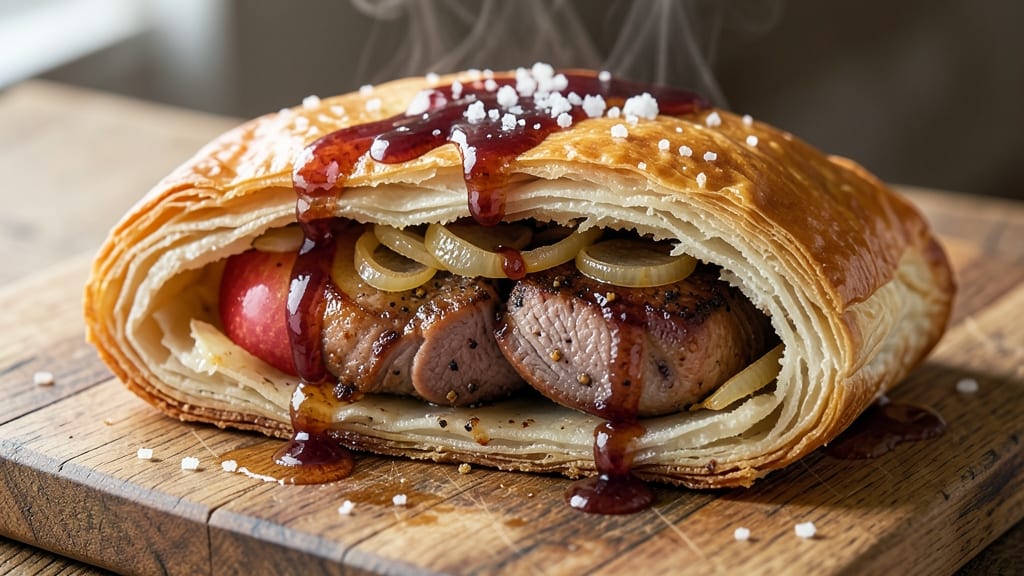
This pork and apple pasty recipe delivers the perfect balance of flaky, golden crust and tender, spiced filling that tastes like a hug from a Southern grandmother. 🌟 I developed this version after years of perfecting the art of layered pastries—where every bite reveals crispy edges and juicy, caramelized apples mingling with savory pork.
The secret lies in a well-seasoned filling that cooks just right, encased in a buttery crust that holds its shape through baking.
The filling starts with pork shoulder—slow-cooked until fork-tender—paired with sweet-tart apples and aromatic spices like cinnamon and nutmeg. Meanwhile, the pastry gets the flaky treatment with cold butter folded into the dough, ensuring those signature layers that make every bite irresistible.
This isn’t just a recipe; it’s a restaurant-quality experience you can recreate at home with patience and precision.
By the time it emerges from the oven, your pasty will have a golden, crackly crust that shatters slightly at the edges, revealing the moist, spiced filling inside.
The apples caramelize beautifully, their natural sweetness complementing the savory pork, while the crust stays sturdy enough to hold its shape when sliced. Serve it warm with a side of apple sauce or a simple green salad for a meal that feels both comforting and impressive.
This recipe is designed for foolproof results—whether you’re feeding a family or prepping for a gathering. The dough can be made ahead, and the filling comes together in under 30 minutes, so you’ll spend more time enjoying the process than standing over the stove.
Let’s get started on a pasty that’ll have everyone asking for seconds.
Ingredients for pork and apple pasty
Sweet apples, savory pork, and flaky crust—this pasty brings comfort food magic to your table.
| Ingredient | Amount | Notes |
|---|---|---|
| Pork Shoulder 🥓 | 1 ½ lb | Bone-in, cut into 1-inch pieces |
| Apples 🍎 | 3 whole | Sweet-tart variety like Honeycrisp |
| All-Purpose Flour 🌾 | 3 ½ cups | Plus 1 tbsp for dusting |
| Unsalted Butter 🧈 | ¾ cup | Cold, cubed for flaky layers |
| Ice Water 💧 | ½ cup | For dough elasticity |
| Salt 🧂 | 1 ½ tsp | Kosher or sea salt |
| Ground Black Pepper 🌶️ | ½ tsp | Freshly cracked preferred |
| Ground Cinnamon 🌿 | 1 tsp | For warm apple flavor |
| Ground Nutmeg 🌿 | ¼ tsp | Freshly grated for depth |
| Onion 🧅 | 1 whole | Yellow, diced small |
| Garlic Cloves 🧄 | 3 cloves | Minced for aromatic base |
| Apple Cider Vinegar 🍏 | 1 tbsp | For tenderizing pork |
| Granulated Sugar 🍚 | 2 tbsp | Balances sweet-tart apples |
| Heavy Cream 🥛 | ¼ cup | For pastry richness |
The pork shoulder is the star here—look for bone-in cuts at the butcher counter for extra flavor. Costco or Whole Foods always have great options, but any grocery store with a meat department will work. Apples are non-negotiable for texture—Honeycrisp or Granny Smith are perfect, but use whatever's in season. The butter matters just as much as the pork—Plugrá or Land O'Lakes unsalted are my go-tos. Keep it cold when making the dough, or those flaky layers will vanish. For the apples, peel and dice them just before mixing—they oxidize fast, which kills that fresh flavor.
No pork shoulder? Pork butt works too, but ask your butcher to cut it into 1-inch pieces. Running short on apples? Pear slices work in a pinch, though they won't caramelize quite the same. The cinnamon and nutmeg are essential—don't swap for pumpkin pie spice (it's got cloves and ginger that overpower). For the dough, if you can't find unsalted butter, reduce the salt in the recipe by 0.5 tsp. The vinegar is key for tenderizing the pork—if you're short, a splash of lemon juice works. And if you're making this ahead, freeze the assembled pasty before baking—it reheats beautifully.
The dough can be made 2 days ahead and stored in the fridge, wrapped tightly in plastic. The filling, once mixed, keeps for 24 hours before baking. Once baked, these pasties reheat like a dream—350°F for 10 minutes in the oven. I always make an extra one to freeze for lazy weeknights. Store baked pasties in an airtight container for up to 5 days or freeze for 3 months. The crust stays crispy if you reheat it wrapped in foil, then uncover for the last 2 minutes.
Why You'll Love This Recipe
- No-Fuss Dough: I swear by that butter-and-flour crust—just mix, fold in ice water, and roll. No kneading, no waiting. The apples and pork shoulder stay juicy while the edges get that golden, shatter-y crisp.
- Sweet-Savory Magic: The caramelized apples? They’re practically melting into the tender pork shoulder, balancing every bite. Honestly, the first time I bit into one still warm, I nearly dropped the whole thing.
- Picnic to Potluck: These pasties are my go-to for tailgates, potlucks, or even a lazy Sunday. Wrap them in foil, toss in a cooler, and they’ll still taste fresh hours later. (Yes, even on a Tuesday night.)
Step-by-step instructions for pork and apple pasty
Here's how to build layers of flaky pastry and rich spiced filling that'll have everyone begging for seconds.
👨🍳 Step 1: Make the Spiced Pork Filling
In a large skillet over medium-high heat, combine the 1.5 lb pork shoulder (cut into 1-inch pieces), 1 whole onion (diced small), and 3 cloves garlic cloves (minced). Cook for 8-10 minutes until the pork begins to brown and onions soften.
Here's the thing—don't stir constantly. Let the pork sear in patches first for maximum flavor. Once everything is lightly browned, add 1 tbsp apple cider vinegar, 2 tbsp granulated sugar, 1.5 tsp salt, 0.5 tsp ground black pepper, 1 tsp ground cinnamon, and 0.25 tsp ground nutmeg. Stir well and cook for another 5 minutes until the pork is tender and the spices meld together.
Remove from heat and let cool slightly. While it cools, peel and dice the 3 whole apples (sweet-tart variety) into ½-inch cubes. Toss them with the pork mixture and set aside. The apples should still be firm—they'll soften during baking.
👨🍳 Step 2: Prepare the Pastry Dough
In a large mixing bowl, combine the 3.5 cups all-purpose flour (plus 1 tbsp for dusting) and 1.5 tsp salt. Cut in the 0.75 cup unsalted butter (cold and cubed) using a pastry cutter or your fingers until the mixture resembles coarse crumbs with pea-sized butter pieces remaining.
Add the 0.25 cup heavy cream and mix gently until the dough just begins to come together. Then add the 0.5 cup ice water 1 tablespoon at a time, mixing lightly with a fork or dough scraper. Stop adding water as soon as the dough forms a shaggy mass that can be pressed together—overworking develops gluten and makes the pasty tough.
Turn the dough onto a lightly floured surface and knead gently just until smooth (3-4 minutes). Divide into two equal pieces, flatten into discs, wrap in plastic, and refrigerate for 30 minutes. Chilling relaxes the gluten for easier rolling and prevents shrinking.
🥘 Step 3: Assemble the Pasties
Preheat your oven to 400°F. Roll out one dough disc on a lightly floured surface to about 12x10 inches (⅛-inch thick). Spoon half of the pork-apple filling onto the center of the dough, leaving a 2-inch border around the edges. Fold the dough over the filling to form a half-moon shape, then seal the edges by pressing firmly with your fingers or using a fork to crimp.
Here's where it gets fun—cut a small slit in the center of the top crust to allow steam to escape. Brush the top with a little beaten egg (optional but gives golden color) and place on a parchment-lined baking sheet. Repeat with the remaining dough and filling.
🔥 Step 4: Bake to Golden Perfection
Bake the pasties for 40-45 minutes until the crust is deep golden brown and the filling is bubbling through the steam slit. The pasties should look puffed and the crust should be crisp along the edges.
I know it seems like too much time, but trust me—this slow baking ensures the filling cooks through while the crust stays flaky. If the top browns too quickly, tent with foil for the last 10 minutes of baking. Remove from oven and let rest for 5 minutes before serving to allow the filling to set slightly.
🍽️ Step 5: Serve Warm with Crispy Crust
Slice each pasty into wedges and serve warm. The crust should be crisp and flaky, with layers that practically melt in your mouth. Each bite should deliver tender pork, sweet-tart apples, and warm spiced notes all wrapped in that perfect buttery crust.
Real talk: these pasties are even better the next day when the flavors have had time to meld. Store leftovers at room temperature and reheat in a 350°F oven for 10-15 minutes to restore crispiness. Pair with a simple green salad or pickled vegetables for a complete meal.
Pro Tips For Making Pork And Apple Pasty
- Pre-Cook the Pork: Sear the pork shoulder first—crisp the edges in a hot pan before wrapping it in the dough. This step locks in flavor and prevents the filling from turning into a soggy mess. (Yes, even if you’re impatient like me, resist the urge to skip it.)
- Core the Apples: Remove the cores and chop the apples into even ½-inch chunks. Uneven pieces burn on the bottom while smaller ones turn to mush—neither is ideal. A mandoline makes this faster, but a sharp knife works if you take your time.
- Chill the Dough: Let the dough rest in the fridge for at least 30 minutes before rolling it out. Cold dough handles better, doesn’t shrink, and gives you a crispier crust. I used to rush this and wondered why my pasties always looked like sad blobs.
- Vent the Top: Poke a few small holes in the dough before baking—just enough to let steam escape. No vent? The pasty will puff up like a balloon and crack, leaving you with a messy, uneven top. (Your future self will thank you.)
Troubleshooting your pork and apple pasty
Crust Too Tough?
If your pasty crust turns out tough instead of flaky, it’s likely from overworking the dough or using warm butter. I’ve made this mistake too—once, I rushed and ended up with a dense brick instead of a golden, shatterable crust. 💫 The fix?
Chill the dough for at least 30 minutes before rolling, and keep your butter cold (even if it means popping it in the freezer for 10 minutes). Also, avoid over-kneading—just handle it until it holds together.
Filling Too Dry?
Dry filling usually means the apples released too much moisture or the pork wasn’t cooked long enough. To prevent this, toss the diced apples with 1 tsp lemon juice before adding them to the filling—this helps retain moisture.
If your filling still looks dry after baking, try adding 1-2 tbsp apple cider or broth when assembling the pasties. The steam from the liquid will keep everything juicy.
Pasty Shrinking?
Shrinking happens when the dough isn’t properly chilled before rolling or when the oven isn’t hot enough.
I learned this the hard way during a busy restaurant service—my pasties came out looking like sad, deflated blobs. 🥲 Preheat your oven to 400°F and let it sit for 15 minutes before baking. Also, roll the dough to ⅛-inch thickness and avoid stretching it—just gently press it out.
Filling Not Cooked Through?
Undercooked filling is usually a temperature issue. If the edges are golden but the center’s still cold, your oven might not be hot enough or the pasties need more time. I use an instant-read thermometer to check—when the filling reaches 165°F, it’s done.
If yours isn’t there after 45 minutes, tent with foil and bake another 10 minutes. The steam will help finish cooking without over-browning the crust.
Crust Browning Too Fast?
If the top browns before the filling cooks, cover the pasties with foil for the last 10-15 minutes of baking. This traps heat and steam, ensuring the filling finishes while the crust stays golden.
I also like brushing the top with a little milk or heavy cream before baking—it adds richness and helps control browning. Just don’t skip the steam slit, or you’ll end up with a messy explosion!
Apples Too Soft?
Overly mushy apples mean they were either too ripe when diced or baked too long. To fix this, choose firm but sweet-tart apples (like Honeycrisp) and dice them just before mixing with the filling. If yours turn out too soft, try reducing the baking time by 5 minutes next time.
The apples should be tender but still hold their shape—think of them like al dente pasta, not a puree.
Nutrition facts
Frequently asked questions
Can I make this pasty recipe with ground pork instead of pork shoulder?
You can absolutely use ground pork, but the texture will be different—it'll be more like a savory pie than a traditional pasty. For best results, brown the ground pork first with the onions and garlic, then proceed with the recipe. If you do use ground pork, reduce the baking time by 5-10 minutes since it cooks faster than larger chunks.
How do I make the crust extra flaky?
The secret is cold butter and proper technique! Keep your butter cubes frozen until just before mixing, and cut them into the flour using a pastry cutter or your fingers until you have pea-sized pieces. Also, handle the dough as little as possible—just until it holds together. Chilling the dough for 30 minutes before rolling is non-negotiable for that perfect flaky texture.
What's the best way to reheat leftover pasties?
For best results, reheat in a 350°F oven for 10-15 minutes until the crust is crisp again. Wrap them in foil for the first 5 minutes to prevent drying, then uncover for the last few minutes to restore that golden color. Microwaving works in a pinch, but it'll make the crust soggy—better to use the oven method.
Can I substitute pears for apples in this recipe?
Yes, but you'll need to adjust the seasoning. Pears are naturally sweeter, so reduce the sugar to 1 tbsp and add ½ tsp lemon zest to balance the flavor. Also, pears caramelize faster than apples, so check them at 35 minutes of baking. For the best texture, use firm pears like Bosc or Anjou and cut them slightly smaller than the apples.
How do I store these pasties if I make extras?
Store baked pasties at room temperature in an airtight container for up to 5 days. For longer storage, freeze them before baking—wrap individually in plastic wrap, then place in a freezer bag. They'll keep for 3 months in the freezer. To reheat from frozen, bake at 375°F for 20-25 minutes until heated through.