
Main Courses
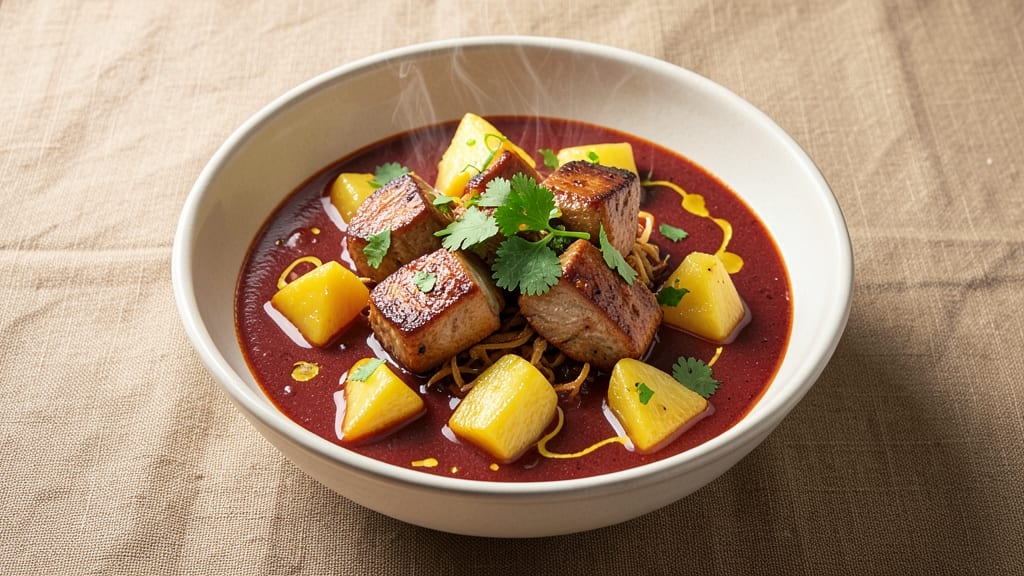
This one-pot pork and pineapple curry delivers the perfect harmony of sweet, tangy, and savory flavors that’ll have you reaching for seconds. 🔥 The secret lies in balancing fresh pineapple’s brightness with rich coconut milk and aromatic curry paste, creating a dish that’s as satisfying as it is simple.
I developed this recipe after years of perfecting Southeast Asian-inspired flavors in my Atlanta kitchen—where pork is king and bold spices are always welcome.
The beauty of this curry is its simplicity: just 30 minutes of active prep followed by hands-off simmering. You’ll start with searing pork shoulder to build deep, caramelized flavors, then let the curry paste and coconut milk work their magic as everything melds together.
The pineapple doesn’t just add sweetness—it tenderizes the pork while keeping the sauce vibrant and bright.
By the time you’re done, you’ll have a fragrant, velvety curry with tender pork that falls apart at the touch of a fork. The pineapple chunks stay juicy and sweet, cutting through the richness, while the spices linger on your palate like a warm embrace.
Serve it over steamed jasmine rice or with crusty naan to soak up every last drop of that luscious sauce.
This recipe scales beautifully—double it for a crowd or halve it for a cozy weeknight dinner. The leftovers taste even better the next day, making it perfect for meal prep. Trust me, once you try this version, store-bought curry pastes won’t stand a chance.
Ingredients for pork and pineapple curry
Sweet, tangy, and deeply savory—this curry brings bold flavors together in one aromatic pot.
| Ingredient | Amount | Notes |
|---|---|---|
| Pork Shoulder 🐖 | 1 ½ lb | Bone-in for flavor, cut into 1.5-inch cubes |
| Fresh Pineapple 🍍 | 1 cup | Chunks, fresh or thawed frozen |
| Red Curry Paste 🌶️ | ¼ cup | Store-bought or homemade, high-quality |
| Coconut Milk 🥥 | 13 ½ oz | Full-fat can, well-shaken |
| Yellow Onion 🧅 | 1 whole | Medium, sliced into half-moons |
| Garlic Cloves 🧄 | 4 cloves | Peeled and minced |
| Fresh Ginger 🌿 | 1 tbsp | Grated, or 1 tsp ground ginger |
| Fish Sauce 🍶 | 1 tbsp | Red Boat brand preferred |
| Brown Sugar 🍚 | 2 tbsp | Light or dark, packed |
| Lime Juice 🍋 | 2 tbsp | Freshly squeezed |
| Vegetable Oil 🫒 | 1 tbsp | For searing pork |
| Salt 🧂 | 1 tsp | Kosher or sea salt |
| Black Pepper 🌶️ | ½ tsp | Freshly ground |
| Fresh Cilantro 🌿 | ¼ cup | Chopped, for garnish |
| Jasmine Rice 🍚 | 1 ½ cups | Uncooked, for serving |
The pork shoulder is your flavor anchor. Bone-in cuts stay juicier, and the marrow adds richness. Grab one from the butcher counter if you can—it's cheaper than pre-cut and tastes better. Look for good marbling, not too lean. Fresh pineapple is ideal, but thawed frozen chunks work in a pinch. Just pat them dry first to avoid excess moisture. For the curry paste, Maesri or Thai Kitchen are solid choices, but if you're feeling adventurous, make your own with galangal and lemongrass if you can find them.
No fish sauce? Soy sauce plus a pinch of sugar gets you close, though it won't be identical. Running short on brown sugar? Honey or maple syrup works, but reduce other liquids slightly to balance. The coconut milk can be swapped for light coconut milk if you're watching calories, but full-fat gives that luxurious texture. Fresh ginger loses potency fast, so buy it whole and grate only what you need. The lime juice should be freshly squeezed—bottled just doesn't cut it here. For extra depth, add a splash of coconut cream at the end if you're serving a crowd.
This curry tastes even better the next day as flavors meld. Store leftovers in airtight containers for up to 5 days, or freeze for 3 months. I always make a double batch—one for dinner, one for lunch the next day. The rice? Cook it in advance and reheat with a splash of water. Garnish with cilantro right before serving, as it wilts fast. If you're prepping ahead, freeze the curry sauce separately and cook the pork fresh when ready—it stays tender that way.
Why You'll Love This Recipe
- One-Pot Magic: I swear by this recipe when I’m too tired to clean a million dishes—just brown the pork, toss everything in one pot, and let it simmer. The onions caramelize right into the curry, so you don’t even need to fuss with extra pans.
- Sweet-Spicy Balance: That fresh pineapple cuts through the richness of the pork and coconut milk like a dream, while the red curry paste adds just enough heat to keep it exciting. Honestly, the first bite makes me forget I’m eating dinner, not dessert.
- Weeknight to Party: Between us, this curry is my go-to for lazy Mondays and when friends drop by unannounced. Serve it over rice with lime wedges, or dump it into tortillas for tacos—it’s that adaptable. (Yes, even on a Tuesday night.)
- Budget-Friendly Feast: Pork shoulder stretches for miles in this dish, and pineapple in season is cheaper than you’d think. A single batch feeds four, and the leftovers? Even better the next day—just reheat with a splash of water to loosen it up.
Step-by-step instructions for pork and pineapple curry
Here's how to create this sweet-tart masterpiece in one pot—no fuss, just flavor.
🔥 Step 1: Sear the Pork Shoulder for Deep Flavor
Heat the 1 tablespoon vegetable oil in a large Dutch oven or heavy pot over medium-high heat until shimmering. Add the 1.5 lb pork shoulder cut into 1.5-inch cubes and sear undisturbed for 3-4 minutes per side until golden brown. This step builds incredible flavor through the Maillard reaction.
I press down gently on the pork cubes during the first minute—this prevents them from curling and ensures even contact with the pan. Once golden, transfer the pork to a plate and set aside. Don't drain the rendered fat; it's the foundation of your curry's richness.
🍳 Step 2: Build the Aromatic Base
In the same pot, add the 1 whole yellow onion sliced into half-moons and cook for 5 minutes until softened and lightly caramelized. Add the 4 cloves garlic cloves and 1 tablespoon fresh ginger (grated), stirring constantly for 30 seconds until fragrant—this is where the magic happens.
Stir in the 0.25 cup red curry paste and cook for 1 minute until it darkens slightly and releases its deep, spicy aroma. The paste contains chili, lemongrass, and galangal—don't rush this step or you'll miss the flavor development. This is the moment that matters: let it bloom.
🥘 Step 3: Simmer the Curry with Coconut Milk
Pour in the 13.5 oz coconut milk (make sure it's well-shaken first) and scrape up any browned bits from the bottom of the pot. Return the pork to the pot, add 1 cup fresh pineapple chunks, 1 tablespoon fish sauce, 2 tablespoons brown sugar, 1 teaspoon salt, and 0.5 teaspoon black pepper. Stir gently to combine.
Bring to a gentle simmer over medium-low heat and cover partially. Let it cook for 1 hour to 1 hour 15 minutes until the pork is fork-tender and easily pulls apart. The sauce should thicken slightly but remain silky—if it gets too thick, add 2-3 tablespoons water to loosen it.
🍽️ Step 4: Finish and Serve with Jasmine Rice
Remove from heat and stir in the 2 tablespoons lime juice. This brightens the flavors and cuts through the richness of the coconut milk. Taste and adjust seasoning—you might want to add a touch more fish sauce for saltiness or lime juice for tang.
While the curry rests, cook the 1.5 cups jasmine rice according to package instructions. Serve the curry hot over the rice, garnished with 0.25 cup chopped fresh cilantro. The pineapple adds a delightful sweetness that balances the spicy-sweet curry perfectly. Real talk: the first bite is always the best.
Pro Tips For Making Pork And Pineapple Curry
- Brown the Pork First: Skip the "quick sear" temptation—cut the pork shoulder into 2-inch chunks and let them sit in the hot pan for 4-5 minutes per side until deeply golden. That crust locks in flavor and prevents the curry from tasting like it simmered in water. (Yes, even if you’re impatient like me.)
- Char the Onions: After sautéing the red curry paste, toss in the sliced onions and let them caramelize until the edges turn dark brown—about 8-10 minutes. This isn’t just for color; it builds a deeper, sweeter base that cuts through the pineapple’s acidity. (Your future self will notice the difference.)
- Add Pineapple Last: Hold off on throwing in the pineapple chunks until the pork is nearly tender and the coconut milk has thickened slightly. Dumping it in too early turns the curry into a watery fruit soup. The last 10 minutes of cooking let the pineapple soften just enough without dissolving into the sauce.
- Use Full-Fat Coconut Milk: The canned stuff works, but for a richer, creamier curry, splurge on a carton of full-fat coconut milk (or split the can—use the thick cream at the top, thin with water). The fat coats the pork and balances the sweetness, so every bite feels indulgent. (I was skeptical until I tried it.)
Wine and beer pairings for this recipe
Thai Red Wine
For this pork and pineapple curry, I reach for a Thai-inspired red wine like Pinot Noir or Shiraz—both complement the dish beautifully.
The Pinot Noir from Thailand’s Mae Whirath vineyard offers bright acidity that cuts through the coconut richness, while Shiraz adds a touch of spice that mirrors the curry paste’s heat. Serve slightly chilled to enhance the wine’s freshness against the warm curry. 🍷
Craft Beer Pairings
If you prefer beer, a hazy IPA or wheat beer works wonders. The hazy IPA from Atlanta’s Strange Fellows brings citrusy notes that echo the pineapple, while a Belgian witbier like Hoegaarden adds a peppery bite that balances the dish’s sweetness.
For a local favorite, try a Southern-style pale ale—its maltiness stands up to the coconut without overpowering the pork. 🍺
Light White Wine
A crisp white wine like Sauvignon Blanc or Viognier is perfect if you’re avoiding reds. Sauvignon Blanc from New Zealand delivers bright citrus and herbal notes that refresh your palate between bites, while Viognier adds floral complexity that pairs beautifully with the ginger and garlic in the curry.
Keep it slightly cooler than room temperature to preserve its freshness. 🍷
Non-Alcoholic Options
For a non-alcoholic pairing, try sparkling limeade or ginger beer. A homemade limeade with fresh mint and a splash of agave syrup mirrors the dish’s tangy-sweet balance, while Fever-Tree ginger beer adds a spicy kick that complements the curry paste. Serve both chilled for the best experience. 💧
Regional Adaptations
In Atlanta, I often serve this curry with a local craft beer like SweetWater Brewing’s 420 Blonde Ale—its caramel notes harmonize with the brown sugar in the curry.
Meanwhile, in Charleston, a Sauvignon Blanc from Torres Vineyard is a classic choice, as it reflects the Lowcountry’s love for bright, citrusy flavors. 🗺️
Nutrition facts
Frequently asked questions
Can I substitute pork shoulder with another cut?
For tender meat, use pork tenderloin (reduce cooking time to 45 minutes) or pork loin. For more flavor, try pork ribs or pork butt—just increase simmering time to 2 hours. Avoid lean cuts like ham; they dry out in coconut milk.
How can I make this curry less spicy?
Start with a milder curry paste (like Thai Kitchen's "Mild" version) or reduce the amount to 1-2 tablespoons. For extra control, remove the chili peppers before blending homemade paste. Add 1 extra tablespoon brown sugar to balance heat with sweetness.
Can I use canned pineapple instead of fresh?
Yes, but drain and rinse the pineapple first to remove excess syrup. For best results, use crushed pineapple in juice (not syrup) and add 1 extra tablespoon lime juice to compensate. Fresh pineapple adds better texture, but canned works in a pinch—just taste and adjust sweetness.
Why did my curry sauce separate?
This happens when coconut milk isn't well-shaken before adding or when heat isn't controlled. Always shake the can vigorously, then whisk the curry paste into the milk first before adding other ingredients. Simmer on low heat to prevent curdling. If it separates, whisk in 1 tablespoon cornstarch mixed with 2 tbsp water.
What are the best sides to serve with this?
Classic pairings include jasmine rice, steamed basmati, or crusty naan for soaking sauce. For extra texture, add cucumber salad (thinly sliced cucumbers with lime and chili) or blistered green beans. In the South, we often serve it with cornbread for a sweet contrast.