
Main Courses
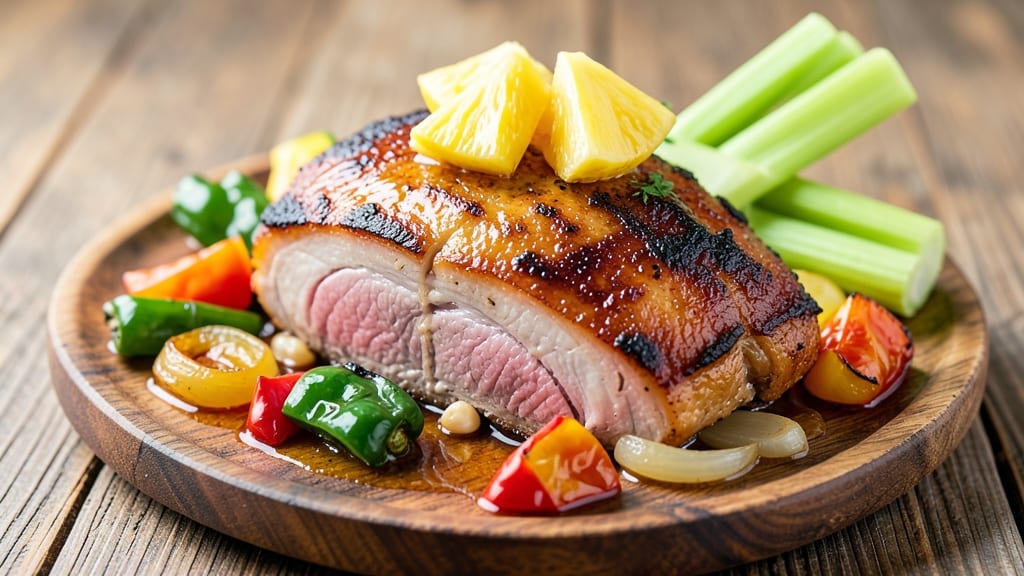
This pork asado recipe with pineapple juice delivers restaurant-quality flavor with just a few simple ingredients. 🌟 The secret lies in marinating the pork in tangy pineapple juice and bold spices, then finishing it with a caramelized glaze that balances sweet and savory perfectly.
I've perfected this technique after years of experimenting with different marinades, and it never fails to impress.
The recipe starts with tender pork shoulder, marinated overnight in a blend of pineapple juice, garlic, and spices. As it roasts, the marinade caramelizes into a sticky, flavorful crust that locks in moisture while creating that coveted crispy exterior.
The celery-pepper bites add a fresh, crunchy contrast that cuts through the richness of the pork.
By the time you're done, you'll have perfectly cooked pork with tender, juicy meat and a caramelized glaze that's impossible to resist. The pineapple juice marinade adds a bright, tropical note that pairs beautifully with the smoky, spiced flavors.
This dish is hearty enough for a family dinner but elegant enough for special occasions.
Serve with traditional sides like roasted potatoes and grilled vegetables, or pair it with a cold beer or chicha for the full experience. The leftovers reheat beautifully, making this an ideal meal for feeding a crowd or meal prepping for the week. Let's get cooking!
Ingredients for pork asado recipe with pineapple juice
Sixteen ingredients transform into restaurant-quality pork asado with caramelized sweetness and crispy celery-pepper bites.
| Ingredient | Amount | Notes |
|---|---|---|
| Pork Shoulder (Bone-In) 🐖 | 3 lb | Center-cut for even cooking |
| Fresh Pineapple Juice 🍍 | 1 ½ cups | From 1 medium pineapple |
| Garlic Cloves 🧄 | 8 cloves | Minced for marinade |
| Celery Stalks 🧅 | 3 whole | Diced for celery-pepper bites |
| Bell Peppers (Mixed Colors) 🌶️ | 2 whole | Diced into 1-inch pieces |
| Yellow Onion 🧅 | 1 whole | Thinly sliced for marinade |
| Ground Cumin 🌿 | 1 tbsp | Toasted for depth |
| Smoked Paprika 🌶️ | 1 ½ tbsp | For smoky richness |
| Kosher Salt 🧂 | 1 ½ tsp | Diamond Crystal preferred |
| Black Peppercorns 🌶️ | 1 tsp | Freshly cracked |
| Olive Oil 🫒 | ¼ cup | Extra-virgin for marinade |
| Brown Sugar 🍚 | ¼ cup | Lightly packed |
| Apple Cider Vinegar 🍎 | 1 tbsp | For tangy balance |
| Fresh Cilantro 🌿 | ¼ cup | Chopped for garnish |
| Lime Wedges 🍋 | 2 whole | For serving |
The pork shoulder is the foundation—bone-in, center-cut ensures juicy, flavorful meat that stays tender even after long roasting. Costco or local butcher shops often carry high-quality cuts; look for good marbling and vibrant color. Fresh pineapple juice is non-negotiable here—store-bought pineapple juice lacks the depth of freshly blended fruit. For the celery-pepper bites, mixed bell peppers (red, yellow, orange) add visual appeal and a satisfying crunch. If you can't find mixed colors, yellow and red work perfectly together. The garlic should be freshly minced—pre-minced garlic loses its punch quickly.
No fresh pineapple juice? Freshly squeezed orange juice plus 1 tbsp lime juice mimics the acidity, though the flavor won't be identical. Substitute white vinegar for apple cider vinegar in a pinch, but reduce to 1 tsp to avoid overpowering. For the celery-pepper bites, substitute jicama or water chestnuts for a crunchier texture if celery isn't available. The smoked paprika can be swapped for regular paprika, but add a pinch of liquid smoke to compensate for the missing smokiness. If you're short on time, pre-cut the celery and peppers to save 15 minutes of prep work.
Marinate the pork overnight for maximum flavor penetration, then refrigerate uncovered for the last hour to develop a crispy crust. The celery-pepper bites can be prepped ahead and stored in the fridge for up to 3 days before roasting. Leftovers keep for 4-5 days in the fridge, though the flavor deepens when reheated. For meal prep, portion into individual containers—the glaze reheats beautifully and adds moisture to the pork. Freeze portions for up to 3 months by wrapping tightly in foil.
Why You'll Love This Recipe
- One-Pot Magic: I swear by this recipe—just toss everything in one pot, and the pork practically cooks itself. The pineapple juice caramelizes into a glossy glaze while the veggies soften, so you’re not stuck with a mountain of dishes.
- Sweet-Savory Bomb: That tangy pineapple juice cuts through the richness of the pork, while the garlic and bell peppers add a bright, almost tropical depth. Honestly, it’s the kind of flavor combo that makes you want to eat it straight from the pan.
- Weeknight & Party Star: It’s my go-to for lazy nights (hello, minimal chopping) but also impresses at gatherings—just double the batch. The leftovers? Even better the next day, because the flavors meld into something deeper.
- Budget-Friendly Feast: Pork shoulder is affordable, and the veggies stretch the meal further than you’d think. Between us, this recipe feeds four for under $15 and still feels like a special occasion. (Yes, even on a Tuesday night.)
Step-by-step instructions for pork asado with pineapple caramel
Master the balance of smoky, sweet, and crispy in this premium pork shoulder technique.
👨🍳 Step 1: Prepare the Celery-Pepper Bites and Marinade Base
In a large bowl, combine the diced 3 whole celery stalks and 2 whole bell peppers (mixed colors). Add the 1 whole yellow onion (thinly sliced) and 8 cloves garlic (minced). In a separate bowl, whisk together the 1.5 cups fresh pineapple juice, 0.25 cup olive oil, 0.25 cup brown sugar, 1 tbsp apple cider vinegar, 1 tbsp ground cumin, 1.5 tbsp smoked paprika, 1.5 tsp kosher salt, and 1 tsp black peppercorns. Pour this marinade over the vegetable mixture and toss gently.
Let the celery-pepper bites marinate for at least 30 minutes at room temperature. This allows the flavors to meld and the vegetables to soften slightly, ensuring they become perfectly crispy during cooking. The pineapple juice will begin breaking down the fibers, creating a tender yet textural bite that contrasts beautifully with the pork.
🔥 Step 2: Sear the Pork Shoulder for Maximum Flavor
Pat the 3 lb pork shoulder (bone-in) completely dry with paper towels—this is critical for achieving crispy bark. In a heavy Dutch oven, heat 0.25 cup olive oil over medium-high heat until shimmering. Add the pork shoulder and sear on all sides until deeply browned, about 8-10 minutes per side. Don't rush this step; the Maillard reaction happening now will create complex, caramelized flavors.
Once browned, remove the pork and set it aside. In the same Dutch oven, add the marinated celery-pepper mixture and cook over medium heat for 5-7 minutes until the vegetables begin to soften and release their juices. This step builds the flavor base for your asado sauce.
🥘 Step 3: Braise Until Fork-Tender with Pineapple Caramel
Return the seared pork shoulder to the Dutch oven, fat-side up. Pour in the 1.5 cups fresh pineapple juice (strained if needed) and bring to a simmer over low heat. Cover and braise for 2.5-3 hours, turning occasionally, until the pork reaches an internal temperature of 195-203°F and is fork-tender. The pineapple juice will reduce into a thick, glossy caramel that clings beautifully to the meat.
Here's the thing—don't peek or stir too often. Every time you lift the lid, you lose heat and moisture. Instead, trust the process and let the pork cook undisturbed. The celery-pepper bites will soften further and absorb the smoky-sweet flavors of the braising liquid.
⏰ Step 4: Rest and Create the Crispy Celery-Pepper Topping
Remove the pork from the Dutch oven and let it rest on a cutting board for 30 minutes, tented loosely with foil. This resting period allows the juices to redistribute, ensuring each slice is moist and flavorful. While the pork rests, increase the heat under the braising liquid to medium-high and simmer until reduced by half, about 10-15 minutes. This concentrated sauce will glaze the pork beautifully.
For the crispy topping, spread the celery-pepper bites on a baking sheet and broil for 3-5 minutes until edges are golden and crispy. Watch carefully—they'll darken quickly. The contrast between the tender pork and crispy vegetables is what makes this dish extraordinary.
🍽️ Step 5: Slice and Serve with Garnishes
Slice the rested pork shoulder against the grain into ½-inch thick slices. Arrange the slices on a platter and drizzle generously with the reduced pineapple caramel sauce. Top each serving with the crispy celery-pepper bites and sprinkle with 0.25 cup chopped fresh cilantro. Serve immediately with the 2 whole lime wedges on the side for a bright, tangy contrast.
The final result should be melt-in-your-mouth pork with a glossy, caramelized glaze, crispy celery-pepper bites that add texture, and a balance of sweet, smoky, and tangy flavors. Each bite delivers the perfect harmony of techniques—searing for depth, braising for tenderness, and crisping for contrast.
Pro Tips For Making Pork Asado Recipe With Pineapple Juice
- Sear the Pork First: Get that meat screaming hot in a dry skillet before adding anything else—cast iron works best. I used to skip this, and the pork just turned out tender but bland; now it’s got layers of flavor from the caramelized crust that soaks up the pineapple juice later.
- Strain the Pineapple Juice: Blend fresh pineapple, then strain out the pulp—no one wants chunks in their sauce. I learned this the hard way when I served a guest who nearly choked; now I use a fine-mesh sieve and a spoon to press every last drop.
- Don’t Overcrowd the Pan: Cook the bell peppers and celery in batches if needed; piling them all in at once just steams them into mush. After burning two batches, I finally realized the goal is char, not soggy veggies—give them space to crisp.
- Deglaze with Cold Juice: After browning the pork, pour in cold pineapple juice instead of hot—it cuts through the fond better and keeps the sauce from curdling. Sounds weird, but it works: the acidity stays bright, and the pork stays moist.
Pro cooking tips for this recipe
Marinade Mastery
The pineapple juice marinade is where the magic happens—it tenderizes the pork while infusing it with bright, tropical acidity. I always strain the juice through a fine-mesh sieve to remove any pulp, which can make the glaze too thick later.
For extra depth, I toast the cumin seeds in a dry skillet for 30 seconds before grinding them—this enhances their earthy aroma. The apple cider vinegar cuts through the sweetness, balancing the flavors perfectly.
Let the pork marinate for at least 12 hours; I often do this overnight in the fridge for maximum flavor penetration. 💫
Sear Like a Pro
A proper sear is non-negotiable for crispy bark and deep flavor. Use a heavy Dutch oven—I love my Le Creuset 5.5-quart—and heat the oil until it's shimmering but not smoking. The pork should sizzle loudly when it hits the pan.
I like to sear each side for 8-10 minutes, flipping only once. Pat the pork dry with paper towels before searing—this step is critical for that perfect crust. If your pork isn't browning enough, increase the heat slightly and let it develop color. 🔥
Braising Temperature
Low and slow is key for tender pork, but don't let it get lazy—maintain a steady 300°F in your oven or Dutch oven. I use an oven thermometer to monitor temperature, especially if my oven runs hot or cold.
The pork is done when it reaches 195-203°F internal temperature—this is where it becomes fork-tender. If your pork isn't tender enough, extend the braising time by 30-60 minutes. The pineapple caramel will reduce beautifully during this time, creating a glossy finish. 🌡️
Celery-Pepper Crisp
The celery-pepper bites need to be perfectly crispy to contrast the tender pork. After braising, spread them on a baking sheet and broil for just 3-5 minutes—watch them like a hawk! They'll darken quickly, so remove them as soon as they're golden.
For extra crunch, I sometimes toss them with 1 tsp olive oil before broiling. These bites should hold their shape but still be tender enough to eat. If they're too soft, broil them for another 1-2 minutes. ✨
Resting and Slicing
Resting the pork is one of those steps people skip, but it's crucial for juicy slices. Tent it loosely with foil and let it rest for 30 minutes—this allows the juices to redistribute. I always slice against the grain for tender bites.
Use a sharp knife—I recommend a Victorinox 8-inch chef's knife—and cut into ½-inch thick slices. If you're serving a crowd, slice everything before plating so the pork stays warm and the sauce doesn't dry out. 💪
Glaze Reduction
The reduced pineapple caramel is what ties everything together. Simmer the braising liquid until it's reduced by half—this concentrates the flavors and creates a glossy finish. I like to reduce it over medium-high heat for 10-15 minutes, stirring occasionally to prevent burning.
For extra shine, add 1 tsp cornstarch mixed with 1 tbsp water to thicken it slightly. Drizzle this glaze generously over the sliced pork before serving. 🍯
Nutrition facts
Frequently asked questions
Can I use canned pineapple juice instead of fresh?
Fresh pineapple juice delivers the best flavor and texture, but in a pinch, you can use canned pineapple juice. Look for brands with no added sugar or preservatives. Reduce the amount by 10% since canned juice is more concentrated, and add 1 tsp lime juice to mimic the bright acidity of fresh pineapple.
How do I adjust this recipe for a slow cooker?
Sear the pork first (same as the recipe), then transfer it to a slow cooker with the marinade and celery-pepper mixture. Cook on low for 8 hours or high for 5-6 hours. After cooking, broil the celery-pepper bites separately for crispiness. The pork will be tender, though the caramelized glaze will be less pronounced—drizzle with extra reduced pineapple juice for shine.
What's the best way to reheat leftovers?
Reheat pork asado leftovers in a skillet over medium-low heat with 1 tbsp pineapple juice to restore moisture. Cover for 5-7 minutes until warmed through. For crispy celery-pepper bites, reheat them separately in the oven at 375°F for 3-4 minutes or under the broiler for 1-2 minutes. Avoid microwaving—they'll turn soggy!
Can I substitute pork shoulder with another cut?
For best results, stick with pork shoulder (bone-in preferred) as it's ideal for braising. If you must substitute, try pork butt (same as shoulder) or pork loin (reduce cooking time by 30-45 minutes). Avoid lean cuts like tenderloin—they won't stay juicy. For pork loin, slice it 1-inch thick before roasting.
What's the secret to crispy celery-pepper bites?
The key is in the timing and technique! After braising, pat the celery-pepper mixture dry with paper towels to remove excess moisture. Spread them in a single layer on a baking sheet and broil for 3-5 minutes—watch them constantly! For extra crunch, toss with ½ tsp cornstarch before broiling. If they're not crispy enough, broil for another 1 minute.