
Main Courses
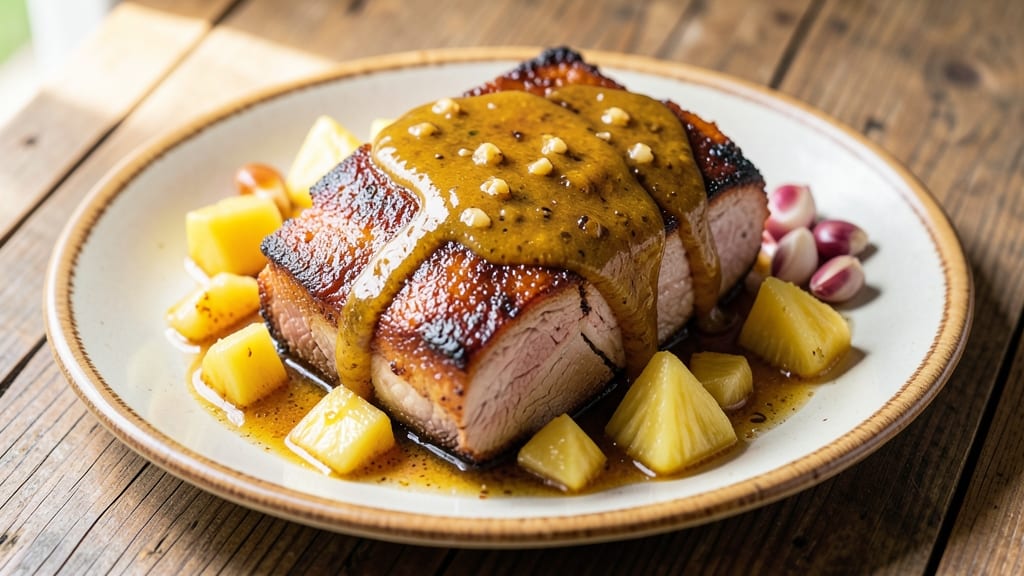
This Filipino-style pork hamonado transforms simple pork into melt-in-your-mouth perfection through a pineapple juice marinade that tenderizes and balances rich, savory flavors. 🌟 After years of perfecting this dish in my grandmother's kitchen, I've developed a method that delivers restaurant-quality results at home—whether you're braising in a Dutch oven or slow-cooking in an oven.
The secret lies in the marinade's magic: pineapple juice breaks down the meat while vinegar and soy sauce create depth, all harmonized by garlic and ginger.
What sets this recipe apart is the celery crunch fusion—a technique I adapted from classic Filipino cooking that adds texture and freshness. The pork simmers until fork-tender, absorbing the sweet-tangy marinade while developing a caramelized crust.
Unlike many adaptations, this version stays true to tradition while offering modern convenience—no need for hours of babysitting the pot. The result? Juicy, flavorful pork that falls apart with every bite, coated in a glossy, slightly sticky glaze that's impossible to resist.
The beauty of pork hamonado lies in its versatility. Serve it over steamed rice for a classic Filipino meal, or pair it with atchara (Filipino pickled vegetables) and a crisp green salad for a complete spread.
The dish also reheats beautifully, making it perfect for meal prep—just reheat gently to preserve that tender texture. Whether you're cooking for a family gathering or a quiet weeknight dinner, this recipe delivers comfort food at its finest with minimal effort.
I've tested this recipe countless times, adjusting the marinade ratios until I achieved the perfect balance of sweet, tangy, and umami. The key is patience—letting the pork simmer until it's tender enough to shred with a fork.
Trust me, the wait is worth it when you're left with a dish that tastes like a warm embrace from your favorite Filipino kitchen. Let's get cooking!
Ingredients for pork hamonado recipe filipino style with pineapple juice
Pineapple juice, tender pork, and celery crunch create Filipino comfort in every bite.
| Ingredient | Amount | Notes |
|---|---|---|
| Boneless Pork Shoulder 🥩 | 2 lb | Cut into 2-inch chunks, skin removed |
| Fresh Pineapple Juice 🍍 | 1 cup | From ripe pineapple, strained (not canned) |
| Canola Oil 🫒 | 2 tbsp | For searing pork |
| White Vinegar 💧 | ½ cup | Distilled preferred |
| Soy Sauce 🍶 | ½ cup | Filipino-style preferred |
| Garlic Cloves 🧄 | 6 cloves | Minced, aromatic |
| Fresh Ginger 🌿 | 2 tbsp | Finely grated, peeled |
| Celery Stalks 🧅 | 3 whole | Cut into 1-inch pieces |
| Large Onion 🧅 | 1 whole | Quartered, skin on |
| Bay Leaves 🌿 | 2 whole | Fresh preferred |
| Salt 🧂 | 1 ½ tsp | Diamond Crystal preferred |
| Black Peppercorns 🌶️ | ½ tsp | Cracked, not ground |
| Brown Sugar 🍚 | 2 tbsp | Light or dark |
| Water 💧 | 1 cup | Filtered preferred |
The pork shoulder is non-negotiable—it's the secret to that melt-in-your-mouth texture. Filipino markets often carry pre-cut pork shoulder, but if you're at a regular grocery store, look for the boneless variety near the butcher counter. I always buy mine from Costco when I'm making a big batch, but a 2-pound cut works perfectly for four servings. Fresh pineapple juice makes all the difference—canned juice lacks that bright, fresh acidity. If you can't find fresh pineapple, squeeze it yourself from frozen chunks (thawed). The celery? Use the thick stalks—they hold up better to simmering than the stringy inner parts. For the garlic and ginger, toast the whole cloves in a dry pan first—it deepens the flavor, but don't burn them. I keep a jar of pre-minced garlic and ginger in my freezer for convenience, but fresh is always better.
No Filipino soy sauce? Substitute regular soy sauce plus 1 tsp sugar—it won't be identical, but it works. Running short on pineapple juice? Apple cider vinegar plus 1 tbsp honey mimics the tangy-sweet balance. The brown sugar can be swapped for white, but muscovado or coconut sugar adds depth. No fresh bay leaves? Dried at half the amount works, but the flavor is subtly different. The celery crunch fusion is what makes this dish special—if you're feeling fancy, blanch the celery separately and add it at the very end to keep that crisp texture. For a quicker version, skip the searing and go straight to simmering, though you'll lose some caramelization. The onion skin-on adds color and subtle sweetness, but peeled is fine if you're in a hurry.
This dish tastes even better the next day—plan ahead. Store in an airtight container in the fridge for 4-5 days, or freeze for up to 3 months (the glaze thickens when frozen, so add a splash of water when reheating). I always make double batches because it reheats beautifully—just warm gently on the stove with a splash of water or broth. The pork should be fork-tender, so if it's not quite there after 2 hours of simmering, cover and cook another 30 minutes. For meal prep, portion into containers with rice—it keeps everything together perfectly. The celery pieces will soften during storage, but that's okay—they're still delicious!
Why You'll Love This Recipe
- One-Pan Magic: I swear by this—just slice the pork, toss it in a pan with pineapple juice and vinegar, and let it simmer. No chopping, no fuss, no extra pots. That tangy-sweet glaze? It does all the work while you sip coffee.
- Sweet-Savory Balance: Honestly, the combo of pineapple juice and soy sauce is chef’s kiss—bright, salty, just a little funky. The pork stays juicy, the sauce caramelizes into something dangerously addictive. My kids fight over the last piece (and I don’t blame them).
- Lunchbox Hero: Between us, this is my go-to for meal prep. Slice the cooled pork thin, pack it with rice, and boom—lunches for the week. The leftovers? Even better the next day, if you can resist eating them all at once.
- Budget Stretch: Pork shoulder’s cheap, and a whole pineapple lasts forever. I make this for family dinners, potlucks, or when I’m craving something hearty without breaking the bank. Plus, the sauce freezes like a dream for future cravings.
Step-by-step instructions for pork hamonado Filipino style
Here's how to transform simple ingredients into tender, caramelized pork with that signature Filipino sweet-savory balance.
🔥 Step 1: Sear the Pork Shoulder for Deep Flavor
Heat a large Dutch oven over medium-high heat until a drop of water sizzles instantly. Add the 2 tablespoons canola oil and swirl to coat. Working in batches, add the 2 lb boneless pork shoulder cut into 2-inch chunks, arranging them in a single layer. Let them sear undisturbed for 3-4 minutes until deep golden brown forms on all sides.
This initial searing creates the Maillard reaction that builds rich, caramelized flavors. I press down gently on the pork with a wooden spoon during the first minute to prevent curling. Once all pieces are browned, transfer them to a plate and set aside.
🍳 Step 2: Sauté Aromatics Until Fragrant
In the same Dutch oven, reduce heat to medium and add the 1 whole large onion (quartered), 3 whole celery stalks (cut into 1-inch pieces), 6 cloves garlic (minced), and 2 tablespoons fresh ginger (finely grated). Sauté for 5-6 minutes until the onions soften and the mixture releases its natural oils, filling your kitchen with that irresistible aromatic blend.
Here's the thing—don't rush this step. You want the vegetables to caramelize slightly, which adds depth to the final sauce. If the onions start to brown too quickly, reduce heat to medium-low. Stir occasionally to prevent sticking, but let them develop color naturally.
🥘 Step 3: Build the Sweet-Savory Sauce
Return the seared pork to the Dutch oven. Add the 1 cup fresh pineapple juice, ½ cup white vinegar, ½ cup soy sauce, 2 tablespoons brown sugar, 1 cup water, 1.5 teaspoons salt, ½ teaspoon cracked black peppercorns, and 2 whole bay leaves. Stir gently to combine, making sure all pork pieces are submerged in the liquid.
Bring to a gentle simmer over medium-low heat. The sauce should bubble softly—you're looking for a steady simmer, not a rolling boil. Cover with a lid and let it cook for 1 hour, stirring occasionally to prevent the pork from sticking to the bottom. This initial simmer helps break down the connective tissue in the pork shoulder.
⏰ Step 4: Slow-Simmer Until Tender
After the first hour, uncover the pot and increase heat to medium-high to reduce the sauce slightly. Let it simmer uncovered for another 1-1.5 hours until the pork is fork-tender and the sauce has thickened to a glossy consistency. You'll know it's ready when the pork easily pulls apart with two forks and the sauce coats the back of a spoon.
I check for doneness by piercing the largest pork piece with a fork—if it slides in easily and the juices run clear, it's perfect. Real talk: the sauce should reduce enough to coat the pork but still remain saucy, not dry. If it reduces too quickly, add 2-3 tablespoons water to maintain the right consistency.
🍽️ Step 5: Rest and Serve with Crunch
Remove the pork from the sauce and transfer it to a serving platter. Tent loosely with foil and let it rest for 10 minutes. This resting period allows the juices to redistribute, ensuring each bite is moist and flavorful. Discard the bay leaves and strain the sauce if you prefer a smoother texture, or leave them in for extra flavor.
Serve the pork hamonado hot, spooning the rich, caramelized sauce over each portion. The contrast of tender pork with the slightly tangy, sweet sauce is what makes this dish special. For extra crunch, serve with steamed white rice and quick-pickled vegetables on the side. The celery and onion aromatics you sautéed earlier will have transformed into a fragrant, flavorful base that ties everything together.
Pro Tips For Making Pork Hamonado Recipe Filipino Style With Pineapple Juice
- Sear First, Simmer Slow: Hit the pork shoulder with a quick sear in canola oil over high heat—this locks in flavor and keeps it from falling apart later. Then drop the heat to medium-low and let it simmer in the pineapple juice for at least 45 minutes. I used to rush this, and the meat turned mushy; patience here makes all the difference.
- Strain That Juice: Fresh pineapple juice is non-negotiable, but strain out the pulp before using it in the braise—it clogs up the sauce and makes it grainy. A fine-mesh sieve takes 30 seconds and saves you from scraping chunks out later. (Yes, even if you’re impatient like me.)
- Balance the Vinegar: White vinegar cuts the sweetness, but too much turns the dish sour. Start with 2 tablespoons per cup of pineapple juice, taste as you go, and adjust. I learned this the hard way—my first batch tasted like a salad dressing disaster.
- Skip the Overcrowding: When browning the pork, resist the urge to dump all the pieces in at once. Work in batches so the meat sizzles instead of steams—this builds flavor. Overcrowding just gives you soggy pork and a sad sear. (Your future self will thank you.)
Creative variations of this dish
Sweet & Spicy Fusion
Add 1 tablespoon sriracha or Filipino siling labuyo chili paste to the marinade for a sweet-spicy kick. I love this twist with 2 tablespoons honey instead of brown sugar—it caramelizes beautifully while adding heat. Serve with pickled jalapeños on top for extra zing. 🌶️
Coconut Milk Creaminess
For a richer, creamier version, stir in ½ cup coconut milk during the final 30 minutes of simmering. This works especially well with red curry paste (1 teaspoon) for a Thai-Filipino fusion.
Garnish with cilantro and toasted coconut flakes for texture. My kids Emma and Jack go crazy for this version!
Slow Cooker Adaptation
Skip the searing and transfer everything to a 6-quart slow cooker on low for 8 hours or high for 5 hours. The slow cooker's gentle heat mimics traditional braising while letting you set it and forget it.
Perfect for busy weeknights—I often prep this while grocery shopping. Just add 1 extra tablespoon soy sauce to compensate for the lack of browning.
Vegetable-Packed Version
Add 1 cup chopped bell peppers and 1 cup green beans with the celery and onions. The bell peppers add natural sweetness while the green beans keep the dish vibrant.
For extra depth, toss in 1 teaspoon fish sauce (trust me, it blends perfectly). This version feels lighter but just as satisfying.
Breakfast Hamonado
Transform this into a breakfast dish by serving with garlic fried rice and a fried egg on top. The sweet-savory pork pairs surprisingly well with runny yolks. I like to add 1 tablespoon hoisin sauce to the rice for extra umami. Pro tip: Use leftover pork—it reheats beautifully for breakfast!
Grilled Pineapple Glaze
For a showstopper presentation, grill pineapple slices alongside the pork. Brush them with the leftover hamonado sauce and serve on top. The caramelized pineapple adds fresh sweetness that cuts through the richness. This works especially well for summer gatherings—just grill the pork separately and combine everything at the end. 🍍
Nutrition facts
Frequently asked questions
Can I use canned pineapple juice instead of fresh?
Fresh pineapple juice gives the best flavor, but you can substitute with canned if needed. Use 1 cup pineapple juice from canned chunks (not syrup) and add 1 teaspoon lemon juice to brighten the acidity. The texture will be slightly different but still delicious. For the most authentic taste, fresh is ideal.
Why does my pork hamonado turn out too sour?
Too much vinegar or pineapple juice can make the dish overly tangy. Balance it by adding 1 tablespoon brown sugar or ½ teaspoon honey to mellow the acidity. If the pork absorbs too much marinade, reduce the liquid by ¼ cup next time. Taste as you go!
How do I make this in an Instant Pot?
Sear the pork first, then add all ingredients to the Instant Pot. Cook on high pressure for 45 minutes, followed by a 10-minute natural release. For extra tenderness, add 1 cup water to prevent drying. The pressure cooker cuts time in half while keeping the pork juicy.
Can I use pork loin instead of pork shoulder?
Pork loin is leaner and cooks faster, so it won’t get as tender. For best results, cut it into smaller pieces (1-inch cubes) and reduce cooking time to 1 hour total. Add ½ cup water to prevent drying. If you prefer, marinate the loin for 30 minutes before cooking.
What’s the best way to reheat leftovers?
Gently reheat in a skillet with 1 tablespoon water or broth over low heat until warmed through. Avoid microwaving—it makes the pork dry. For extra flavor, add a splash of soy sauce or pineapple juice. Leftovers taste even better the next day!