
Main Courses
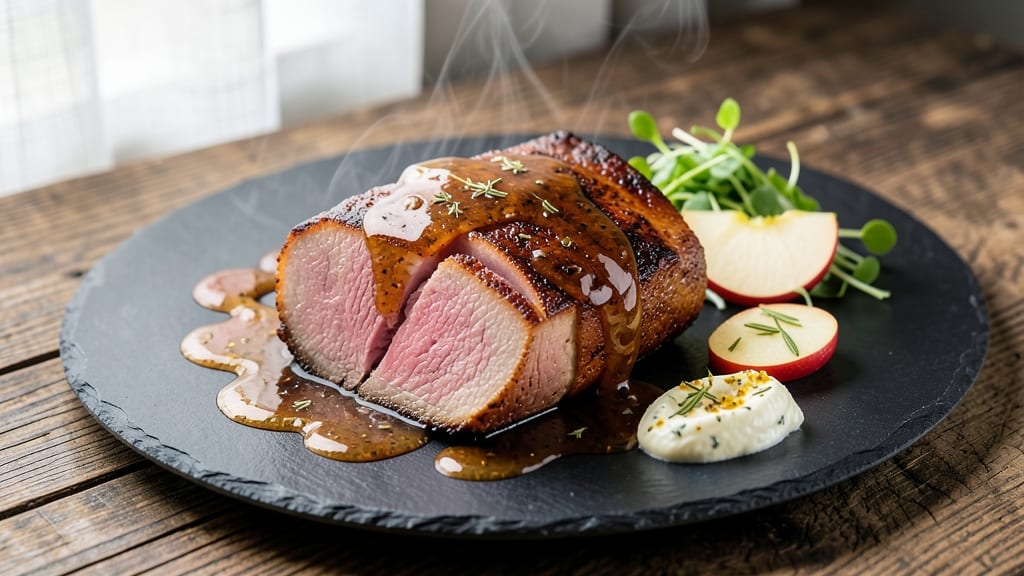
This pork loin recipe with apple juice transforms a simple protein into a showstopper with caramelized edges and tender meat. The apple juice creates a sweet-tart balance that tenderizes the pork while building rich, glossy sauce—no fancy techniques required.
I perfected this after years of testing how to achieve that perfect harmony between sweet and savory, especially when cooking for family gatherings where everyone expects restaurant-quality results.
The secret lies in a slow braise that lets the apple juice reduce into a glossy glaze while the pork cooks to perfection. You'll start with a simple marinade of apple juice, mustard, and herbs, then sear the pork to lock in flavors before finishing it in the oven.
This method ensures the edges caramelize beautifully while keeping the inside juicy—no dry pork here. The best part? It takes just 30 minutes of active prep and 2 hours of hands-off cooking time.
By the time you serve this dish, you'll have golden-brown pork loin with a glossy, caramelized crust that practically sings with flavor. The apple juice reduction adds natural sweetness that pairs perfectly with the savory pork, creating a sauce that's rich enough to spoon over every bite.
This recipe delivers restaurant-quality results without the fuss, making it ideal for weeknight dinners or special occasions when you want to impress.
Pair it with roasted potatoes or a simple green salad to round out the meal. The leftovers reheat beautifully too, so you'll have delicious meals ready for the next day. Let's get started with this foolproof technique that transforms pork loin into something truly special.
Ingredients for pork loin recipe with apple juice
Sweet-tart balance starts with these 13 quality ingredients that transform simple pork into a restaurant-worthy centerpiece.
| Ingredient | Amount | Notes |
|---|---|---|
| Pork Loin 🥓 | 1 ½ lb | Center-cut, 1.5-inch thick |
| Unsalted Butter 🧈 | ½ cup | Cold, cut into 1-inch cubes |
| Apple Juice 🍎 | 1 ½ cups | Unfiltered, preferably organic |
| Dijon Mustard 🥫 | 2 tbsp | High-quality, smooth variety |
| Fresh Thyme 🌿 | ¼ cup | Leaves only, finely chopped |
| Fresh Rosemary 🌿 | ¼ cup | Needles only, finely chopped |
| Garlic Cloves 🧄 | 4 cloves | Minced, fresh preferred |
| Kosher Salt 🧂 | 1 ½ tsp | Diamond Crystal preferred |
| Black Pepper 🌶️ | 1 tsp | Freshly ground preferred |
| Brown Sugar 🍚 | 2 tbsp | Light or dark, packed |
| Balsamic Vinegar 🍷 | 1 tbsp | Aged 25 years or more |
| Olive Oil 🫒 | 1 tbsp | Extra-virgin, for searing |
| Honey 🍯 | 1 tbsp | Wildflower preferred |
The pork loin is where this dish shines—center-cut is non-negotiable for even cooking. Grab the thickest piece you can find (about 1.5 inches) from Whole Foods or your local butcher. Look for good marbling—those little white flecks mean juicier meat. For the apple juice, unfiltered organic has more depth of flavor (and fewer additives). I always buy a big bottle at Trader Joe's—their organic apple juice is perfect for this. Fresh herbs make a difference here, so if you're using dried, reduce to one-third the amount. The Dijon mustard should be smooth, not grainy—Maille is my go-to.
No apple juice? Substitute with a mix of orange juice and a splash of apple cider vinegar—it won't be identical, but it works in a pinch. Short on fresh thyme or rosemary? Dried works at one-third the amount, but the flavor won't be as bright. The brown sugar adds depth to the caramelized edges—don't skip it. For a quicker version, swap the balsamic reduction at the end with store-bought caramel sauce (like Annie's). The honey and balsamic combo is what creates that perfect sweet-tart balance, so if you're avoiding honey, agave nectar works too. The olive oil for searing? Use something with a high smoke point—avocado oil is ideal.
Pork loin keeps best in the coldest part of your fridge, wrapped in parchment paper for up to 3 days. The apple juice and herbs can be prepped ahead—store them in airtight containers for 5 days. This dish reheats beautifully—just warm it gently in a saucepan with a splash of water or apple juice. The sauce will thicken as it cools, so add a little water when reheating if needed. Portion into containers for easy leftovers—this tastes even better the next day as the flavors meld.
Why You'll Love This Recipe
- One-Pan Magic: I swear by this recipe when I’m too tired to scrub pots—just sear the pork, toss in apple juice and thyme, and let it braise. The butter pools on top like a golden reward, and honestly? I haven’t used the oven cleaner since I discovered this trick.
- Sweet-Savory Balance: That apple juice isn’t just for moisture—it cuts through the richness of the pork with a bright, almost caramelized tang. Add the Dijon mustard, and you’ve got a flavor bomb that feels fancy but tastes like comfort. (Yes, even on a Tuesday night.)
- Leftovers That Beg for Seconds: This roast is so forgiving it practically wants to be reheated. Slice it thin, pack it in containers, and watch it disappear from your fridge. Between us, I’ve taken it to potlucks, packed lunches, and “emergency dinner” nights—it’s my secret weapon for busy weeks.
- Budget-Friendly Feast: A single pork loin feeds my whole family, and the apple juice? I use whatever’s on sale. The butter and thyme are the only splurges, but they make it taste like you spent hours in the kitchen. Not the prettiest, but the taste makes up for it every time.
Step-by-step instructions for pork loin with apple juice braise
Here's how to transform simple ingredients into a rich, caramelized pork loin with tender edges and a sweet-tart glaze.
Sear the Pork Loin for Maximum Flavor
Pat the 1.5 lb pork loin dry with paper towels—this ensures a proper sear. Heat 1 tablespoon olive oil in a heavy Dutch oven over medium-high heat until shimmering. Place the pork loin in the pan and sear for 4-5 minutes per side until deep golden brown forms on each surface. Here's the thing—don't move it around too much during this time. Let it develop that crust without disturbing it.
Once browned, remove the pork from the pan and set it aside on a plate. The residual heat will keep it warm while you build the braising liquid. This initial sear locks in juices and creates the foundation for that caramelized crust we're after.
Build the Sweet-Tart Braising Liquid
In the same Dutch oven, reduce heat to medium and add 0.5 cup cold unsalted butter, cut into cubes. Let it melt completely, about 2 minutes, then add the 4 cloves minced garlic and cook for 30 seconds until fragrant. Be careful not to let the garlic burn—it should just perfume the butter.
Next, whisk in 2 tablespoons Dijon mustard, 2 tablespoons brown sugar, 1 tablespoon balsamic vinegar, and 1 tablespoon honey. Let this mixture bubble gently for 1 minute until slightly thickened. This combination creates the perfect balance of sweetness and acidity that will tenderize the pork as it braises.
Deglaze and Combine All Ingredients
Pour in 1.5 cups apple juice, scraping up any browned bits from the bottom of the pan with a wooden spoon. This deglazing step captures all those flavorful fond particles that would otherwise go to waste. Add the 0.25 cup finely chopped fresh thyme and 0.25 cup finely chopped fresh rosemary, stirring to combine.
Return the pork loin to the Dutch oven, placing it seam-side up. Sprinkle 1.5 teaspoons kosher salt and 1 teaspoon black pepper evenly over the top. The salt will penetrate the meat during the braising process, while the pepper adds a subtle warmth that complements the sweet-tart flavors.
Braise Until Fork-Tender
Cover the Dutch oven with a tight-fitting lid and transfer it to a 325°F oven. Braise for 1 hour 30 minutes to 2 hours, depending on your preferred doneness. Real talk—the pork should reach an internal temperature of 195-200°F when done, which is well past the usual 145°F safe temperature. This extended cooking breaks down the collagen for fork-tender results.
About 30 minutes before the pork is done, check the braising liquid. If it's reduced too much, add 2-3 tablespoons water to maintain moisture. The liquid should coat the back of a spoon but not be watery. This ensures the pork stays moist and the sauce clings beautifully to each slice.
Rest and Serve with Caramelized Edges
Once the pork reaches the desired temperature, remove it from the oven and transfer to a cutting board. Tent loosely with aluminum foil and let it rest for 15-20 minutes. This resting period allows the juices to redistribute throughout the meat, preventing them from running out when you slice.
To serve, slice the pork loin into ½-inch thick medallions against the grain. The edges should be beautifully caramelized from the braising process, while the interior remains juicy and tender. Spoon the reduced braising liquid over the top and serve with roasted vegetables or crusty bread to soak up every last drop of that sweet-tart sauce.
Pro Tips For Making Pork Loin Recipe With Apple Juice
- USE A THICK CUT: Pork loin can dry out fast, so grab a chunk at least 1.5 inches thick—this keeps the center juicy while the edges get that perfect crisp. Thin slices? Flip them over halfway through cooking to balance the doneness.
- SALT THE PORK 24 HOURS EARLY: I learned this the hard way—skipping the overnight salt means the pork stays bland no matter how much butter you slather on later. Sprinkle 1 tsp kosher salt per pound, then refrigerate uncovered (yes, it’ll look weird, but it works).
- DEGLAZE WITH APPLE JUICE HEAT: Pour the apple juice into the hot pan after removing the pork—it’ll sizzle and caramelize instantly, turning into a glossy sauce instead of a watery one. If you add it cold, you’re basically making pork gravy.
- STOP WHEN IT HITS 140°F: Pork loin’s safe at 145°F, but pulling it at 140°F gives you that tender, melt-in-your-mouth texture. Overcook it, and you’ll regret it—especially since this recipe relies on the apple juice to keep things moist. A meat thermometer is non-negotiable here.
Creative variations of pork loin recipe with apple juice
Sweet & Spicy Apple Cider Glaze
Swap the balsamic-honey combo for a spiced apple cider glaze that adds warmth and depth. After braising, remove the pork and reduce the apple juice with 1 cinnamon stick, 2 star anise pods, and 1 tsp chili powder until syrupy.
Brush this glaze over the pork before serving—it’s perfect for fall gatherings and pairs beautifully with roasted Brussels sprouts. 🍎
Asian-Inspired Apple Juice Marinade
Transform this into a fusion dish by marinating the pork in 1 cup apple juice, 2 tbsp soy sauce, 1 tbsp ginger, and 1 tbsp sesame oil for 4-6 hours before searing.
After braising, finish with a drizzle of hoisin sauce and sliced scallions. Serve with jasmine rice for a restaurant-worthy twist. 🌶️
Herbed Apple Butter Topping
For a cozy, rustic touch, make a quick herbed apple butter to serve alongside. Simmer ½ cup apple juice, 2 tbsp apple butter, 1 tbsp fresh sage, and 1 tsp maple syrup until thickened.
Spoon this over sliced pork for a sweet, aromatic contrast that’s especially great with mashed potatoes. 🍂
Smoky Apple BBQ Twist
Add smoky depth by mixing ½ cup apple juice with ½ cup BBQ sauce and 1 tbsp smoked paprika into the braising liquid. After cooking, finish with a sprinkle of crumbled bacon and chopped red onion.
This version works perfectly for summer cookouts and pairs well with corn on the cob. 🔥
Creamy Apple Wine Reduction
Elevate the dish with a creamy apple wine reduction. After braising, strain the liquid and reduce it with ½ cup dry apple cider and ¼ cup heavy cream until thick.
Finish with a pinch of nutmeg and drizzle over the pork. This luxurious touch turns it into a special-occasion centerpiece. 🍷
Quick Sheet-Pan Version
For a faster weeknight meal, roast the pork loin on a sheet pan with 1 cup apple juice, 2 tbsp Dijon mustard, and 1 tbsp honey> at 375°F for 45-50 minutes.
Toss potatoes and carrots on the same pan for a one-pan wonder. The flavors are just as rich but with half the cleanup. 💫
Nutrition facts
Frequently asked questions
Why does this recipe use apple juice instead of apple cider?
Apple juice creates a smoother, more consistent sauce that reduces beautifully without the sediment or texture variations you'd get from cider. The natural sweetness in juice also helps balance the savory pork perfectly, while its thinner consistency makes it ideal for braising. For extra depth, use unfiltered organic juice—it has more flavor complexity.
Can I substitute apple juice with another liquid?
Yes! For a similar sweet-tart profile, try 1 cup orange juice + ½ cup apple cider vinegar. For a richer sauce, use ½ cup chicken stock + ½ cup apple juice. The key is maintaining that acidity-sweetness balance that tenderizes the pork. Avoid water or plain broth—they won't caramelize properly.
How do I know when the pork is fully cooked?
Use a meat thermometer to check the internal temperature—it should reach 195-200°F for fork-tender results. The pork will pull away from the bone slightly and be very tender when pierced with a fork. Pro tip: If you don't have a thermometer, cut into the thickest part—juices should run clear, not pink.
What's the best way to reheat leftovers?
Gently warm the pork in a saucepan with 2-3 tablespoons apple juice> over low heat until heated through (5-7 minutes). Avoid microwaving—it makes the meat dry. For extra flavor, add a splash of balsamic vinegar while reheating. Leftovers keep well for 3-4 days in the fridge.
Can I make this recipe in a slow cooker?
Sear the pork first, then transfer everything to a slow cooker on low for 6-8 hours or high for 3-4 hours. Add ¼ cup water> if the liquid reduces too much. The slow cooker method gives even more tender results, though you'll lose some of the caramelized crust. Finish with a quick broil if you want that golden edge.