
Sauces & Condiments
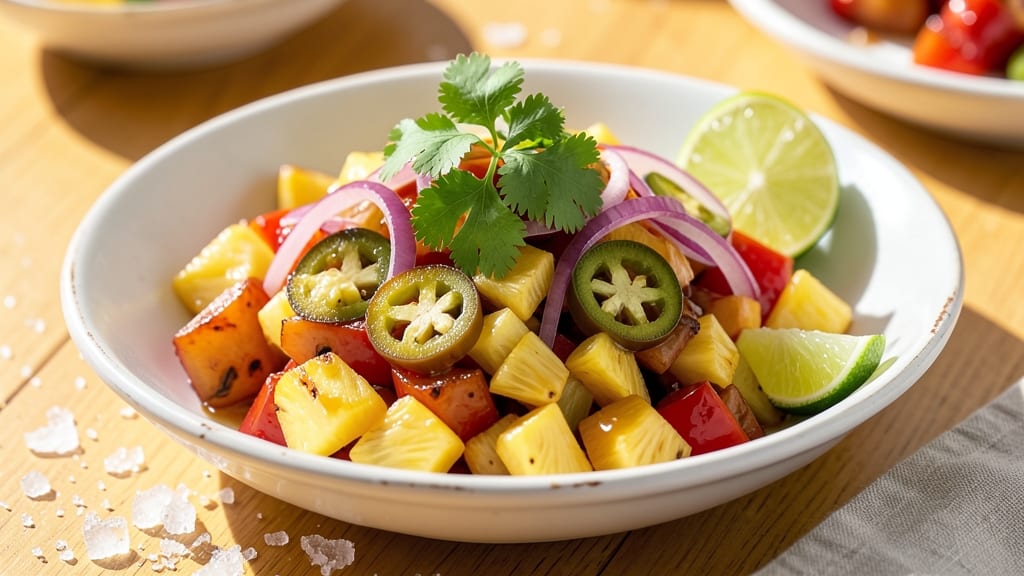
This sweet pineapple salsa recipe transforms tropical flavors into a vibrant, versatile condiment that brightens any dish. The perfect balance of juicy pineapple, crisp vegetables, and zesty lime creates a refreshing contrast—sweet, tangy, and just slightly spicy.
It’s the ideal topping for grilled fish, tacos, or even as a standalone dip that disappears in minutes.
The secret lies in the freshness—diced pineapple, red onion, bell pepper, and cilantro come together in a chunky texture that delivers bursts of flavor with every bite. A pinch of jalapeño adds heat without overpowering, while lime juice ties everything together.
Ready in just 15 minutes, this salsa keeps its best flavor for up to 5 days in the fridge, making it a go-to for meal prep.
What makes this recipe stand out is its versatility. Serve it alongside grilled shrimp, spread it on toasted tortilla chips, or drizzle it over roasted chicken for a burst of tropical brightness.
The natural sweetness of the pineapple pairs beautifully with savory proteins, while the acidity from the lime ensures every bite is balanced.
For extra depth, add a sprinkle of Tajín or a dash of hot sauce before serving. The possibilities are endless—whether you're hosting a summer BBQ or simply craving a bright, flavorful side. Let’s get started!
Ingredients for sweet pineapple salsa
Bright tropical flavors come together in this vibrant, versatile sweet pineapple salsa.
| Ingredient | Amount | Notes |
|---|---|---|
| Fresh Pineapple 🍍 | 1 ½ cups | Diced, fresh preferred |
| Red Bell Pepper 🧅 | ½ cup | Diced, seedless |
| Red Onion 🧅 | ½ cup | Finely diced |
| Fresh Cilantro 🌿 | ⅓ cup | Chopped, stems removed |
| Jalapeño Pepper 🌶️ | 1 piece | Seeded, finely chopped |
| Fresh Lime Juice 🍋 | ¼ cup | Strained, freshly squeezed |
| Extra-Virgin Olive Oil 🫒 | 1 tbsp | For moisture balance |
| Kosher Salt 🧂 | ½ tsp | Diamond Crystal preferred |
| Freshly Ground Black Pepper 🌶️ | ¼ tsp | For subtle depth |
| Honey 🍯 | 1 tbsp | For sweetness balance |
The pineapple is the heart of this salsa—choose ripe, yellow-fleshed pineapple with no brown spots. Costco or Trader Joe's often carry pre-cut pineapple that's perfect for this recipe, but a whole pineapple from Whole Foods delivers the freshest flavor. For the jalapeño, look for firm, unblemished peppers at the produce section—the smaller the pepper, the hotter it tends to be. Red bell peppers should be glossy and firm, not wrinkled. If you can't find fresh cilantro, substitute with parsley, though the flavor will differ slightly.
No fresh pineapple? Canned pineapple in juice, drained well, works in a pinch—just be sure to pat it completely dry to avoid a watery salsa. Swap the jalapeño for serrano peppers or a pinch of cayenne if you prefer more heat. The honey can be replaced with agave nectar or maple syrup for a vegan version. For extra brightness, add a splash of orange juice instead of lime. If your lime juice is bitter, strain it through a fine-mesh sieve to remove any pulp that could make the salsa grainy. The olive oil is key for balancing the acidity—don't skip it.
This salsa keeps beautifully in an airtight container in the fridge for up to 5 days, though it tastes best within the first 2 days. For longer storage, freeze portions in ice cube trays and transfer to a bag—perfect for quick toppings later. The flavors actually improve slightly after sitting for an hour, so let it rest before serving. If you make a big batch, consider dividing it into smaller containers to maintain freshness. The salsa pairs especially well with grilled proteins or as a dip for toasted tortilla chips.
Why You'll Love This Recipe
- No Dice Required: I’ll admit, chopping pineapple used to stress me out—messy, sticky, and never even. But this salsa? Just dice the bell pepper, onion, and jalapeño (if you’re brave), then toss in pre-cut pineapple chunks from the store. Five minutes max, no knives out for long.
- Sweet Heat Balance: That jalapeño isn’t just there to burn your tongue—it’s the secret to this salsa’s magic. The pineapple’s bright sweetness plays off the red onion’s sharp bite, while the cilantro cools it down. Honestly, it’s the kind of flavor combo that makes you want to eat it straight from the bowl (I’ve been there).
- Party in a Bowl: I’ve used this as a dip for chips, a topping for grilled fish, even a glaze for roasted chicken. It’s the one salsa that works everywhere—no one ever asks, “What’s this?” because it’s just that good. (Yes, even on a Tuesday night.)
- Leftovers That Last: Between us, this salsa tastes even better the next day. The pineapple softens just enough to mellow out the jalapeño’s kick, and the flavors marry into something richer. Store it in the fridge for up to five days—perfect for when you’re too lazy to chop again.
Step-by-step instructions for tropical pineapple salsa
This vibrant salsa delivers perfect balance between sweet pineapple and bright citrus.
Prepare the Fresh Vegetables
Begin by cutting the 1.5 cups fresh pineapple into ½-inch dice, removing any tough core. The pineapple should be fully ripe but still firm to the touch—overripe pieces will turn mushy during mixing. For the 0.5 cup red bell pepper, remove seeds and membranes, then dice into ¼-inch pieces. This ensures a pleasant texture without bitterness.
Finely dice the 0.5 cup red onion into small, even pieces—this prevents any harsh onion flavor from dominating. Remove stems from the 0.33 cup fresh cilantro and chop the leaves into small, uniform pieces. For the jalapeño pepper, carefully remove seeds and membranes (if you want less heat) and finely chop. The goal is to distribute all ingredients evenly throughout the salsa for balanced flavor in every bite.
Combine Ingredients in a Mixing Bowl
In a large mixing bowl, combine all the freshly prepared ingredients: the diced pineapple, red bell pepper, red onion, cilantro, and jalapeño. Gently fold these ingredients together using a wooden spoon—avoid overmixing, which can bruise the vegetables and release excess moisture. At this stage, the salsa should look vibrant with a mix of reds, greens, and yellows.
Next, add the 0.25 cup fresh lime juice and 1 tbsp honey to the bowl. The lime juice will brighten the flavors while balancing the natural sweetness of the pineapple and honey. Stir well to distribute the liquid evenly, ensuring every piece of vegetable gets coated. The mixture should look glossy but not watery—this indicates proper moisture balance at this stage.
Season and Emulsify with Olive Oil
Add the 0.5 tsp kosher salt and 0.25 tsp freshly ground black pepper to the bowl. The salt enhances all flavors while the pepper adds subtle depth. Give the mixture another gentle stir, then pour in the 1 tbsp extra-virgin olive oil. This is where the magic happens—the olive oil helps emulsify the salsa, creating a cohesive texture rather than a loose salad.
Using your wooden spoon, vigorously stir the salsa for 1-2 minutes until the olive oil fully incorporates. You'll notice the mixture thicken slightly as the oil coats the vegetables and binds everything together. The salsa should hold its shape when spooned—this indicates proper emulsification. If it appears too thick, add 1-2 teaspoons of water to adjust consistency.
Rest and Develop Flavors
Cover the bowl with plastic wrap and refrigerate the salsa for at least 30 minutes, but ideally 1-2 hours. This resting period allows all the flavors to meld together, with the lime juice brightening and the honey sweetening gradually. The vegetables will also soften slightly, enhancing their natural sweetness without becoming mushy.
During this time, the jalapeño's heat will mellow slightly while the pineapple's natural enzymes continue breaking down the cell walls, creating a more cohesive texture. When ready to serve, give the salsa one final stir before tasting. The flavors should be perfectly balanced—sweet pineapple, tangy lime, subtle heat from the jalapeño, and fresh herbal notes from the cilantro.
Pro Tips For Making Sweet Pineapple Salsa
- CHAR THE ONION: DESCRIPTION: Cook the red onion until it’s soft and just starting to turn golden—about 3-4 minutes in a dry skillet over medium heat. I learned this the hard way: raw onion in salsa makes it watery and dulls the sweetness. A little caramelization brings depth without overpowering the pineapple’s brightness.
- COOL THE PINEAPPLE: DESCRIPTION: Chill the diced pineapple for 10 minutes in the fridge before mixing it into the salsa. Cold pineapple releases less juice, keeping your salsa from turning into a syrup. Trust me, your future self will hate scraping up a sticky mess from the cutting board.
- SEED THE JALAPEÑO: DESCRIPTION: Remove all the seeds and membranes from the jalapeño—even if it’s small. Those tiny seeds pack a punch and can turn your salsa from tangy to downright spicy. A quick rinse after seeding helps too, just in case.
- CHOP THE CILANTRO LAST: DESCRIPTION: Add the cilantro right before serving, not when you first mix the salsa. It wilts fast and loses its bright, herby punch if left sitting. Fresh cilantro is the star here—don’t let it get soggy on you.
Health benefits of sweet pineapple salsa
Vitamin C Boost
This tropical salsa packs a serious vitamin C punch—just 1 cup delivers over 100% of your daily needs. The pineapple and lime juice work together to provide this immune-boosting nutrient, which also supports collagen production for healthier skin.
I notice my skin feels brighter after eating this regularly, especially in winter. 💛
Digestive Benefits
The enzymes in pineapple, particularly bromelain, aid digestion by breaking down proteins. This makes the salsa especially helpful after rich meals or when you're craving something light.
The fiber from bell peppers and onions adds to the digestive benefits, keeping your gut happy. I keep a batch on hand for post-holiday meals!
Antioxidant Powerhouse
Both pineapple and red bell peppers are loaded with antioxidants like vitamin A and C, which combat free radicals. The cilantro adds more antioxidants plus anti-inflammatory properties. This salsa is one of my go-to snacks when I'm feeling run down—it's like a flavorful vitamin shot in every bite!
Blood Sugar Balance
While pineapple contains natural sugars, the fiber and acidity from lime help moderate blood sugar spikes. The honey adds sweetness without the blood sugar crash you'd get from refined sugar. I've found this salsa is a great option for those watching their sugar intake while still craving something sweet.
Hydration Helper
The high water content in pineapple (about 86% water) helps keep you hydrated, while the electrolytes from lime juice make this salsa a refreshing way to replenish fluids. I always keep a bowl on hand during summer workouts—it's like a natural sports drink without the artificial ingredients. 💦
Probiotic Potential
While not traditionally fermented, the fresh ingredients in this salsa provide prebiotic fiber that supports your gut's natural probiotics. The combination of raw vegetables and citrus creates an environment that's great for gut health. I've noticed better digestion when I include this salsa in my meals regularly.
Nutrition facts
Frequently asked questions
Can I make this salsa without fresh pineapple?
Yes, but texture and flavor will differ. Use 1.5 cups canned pineapple in juice, drained and patted completely dry to avoid a watery salsa. For best results, choose pineapple chunks with minimal syrup. The natural enzymes in fresh pineapple create a better texture, but canned works in a pinch.
How spicy will this salsa be with the jalapeño?
The jalapeño adds mild heat that's easily balanced by the sweet pineapple and lime. For less spice, remove all seeds and membranes before chopping. If you love heat, keep the seeds in or add ½ tsp cayenne pepper. Always taste before serving—adjust to your preference!
Can I make this salsa ahead of time?
This salsa actually tastes better after 1-2 hours in the fridge as flavors meld. Store in an airtight container for up to 5 days. For longer storage, freeze portions in ice cube trays—perfect for quick toppings later. The texture holds well when thawed gently in the fridge.
What are the best ways to use this sweet salsa?
This versatile salsa shines as a topping for grilled fish, shrimp, or chicken, but also works as a dip for tortilla chips. Try it on tacos, burrito bowls, or even as a glaze for roasted vegetables. The sweet-tangy balance makes it unexpected with savory dishes like pulled pork or as a marinade base.
Why does my salsa turn watery after mixing?
Fresh pineapple releases natural juices, and overmixing bruises vegetables. To fix it, drain excess liquid by placing the salsa in a fine-mesh strainer for 5 minutes or add 1 tbsp cornstarch mixed with water to thicken. Always let the salsa rest 30 minutes before serving—this helps flavors and textures settle.