
Sauces & Condiments
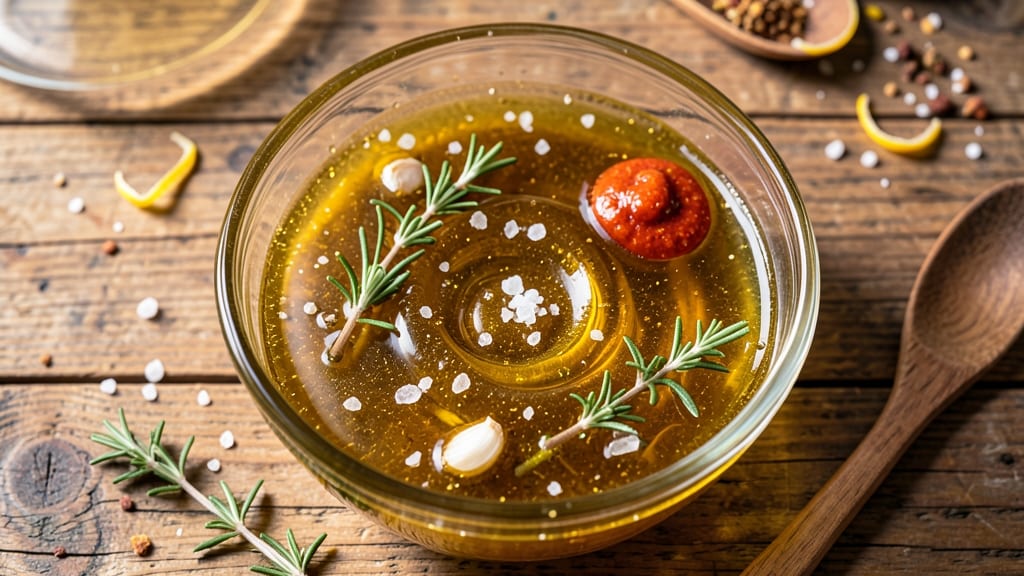
This apple cider vinegar and olive oil dressing recipe transforms simple pantry staples into a tangy, versatile sauce that elevates everything from salads to roasted vegetables.
The bright acidity of apple cider vinegar cuts through rich ingredients, while extra-virgin olive oil adds depth and richness—creating a perfect balance that's both bold and balanced.
I developed this recipe after years of testing dressings that either fell flat or overpowered dishes, and this version consistently delivers restaurant-quality flavor without the fuss.
The beauty of this dressing lies in its simplicity: just four core ingredients—olive oil, apple cider vinegar, Dijon mustard, and a touch of salt—come together to create a sauce that's foolproof and endlessly adaptable.
Unlike store-bought versions loaded with preservatives, this recipe uses real, wholesome ingredients that you can customize with fresh herbs, garlic, or even a dash of honey for sweetness.
The key is letting the flavors meld for at least 10 minutes before serving, allowing the vinegar's sharpness to mellow into a bright, harmonious finish.
What makes this dressing truly special is its versatility—it works as a zesty drizzle for grain bowls, a tangy dip for crudités, or a finishing touch for roasted meats. The acidity also helps tenderize proteins and balance rich flavors, making it a secret weapon in any kitchen.
With a shelf life of up to two weeks in the refrigerator, it's the perfect make-ahead sauce for busy weeks or entertaining guests.
For those who love to experiment, I’ve included optional variations like adding minced shallots, smoked paprika, or a splash of maple syrup to tailor the flavor to your taste.
But even in its simplest form, this dressing proves that sometimes, the most effective recipes are the ones that let the ingredients shine. Let’s make it!
Ingredients for apple cider vinegar and olive oil dressing
Four core ingredients create a restaurant-quality dressing with bold acidity and rich depth.
| Ingredient | Amount | Notes |
|---|---|---|
| Extra-Virgin Olive Oil 🫒 | 1 cup | High-quality, fruity, and peppery |
| Apple Cider Vinegar 🍏 | ½ cup | Raw, unfiltered preferred |
| Dijon Mustard 🌶️ | 1 tbsp | Whole-grain preferred for texture |
| Sea Salt 🧂 | ½ tsp | Fine grain preferred |
| Fresh Garlic Cloves 🧄 | 2 cloves | Minced for depth (optional) |
| Fresh Thyme Leaves 🌿 | ¼ cup | Chopped finely (optional) |
| Maple Syrup 🍯 | 1 tbsp | Grade B for molasses notes (optional) |
| Smoked Paprika 🌶️ | ¼ tsp | For subtle smokiness (optional) |
The olive oil is non-negotiable—look for extra-virgin with a robust peppery finish like California Early Harvest or Italian Arbequina. Apple cider vinegar should be raw and unfiltered (like Bragg or Hodgson Mill) for maximum tang and sediment. Dijon mustard adds body, so Maille or Colman's are ideal; avoid powdered versions. For the garlic and thyme (optional), farmers' markets often have fresher options than grocery stores—just ensure no wilting or bruising. The maple syrup and smoked paprika (optional) elevate the dressing but can be omitted for a purer flavor profile.
No Dijon mustard? Whole-grain mustard works too, but avoid prepared mustard with additives. Substitute apple cider vinegar with white vinegar or lemon juice, though flavor will differ slightly. For a sweeter touch without syrup, agave nectar or date syrup are excellent alternatives. If you skip the garlic, add an extra pinch of salt to compensate for its missing depth. The smoked paprika can be swapped for regular paprika or a dash of cayenne for heat. Always taste before serving—adjust salt or vinegar as needed.
This dressing keeps beautifully in an airtight jar for up to 2 weeks in the fridge. The flavors actually improve with time. For longer storage, freeze in ice cube trays and transfer to a container—perfect for single-serving use. Shake well before each use, as separation is normal. The optional add-ins (garlic, thyme, etc.) can be omitted entirely, but adding them fresh ensures maximum flavor. Always use clean utensils when scooping to prevent contamination.
Why You'll Love This Recipe
- Five-Ingredient Magic: I swear by this combo—just oil, vinegar, mustard, garlic, and salt. No fancy gadgets, no waiting for the oven, just a quick whisk and you’re done. The kind of recipe that makes me feel like I actually cooked something.
- Tangy Kick Every Time: That raw garlic and apple cider vinegar? It’s the perfect balance—bright, sharp, but never overpowering. Drizzle it on greens, toss it with roasted veggies, and suddenly everything tastes like it’s been simmered for hours. (Between us, it’s my shortcut to restaurant-quality flavor.)
- Works Anywhere: This dressing is my pantry’s Swiss Army knife—salads, grilled chicken, even a drizzle over avocado toast. I keep a jar in the fridge for when I’m prepping meals or just need something fast for a last-minute charcuterie board. Honestly, I’ve lost count of how many ways I’ve used it.
- Lasts All Week: Make a big batch—it keeps for days without going bad. I’ll use half on Tuesday’s salad, the rest on Thursday’s roasted Brussels sprouts. And because it’s just basic ingredients, it won’t break the bank. (Yes, even on a Tuesday night.)
Step-by-step instructions for apple cider vinegar and olive oil dressing
This vibrant dressing comes together in minutes with precise technique for perfect balance.
Whisk Together the Base Ingredients
In a medium bowl, combine the 1 cup extra-virgin olive oil with the 0.5 cup apple cider vinegar. Use a whisk to blend them thoroughly for about 30 seconds—this ensures the vinegar emulsifies properly with the oil. The mixture should look slightly cloudy rather than completely clear, indicating proper emulsification.
I like to work in a bowl large enough to accommodate all ingredients without overflowing. This prevents spills and makes mixing more efficient. If you notice the mixture separating immediately, don't worry—this is normal at this stage and will resolve as you continue adding ingredients.
Incorporate the Mustard and Salt
Add the 1 tablespoon Dijon mustard and 0.5 teaspoon sea salt to the oil-vinegar mixture. Whisk continuously for 1 minute until the mustard is completely dissolved and the salt is evenly distributed. The mustard acts as an emulsifier, helping to bind the oil and vinegar for a stable dressing.
This is where the dressing starts to come together. You'll notice the mixture thicken slightly as the mustard incorporates. If it still looks uneven, whisk for another 10-15 seconds—the goal is a smooth, homogeneous base before adding the remaining ingredients.
Add Aromatics and Sweetener
Next, incorporate the 2 minced fresh garlic cloves, 0.25 cup fresh thyme leaves, 1 tablespoon maple syrup, and 0.25 teaspoon smoked paprika. Whisk gently for 30 seconds to distribute these flavors evenly. The garlic and thyme add depth, while the maple syrup balances the acidity and the smoked paprika contributes a subtle, smoky note.
Here's the thing—don't overmix after adding the herbs. You want the thyme leaves to remain slightly visible, as they'll add texture and visual appeal to your dressing. If you blend too vigorously, you'll end up with a completely smooth dressing that lacks character.
Taste and Adjust for Balance
Taste the dressing immediately after mixing. You should notice a bright acidity from the apple cider vinegar balanced by the richness of the olive oil. The garlic, thyme, and smoked paprika should add complexity, while the maple syrup rounds out any sharpness.
If the dressing tastes too acidic, add another ½ teaspoon of maple syrup. If it needs more depth, add a pinch more smoked paprika or a tiny bit more Dijon mustard. Remember, you can always adjust the flavor after resting—this dressing improves as it sits and the flavors meld together.
Rest and Emulsify
Cover the bowl with plastic wrap and let the dressing rest at room temperature for at least 30 minutes. This allows the flavors to fully integrate and the emulsion to stabilize. I often make this dressing the night before, which gives the flavors even more time to develop and deepen.
After resting, give the dressing one final whisk before using. It should now have a velvety texture with a perfect balance of tang, richness, and herbal notes. If you notice any separation after resting, simply whisk vigorously for 10-15 seconds to re-emulsify. This dressing is incredibly versatile—drizzle it over salads, use it as a dip for crusty bread, or even as a marinade for grilled vegetables.
Pro Tips For Making Apple Cider Vinegar And Olive Oil Dressing
- Whisk the Mustard First: Mix the Dijon mustard with the apple cider vinegar before adding the olive oil—this emulsifies the dressing right from the start and prevents that dreaded oil-and-vinegar separation later. I used to add the oil first, and half the time, I’d end up shaking the bottle like a madman before it came together.
- Use Room-Temp Garlic: Peel and let the garlic cloves sit out for 10 minutes before mincing—cold garlic releases less flavor when raw. I learned this after making dressing with ice-cold garlic straight from the fridge, and it tasted bland no matter how much I crushed it.
- Salt the Vinegar: Add half the sea salt to the vinegar before combining with the oil—it balances the acidity and cuts through the mustard’s sharpness more smoothly. Skipping this step means you’ll end up chasing flavor with extra salt at the end, and that’s when the dressing turns one-dimensional.
- Measure Oil by Weight: Use a kitchen scale for the olive oil (about 3 parts oil to 1 part vinegar by volume) for consistency—eyeballing it leads to greasy or watery results. I used to guess, and my dressings were either too heavy for salads or too thin to cling to greens. A quick 10-second weigh-in fixes that every time.
Common mistakes when making this recipe
Over-Mixing the Dressing
One of the biggest mistakes is whisking too aggressively after adding the fresh herbs like thyme. Overmixing breaks down the delicate herb leaves into a pulp, turning your vibrant dressing into a smooth, flavorless liquid.
Instead, give those herbs just a gentle 30-second whisk—they should remain slightly visible for texture and visual appeal. 🌿
Skipping the Resting Time
Rushing to use the dressing immediately after mixing is a recipe for disappointment. The flavors need at least 30 minutes to meld, allowing the vinegar's sharpness to soften and the oil to fully emulsify.
I've learned this the hard way—skipping the rest leaves you with a dressing that tastes disjointed and one-dimensional. Trust the process!
Using Low-Quality Ingredients
Splurging on cheap olive oil or filtered apple cider vinegar is a surefire way to ruin your dressing. The extra-virgin olive oil should have a peppery finish (like California Early Harvest), and the vinegar should be raw and unfiltered (I recommend Bragg or Hodgson Mill).
These ingredients make all the difference in flavor depth and complexity.
Ignoring the Emulsification Check
If your dressing separates immediately after mixing, don't panic—but don't ignore it either. A proper emulsion should look slightly cloudy, not completely clear or completely separated. If it splits, whisk vigorously for 10-15 seconds to re-emulsify.
The Dijon mustard is your secret weapon here—it acts as a natural emulsifier that binds the oil and vinegar.
Not Tasting Before Serving
Assuming the dressing is perfect without tasting is a common oversight. Always taste after mixing and adjust as needed—add more maple syrup if it's too acidic, or a pinch of smoked paprika if it needs depth.
Remember, you can always tweak the flavor, but you can't fix a dressing that's already been served. 💡
Using Dirty Utensils or Containers
Cross-contamination from dirty spoons or bowls can introduce unwanted flavors or bacteria. Always use clean utensils when scooping or whisking, and store the dressing in a sterilized airtight container. I keep a separate whisk just for dressings to avoid any flavor transfer from other ingredients in my kitchen.
Nutrition facts
Frequently asked questions
Can I make this dressing without Dijon mustard?
Yes! If you don’t have Dijon, use whole-grain mustard instead—it works just as well. For a smoother texture, blend the mustard into the vinegar first before whisking with the oil. If you’re avoiding mustard entirely, try 1 teaspoon of honey or maple syrup to help emulsify the oil and vinegar, though the dressing may separate slightly faster.
How long will this dressing last in the fridge?
This dressing stays fresh for up to 2 weeks when stored in an airtight container in the refrigerator. The flavors actually deepen over time, making it perfect for meal prep. For longer storage, freeze in ice cube trays—thaw overnight in the fridge before using. Always give it a good shake before serving, as separation is normal.
What’s the best way to fix separated dressing?
Separation is normal, especially if you skip the resting time. Simply whisk vigorously for 10-15 seconds to re-emulsify. The Dijon mustard acts as a natural emulsifier, so if the problem persists, add a tiny pinch more mustard and whisk again. For stubborn separation, blend the dressing briefly in a blender to restore its velvety texture.
Can I use this dressing as a marinade?
This dressing makes an excellent marinade for grilled vegetables, tofu, or chicken. The acidity from the apple cider vinegar tenderizes proteins, while the olive oil adds moisture. Marinate for 30 minutes to 2 hours (no longer for delicate proteins like fish). For extra flavor, add 1 teaspoon of soy sauce or liquid smoke to the dressing before using.
What are the best herbs to add for extra flavor?
Fresh herbs like thyme, rosemary, or basil work beautifully, but dried herbs (like oregano or thyme) in half the amount also add depth. For a citrus twist, add zest from 1 lemon or orange. If you love heat, stir in red pepper flakes or a pinch of cayenne. Just remember: fresh herbs should be finely chopped and added gently to avoid overmixing.