
Main Courses
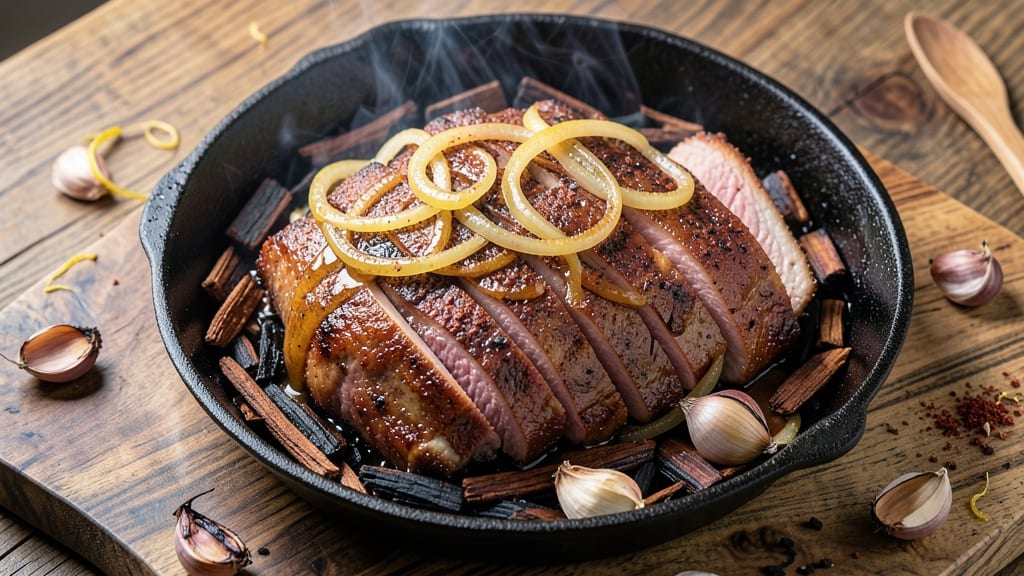
This apple smoked brisket recipe transforms a classic barbecue staple into something extraordinary by blending smoky applewood infusion with sweet caramelized apple elements. The result is a brisket that achieves fall-apart tenderness while incorporating layers of flavor that elevate it beyond traditional preparations.
What makes this recipe stand out is the strategic use of apple—whether as a caramelized glaze, sliced for serving, or even infused into the rub—creating a harmonious balance between smoky, sweet, and savory notes.
The process begins with a low-and-slow smoke using applewood, which imparts a delicate sweetness that complements the brisket’s natural richness. The key to achieving that coveted tenderness lies in precise temperature control—maintaining a consistent 225°F for hours until the internal temperature reaches 203°F.
Meanwhile, the apple component is prepared in parallel, whether caramelized into a glossy glaze or sliced fresh for a vibrant contrast. This dual approach ensures every bite delivers both the deep, smoky flavors of traditional brisket and the bright, fruity accents that make it unforgettable.
Once the brisket is perfectly smoked and rested, the final touch involves applying the caramelized apple glaze or serving it alongside crisp apple slices.
The result is a dish that’s restaurant-quality yet approachable for home cooks, with a texture that’s irresistibly tender and a flavor profile that’s both bold and nuanced. The combination of applewood smoke and apple sweetness creates a symphony of tastes that will impress even the most discerning guests.
Pair this brisket with classic sides like roasted potatoes or a tangy apple coleslaw to complete the meal. The apple theme ties everything together, making it ideal for fall gatherings or special occasions where you want to showcase your smoking skills with a modern twist.
This recipe isn’t just about smoking brisket—it’s about redefining what brisket can be.
Ingredients for apple smoked brisket
Six pounds of brisket, smoky applewood, and four apples create a brisket that redefines traditional barbecue.
| Ingredient | Amount | Notes |
|---|---|---|
| Beef Brisket 🥩 | 6 lb | Packer cut, well-marbled preferred |
| Applewood Chips 🍎 | 1 cup | For smoker infusion (store-bought or homemade) |
| Yellow Onions 🧅 | 2 whole | Yellow or red, sliced into wedges |
| Fresh Garlic 🧄 | 8 cloves | Peeled, smashed for rub |
| Smoked Paprika 🌶️ | ½ cup | For deep smoky flavor |
| Brown Sugar 🍯 | ¼ cup | Light or dark, packed |
| Kosher Salt 🧂 | ¼ cup | Diamond Crystal preferred |
| Ground Black Pepper 🌶️ | 2 tbsp | Freshly cracked preferred |
| Fresh Apples 🍎 | 4 medium | Honeycrisp or Fuji for sweetness |
| Apple Cider Vinegar 🍎 | ¼ cup | For caramelized glaze |
| Unsalted Butter 🧈 | ½ cup | Cold, cubed for glaze |
| Yellow Mustard 🍯 | 1 tbsp | For glaze binding |
| Wooden Chips (Applewood) 🌳 | 2 pounds | For smoker, soaked 1 hour |
| Beef Broth 💧 | 1 cup | Low-sodium, for spritzing |
The brisket cut is non-negotiable here—packer-cut with thick fat cap ensures maximum tenderness. Costco or specialty butchers like Snake River Farms carry the best quality. Look for vibrant red color and good marbling. The applewood chips (Traeger or Cookshack brands) should be stored in an airtight container to maintain their potency. For the apples, Honeycrisp or Fuji varieties hold their shape during caramelization and provide the right balance of sweetness. If you can't find applewood chips, cherrywood works in a pinch—just add a splash of apple cider to the smoker for that signature flavor.
No smoked paprika? Substitute with equal parts chili powder and a pinch of liquid smoke. Running short on apples? Pear slices or apple juice concentrate can mimic the caramelization process. The apple cider vinegar is crucial for cutting through the richness—substitute with white vinegar if needed. For the glaze, if you're avoiding butter, use coconut oil or extra olive oil instead. The mustard acts as a binder, so if you're making this gluten-free, Dijon mustard works perfectly. Prefer a sweeter glaze? Add an extra tablespoon of brown sugar to the caramelization process.
The brisket should rest for at least 2 hours before slicing—this is where the magic happens. Store leftovers in the fridge for up to 5 days, wrapped tightly in butcher paper. For longer storage, vacuum-seal portions and freeze for up to 3 months. The caramelized apple glaze can be made ahead and reheated gently with a splash of water. I always make extra glaze to drizzle over sandwiches or serve with the brisket slices—it keeps well in the fridge for 1 week in an airtight container.
Why You'll Love This Recipe
- Foolproof Prep: The brisket is the star, but I swear the real magic happens in the prep—just a quick rub of garlic, onions, and smoked paprika, then toss in those applewood chips for smoke. No fancy techniques, no stress, just 15 minutes of hands-on time before you walk away.
- Applewood Magic: That first whiff of applewood smoke hitting the brisket? Instantly takes it from "weeknight meal" to "I’d pay double for this at a BBQ joint." The sweetness lingers, and the smoky depth? It’s what makes this brisket feel like a celebration, even when it’s just me and a lazy Sunday.
- Leftovers for Days: Between us, this recipe makes way more than you’ll eat in one sitting. The brisket gets even better the next day—shred it for tacos, sandwiches, or just reheat a slab with a sprinkle of extra smoked paprika. Honestly, I’ve had it cold in a wrap three days later, and it’s still solid.
- Budget BBQ Win: A whole packer of brisket feeds six, and the rest of the ingredients cost pennies. Applewood chips? They’re a splurge, sure, but you use half a bag for this, and the rest goes in the freezer for future smoky projects. This is the kind of meal that makes you feel fancy without breaking the bank.
Step-by-step instructions for apple smoked brisket
Master this technique and you'll achieve fall-apart tenderness with applewood's signature sweet-smoky depth.
Prepare the Brisket and Smoker Setup
Begin by trimming the fat cap of the 6 lb beef brisket to about ¼ inch thickness using a sharp boning knife. Leave the fat on the edges to protect the meat during smoking. In a small bowl, combine the 0.5 cup smoked paprika, 0.25 cup brown sugar, 0.25 cup kosher salt, and 2 tbsp ground black pepper. Mix thoroughly to create the dry rub.
Apply this mixture generously to all sides of the brisket, pressing it into the meat so it adheres well. Place the brisket on a wire rack set over a tray and refrigerate uncovered for 1 hour. Meanwhile, soak the 2 pounds wooden chips (applewood) in water for at least 1 hour to prevent flare-ups. Preheat your smoker to 225°F using the soaked applewood chips—you'll know it's ready when clean, blue smoke emerges.
Smoke the Brisket Low and Slow
Once the smoker reaches 225°F, place the brisket fat-side up on the grill grates. Smoke undisturbed for 6 hours, maintaining this temperature. Every 90 minutes, spritz the brisket with ¼ cup of the 1 cup beef broth using a spray bottle—this keeps the meat moist and enhances bark development.
After 6 hours, check the internal temperature using a meat thermometer. When it reaches 165-170°F, you'll hit "the stall"—a period where the temperature stops rising. This is normal and indicates moisture evaporation. At this point, wrap the brisket tightly in pink butcher paper (not foil), leaving room for expansion. Return it to the smoker and continue cooking.
Create the Apple Cider Glaze
While the brisket finishes, prepare the glaze by combining the 4 medium fresh apples (peeled and grated), 0.25 cup apple cider vinegar, 0.5 cup unsalted butter (cold, cubed), and 1 tbsp yellow mustard in a saucepan. Cook over medium heat for 10 minutes, stirring occasionally, until the mixture thickens into a caramelized consistency. Strain through a fine-mesh sieve to remove apple pieces, then set aside.
Continue smoking the wrapped brisket until the internal temperature reaches 200-205°F and a probe slides in easily with no resistance. This typically takes an additional 4-6 hours. The wrap helps power through the stall while preserving the bark's crispiness. Remove the brisket from the smoker and let it rest in the butcher paper for 1 hour before slicing.
Apply the Glaze and Slice
Unwrap the brisket and transfer it to a cutting board. Brush the caramelized apple cider glaze generously over all sides, allowing it to penetrate the meat for 5 minutes. Slice the brisket against the grain into ¼-inch thick pieces, starting with the flat cut and moving to the point.
Serve immediately, allowing guests to experience the perfect balance of smoky applewood infusion, tender meat, and sweet-tangy glaze. Each slice should pull apart easily with a gentle tug, revealing a beautiful pink smoke ring beneath the dark mahogany bark. The glaze should coat the meat, adding a glossy finish and complementary sweetness to the rich, smoky flavors.
Pro Tips For Making Apple Smoked Brisket
- CRANK THE HEAT FIRST: Start your smoker or grill at 275°F—no lower. I learned this the hard way after a brisket that took 12 hours to hit 195°F because I played it too cool. High initial heat helps render fat faster and gets that crust locked in before the long slow cook.
- CHAR THE ONIONS DEEP: Caramelize your yellow onions until they’re dark brown, almost black at the edges—this adds a smoky depth that store-bought applewood chips alone can’t match. Skip this, and your rub’s flavor will feel flat, no matter how much smoked paprika you use.
- WRAP WITH FOIL MIDWAY: When the brisket hits 165°F, wrap it tightly in butcher paper (not foil) with a handful of applewood chips and a splash of apple juice. This traps steam without steaming the bark dry—my first attempt with foil left me with a sad, soggy crust.
- GARLIC PASTE NOT MINCED: Make a thick paste with garlic, applewood chips, and a splash of water—this sticks to the meat better than minced garlic and infuses deeper during the smoke. I was skeptical until I tried it; the flavor penetrates like a second rub.
Common mistakes when making this dish
Skipping the Rest
Brisket needs time to redistribute juices after smoking, but I see people slicing it too soon. Always rest the brisket for at least 2 hours (I prefer 3-4 hours) wrapped in butcher paper.
This step is non-negotiable—rushing it results in dry, stringy meat. The internal temperature should stabilize at 195-203°F during resting. 💪
Ignoring the Stall
Many beginners panic when the brisket's temperature stalls around 165°F for hours. This is completely normal and happens due to moisture evaporation. Instead of unwrapping or increasing heat, wrap the brisket tightly in pink butcher paper (not foil) and let it continue cooking.
This technique, called the "Texas Crutch," helps push through the stall while preserving the bark's texture.
Wrong Wood Choice
Using non-applewood chips like hickory or mesquite can overpower the delicate sweetness of the brisket. Stick to applewood for that signature subtle sweetness. If you can't find applewood, cherrywood is a decent alternative, but add a splash of apple cider to the smoker for extra depth.
Never use oak or pecan—they're too strong and can make the brisket taste bitter. 🍎
Over-Spritzing
While spritzing with beef broth every 90 minutes is crucial for moisture, some people go overboard and drown the brisket. Use just ¼ cup per spritz—too much can create steam and slow down the cooking process.
Also, avoid spritzing during the final wrapped phase, as the butcher paper already traps moisture effectively.
Uneven Rub Application
A common mistake is applying the dry rub unevenly, leading to inconsistent flavor and bark development. Press the rub mixture firmly into every nook of the brisket, including the fat cap.
I like to use my fingers to work it into the meat's crevices. Uneven rub means some areas will have more bark than others, creating an unbalanced texture and taste.
Wrong Slicing Technique
Brisket has two distinct muscles—the flat and the point—that run in different directions. Slicing against the grain in both sections is essential for tenderness. Use a sharp knife and cut perpendicular to the muscle fibers in ¼-inch thick slices.
If you slice with the grain, you'll end up with chewy, tough pieces. I recommend using a Dexter-Russell 12-inch slicing knife for clean, precise cuts. ✨
Nutrition facts
Frequently asked questions
Can I use apple juice instead of fresh apples for the glaze?
Yes, apple juice works well as a substitute! Use 1 cup of 100% apple juice instead of the grated apples, and reduce the apple cider vinegar to 2 tablespoons. Simmer the mixture with 0.5 cup butter and 1 tbsp mustard for 10 minutes until thickened. The texture will be smoother but still deliver that signature apple sweetness.
How do I adjust the cooking time if I use a smaller brisket?
For every pound less than 6 lbs, reduce the total smoking time by about 30-45 minutes. For example, a 4 lb brisket would cook in roughly 10-12 hours instead of 12-14 hours. Always monitor the internal temperature—it's the most reliable indicator of doneness, not time alone.
What's the best way to reheat leftover apple smoked brisket?
To preserve moisture, slice the brisket and reheat in a 350°F oven for 10-15 minutes with a splash of beef broth or apple cider. Avoid microwaving—it makes the meat rubbery. For sandwiches, warm the slices in a skillet over medium-low heat for just 2-3 minutes per side.
Can I make this recipe in an electric smoker or grill?
Electric smokers work perfectly—just maintain 225°F and use applewood chips. For electric grills, use the smoker box with applewood chunks. Gas grills can mimic smoking by using a drip pan with applewood chips and reducing heat to 250°F. The key is consistent low-and-slow cooking regardless of smoker type.
What sides pair best with apple smoked brisket?
Classic options include apple cider braised red cabbage, creamy mashed potatoes, or apple slaw for a cohesive theme. For contrast, try tangy pickles or buttery cornbread. The sweetness of the brisket glaze pairs beautifully with rich, creamy, or slightly acidic sides.