
Sauces & Condiments
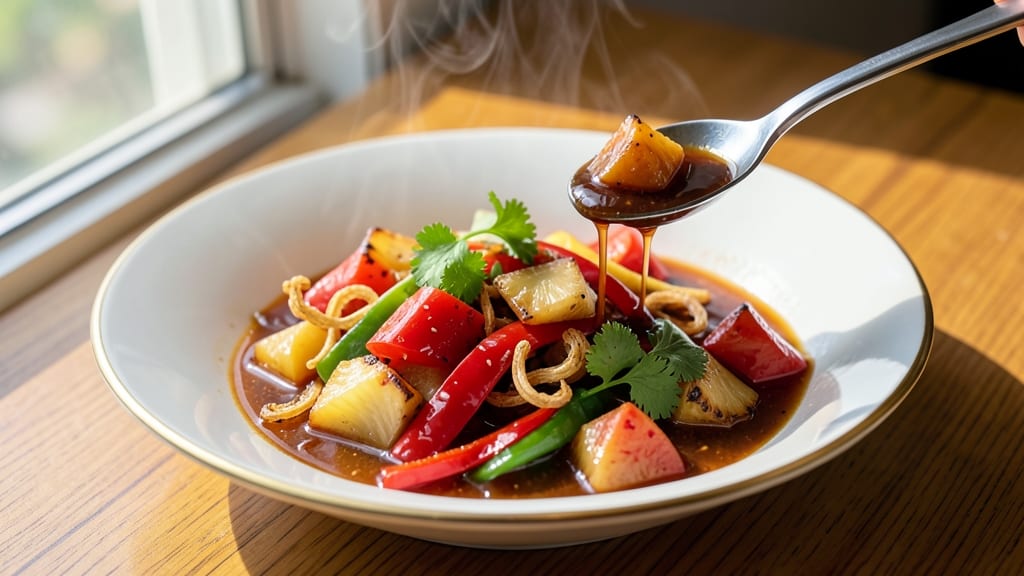
This Chinese sweet and sour pineapple juice sauce recipe transforms ordinary dishes into vibrant, restaurant-quality meals with just a few simple ingredients. The secret lies in balancing tangy vinegar, sweet pineapple juice, and umami-rich ketchup—creating a glossy glaze that clings beautifully to chicken, pork, or vegetables.
I developed this version after years of testing, ensuring every spoonful delivers that perfect harmony of sweet, sour, and savory notes.
The process is straightforward but precise: simmering the sauce until it thickens slightly while preserving its bright pineapple essence. Traditional Chinese techniques like aromatics (garlic, ginger) build depth, while modern adaptations—like reducing sugar for balance—make it adaptable to any palate.
This sauce isn’t just for stir-fries; it elevates grilled meats, noodles, or even as a dipping sauce for spring rolls.
What sets this recipe apart is its glossy finish—achieved by simmering just until the sauce coats the back of a spoon, not boiling it dry. The pineapple juice adds natural sweetness without overpowering the tangy vinegar, while a touch of cornstarch (optional) ensures the perfect consistency.
Whether you’re recreating a wok hei experience at home or adapting it for vegan diets, this sauce delivers every time.
Ready in under 20 minutes, this sauce keeps well in the fridge for up to a week, making it the ultimate pantry staple. The key is patience—letting flavors meld during simmering transforms it from ordinary to extraordinary. Let’s make it!
Ingredients for chinese sweet and sour sauce recipe pineapple juice
Nine ingredients. One vibrant sauce. Homemade gloss that rivals restaurant-quality dishes.
| Ingredient | Amount | Notes |
|---|---|---|
| Pineapple Juice 🍍 | 1 cup | Freshly squeezed for brightness |
| White Vinegar 💧 | ½ cup | Distilled preferred for tang |
| Ketchup 🍅 | ½ cup | Heinz or similar for umami |
| Brown Sugar 🍚 | ⅓ cup | Light or dark, packed |
| Garlic Cloves 🧄 | 3 cloves | Minced for aromatic depth |
| Fresh Ginger 🌿 | 1 tbsp | Grated, peeled, fresh |
| Cornstarch 🌾 | 1 tbsp | Optional for glossy finish |
| Soy Sauce 🍜 | 2 tbsp | Light or dark preferred |
| Sesame Oil 🫒 | 1 tsp | Toasted for nutty aroma |
| Salt 🧂 | ½ tsp | Diamond Crystal preferred |
The pineapple juice is your secret weapon—freshly squeezed delivers that bright, tropical essence you can't get from canned. I always grab Dole or Del Monte for consistency, but if you're feeling fancy, organic pineapple from Trader Joe's takes it to the next level. The garlic and ginger? Freshly grated or minced—no shortcuts here. Pre-minced garlic loses its punch fast, and jarred ginger tastes like sawdust. If you're short on time, garlic powder at half the amount works, but you'll miss that aromatic depth. The brown sugar? Light or dark doesn't matter—just pack it tightly into the measuring cup for accuracy.
No ketchup? Tomato paste thinned with water gets you close, but you'll lose some of that umami richness. Swap the soy sauce for coconut aminos if you're avoiding gluten. The cornstarch is optional but worth the extra minute—it gives that signature glossy finish. Short on sesame oil? Toasted peanut oil works in a pinch, though the flavor will be subtly different. The vinegar is non-negotiable for that tangy kick—apple cider vinegar adds complexity if you want to experiment. And if you're making this for a crowd, double the batch—it disappears fast.
This sauce keeps like a dream—up to 1 week in the fridge, sealed tightly. For longer storage, freeze in ice cube trays and transfer to a bag. Thaw overnight in the fridge, then reheat gently. The cornstarch version thickens slightly when chilled, so add a splash of water if it's too stiff. I always make extra—it's perfect for marinating proteins or drizzling over noodles. The flavors actually improve after simmering, so let it sit 10 minutes before serving if you can wait.
Why You'll Love This Recipe
- Here’s what sold me: that perfect push-and-pull of flavors. The garlic gives it a little bite, the brown sugar mellows it out, and the pineapple juice? It’s the MVP—bright, just sweet enough, with this weirdly addictive depth. Drizzle it over chicken, toss it in noodles, or even dip those leftover fries from last night. It’s the kind of sauce that makes you go, “Wait, I made this?”
- I’ll be real: I’ve spent way too much on store-bought sweet and sour sauce that’s either too thin or suspiciously artificial-tasting. This? Costs me pennies, keeps for weeks in the fridge, and I can double the batch without blinking. Plus, the pineapple juice adds this tropical twist that makes it feel fancy—without the fancy price tag. Leftovers? Just freeze them in ice cube trays for easy drizzling later.
Step-by-step instructions for Chinese sweet and sour pineapple juice sauce
This vibrant sauce comes together in minutes with bold flavors and perfect balance.
Bloom the Aromatics in a Light Base
In a medium saucepan over medium heat, combine the 1 cup pineapple juice, 0.5 cup white vinegar, and 2 tablespoons soy sauce. Bring to a gentle simmer while you prepare the aromatics. The vinegar's sharpness will mellow as it cooks, creating the perfect tangy foundation.
While waiting for the liquid to heat, finely mince the 3 cloves garlic and grate the 1 tablespoon fresh ginger using a microplane. The fresh ginger should yield about 1 tablespoon of finely grated zest—this is crucial for that bright, zesty kick. Set these aside for now; you'll add them when the liquid reaches a simmer.
Build Flavor with Sugar and Umami
Once the pineapple-vinegar mixture reaches a gentle simmer, whisk in the 0.5 cup ketchup and 0.33 cup brown sugar. Stir constantly for 3-4 minutes until the sugar fully dissolves and the mixture thickens slightly. You're looking for a syrupy consistency—almost like a glaze—where the sauce begins to coat the back of a spoon.
Here's the thing—don't rush this step. The sugar needs time to caramelize just enough to deepen the sauce's complexity. If it starts to look too thick, add 1-2 tablespoons of water to keep it workable. The key is balance: sweet enough to complement the tartness, but not cloying.
Thicken and Finish with Cornstarch
Reduce the heat to low and stir in the 1 tablespoon cornstarch mixed with 1 tablespoon cold water (this prevents clumping). Let the sauce simmer for 2-3 minutes, stirring constantly, until it reaches a glossy, syrupy consistency. It should coat the back of a spoon smoothly—this is your target texture for that signature sweet-and-sour shine.
Now, add the minced garlic and grated ginger. Let the mixture simmer for another 1-2 minutes until the raw aroma of the garlic fades and the ginger's warmth infuses the sauce. The garlic should be fragrant but not overpowering—just enough to add depth without bitterness.
Elevate with Sesame Oil and Season
Remove the saucepan from heat and stir in the 1 teaspoon sesame oil and 0.5 teaspoon salt. The sesame oil adds a nutty aroma that ties everything together, while the salt rounds out the flavors. Taste and adjust: if it needs more tang, add a splash of the reserved white vinegar; if it needs sweetness, a pinch more brown sugar.
Let the sauce rest for 5 minutes before serving. This resting period allows the flavors to meld and the sauce to thicken slightly as it cools. The result should be a glossy, vibrant glaze with bright pineapple notes, a perfect balance of sweet and sour, and a hint of umami from the soy and ketchup.
Use Immediately or Store Properly
This sauce is best used fresh, but it will keep in an airtight container in the refrigerator for up to 1 week. If it thickens too much when stored, simply reheat it gently over low heat, stirring in 1-2 tablespoons of water or pineapple juice until it reaches the desired consistency.
For the best results, use this sauce immediately over your favorite dishes—think grilled chicken, crispy tofu, or even as a dipping sauce for spring rolls. The fresh pineapple juice ensures brightness, while the vinegar and soy sauce provide that classic sweet-and-sour depth you crave.
Pro Tips For Making Chinese Sweet And Sour Sauce Recipe Pineapple Juice
- Simmer Slow and Low: I learned this the hard way—boiling the sauce too hard turns it into a sticky mess that won’t thicken properly. Keep the heat at a gentle simmer (small bubbles, occasional swirls) once all ingredients are in, or you’ll end up with a runny glaze instead of a glossy, balanced sauce.
- Mince Garlic Fine: Skip the rough chop—this sauce needs finely minced garlic for a smooth texture. I used to crush whole cloves, and it left gritty bits that ruined the silky finish. A quick pulse in a food processor or a sharp knife works best.
- Balance the Vinegar Last: Adding vinegar too early makes the sauce taste harsh before the sweetness can mellow it out. Stir in the white vinegar just before tasting, then adjust sugar or ketchup to balance—this keeps the tang bright without overpowering.
- Use Fresh Pineapple Juice: Canned juice works in a pinch, but fresh pineapple juice adds depth and prevents that artificial aftertaste. If you’re short on time, blend frozen pineapple chunks with a splash of water—it’s closer to fresh than most store-bought versions.
Essential equipment for this dish
Saucepan Essentials
Start with a medium saucepan that has a flat bottom—this ensures even heating and prevents scorching. I use my All-Clad stainless steel pan because it distributes heat perfectly, but any heavy-bottomed pan (like Calphalon or Le Creuset) works.
Avoid thin, flimsy pans—they can cause hot spots and burn your sauce. 🔥
Whisk for Smoothness
A balloon whisk is my go-to for this recipe because it creates a vortex that prevents clumping when adding cornstarch. The OXO Good Grips model has a comfortable handle and sturdy wires.
If you don’t have one, a flat whisk works, but you’ll need to stir more vigorously to avoid lumps.
Measuring Tools
Precision matters in sweet-and-sour sauce—use a liquid measuring cup for the pineapple juice and vinegar, and a spoon rest to level off dry ingredients like sugar and cornstarch.
My We Are Spoon set includes a built-in leveler, which saves time. For the sesame oil, a small squeeze bottle makes drizzling easier and more controlled.
Microplane for Ginger
A microplane is non-negotiable for fresh ginger—it creates fine, even zest that blends seamlessly into the sauce. The OXO Good Grips version is my favorite because it’s easy to grip and cleans effortlessly.
If you’re short on time, a fine grater works, but you’ll need to sift out the pulp afterward.
Fine-Mesh Strainer
If you prefer a smoother sauce, strain it through a fine-mesh sieve after simmering to remove any garlic bits or ginger fibers. The Hamilton Beach collapsible strainer is my top pick—it’s durable and easy to store. Skip this step if you like texture, but straining gives that restaurant-quality finish. 💫
Storage Containers
Transfer leftover sauce to an airtight glass container (like Pyrex) for fridge storage. Glass preserves flavors better than plastic and won’t absorb odors.
Label the container with the date—this sauce keeps for up to 1 week in the fridge or 3 months in the freezer (portion into ice cube trays for easy use).
Nutrition facts
Frequently asked questions
Can I substitute canned pineapple juice for fresh?
Yes, but fresh pineapple juice delivers brighter, more vibrant flavors. If using canned, choose 100% pineapple juice (no added sugar) and reduce the brown sugar to 0.25 cup to avoid over-sweetness. The canned version lacks the fresh acidity that fresh juice provides, but it still works in a pinch.
How do I make this sauce vegan?
Swap the ketchup for 1/4 cup tomato paste + 1/4 cup water and use coconut aminos instead of soy sauce. The cornstarch thickener is naturally vegan, but ensure your sesame oil is refined (unrefined may contain traces of fish). Taste and adjust sweetness with maple syrup if needed.
Why did my sauce turn cloudy or separate?
This usually happens from over-stirring or adding cornstarch too quickly. For a glossy finish, whisk the cornstarch with cold water first, then slowly stir into the simmering sauce. If it separates, gently reheat while whisking constantly—just until smooth. The pineapple juice's natural pectin helps stabilize the sauce when cooked properly.
Can I use this sauce on non-Chinese dishes?
This versatile glaze works beautifully on grilled shrimp, baked chicken thighs, or even as a marinade for tofu or tempeh. Try drizzling it over pizza or using it as a dip for fries. The pineapple brightens any dish, while the sweet-sour balance cuts through rich flavors.
How can I adjust the sweet-to-sour ratio?
Start with small adjustments: add 1 teaspoon more vinegar for extra tang or 1 teaspoon more brown sugar for sweetness. Taste as you go—simmer for another 1-2 minutes after adjusting to let flavors meld. For a more balanced sauce, reduce sugar by 1 tablespoon and increase vinegar by 1 teaspoon instead.