
Sauces & Condiments
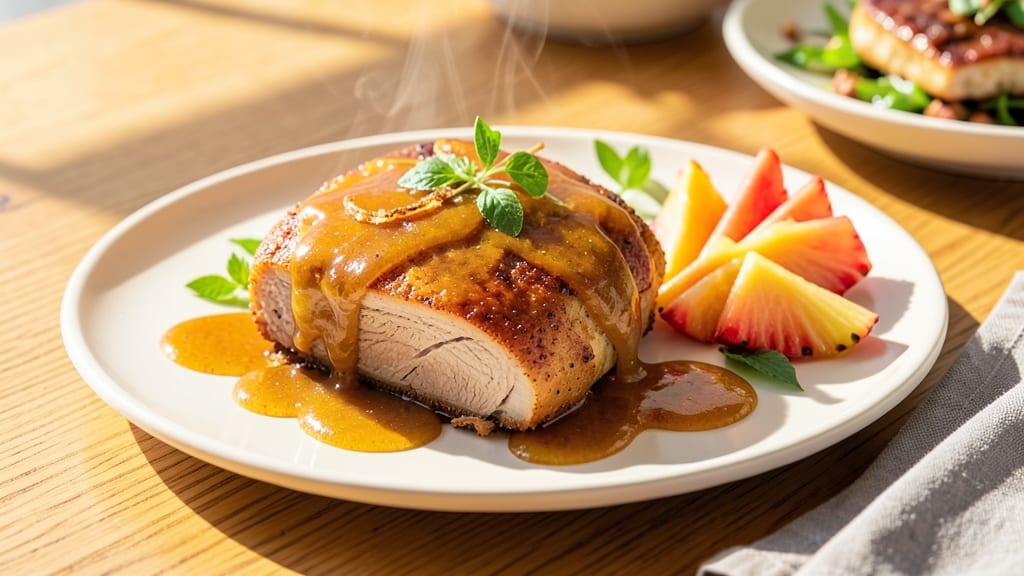
This pineapple glaze recipe for pork transforms simple roasted or grilled cuts into a restaurant-worthy centerpiece with just five ingredients and 20 minutes of active time.
The secret lies in balancing sweet pineapple juice with tangy vinegar and a touch of brown sugar, creating a glossy finish that caramelizes beautifully while keeping the pork juicy.
I developed this glaze after years of testing store-bought versions that always tasted artificial—this one delivers that perfect tropical sweetness with depth.
The process couldn't be simpler: simmer pineapple juice, sugar, and vinegar until reduced by half, then strain for smoothness. What you'll end up with is a vibrant, aromatic glaze that's sticky enough to cling to pork but light enough to let the meat shine through.
The acidity in the vinegar tenderizes the pork slightly, while the pineapple adds a bright, fruity contrast that cuts through rich flavors. This glaze works equally well on ribs, chops, or tenderloin, making it versatile for any pork dish.
What makes this recipe truly professional is how it elevates humble cuts of pork to showstopping status. The glaze develops a beautiful caramelized crust when brushed on during the last 10 minutes of cooking, adding both texture and flavor without overwhelming the natural taste of the meat.
Store any leftovers in the fridge for up to 2 weeks or freeze for 3 months—it actually tastes better after a few days as the flavors meld.
Pair this glaze with grilled pineapple slices for a complete tropical experience, or serve alongside roasted sweet potatoes and steamed greens for a balanced meal. The key to success is patience during reduction—don't rush it, or you'll miss that perfect balance of sweetness and tang. Let's get started!
Ingredients for pineapple glaze recipe for pork
Five ingredients transform pork into restaurant-worthy tropical perfection with minimal effort.
| Ingredient | Amount | Notes |
|---|---|---|
| Fresh Pineapple Juice 🍍 | 1 ½ cups | From 100% pure pineapple, no additives |
| Light Brown Sugar 🍚 | ½ cup | Packed, not spooned |
| White Vinegar 🍶 | ¼ cup | Distilled or apple cider |
| Fresh Ginger 🌿 | 1 tbsp | Finely grated, not powdered |
| Salt 🧂 | ½ tsp | Kosher or sea salt |
| Extra-Virgin Olive Oil 🫒 | 1 tbsp | For glossy finish |
| Fresh Pineapple 🍍 | ½ cup | Diced, for garnish (optional) |
The pineapple juice is non-negotiable—canned 100% pure pineapple juice (like Del Monte or Dole) works best, but fresh is ideal if you're feeling fancy. Whole Foods or Latin markets often carry premium brands with deeper flavor. Avoid juices with added sugar or preservatives—they'll throw off the delicate balance. Brown sugar adds caramel depth, but muscovado or coconut sugar work beautifully too if you prefer a more complex flavor. The ginger? Freshly grated makes all the difference—powdered won't give that bright zing you're chasing. I always grab a small knob from the produce section and grate it myself, but pre-grated in a jar is fine in a pinch.
No pineapple juice? Mango nectar or orange juice can substitute at the same amount, though the flavor profile shifts slightly. Running short on vinegar? Lemon juice works 1:1, but you'll lose some of that tangy depth. The olive oil isn't just for finish—it helps emulsify the glaze for that professional sheen. Avocado oil is a great alternative if you're avoiding olive oil's grassy notes. Want to make this spicier? Add a dash of chili flakes or 1 tsp sriracha to the finished glaze. For a richer version, reduce the pineapple juice to 1 cup and add 2 tbsp of heavy cream or coconut milk at the end.
This glaze keeps beautifully—up to 2 weeks refrigerated or 3 months frozen. Store in a clean glass jar with a tight lid. The flavors actually improve after a day or two as the sugar and acidity marry. To use frozen glaze, thaw in the fridge overnight and whisk to recombine any separated oils. For restaurant-quality results, strain through a fine-mesh sieve before using to ensure silky smoothness. Brush on pork during the last 10 minutes of cooking for that perfect caramelized crust—don't skip this step, it's what transforms good pork into showstopper pork.
Why You'll Love This Recipe
- Pantry Magic: I swear by this glaze because it uses stuff I always have—no specialty shopping. That jar of brown sugar and bottle of vinegar? Already there. The ginger’s the only thing I buy fresh, but it lasts forever if I freeze the rest.
- Sweet-Savory Magic: The brown sugar caramelizes into something rich, while the pineapple juice keeps it bright and tangy. Add a splash of vinegar, and suddenly you’ve got that perfect balance—like a hug for your taste buds, but make it pork.
- Weeknight Hero: This glaze turns a simple pork chop into something special with almost no effort. I’ve used it on roasted pork tenderloin for company, grilled pork chops for summer BBQs, and even as a quick stir-fry sauce. It’s my go-to when I need flavor without fuss.
- Leftovers? Better: The glaze thickens as it cools, so any extra just gets richer. I’ve reheated it with a splash of water for stir-fries or drizzled it over rice bowls the next day. Honestly, I make double batches just to have it on hand.
Step-by-step instructions for pineapple glaze for pork
This tropical glaze balances sweetness and acidity, creating a perfect complement to pork's richness.
Combine Base Ingredients in a Saucepan
In a medium saucepan, pour in the 1.5 cups fresh pineapple juice and add the 0.5 cup packed light brown sugar. Stir until the sugar dissolves completely—this prevents grainy spots in your finished glaze. The mixture should look clear and smooth.
Next, add the 0.25 cup white vinegar and 1 tablespoon finely grated fresh ginger. Bring everything to a boil over medium-high heat, then immediately reduce to medium heat. The vinegar will help balance the sweetness while the ginger adds subtle warmth that pairs beautifully with pork.
Simmer Until Thickened
Let the glaze simmer uncovered for 15-20 minutes, stirring occasionally with a wooden spoon. You're looking for a reduction where the mixture thickens noticeably—it should coat the back of a spoon smoothly. The color will deepen from pale gold to a rich amber hue.
I check for doneness by running my finger through the glaze—when it leaves a clean trail without dripping, it's ready. If it thickens too quickly, add 1-2 tablespoons water to adjust consistency. This step transforms the simple ingredients into a complex, flavorful sauce.
Finish with Olive Oil and Salt
Remove the saucepan from heat and stir in the 1 tablespoon extra-virgin olive oil and 0.5 teaspoon salt. The olive oil adds a silky texture and helps the glaze cling beautifully to pork. Taste and adjust seasoning—you might need a touch more salt to balance the sweetness.
Let the glaze cool slightly for 5 minutes before using. This resting period allows flavors to meld completely. For extra presentation, reserve the 0.5 cup diced fresh pineapple to garnish the finished dish.
Apply to Pork (Optional Demonstration)
For best results, brush the warm glaze onto cooked pork 2-3 minutes before serving. The residual heat will help it caramelize slightly, creating a glossy finish. If storing, keep the glaze refrigerated in an airtight container for up to 1 week—reheat gently before using.
This glaze works particularly well with pulled pork, pork chops, or roasted pork tenderloin. The tropical sweetness cuts through the richness of pork fat, creating a harmonious balance that's both familiar and exciting.
Pro Tips For Making Pineapple Glaze Recipe For Pork
- Simmer Low and Slow: That pineapple glaze needs time to develop depth—don’t rush it. After combining everything in the pot, keep the heat at a gentle simmer (barely bubbling) for at least 15 minutes. I used to crank the heat and end up with a sticky mess that tasted more like syrup than glaze. Let it work its magic, and you’ll get that perfect balance of sweet, tangy, and umami.
- Strain the Ginger: Fresh ginger adds amazing warmth, but you don’t want chunks in your glaze. Grate it fine (or pulse it in a food processor) and strain it through a fine-mesh sieve before adding it to the pot. I learned this the hard way—my first batch had a ginger surprise with every bite. Trust me, the texture is smoother when it’s fully incorporated.
- Balance the Vinegar Early: White vinegar cuts through the sweetness, but too much too late can make your glaze taste harsh. Add half the vinegar upfront with the pineapple juice and sugar, then taste and adjust as you simmer. I once dumped it all at the end and ended up with a glaze that tasted like a science experiment. Start light, then tweak.
- Use Thick Pineapple Juice: Fresh pineapple juice works best, but if you’re using canned, pick the thick kind—not the watery stuff. The thicker the juice, the richer the glaze. I used to dilute it with water to save money, and the glaze always ended up thin and lackluster. Spend the extra 20 seconds squeezing or buy the good stuff—your pork will taste it.
Wine and beer pairings for this recipe
White Wine Pairings
For this tropical glaze, I always reach for a crisp Sauvignon Blanc from New Zealand or California—think Cloudy Bay or Kim Crawford. The wine's bright acidity and citrus notes mirror the pineapple's tang while cutting through pork's richness.
The slight herbal undertones in Sauvignon Blanc complement the ginger beautifully, creating a perfect balance. 🍷
Light-Bodied Reds
If you prefer red wine, a Pinot Noir from Oregon's Willamette Valley works wonderfully. The wine's delicate berry flavors and silky texture won't overpower the glaze's tropical sweetness.
I particularly love Domaine Serene or La Crema—their approachable acidity makes them ideal partners. Serve slightly chilled to enhance the refreshing contrast.
Beer Pairings
A Hefeweizen or Witbier like Weihenstephaner or Hoegaarden brings the perfect balance to this dish. The beer's banana and spice notes harmonize with the pineapple glaze while its effervescence cleanses your palate.
For a darker option, try a Belgian Dubbel—the caramel and fruit flavors create a rich pairing that stands up to the pork.
Non-Alcoholic Options
For a refreshing non-alcoholic match, I recommend sparkling pineapple juice—it mirrors the glaze's tropical profile while adding effervescence. A ginger beer with a squeeze of lime also works brilliantly, enhancing the dish's zesty notes.
For something more substantial, try a coconut water-based mocktail with muddled mint for a spa-like pairing.
Serving Temperature
Always serve your wine or beer slightly chilled—around 45-50°F for white wines and 50-55°F for reds. The cool temperature helps balance the glaze's sweetness and keeps the palate fresh.
I like to chill my beer in the fridge for 30-45 minutes before serving, which enhances its crispness without making it taste flat.
Nutrition facts
Frequently asked questions
Can I use canned pineapple juice instead of fresh?
Yes, but choose 100% pure pineapple juice with no added sugar or preservatives. Brands like Del Monte or Dole work perfectly. For deeper flavor, look for "premium" or "extra" labels—these often use more concentrated juice. If your canned juice has added sugar, reduce the brown sugar to 0.375 cup to maintain balance.
How do I prevent the glaze from becoming too thick?
If your glaze thickens too quickly, simply add 1-2 tablespoons water and stir until smooth. For extra insurance, simmer at medium-low heat instead of medium. The key is patience—rushing the reduction leads to uneven consistency. Always check doneness by running a finger through it; it should leave a clean trail without dripping.
What's the best way to store leftover glaze?
Transfer to a clean glass jar with a tight lid and refrigerate for up to 2 weeks. The flavors actually improve as the sugar and acidity meld! For longer storage, freeze in 1-tablespoon portions (perfect for quick reheats). Thaw overnight in the fridge and whisk to recombine any separated oils before using.
Can I make this glaze without vinegar?
Yes, but the flavor will be less balanced. Substitute with lemon juice or orange juice at the same amount (0.25 cup). You'll lose some of the tangy depth, but the citrus will still complement the pineapple. For extra brightness, add ½ teaspoon of salt to compensate for the missing acidity.
Why does my glaze look cloudy after cooling?
Cloudiness usually means unstrained ginger fibers or undissolved sugar. For silky smooth results, strain through a fine-mesh sieve before using. If you missed this step, simply whisk vigorously or blend briefly to emulsify. The glaze will still taste delicious—just less professional-looking!