
Main Courses
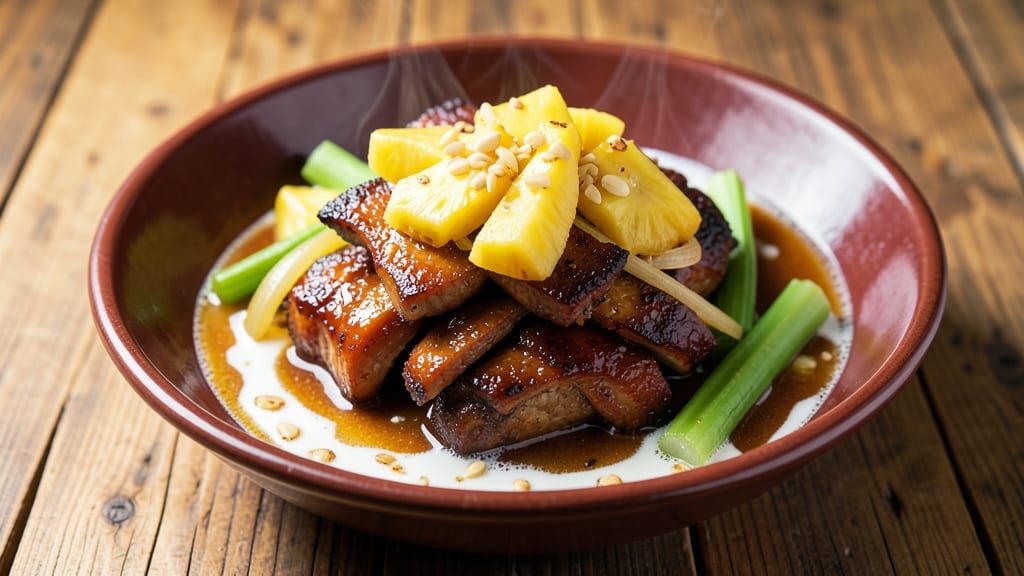
This Pork Pata Humba with Pineapple Recipe in a Pinoy Style brings the soul of Filipino home cooking to your table with its perfect balance of sweet, savory, and tangy flavors. 💛 I first discovered this dish at my neighbor's family gatherings in Cincinnati, where her Filipino family would slow-cook pork until it was fall-apart tender, then glaze it with caramelized pineapple and a touch of vinegar for that signature tang.
The celery adds a satisfying crunch that cuts through the richness, making every bite unforgettable. The secret to this dish lies in the slow-cooking process, which transforms tough pork shoulder into melt-in-your-mouth perfection.
We'll start with a simple marinade of soy sauce, vinegar, and garlic, then braise the pork until it's tender enough to shred with a fork.
Meanwhile, the pineapple gets caramelized to create a glossy, sweet-savory glaze that coats every bite, while the celery adds a refreshing contrast that keeps the dish balanced. What you'll end up with is a dish that's rich, flavorful, and deeply satisfying—perfect for family gatherings or special occasions.
The pork is so tender it practically melts in your mouth, while the pineapple glaze adds a touch of sweetness that's balanced by the tangy vinegar and the crisp crunch of celery.
It's the kind of meal that makes you feel like you're sitting at a Filipino fiesta table, even if you're just cooking in your own kitchen. Serve this dish with steamed rice and a side of atchara (Filipino pickled papaya) for the full experience.
The combination of textures and flavors creates a harmonious balance that's both comforting and exciting. Let's get cooking!
Ingredients for pork pata humba with pineapple recipe pinoy style
Sweet, savory, and tangy—this Filipino classic needs just 15 simple ingredients for melt-in-your-mouth pork.
| Ingredient | Amount | Notes |
|---|---|---|
| Pork Shoulder 🐷 | 3 lb | Bone-in for best flavor |
| Fresh Pineapple 🍍 | 2 cups | Chopped, fresh or canned |
| Yellow Onion 🧅 | 1 whole | Chopped into wedges |
| Celery Stalk 🥬 | 3 whole | Cut into 2-inch pieces |
| Garlic Cloves 🧄 | 6 cloves | Minced for marinade |
| Coconut Milk 🥥 | 1 can | 13.5 oz can, full-fat |
| Soy Sauce 🥄 | ½ cup | Regular or light soy |
| White Vinegar 🍶 | ¼ cup | Distilled preferred |
| Brown Sugar 🍚 | ½ cup | Packed tightly |
| Olive Oil 🫒 | 2 tbsp | For searing pork |
| Salt 🧂 | 1 ½ tsp | Kosher or sea salt |
| Black Pepper 🌶️ | 1 tsp | Freshly ground |
| Bay Leaves 🌿 | 2 whole | For braising |
| Fresh Ginger 🌿 | 1 ½ oz | Peeled, grated |
| Green Onion 🧅 | 2 whole | Sliced for garnish |
The pork shoulder is your secret weapon here—bone-in stays juicier. Costco or Whole Foods usually have the best deals on big cuts, and you'll want about 3 pounds for six servings. Look for good marbling, not too much fat. If you can't find bone-in, a well-marbled boneless shoulder works too. The pineapple? Fresh is ideal—canned works in a pinch, but fresh gives that bright, juicy bite. For the coconut milk, Thai Kitchen brand is my go-to at the grocery store, but any full-fat canned coconut milk will do.
No fresh ginger? Dried works at half the amount, but fresh is worth it for that zesty kick. Running short on celery? Substitute with bell peppers or carrots—just adjust the cooking time slightly. The soy sauce can be swapped for tamari if you're gluten-free, but traditional soy sauce gives that classic Filipino umami. For the brown sugar, pack it tightly—don't scoop it loosely. And if you're using canned pineapple, drain it well and pat it dry to avoid a watery glaze. The green onions at the end? Fresh from the market has more flavor than those sad little bunches at the store.
This dish tastes even better the next day—plan ahead! Store leftovers in the fridge for 4-5 days or freeze for 3 months. I like to portion it into containers so we can grab it for quick lunches. The braising liquid keeps for 2 weeks in the fridge too—great for quick soups later. And if you make extra pineapple glaze, freeze it in ice cube trays for easy portioning.
Why You'll Love This Recipe
- One-Pot Magic: I swear by this recipe—just toss the pork, pineapple chunks, and veggies into a pot, add a splash of soy sauce and calamansi, then let it simmer. No fancy techniques, no extra pans, and honestly? The cleanup is just rinsing a single pot.
- Sweet-Savory Balance: That caramelized pineapple cutting through the tender pork? It’s the kind of flavor combo that makes you pause mid-bite. The garlic and onions deepen as they cook, while the pineapple’s tang keeps it bright—no heavy sauces needed.
- Lunchbox Hero: Between us, this is my go-to for meal prep. The leftovers reheat beautifully, and the sweetness makes it a hit with kids (yes, even my picky one). Pack it in containers, and you’ve got a lunch that’s way more exciting than sandwiches.
- Budget-Friendly Feast: Pork shoulder stretches for days, and pineapple’s seasonal deals make this a steal. I’ve fed six people for under $15—plus, the onions and celery bulk it up so it never feels skimpy. (My wallet thanks me every time.)
Step-by-step instructions for pork pata humba with pineapple
Here's how to create this Filipino classic with tender pork and caramelized sweetness.
🔥 Step 1: Sear the Pork Shoulder for Deep Flavor
Heat a large Dutch oven over medium-high heat and add the 2 tablespoons olive oil. Place the 3 lb pork shoulder fat-side down and sear undisturbed for 8-10 minutes until the fat renders out and the skin turns deep golden brown. Flip the pork and sear the other side for another 5-7 minutes.
This step develops the rich, caramelized crust that forms the base of the dish. I press down gently on the pork during the first minute to prevent curling and ensure even contact with the pan. Once nicely browned, remove the pork and set it aside on a plate.
👨🍳 Step 2: Build the Sweet-Savory Base
In the same Dutch oven, add 1 whole yellow onion (chopped into wedges), 3 whole celery stalks (cut into 2-inch pieces), and 6 cloves garlic (minced). Sauté for 5-7 minutes until the vegetables soften and the garlic becomes fragrant. Add 1.5 oz fresh ginger (peeled and grated) and cook for 1 minute more.
Here's where the magic happens: Stir in 0.5 cup brown sugar and let it caramelize for 2-3 minutes until it turns a deep amber color. This sweet base balances the savory elements perfectly. Then add 0.5 cup soy sauce and 0.25 cup white vinegar, stirring to combine.
🥘 Step 3: Braise the Pork with Coconut Milk
Return the seared pork to the Dutch oven along with 2 cups fresh pineapple (chopped), 2 whole bay leaves, 1.5 teaspoons salt, and 1 teaspoon black pepper. Pour in the 1 can coconut milk and add enough water to just cover the pork (about 1 cup). Bring to a simmer over medium heat.
Once simmering, reduce heat to low and cover partially with a lid. Braise for 2.5-3 hours until the pork is fork-tender and easily pulls apart. The sauce should thicken and become glossy. I check the pork after 2 hours—if it's not tender yet, give it another 30-45 minutes.
⏰ Step 4: Reduce the Sauce to Perfect Consistency
Once the pork is tender, remove it from the Dutch oven and set it aside. Strain the braising liquid through a fine-mesh sieve into a saucepan to remove any solids. Return the liquid to medium-high heat and simmer uncovered for 10-12 minutes until it reduces by about half and becomes syrupy.
This reduction step is crucial—it intensifies the flavors and creates that signature glossy, caramelized sauce. Taste and adjust seasoning if needed, adding a splash of water if the sauce becomes too thick. Return the pork to the sauce and let it soak up those rich flavors for 5 minutes.
🍽️ Step 5: Serve with Fresh Garnishes
Slice the pork into ½-inch thick pieces and arrange on a platter. Ladle the reduced sauce over the top and garnish with 2 whole green onions (sliced). Serve immediately with steamed rice to soak up all that delicious sauce.
Each bite should deliver tender pork, sweet pineapple, and that perfect balance of savory and caramelized flavors. The celery adds a nice crunch that cuts through the richness. Don't forget to save some sauce for drizzling over the top—it makes all the difference!
Pro Tips For Making Pork Pata Humba With Pineapple Recipe Pinoy Style
- SEAR THE PORK FIRST: Get that Dutch oven screaming hot before adding the pork—cast iron or heavy steel—then let it develop a deep brown crust for 4-5 minutes per side. I used to skip this, and the sauce never tasted as rich; that crust is where all the flavor hides.
- COOK THE ONIONS LOW: After browning the pork, reduce heat to medium-low when adding onions and celery. They’ll soften in 8-10 minutes without burning, and you’ll avoid that bitter taste that ruins the whole dish. (Yes, even if you’re impatient like me.)
- USE CORELESS PINEAPPLE: Cut the pineapple into ½-inch chunks without the tough core—it’s the thing that matters most for texture. If you leave it in, you’ll spend the whole cooking time chewing instead of enjoying the sweet-tangy balance.
- SIMMER THE SAUCE: Once the pineapple’s added, bring the liquid to a boil once, then drop to a gentle simmer. Boiling too hard reduces the sauce to glue; a low simmer keeps it glossy and thickens it naturally over 45-60 minutes. (Your future self will thank you.)
Wine and beer pairings for this pork pata humba with pineapple recipe pinoy style
Filipino White Wine
For this dish, I always reach for a crisp Filipino white wine like Petron White or Lambrusco—both are widely available at Asian grocery stores and offer that perfect balance of acidity to cut through the richness of the pork.
The slight sweetness in these wines complements the caramelized pineapple beautifully. If you're using a different white, opt for something light and citrusy like Sauvignon Blanc—just avoid heavy, oaky whites that would overpower the delicate flavors. 🍷
Light Beer Pairings
A Filipino lager like San Miguel or Red Horse is my go-to for this dish. The light, slightly malty profile cleanses your palate between bites of tender pork and sweet pineapple.
If you're in the US, Corona Extra or Modelo Especial work well too—their crisp finish helps balance the dish's sweet and savory notes. For a local craft option, try a hoppy IPA with citrus notes to match the pineapple's brightness.
Coconut Milk-Inspired Cocktails
Want to elevate your meal? Serve a Piña Colada made with coconut milk and pineapple juice—it mirrors the dish's flavors while keeping things refreshing.
For something stronger, try a Filipino-inspired cocktail like a Calamansi Margarita (made with Filipino lime) or a Rum and Coconut drink with a splash of pineapple juice. The tropical notes tie everything together perfectly. 🍹
Non-Alcoholic Options
For those skipping alcohol, a ginger-lime soda with a splash of pineapple juice works wonders. I also love serving Filipino salabat (ginger tea) on the side—it's light, spicy, and pairs beautifully with the rich pork.
For a sweeter option, try mango juice or coconut water to balance the dish's bold flavors without overpowering them.
Local Market Tips
If you're in Portland, hit up New Seasons Market for their selection of imported wines and beers. Look for Filipino wine brands in the international aisle—they often have unique flavors that pair perfectly with this dish.
For beer, check the craft section for local IPAs with citrus notes. And if you're at a farmers market, grab some fresh calamansi (Filipino lime) to make your own margaritas at home!
Nutrition facts
Frequently asked questions
Can I substitute bone-in pork shoulder with boneless?
Yes, but choose a well-marbled boneless pork shoulder to maintain juiciness. Bone-in stays moister during braising, but boneless works fine if you add 1 extra cup of water to the braising liquid. The cooking time remains the same—just check for tenderness at 2 hours.
What if I don't have fresh pineapple?
Canned pineapple works perfectly! Drain it well and pat dry with paper towels to prevent a watery sauce. For extra flavor, add 1 teaspoon of calamansi juice (Filipino lime) or a splash of white vinegar to mimic freshness. Avoid pineapple with added sugar.
How do I know when the pork is tender enough?
Use the fork test: Insert a fork into the thickest part of the pork—it should slide in with minimal resistance. The meat should also pull apart easily into 3-inch shreds. If not tender after 3 hours, cover and cook 30 more minutes. Overcooking can make it dry.
Can I make this dish in a slow cooker?
Sear the pork first, then transfer everything (including pineapple) to a 6-quart slow cooker. Cook on low for 7-8 hours or high for 4-5 hours. The sauce will be thinner—reduce it on the stovetop afterward. Add 1 extra tablespoon of brown sugar to compensate for the longer cooking.
What's the best way to reheat leftovers?
Gently reheat in a skillet with 1-2 tablespoons of water or coconut milk over low heat for 5-7 minutes. Avoid microwaving—it can make the pork dry. For best texture, reheat only what you'll serve immediately. Leftovers keep for 4-5 days in the fridge.