
Main Courses
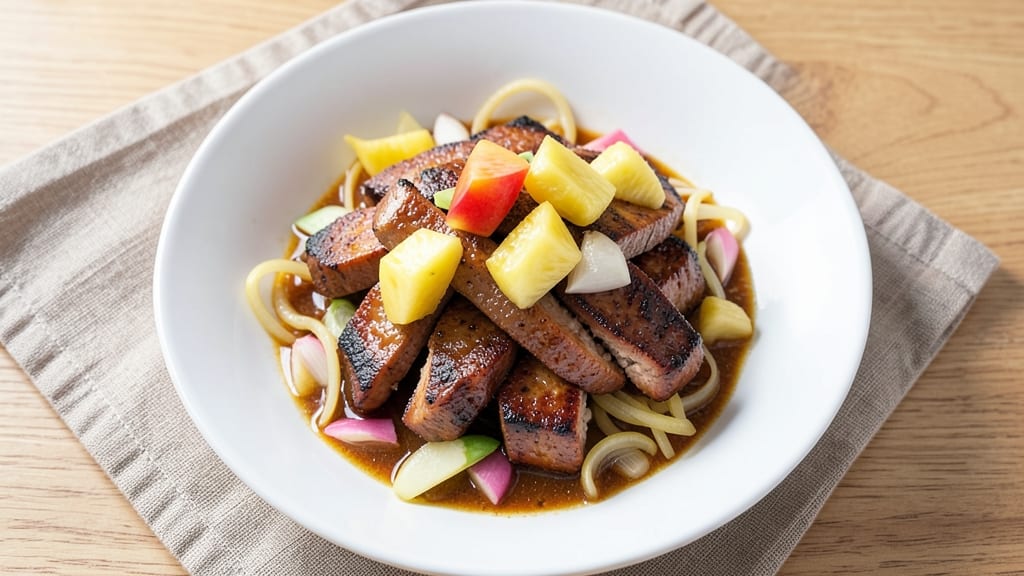
This Pork With Pineapple Pinoy recipe brings the bold flavors of Filipino cuisine to your kitchen in just 20 minutes—where tender pork meets sweet pineapple in a perfect balance of savory and tangy.
Growing up in Georgia, I first discovered this dish at a local Filipino restaurant, and it became an instant favorite for its ability to transform simple ingredients into something extraordinary.
The secret lies in the marinade—a mix of soy sauce, calamansi (or lime), garlic, and ginger—that tenderizes the pork while building deep, aromatic flavors. What makes this recipe special is how the sweetness of pineapple caramelizes beautifully when stir-fried, creating a glossy glaze that coats every bite.
The result is restaurant-quality Filipino comfort food that’s surprisingly easy to recreate at home.
By the time you finish cooking, you’ll have perfectly seared pork strips with a glossy, caramelized sheen and chunks of juicy pineapple that add just the right amount of sweetness.
The dish is hearty enough to stand alone but pairs beautifully with steamed rice, making it ideal for weeknight dinners or weekend gatherings. This is the kind of meal that reminds you why home cooking is always worth the effort.
Whether you're serving it to family or friends, this stir-fry delivers the vibrant flavors of the Philippines without the fuss. The technique is straightforward, and the ingredients are easy to find, so you can focus on enjoying the process. Let’s get cooking—your taste buds will thank you.
Ingredients for pork with pineapple pinoy
Pantry staples meet tropical flavors—this stir-fry needs just 13 ingredients for bold Filipino taste.
| Ingredient | Amount | Notes |
|---|---|---|
| Boneless Pork Loin 🥩 | 1 ½ lb | Cut into 1-inch strips, boneless skinless |
| Fresh Pineapple 🍍 | 1 cup | Cubed, fresh or canned in juice |
| Yellow Onion 🧅 | 1 whole | Thinly sliced, white or yellow |
| Garlic Cloves 🧄 | 6 cloves | Minced, fresh preferred |
| Fresh Ginger 🌿 | 2 tbsp | Finely grated, peeled |
| Soy Sauce 🥄 | ½ cup | Regular or tamari for gluten-free |
| Calamansi Juice 🍋 | ¼ cup | Lime juice substitute if unavailable |
| Brown Sugar 🍚 | 2 tbsp | Packed, light or dark |
| Vegetable Oil 🫒 | 2 tbsp | High smoke point preferred |
| Black Peppercorns 🌶️ | ½ tsp | Freshly ground preferred |
| Salt 🧂 | 1 tsp | Kosher or sea salt |
| White Vinegar 🍶 | 1 tbsp | For brightness, optional |
| Green Onions 🧅 | 2 whole | Thinly sliced, for garnish |
The pork cut matters here. Boneless loin stays tender without drying out, but shoulder works too if sliced thin. I grab mine from the Asian market when possible—they cut it perfectly, but the regular supermarket package does fine. Look for good marbling if buying whole. Fresh ginger and garlic? Penzeys or bulk bins have the best quality, but honestly the grocery store stuff works if it's not ancient. Quick tip: peel ginger with a spoon—no peeler needed.
No calamansi? Lime juice works perfectly—just double the amount. Brown sugar substitutes? Coconut sugar or honey (though honey isn't traditional). The pineapple can be fresh or canned—Dole brand in juice is my go-to when fresh isn't available. For extra depth, add a dash of fish sauce (if not avoiding it) or a pinch of sriracha for heat. The soy sauce should be light or regular—not low-sodium, or the flavor gets watered down.
Pork strips keep 2 days in the fridge, but marinate them overnight for best results. Fresh pineapple? Store cut pieces in an airtight container with paper towels to absorb moisture—lasts 3 days. For meal prep, cook the pork and pineapple separately, then combine when reheating. This dish reheats beautifully—stir-fry again for 2-3 minutes to revive the caramelized edges. Garnish with green onions right before serving—they wilt fast when cooked.
Why You'll Love This Recipe
- One-Pan Magic: I swear by this recipe when I’m too tired to wash a million dishes. Sear the pork, toss in the onions and ginger, then let the pineapple caramelize—no flipping pans, no stress. That golden crust on the pork? Happens while you’re chopping the pineapple.
- Sweet-Savory Balance: The pineapple’s tang cuts through the pork’s richness, and the ginger? Oh, it’s the secret weapon—just a thumb-sized piece, but it turns this into something ridiculously good. Honestly, I’ve made it for people who “don’t like sweet and savory,” and they still ask for seconds.
- Lunchbox Hero: Between us, this is my go-to for packed lunches. The flavors only get better after a day in the fridge, and it reheats like a dream. My kid’s favorite? The crispy bits clinging to the pork—she’ll eat it straight from the container (no judgment here).
- Budget Meal Stretch: Pork loin’s affordable, and pineapple’s cheap when you buy it whole. A single cut serves four, and leftovers? Even better cold in sandwiches or over rice. I’ll be real: this recipe saved me from takeout more times than I can count.
Step-by-step instructions for pork with pineapple pinoy recipe
Here's how to create a perfectly balanced sweet and savory stir-fry that's ready in just 20 minutes.
Prep the Pork and Aromatics for Maximum Flavor
Begin by cutting the 1.5 lb boneless pork loin into 1-inch strips—this size ensures even cooking and tender bites. Pat the strips dry with paper towels to remove any excess moisture, which helps them sear properly. In a small bowl, combine 1 teaspoon salt, ½ teaspoon freshly ground black peppercorns, and 1 tablespoon white vinegar. Toss the pork strips in this mixture and let them marinate for 10 minutes while you prep the rest of the ingredients.
Next, finely grate the 2 tablespoons fresh ginger and mince the 6 cloves garlic. Thinly slice the 1 whole yellow onion and cube the 1 cup fresh pineapple—if using canned pineapple, drain it well to avoid excess liquid in your stir-fry. The key here is to work efficiently; having everything prepped and ready ensures a quick cook and prevents overcrowding in your pan.
Sear the Pork for Deep Flavor and Texture
Heat a large skillet or wok over medium-high heat and add the 2 tablespoons vegetable oil. Once the oil shimmers, add the pork strips in a single layer, leaving space between them. Let them sear undisturbed for 2-3 minutes until they develop a golden-brown crust on one side. This step is crucial—it locks in juices and builds the foundation of flavor.
Once browned, flip the pork and cook for another 2-3 minutes until fully cooked through. Remove the pork from the skillet and set it aside on a plate. The pork should be tender but still hold its shape—if it feels slightly undercooked, it will finish cooking when combined with the sauce later.
Build the Sweet and Savory Sauce
In the same skillet, reduce the heat to medium and add the sliced onions. Cook for 3-4 minutes until they soften and begin to caramelize slightly. Add the minced garlic and grated ginger, cooking for another 30 seconds until fragrant—this releases their flavors and prevents bitterness.
Pour in the ½ cup soy sauce and 2 tablespoons brown sugar, stirring to combine. Let the mixture simmer for 1 minute until slightly reduced. Then, add the ¼ cup calamansi juice (or lime juice substitute) and the cubed pineapple. Simmer for another 2 minutes until the pineapple softens slightly and the sauce thickens to a glossy consistency. The sauce should coat the back of a spoon—if it's too thin, simmer for another 30 seconds to achieve the right balance.
Combine and Finish the Stir-Fry
Return the seared pork to the skillet and stir everything together. Cook for an additional 2-3 minutes until the pork is heated through and fully coated in the sauce. The pineapple should be tender but still hold its shape, and the pork should be juicy and flavorful. Taste and adjust the seasoning if needed—you might want to add a pinch more salt or a splash of calamansi juice for brightness.
Once everything is heated through and well combined, remove the skillet from heat. Garnish with the thinly sliced 2 whole green onions for a pop of color and freshness. Serve immediately over steamed rice or noodles to soak up every last bit of that sweet and savory sauce.
Pro Tips For Making Pork With Pineapple Pinoy
- Slice Pork Thinly: Use a sharp knife and cut the pork loin against the grain into ½-inch thick slices—thinner pieces cook faster and soak up the pineapple sauce better. I used to leave them too thick, and they’d turn rubbery instead of tender.
- Char Pineapple First: Before adding pineapple to the pan, sear the chunks over high heat for 2-3 minutes until slightly caramelized. This deepens the sweetness and balances the tangy-savory sauce—trust me, it makes a real difference.
- Don’t Overcrowd the Pan: Cook the pork in batches if needed to avoid steaming instead of browning. I learned this the hard way—crowded pork just sits in its juices and turns out bland instead of crispy.
- Use Ginger Paste: Skip grating fresh ginger if you’re short on time—just use 1 tablespoon of ginger paste for the same zing without the mess. It’s not cheating; it’s smart. (Yes, even if you’re impatient like me.)
Make-ahead tips for pork with pineapple pinoy
Marinate Ahead
Save time by marinating the pork overnight in the fridge. Mix ½ cup soy sauce, ¼ cup calamansi juice (or lime), 2 tbsp brown sugar, 1 tbsp white vinegar, 1 tsp salt, and ½ tsp black pepper in a resealable bag with the pork strips.
This deepens the flavors and tenderizes the meat—just 10 minutes of marinating works, but longer is better. 🌟
Prep Ingredients
Chop all your vegetables—onions, garlic, ginger, and pineapple—while the pork marinates. Store them in separate airtight containers in the fridge for up to 3 days.
This makes assembly a breeze when you're ready to cook. I keep the pineapple in a sealed container with paper towels to absorb excess juice.
Cook in Batches
If you're feeding a crowd, cook the pork in two batches to avoid overcrowding the pan. This ensures a proper sear and keeps the meat juicy. Keep the first batch warm in a 200°F oven while you finish cooking the second.
The pineapple can be added to the sauce in one go—it cooks quickly.
Freezer-Friendly
This dish freezes beautifully for up to 3 months. Cook the pork and pineapple mixture, then let it cool completely before transferring to a freezer-safe container. Thaw overnight in the fridge, then reheat in a skillet with a splash of water or broth to restore that caramelized sheen.
Garnish with fresh green onions after reheating.
Reheat Like a Pro
For the best results, reheat the stir-fry in a skillet over medium heat with 1 tbsp vegetable oil for 3-4 minutes. Stir occasionally to prevent sticking and revive the caramelized edges.
If using the microwave, cover with a damp paper towel and heat in 1-minute intervals until steaming hot—this keeps the pineapple tender.
Meal Prep Hack
Prep the sauce separately and store it in a jar in the fridge for up to 5 days. When ready to eat, simply sear fresh pork strips and toss them in the pre-made sauce with pineapple.
This cuts your cooking time in half! I also like to make extra rice to reheat alongside the stir-fry for a complete meal. ✨
Nutrition facts
Frequently asked questions
Can I substitute chicken for pork in this recipe?
Chicken breast or thigh works perfectly—just cut it into 1-inch pieces and reduce cooking time by 2-3 minutes per side. For extra tenderness, marinate the chicken 30 minutes longer than the pork. The pineapple and sauce will complement the chicken beautifully, creating a lighter version of this Filipino favorite.
What if I don't have calamansi juice?
No problem! Use lime juice (double the amount) or a mix of lemon juice and a pinch of salt for brightness. For a deeper Filipino flavor, add 1 teaspoon fish sauce to the marinade. The dish will still taste amazing—calamansi just adds that signature tangy sweetness.
How do I make this dish spicier?
Add ½ teaspoon ground black pepper to the marinade, or stir in 1 tablespoon sriracha or chili flakes with the sauce. For heat lovers, sear 1-2 thinly sliced Thai chilies with the onions. Start with less—Filipino cuisine balances sweet, sour, and spicy, so adjust gradually.
Can I use canned pineapple instead of fresh?
Yes! Drain the pineapple well to avoid a watery stir-fry. For extra flavor, use canned pineapple in juice (not syrup) and add ½ teaspoon salt to the sauce. Fresh pineapple adds natural sweetness, but canned works perfectly—just reduce the brown sugar by 1 teaspoon if needed.
Why did my pork turn out dry?
Overcooking is the most common cause—pork strips are done when they reach 145°F internal temp. Avoid overcrowding the pan (cook in batches if needed) and don’t overstir while searing. For extra juiciness, baste the pork with 1 tablespoon marinade during cooking. Resting the meat for 2-3 minutes after cooking also helps retain moisture.